
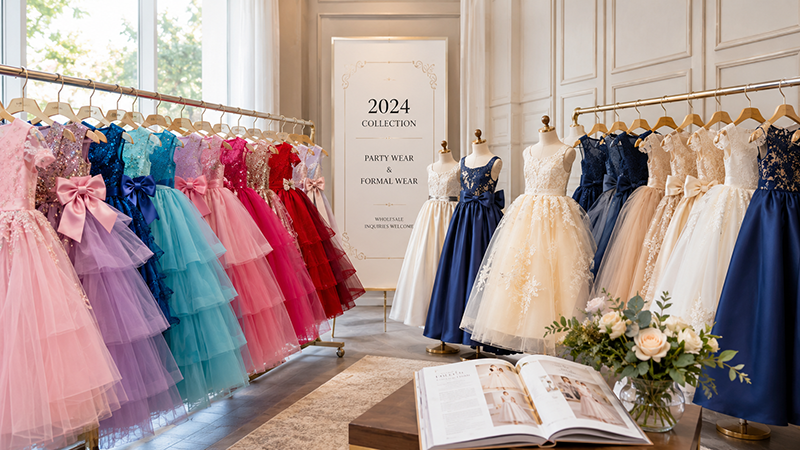
Party dresses and formal dresses overlap, but they are not identical product categories. A party dress is usually designed around celebration, color and visual impact, while a formal dress is chosen to match the tone, dress code or tradition of an event. For wholesalers, boutiques and children’s fashion brands, the distinction affects product naming, fabric cost, size planning and the occasions a collection can cover. This guide explains the difference from both a customer and wholesale sourcing perspective.
What Is a Party Dress?
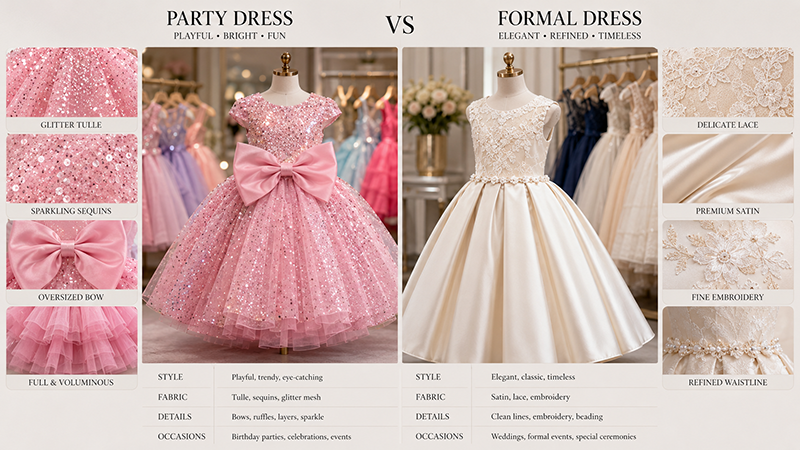
A party dress is special-occasion clothing created for birthdays, holiday parties, family gatherings, school celebrations and other festive events. The category favors playful silhouettes and noticeable details, including layered tulle, sequins, 3D flowers, oversized bows and brighter colors. Knee-length and tea-length styles are common because they photograph well and still allow children to move comfortably. Buyers planning this category can review our most popular girls’ party dress styles and the wider festivals and parties range for merchandising ideas.
“Party dress” is also a flexible retail label. The same satin or tulle dress may be marketed as a birthday dress, holiday dress or occasion dress depending on the color, styling and sales channel. This flexibility makes party dresses useful for trend-led collections, but buyers should define the exact event, age group and price position before sampling instead of relying on the category name alone.
What Is a Formal Dress?
A formal dress is intended for occasions where a polished or ceremonial appearance is expected, such as weddings, graduations, First Communion, baptisms, church events, galas and formal family celebrations. Formality does not always mean floor length. Instead, it is usually defined by a refined silhouette, an appropriate color palette, careful finishing and details that match the occasion. As the Emily Post attire guide explains, the level of formality depends not only on the garment itself, but also on the event and its dress code.
Emily Post attire guide
For children’s wear buyers, formal dresses commonly use satin, lace, chiffon, organza or velvet with structured bodices, balanced skirt volume and restrained embellishment. White and ivory remain important for religious and wedding collections, while champagne, navy, burgundy and emerald support evening and holiday ranges. Our guide to when girls need formal dresses and the weddings and church collection provide more occasion-specific examples.
Party Dress vs Formal Dress: Key Differences
| Factor | Party Dress | Formal Dress |
|---|---|---|
| Main purpose | Festive, playful celebration | Ceremonial or dress-code-led event |
| Typical occasions | Birthdays, holidays, school parties | Weddings, church, graduation, gala |
| Silhouette | Shorter, fuller or trend-led | Controlled, elegant and often longer |
| Colors | Bright, pastel or themed | Ivory, neutrals, jewel tones, classic shades |
| Details | Sequins, bows, glitter, 3D flowers | Lace, embroidery, pearls, refined trims |
| Buying cycle | Trend and seasonal demand | Event calendar and ceremony demand |
Where the Two Categories Overlap
There is a practical middle ground between party and formal wear. A knee-length satin A-line dress with a removable bow can work for a birthday, graduation or wedding guest, depending on its color and accessories. For inventory planning, it is more useful to tag a style by occasion, fabric, length and formality level than to force it into only one label. This improves on-site filtering and lets a versatile SKU appear in more than one relevant collection without confusing the customer.
How Fabric and Construction Change the Category
Fabric alone does not decide whether a dress is formal. Soft tulle, glitter tulle and sequins often signal party wear, while smooth satin, lace, chiffon and velvet are associated with formal collections; however, lining, skirt support, seam finishing, closure quality and embellishment placement have equal influence. Buyers comparing tulle softness and structure can use our tulle fabric guide before confirming samples.
Construction also affects cost and retail positioning. A short party dress with dense hand-beading or multiple appliqués may cost more than a simple formal satin dress, so buyers should compare the complete specification rather than the category name alone. For children’s wear, decorative details should also be balanced with comfort and safety. OEKO-TEX® STANDARD 100 provides a useful reference for textiles tested for harmful substances, while buyers selling in the United States can consult the U.S. Consumer Product Safety Commission for testing and certification requirements.
What Our Factory Experience Shows
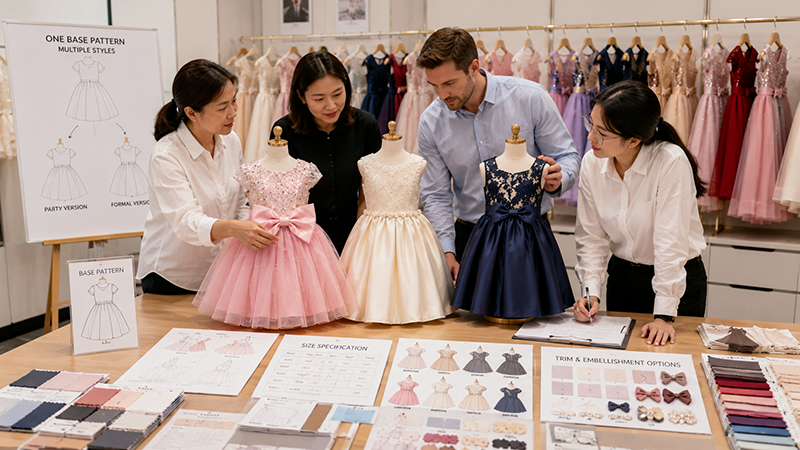
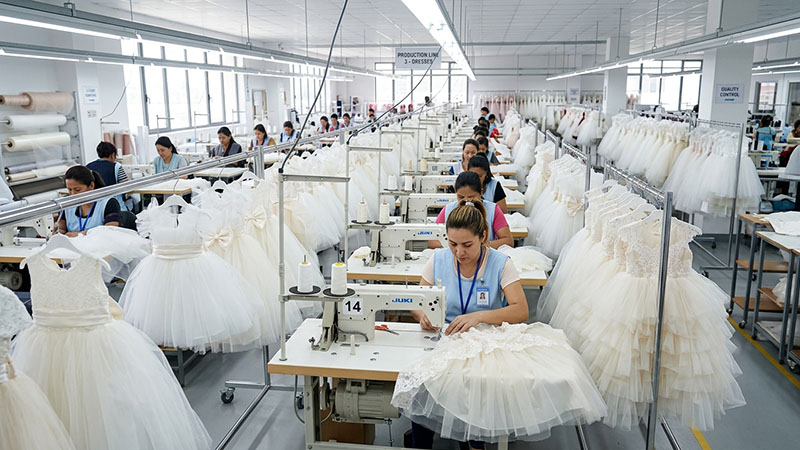
During sampling, we often turn one base pattern into both categories instead of developing two unrelated dresses. Changing bright glitter tulle to ivory soft tulle, reducing decoration, lengthening the skirt and adding a cleaner satin waistband moves the design toward formal wear. Shortening the skirt, adding a statement bow or using a stronger seasonal color moves the same platform toward party wear. This shared-platform approach can reduce development work and create a visually coordinated capsule collection.
We also see differences that are easy to miss in photos. Multi-layer tulle can settle after steaming, so our QC team rechecks finished length after pressing; buyers should therefore approve the measurement method as well as the size chart. Our girls’ dress size guide explains the key measurements, while our guide to avoiding quality problems when sourcing girls’ dresses covers bulk-fabric approval, tolerances and pre-production samples.
Climate and local expectations should be reviewed together. North American and European boutiques often reorder soft tulle, oversized-bow and satin party styles, while Middle Eastern buyers frequently request more coverage, embroidery and richer formal finishes. In hot markets, heavy layers can reduce comfort even when the dress looks premium, so lighter skirt structures and soft linings usually create a better balance.
Which Mix Should Wholesale Buyers Stock?
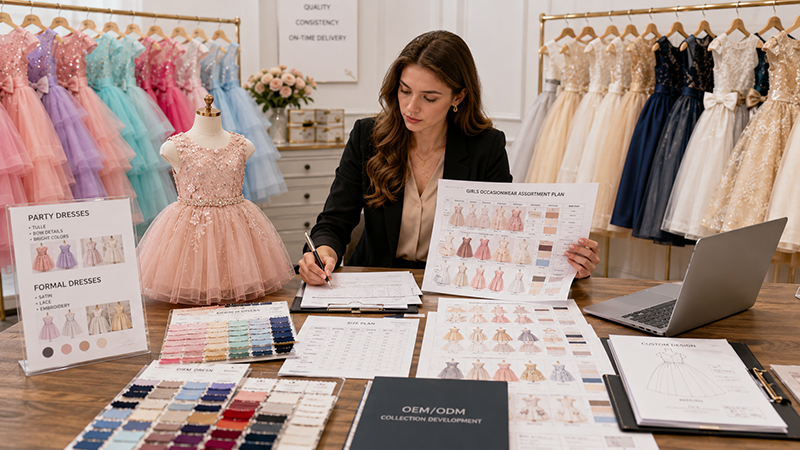
Most retailers benefit from carrying both categories, but the ratio should follow the store’s customer and occasion calendar. The ranges below are practical starting points from our product-development experience, not universal sales benchmarks. Test a focused assortment for 30–60 days, review size and color sell-through, and scale repeat orders using real results. This follows the same demand-led logic described in Shopify’s assortment-planning guide.
| Buyer / Channel | Party | Versatile | Formal |
|---|---|---|---|
| Birthday boutique / online shop | 55–65% | 25–35% | 10–20% |
| Wedding or church boutique | 15–25% | 25–35% | 45–55% |
| Multi-occasion childrenswear retailer | 35–45% | 30–40% | 20–30% |
| Hot-climate Eid / event retailer | 25–35% | 30–40% | 30–40% |
A low-risk opening range can begin with three platforms: a soft-tulle bow dress for party demand, a clean satin A-line style that crosses occasions, and a lace or embroidered dress for formal events. Extend these platforms through color and length rather than buying many unrelated designs. This keeps the collection coherent, makes size replenishment easier and gives buyers clearer evidence about which silhouette deserves a larger repeat order.
FAQ
Can a party dress be worn to a formal event?
Yes, if the dress has a polished silhouette, appropriate length and restrained color. A glitter-heavy or highly themed party dress may feel too casual for a traditional ceremony.
Are formal dresses always long?
No. Tea-length and knee-length dresses can be formal when the fabric, finish and event are appropriate, especially for younger children.
Can retailers list the same dress as both a party dress and a formal dress?
Yes, when the style suits multiple occasions. However, product titles and descriptions should clarify the fabric, length, formality level and recommended events.
Which category is normally more expensive?
Formal dresses often cost more because of refined fabrics and construction, but heavily beaded party dresses can be equally expensive. Compare the specification, not only the label.
Which styles offer the best cross-occasion value?
Satin A-line, soft-tulle and simple lace dresses in adaptable colors usually cover the widest range of events. Removable bows, sashes or accessories add flexibility.
How early should wholesale buyers place orders?
Allow roughly two to four months for standard seasonal buying and longer for custom development or sea freight. Plan major wedding, Eid and holiday collections around the local selling calendar.
Conclusion
The clearest difference is purpose: party dresses emphasize celebration, while formal dresses respond to ceremony and dress code. For wholesale buyers, the strongest collection usually combines playful party styles, versatile crossover designs and a focused formal range.
Outong supports wholesalers, retailers and brands with OEM/ODM development, sampling and bulk production; contact our team to discuss styles, fabrics and a collection suited to your market.