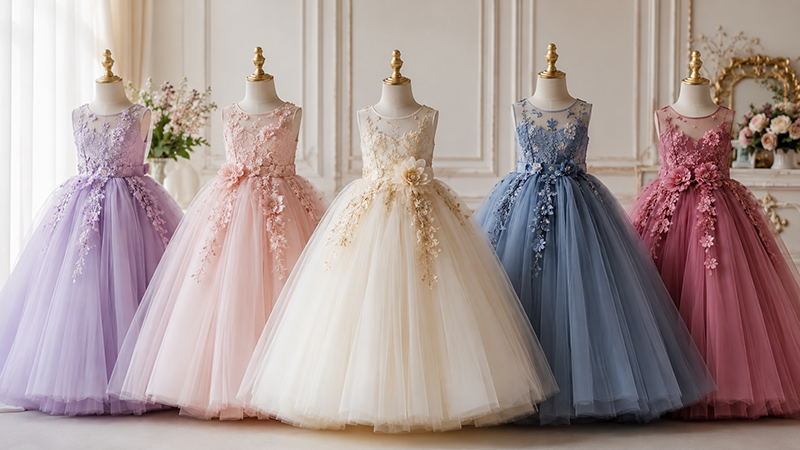
Tulle fabric has long been one of the most important materials in girls’ dress manufacturing, particularly for flower girl dresses, princess gowns, birthday dresses, and other special occasion wear. Its lightweight structure, soft appearance, and ability to create elegant volume make it a preferred choice for designers, retailers, and parents alike.
At Outong, we have worked with boutiques, wholesalers, and children’s fashion brands worldwide for more than 24 years. Based on our production experience, tulle remains one of the most requested fabrics because it offers the perfect balance of style, comfort, and versatility across different markets.
In this guide, we’ll explain what tulle fabric is, the different types available, how manufacturers use it in girls’ dresses, and what buyers should consider when sourcing high-quality tulle garments.
What Is Tulle Fabric?
Tulle is a lightweight netted fabric made from materials such as polyester, nylon, silk, or cotton. It features a fine mesh structure that creates a soft, airy, and slightly transparent appearance.
Originally used in bridal veils and ballet tutus, tulle has become a key fabric in children’s fashion because it adds volume and elegance without making garments too heavy.
Today, polyester tulle is the most commonly used option in girls’ dresses because it is durable, cost-effective, and easy to shape during production.
According to the Encyclopaedia Britannica, tulle is widely used in fashion and decorative garments due to its lightweight structure and versatility.
How Is Tulle Fabric Made?
Tulle is made through a simple process that affects its quality and performance.
First, manufacturers select the yarn. Common materials include polyester, nylon, silk, and rayon. For most girls’ dresses, polyester and nylon are preferred because they are durable and affordable.
Next, the yarn is processed on warp knitting machines to create the lightweight open-mesh structure that gives tulle its signature look.
After knitting, the fabric is dyed and finished. Depending on design needs, treatments such as softening, glitter effects, embroidery preparation, or anti-static finishes may be added.
The fabric is then heat-set to improve stability and help maintain its shape during garment production.
Finally, the tulle is inspected for color consistency, mesh quality, strength, and defects before being used in dress manufacturing. At Outong, fabric inspections are completed before cutting to help ensure consistent bulk production quality.
Different Types of Tulle Fabric
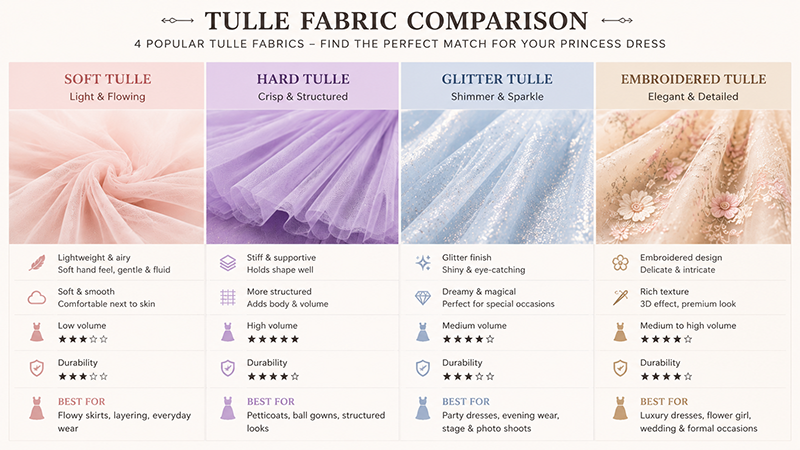
Not all tulle fabrics are the same. Different styles create different effects in girls’ dresses.
Soft Tulle
Based on our experience producing flower girl dresses for international buyers, soft tulle remains the most popular option because it provides a comfortable feel while maintaining the fullness required for special occasion wear.
Hard Tulle
Hard tulle is commonly used as an inner support layer in princess dresses and tutu skirts. While it creates excellent structure, it is usually paired with soft lining materials to improve comfort.
Glitter Tulle
Glitter tulle contains shimmering particles or metallic finishes. It is especially popular in:
- Middle Eastern markets
- Birthday dresses
- Luxury girls’ gowns
- Holiday collections
This style creates a more eye-catching and premium appearance.
Embroidered Tulle
Embroidered tulle combines mesh fabric with lace, floral embroidery, pearls, or sequins.
This type is commonly seen in:
- High-end party dresses
- Communion dresses
- Premium boutique collections
Why Is Tulle So Popular for Girls Dresses?
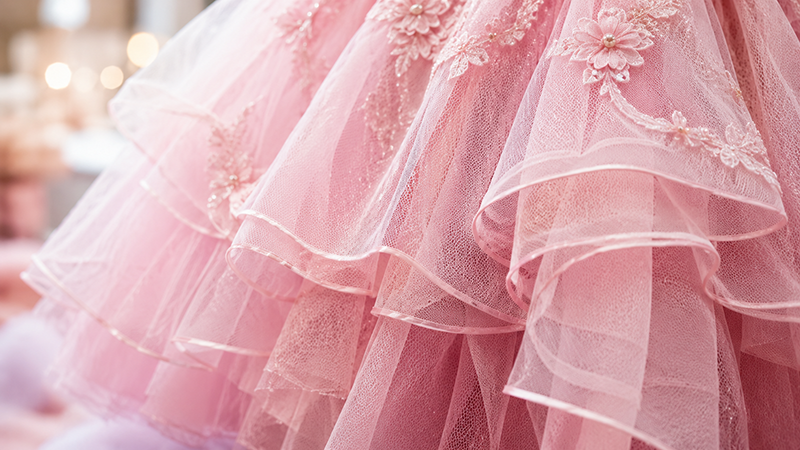
Tulle remains one of the most popular fabrics in children’s fashion for several reasons.
Creates a Princess Look
The biggest reason is visual appeal. Tulle naturally creates volume and layering, helping dresses look fuller and more elegant.
This “princess effect” is especially important for:
- Birthday dresses
- Wedding party dresses
- Flower girl collections
- Formal occasion wear
Lightweight and Comfortable
Despite its layered appearance, tulle is relatively lightweight compared to heavier decorative fabrics.
When manufacturers use soft lining and high-quality tulle together, dresses can remain comfortable for children to wear for long periods.
Excellent for Photos and Special Events
Tulle reflects movement beautifully in photos and videos. The layered texture adds depth and softness, making it highly popular for:
- Studio photography
- Wedding events
- Social media collections
- Boutique displays
Flexible for Design
Manufacturers can use tulle in many ways:
- Layered skirts
- Puffy sleeves
- Decorative overlays
- Bows and ruffles
- Embroidered panels
This flexibility allows designers to create both minimalist and luxury styles.
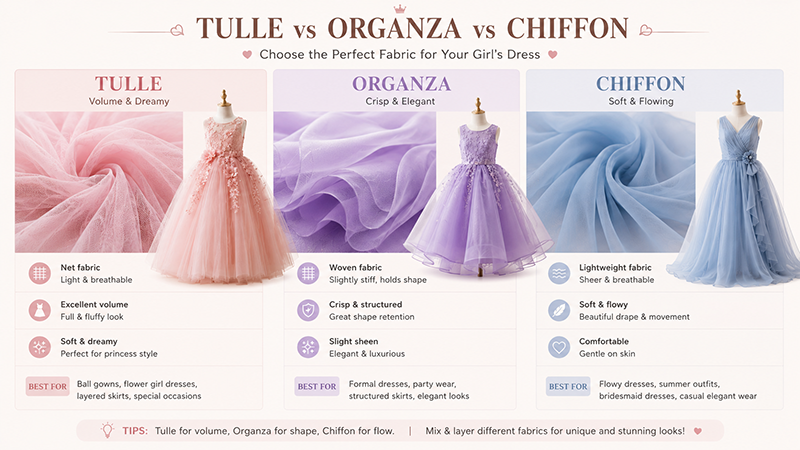
Tulle vs Organza vs Chiffon
Many buyers confuse tulle with organza and chiffon. Although these fabrics may look similar, they perform differently in dress production.
| Fabric | Texture | Appearance | Common Use |
|---|---|---|---|
| Tulle | Mesh-like | Puffy & layered | Princess dresses |
| Organza | Crisp & smooth | Structured shine | Formal dresses |
| Chiffon | Soft & flowing | Elegant drape | Lightweight gowns |
For flower girl dresses and princess-style gowns, soft tulle is generally preferred because it creates volume while remaining lightweight and comfortable.
Organza is often selected for more structured silhouettes and formal occasions where a crisp appearance is desired.
Chiffon, on the other hand, provides excellent drape and movement but cannot create the same fullness as layered tulle.
Based on our experience working with international retailers, many premium dress collections combine tulle and organza together to achieve both structure and softness in the final design.
Is Tulle Fabric Good for Children’s Clothing?
Yes — when properly selected.
High-quality soft tulle can work very well in children’s clothing because it is:
- Lightweight
- Breathable
- Flexible
- Easy to layer
However, low-quality tulle may feel stiff or scratchy. That’s why experienced manufacturers focus heavily on:
- Softness testing
- Lining quality
- Density control
- Fabric finishing
The OEKO-TEX® Standard is often used in the textile industry to help verify fabric safety and quality standards for garments.
Common Problems With Low-Quality Tulle
In bulk production, low-quality tulle can create serious issues for brands and wholesalers.
Common Problems Include:
- Rough texture
- Easy tearing
- Uneven color
- Weak elasticity
- Poor layering effect
- Glitter shedding
At Outong, every sample goes through material checking and quality inspection before bulk production begins. This helps ensure consistency across large orders.
How to Identify High-Quality Tulle Fabric
For wholesale buyers, selecting the right tulle fabric is just as important as choosing the right dress design. High-quality tulle should have a uniform mesh structure, a soft and comfortable feel, and enough resilience to maintain its shape after compression. It should also offer good color fastness, ensuring that colors remain vibrant after washing and long-term storage.
According to textile quality assessment principles widely recognized within the textile industry, factors such as fabric consistency, durability, and performance testing play an important role in evaluating overall fabric quality.
In addition, durability is a key indicator of quality. Reliable manufacturers typically test tear strength, seam performance, and abrasion resistance to ensure the fabric can withstand regular wear and maintain the overall quality of the garment over time.
How Manufacturers Use Tulle in Girls Dresses
Professional manufacturers use tulle differently depending on the dress style and target market.
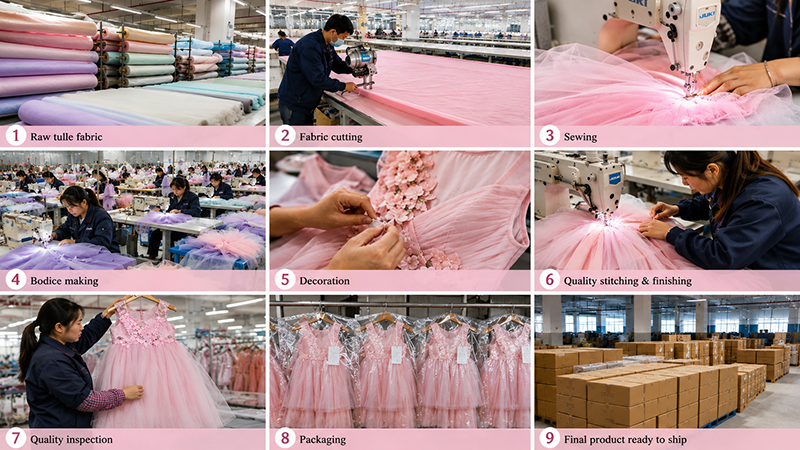
Layered Construction
Multiple layers of tulle are used to create volume while maintaining softness.
Embroidery and Decoration
Tulle works well with:
- Lace appliqué
- Sequins
- Beading
- Floral embroidery
These details help dresses achieve a premium appearance.
Matching With Lining
The lining is just as important as the tulle itself. Soft cotton or satin lining helps improve comfort and prevents irritation.
Shaping and Structure
For luxury dresses, manufacturers often combine:
- Soft tulle
- Hard tulle
- Structured lining
This combination helps dresses keep their shape while remaining wearable for children.
Tulle Fabric Trends in 2026
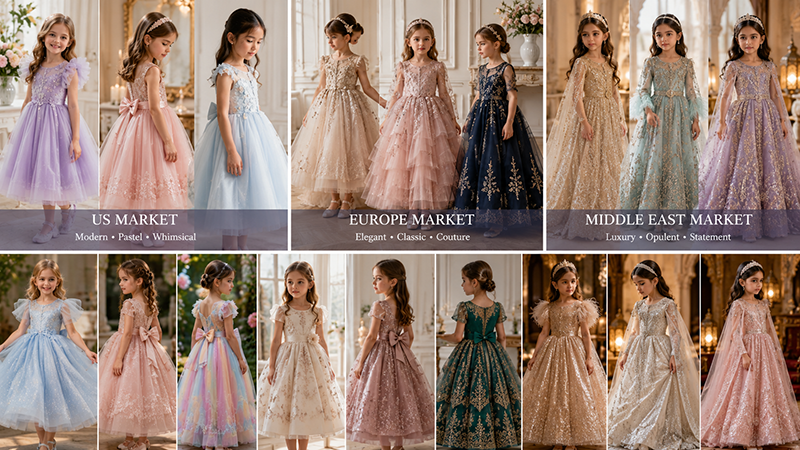
Children’s fashion continues to evolve, and tulle remains one of the most important fabrics in special occasion wear. In 2026, several trends are shaping the market across North America, Europe, the Middle East, and other international regions.
North America and Europe
Buyers in the United States and Europe increasingly prefer soft tulle, elegant layering, and minimalist luxury designs. Neutral tones, delicate embroidery, and lightweight silhouettes remain popular choices for flower girl dresses, communion dresses, and boutique collections. Sustainability is also becoming a key purchasing factor, leading many brands to adopt recycled polyester tulle in their product lines.
Middle East Market
In Middle Eastern markets, demand continues to grow for glitter tulle, heavy embellishments, pearl decorations, and dramatic princess silhouettes. Luxury occasionwear collections often feature multiple layers of tulle combined with intricate embroidery and beading to create a premium appearance.
Boutique Fashion Trends
Boutique brands worldwide are focusing on unique design elements that help their collections stand out. Popular trends include 3D floral appliqués, ombre tulle with gradient color effects, handmade embellishments, and limited-edition color combinations. These details add exclusivity and help brands differentiate themselves in competitive markets.
The Future of Tulle in Girls’ Fashion
As consumer preferences continue to shift toward premium quality and sustainability, manufacturers are increasingly combining innovative design techniques with environmentally responsible materials. The growing popularity of recycled tulle, pearl embellishments, and luxury floral details suggests that tulle will remain a leading fabric choice for girls’ dresses in the years ahead.
Tips for Buyers Choosing Tulle Dresses
When sourcing girls’ dresses in bulk, evaluating quality is essential to ensure customer satisfaction and reduce returns. A high-quality tulle dress should combine comfort, appearance, durability, and consistent production standards.
Pay close attention to the fabric and overall construction. Premium tulle should feel soft and comfortable, often paired with cotton or satin lining to prevent irritation. The dress should feature evenly distributed layers that create volume while maintaining a natural silhouette. Clean stitching, secure embellishments, and reinforced seams are also important indicators of durability and craftsmanship.
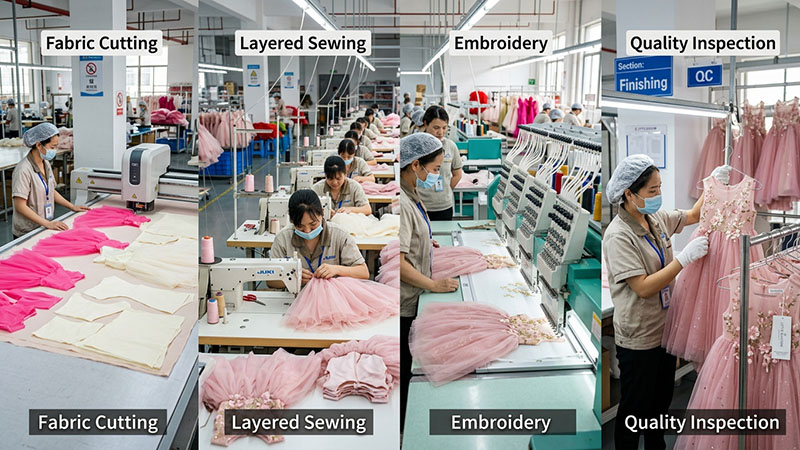
For wholesale orders, consistency across all pieces is equally important. Colors, sizing, fabric quality, and decorative details should remain uniform throughout the production run. Reliable manufacturers support this consistency through strict quality control procedures, including inspections during fabric selection, sewing, and final garment finishing before shipment.
Conclusion
Tulle fabric remains one of the most important materials in girls’ dresses because of its elegant appearance, lightweight structure, and versatility in design.
From flower girl dresses to luxury princess gowns, tulle helps create the layered and fashionable styles that continue to dominate the children’s occasionwear market.
For brands and wholesale buyers, choosing the right tulle — and the right manufacturing partner — is essential for achieving stable quality and long-term success.
At Outong , we combine fabric expertise, dress manufacturing experience, and strict quality control to help global clients create high-quality girls’ dresses for different markets worldwide.
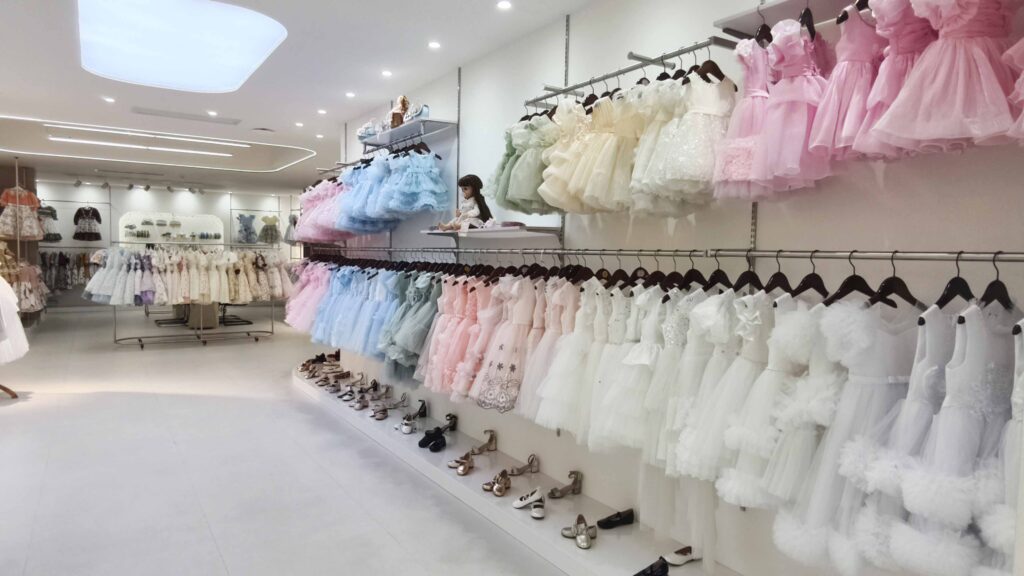
FAQ
1、Is polyester tulle better than nylon tulle?
Both polyester and nylon tulle have their advantages. Polyester tulle is more durable, cost-effective, and widely used in bulk production, making it a popular choice for wholesale girls’ dresses. Nylon tulle is generally softer and offers a smoother feel, which can be beneficial for premium collections. The best choice depends on the dress design, comfort requirements, and target marke
2、Does tulle fabric shrink after washing?
Most modern polyester tulle experiences minimal shrinkage when properly cared for. However, washing methods, water temperature, and fabric quality can affect performance. To maintain the shape and appearance of tulle dresses, manufacturers typically recommend gentle washing and avoiding high-heat drying.
3、Is tulle fabric comfortable for children?
Yes, high-quality soft tulle can be comfortable for children when paired with proper lining. Professional manufacturers usually combine tulle with soft cotton or satin lining to improve comfort and reduce irritation.
4、What is the difference between soft tulle and hard tulle?
Soft tulle is flexible and lightweight, commonly used for flowing skirts and layered dresses. Hard tulle is stiffer and mainly used to create structure and volume in tutu dresses or princess gowns.
5、How do manufacturers use tulle in girls’ dresses?
Manufacturers use tulle for layered skirts, puff sleeves, embroidery overlays, and decorative details to create volume and premium-looking designs.
6、How can buyers identify high-quality tulle dresses?
Buyers should check the softness, layering effect, stitching quality, lining comfort, and overall finishing to ensure stable quality in bulk orders.
Looking for High-Quality Tulle Girls Dresses?
At Outong, we specialize in flower girl dresses, princess gowns, and custom girls’ dresses made with premium tulle fabrics.
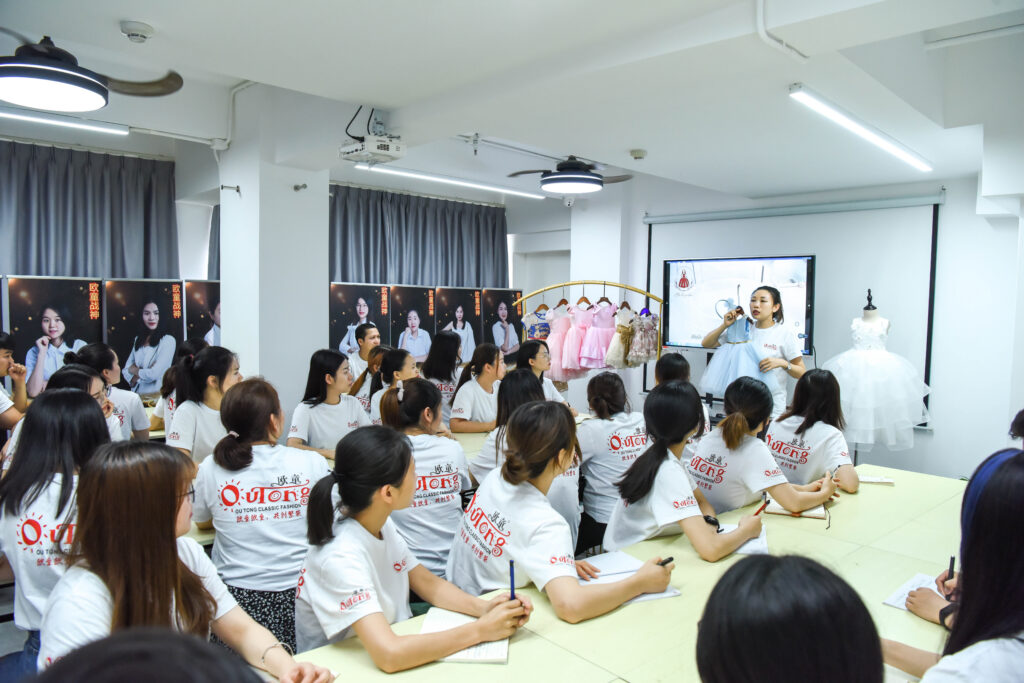
✔ OEM/ODM customization
✔ Fast sample development
✔ Strict quality control
✔ Stable bulk production
📩Looking for high-quality girls dresses made with premium tulle fabric? Contact our team today to discuss OEM and ODM manufacturing solutions tailored to your market.