Girls’ formal dresses are no longer reserved just for weddings. Today, they’re worn for birthdays, graduations, religious ceremonies, holiday celebrations, family gatherings, and many other special occasions throughout the year.
For retailers and boutiques, understanding when customers need formal dresses makes it easier to plan seasonal collections, choose the right styles, and meet changing market demand. Different occasions often call for different fabrics, colors, and design details.
Understanding these occasions helps retailers choose the right products, plan seasonal collections, and better meet customer demand. The following sections explain which events drive formal dress sales and how to build a collection that performs throughout the year.
What Is Considered a Girls’ Formal Dress?
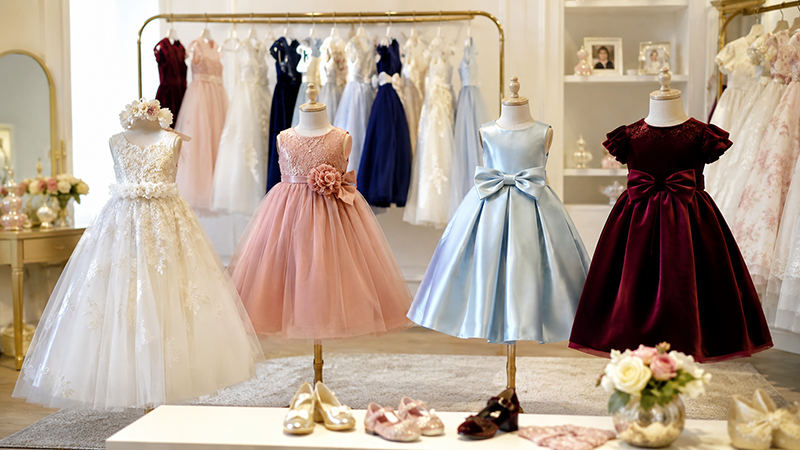
A girls’ formal dress is designed for special occasions where a more elegant appearance is expected. Unlike everyday dresses, formal styles focus on refined fabrics, thoughtful details, and a polished look while remaining comfortable enough for children to wear throughout an event.
Many retailers also pay close attention to fabric quality and safety, especially for children’s occasion wear. Choosing materials certified under OEKO-TEX® STANDARD 100 helps demonstrate compliance with internationally recognized textile safety standards.
The most common fabrics include tulle, satin, lace, chiffon, organza, and velvet, each suited to different occasions and seasons. Design features such as layered skirts, embroidered bodices, oversized bows, pearl embellishments, and floral appliqués help create a more sophisticated appearance. Compared with casual dresses, formal dresses also place greater emphasis on quality craftsmanship and coordinated styling.
Another important characteristic is versatility. While a flower girl dress is created for weddings and a velvet dress is often chosen for Christmas celebrations, many formal dresses can be worn for birthdays, graduations, religious ceremonies, family portraits, and other memorable events with only minor styling differences.
For retailers, understanding these characteristics makes it easier to develop collections that appeal to different customer needs. Instead of viewing girls’ formal dresses as a single category, it’s more effective to organize collections around the occasions that drive purchasing decisions throughout the year.
When Do Girls Need Formal Dresses?
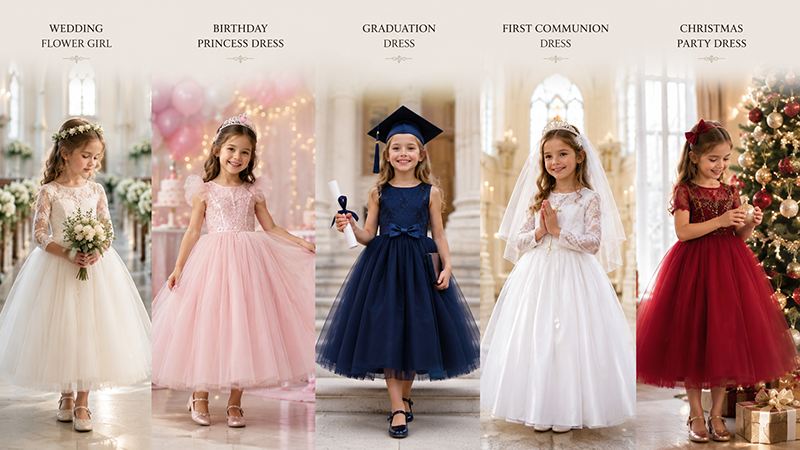
Girls’ formal dresses are worn for many occasions beyond weddings. Throughout the year, families purchase occasion wear for celebrations, school events, religious ceremonies, and seasonal holidays, creating demand across different seasons rather than during a single selling period. For retailers, understanding these occasions makes it easier to build collections that appeal to a wider range of customers.
Weddings and Family Celebrations
Weddings remain one of the most important occasions for girls’ formal dresses. Whether as a flower girl, junior bridesmaid, or wedding guest, children are often expected to wear elegant outfits that complement the ceremony. Beyond weddings, birthday parties, family gatherings, anniversary celebrations, and professional photo sessions also create steady demand, making these events an important part of any occasion wear collection.
School, Religious, and Seasonal Events
Formal dresses are also commonly chosen for school graduations, music recitals, award ceremonies, baptisms, First Communion celebrations, and church events. These occasions typically favor elegant yet age-appropriate designs, with white, ivory, lace, and satin remaining popular choices for many religious ceremonies.
Seasonal celebrations such as Christmas, Easter, and Eid provide another important sales opportunity. Families often purchase new dresses for holiday parties and festive gatherings, while pageants, dance performances, and stage events also encourage demand for more distinctive formal styles.
Based on our experience supplying wholesalers in North America, Europe, the Middle East, and Latin America, retailers generally achieve stronger year-round sales by offering dresses for multiple occasions instead of focusing only on weddings. A balanced collection not only attracts a broader customer base but also helps maintain steady sales across different seasons.
How to Choose the Right Formal Dress for Different Occasions
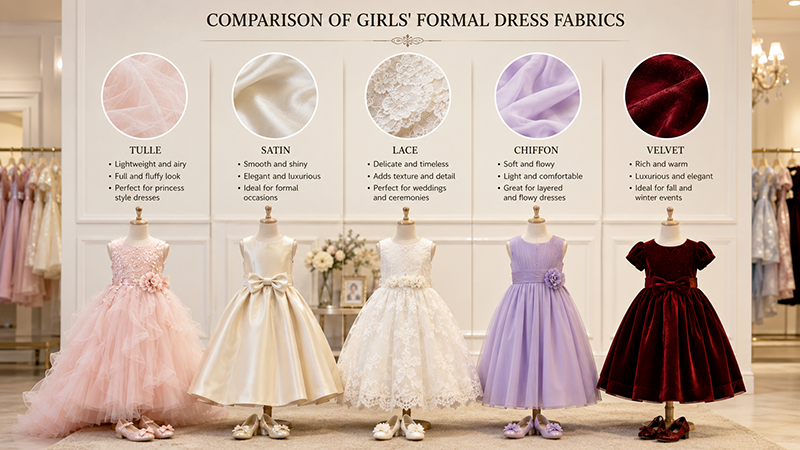
Choosing the right girls’ formal dress starts with understanding the occasion. A style that looks perfect at a wedding may not be the best choice for a graduation ceremony or a birthday party. Retailers who match their collections to different events are more likely to meet customer expectations and increase customer satisfaction.
The level of formality should always come first. Weddings and religious ceremonies usually require classic designs with elegant details, while birthday parties often allow for brighter colors and more playful silhouettes. School events and family celebrations generally fall between these two, with parents preferring dresses that look polished without being overly elaborate.
Comfort is equally important, especially for younger children. Soft linings, lightweight fabrics, and well-designed silhouettes help children move freely during ceremonies, parties, or performances. A beautiful dress is more likely to receive positive feedback when it combines an elegant appearance with practical wearability.
Season also influences buying decisions. Lightweight fabrics such as tulle, chiffon, and organza remain popular during spring and summer, while satin and velvet are better suited to cooler months and holiday collections. Retailers that adjust their fabric selection to seasonal demand can usually offer more relevant products throughout the year.
The table below provides a quick reference when selecting styles for different occasions.
| Occasion | Best Style | Key Buying Focus |
|---|---|---|
| Wedding | Tulle Flower Girl Dress | Elegant appearance |
| Birthday Party | Princess or Bow Dress | Fun and comfortable |
| Graduation | Simple A-line Dress | Lightweight and easy to wear |
| Religious Ceremony | Classic Satin or Lace Dress | Modest and timeless |
| Christmas & Holidays | Velvet Party Dress | Warmth and festive look |
Rather than offering the same dress for every occasion, retailers can build stronger collections by choosing styles that reflect the purpose of each event. This approach not only improves product variety but also helps customers find dresses that better suit their needs.
How Retailers Can Build a Best-Selling Girls’ Formal Dress Collection
Successful retailers rarely rely on a single type of formal dress. Instead, they build collections that cover multiple occasions throughout the year, allowing them to attract different customer groups while reducing seasonal sales fluctuations.
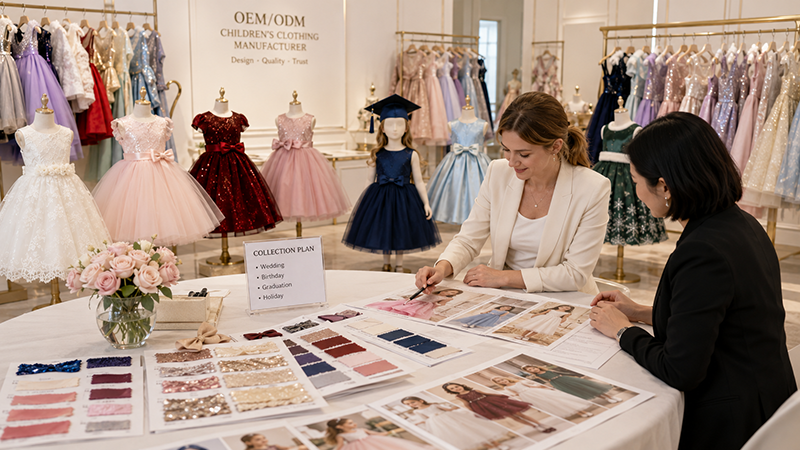
A practical approach is to organize collections around the occasions that drive demand. Wedding styles often perform well during the spring and summer wedding season, while graduation dresses become more popular before school ceremonies. As the year progresses, holiday collections featuring velvet, satin, and festive colors help maintain sales during the final quarter. Planning products around these seasonal buying patterns creates a more balanced inventory.
Regional preferences are equally important. Based on our experience supplying wholesalers and children’s fashion brands worldwide, buyers in North America and Europe often prefer lightweight tulle dresses in soft, elegant colors. In contrast, customers in the Middle East generally favor satin fabrics, embroidery, and more luxurious finishes, while princess silhouettes and decorative details continue to perform well in many Latin American markets.
Global demand for children’s occasion wear continues to evolve across different markets. Market research from Statista can help retailers better understand long-term apparel trends.
We’ve also found that retailers offering dresses for several occasions tend to generate more repeat business than those focusing only on wedding collections. Customers appreciate having more choices throughout the year, and retailers benefit from steadier sales instead of relying on a single peak season.
A successful girls’ formal dress collection isn’t built around one event—it grows by meeting customer needs across different occasions, seasons, and markets. Combining thoughtful product planning with regional market insights helps retailers create collections that remain competitive while supporting long-term business growth.
Frequently Asked Questions
What is the difference between a girls’ party dress and a formal dress?
A girls’ party dress is typically designed for fun and festive occasions such as birthday parties, while a formal dress is intended for events that require a more elegant appearance, including weddings, graduations, religious ceremonies, and holiday celebrations. Formal dresses often feature premium fabrics, refined details, and more sophisticated styling.
At what age do girls start wearing formal dresses?
There is no specific age for wearing a formal dress. Many girls first wear one as toddlers for family weddings or birthday celebrations, while others begin wearing formal styles for graduations, religious ceremonies, or holiday events. The right choice depends more on the occasion than on age.
Which colors are most popular for girls’ formal dresses?
Color preferences vary by occasion and market. Soft shades such as ivory, blush pink, champagne, and lavender remain popular for weddings and formal ceremonies, while burgundy, emerald green, and deep red are common choices for Christmas and holiday collections. Retailers should also consider regional preferences when selecting seasonal color palettes.
When should retailers order girls’ formal dresses?
Retailers should ideally place orders three to six months before the peak selling season. Early planning provides more time for sampling, production, customization, and shipping, while also giving buyers access to a wider selection of styles before demand increases.
Can one formal dress be worn for different occasions?
Yes. Many classic formal dresses are versatile enough to suit several occasions with only minor styling changes. For example, a satin or tulle dress can be worn for a birthday party, graduation, family celebration, or holiday event by pairing it with different accessories. For retailers, offering versatile styles can appeal to a broader customer base and improve inventory efficiency.
Conclusion
Girls’ formal dresses are worn for many occasions beyond weddings, from birthdays and graduations to religious ceremonies and holiday celebrations. For retailers, understanding these different needs makes it easier to build balanced collections that appeal to a wider range of customers. By planning around occasions, seasons, and regional preferences, businesses can create stronger collections and support more consistent sales throughout the year.
Looking for a Reliable Girls’ Formal Dress Manufacturer?
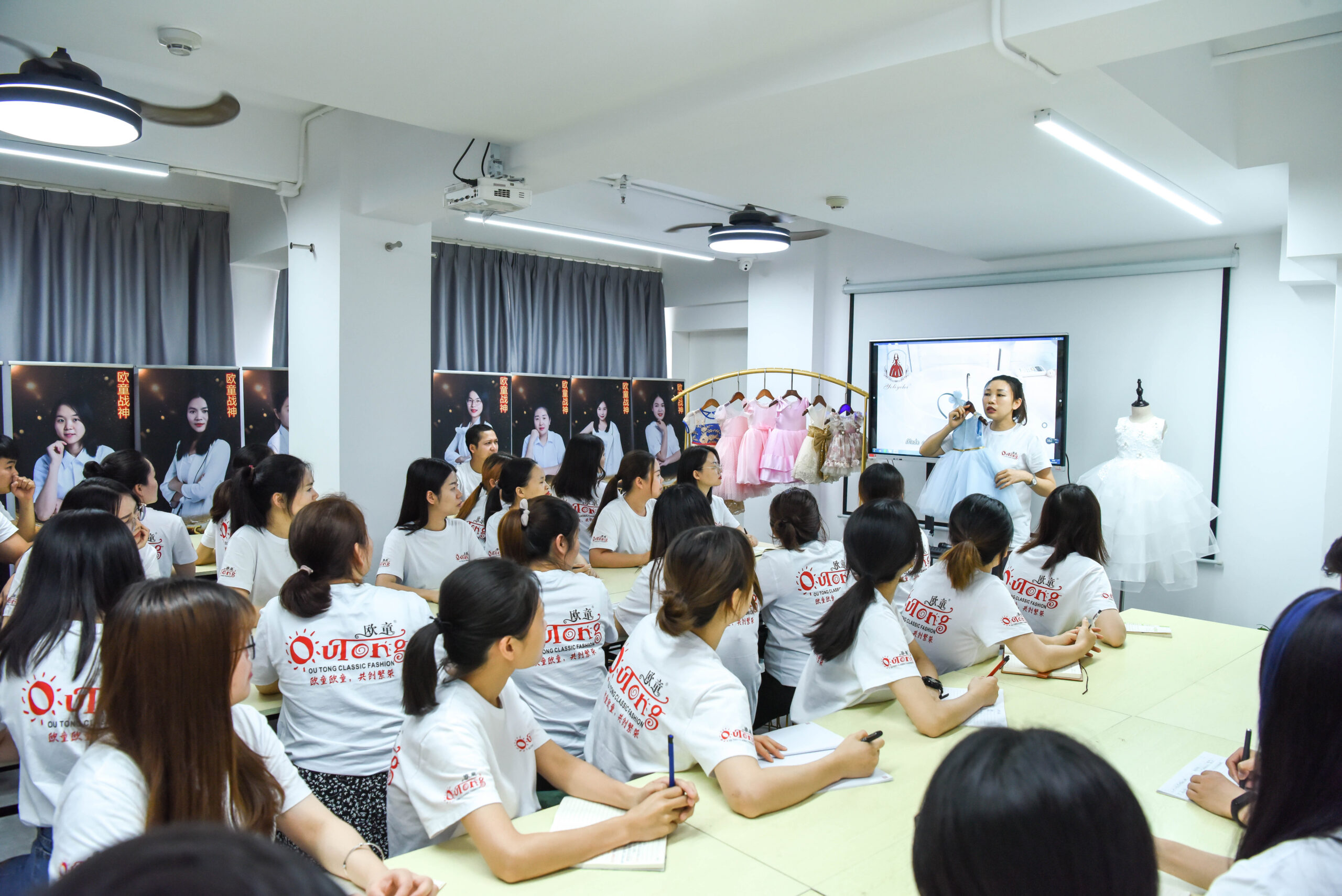
At Outong, we help wholesalers, retailers, boutiques, and children’s fashion brands develop high-quality girls’ formal dress collections through OEM & ODM services, custom branding, and reliable manufacturing support.
Contact us to request our latest catalog or discuss a collection tailored to your market.