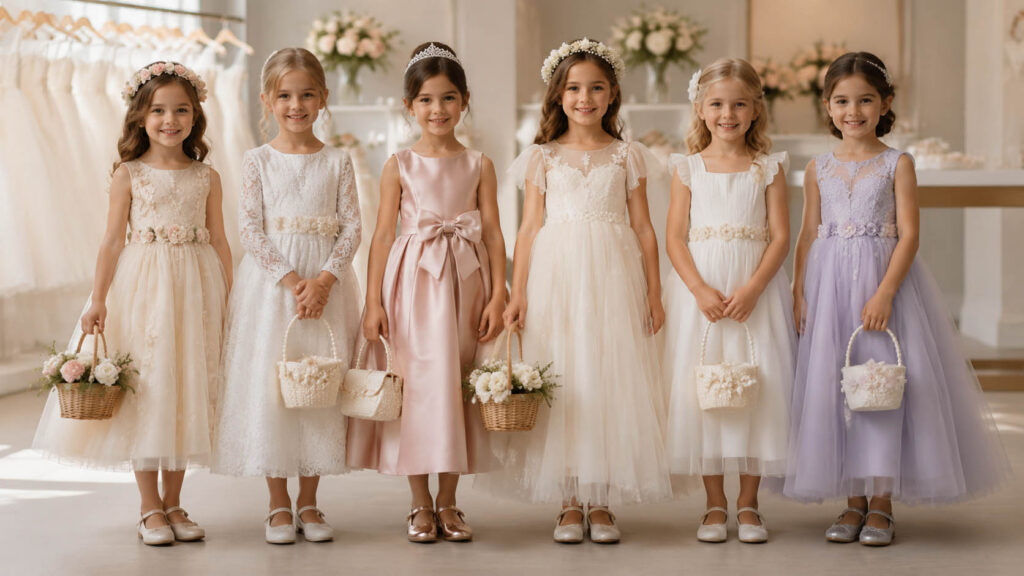
A flower girl’s outfit should look beautiful while still allowing children to feel comfortable throughout the wedding day. Besides the dress itself, shoes, accessories, and seasonal layers also play an important role in completing the overall look.
For wedding boutiques, retailers, and wholesalers, knowing what customers expect from flower girl outfits can help create a more practical product selection. Preferences often vary by market, with different demands for fabrics, colors, dress styles, and wedding themes.
In this guide, we will explore the key elements of a flower girl outfit and share sourcing experience from over 24 years of children’s formalwear manufacturing.
The Essential Flower Girl Outfit
When selecting flower girl collections, buyers should look beyond the dress itself. A well-planned flower girl outfit usually includes matching shoes, accessories, and seasonal layers that complete the wedding look while keeping children comfortable throughout the event. According to wedding planning guidance from The Knot, flower girl attire is typically chosen to complement the overall wedding style, including the ceremony theme, color palette, and level of formality.
For wedding boutiques, retailers, and wholesalers, offering coordinated outfit options helps create a more complete product selection. Many customers prefer styles that are easy to match with different wedding themes, especially when purchasing for formal events where every detail needs to work together.
| Outfit Element | Importance for Flower Girls |
|---|---|
| Flower Girl Dress | Creates the main visual style and matches the wedding theme |
| Shoes | Should provide comfort for walking and standing during ceremonies |
| Hair Accessories | Adds finishing details such as elegance or seasonal style |
| Flower Basket | A traditional accessory for many wedding ceremonies |
| Cardigan or Shawl | Provides warmth for outdoor or cooler-season weddings |
| Tights or Socks | Helps improve comfort in colder weather |
For wholesale buyers, each element should also be considered from a product planning perspective. For example, a simple tulle flower girl dress can be adapted to different wedding themes by changing accessories, while heavily decorated designs may have fewer opportunities for reuse. Choosing versatile styles allows retailers to serve more customers without creating excessive inventory complexity.
Retailers can also expand their occasion wear collections by combining flower girl styles with related categories such as girls’ formal dresses, providing customers with more options for weddings, birthdays, and other special events.
How to Choose the Right Flower Girl Dress
When selecting flower girl dresses, buyers need to consider more than design appearance. Wedding themes, seasonal demand, fabric choices, and regional preferences all affect which styles are suitable for different markets. A strong collection usually includes different styles instead of relying on a single design direction.
Consider the Wedding Theme
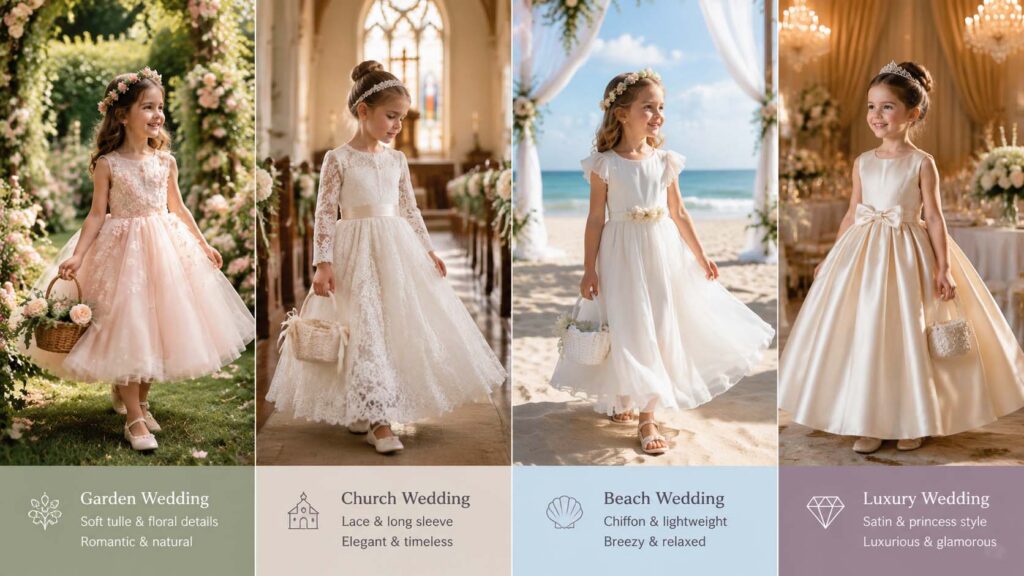
The wedding style often determines the most suitable dress design. Garden weddings usually favor soft tulle skirts, floral details, and light colors, while church weddings often require more classic styles with lace, sleeves, or elegant silhouettes.
For beach weddings, lightweight and breathable fabrics are preferred because children need more freedom to move in warm weather. Luxury ballroom weddings, on the other hand, often create demand for satin fabrics, embroidery, pearl details, and more formal princess-style designs.
For retailers, understanding these differences helps create a more practical product range. Buyers can also explore our guide on how to choose flower girl dresses for different wedding themes for more ideas on matching styles with different ceremony settings.
Choose Comfortable Fabrics and Practical Designs
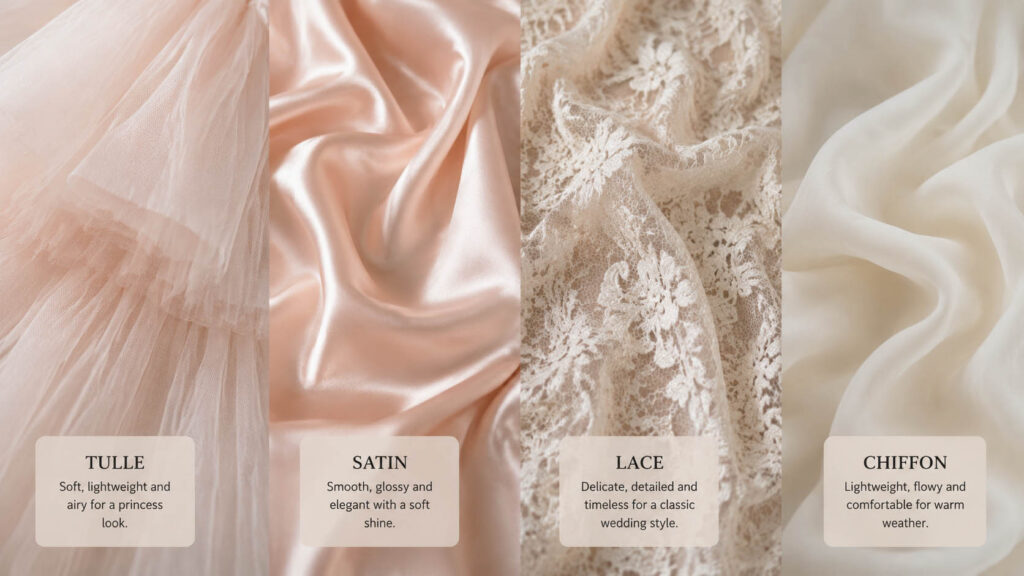
Fabric selection directly affects both the appearance and wearing experience of a flower girl dress. Popular choices include soft tulle for lightweight princess styles, satin for elegant formal looks, and lace or chiffon for classic and outdoor wedding designs.
From our experience with children’s formalwear manufacturing, soft tulle combined with lightweight lining is often preferred over stiff multi-layer constructions. This approach keeps the dress shape while allowing children to move more comfortably during long wedding events.
For wholesale buyers, these small construction details can influence customer feedback and repeat orders. Working with an experienced supplier also helps optimize fabric selection, sizing, and production details through OEM and ODM children’s clothing manufacturing support.
Matching Shoes and Accessories
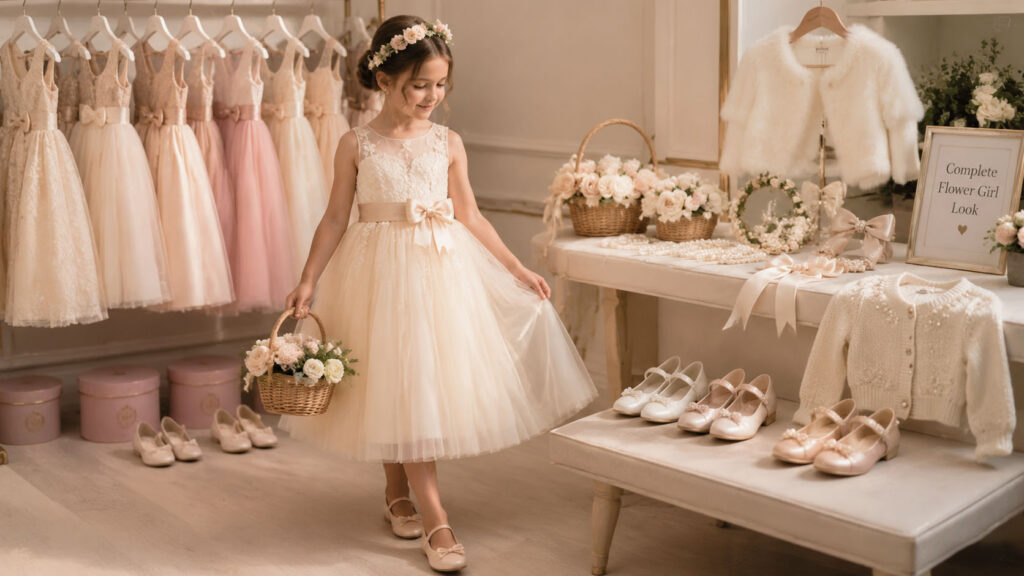
A flower girl outfit is completed by details such as shoes, hair accessories, and seasonal layers. These elements can enhance the wedding style while improving comfort during the ceremony.
For wedding boutiques, retailers, and wholesalers, offering coordinated accessories helps create a more complete flower girl collection. Soft ballet flats, Mary Jane shoes, floral crowns, satin bows, and pearl clips are popular choices because they allow customers to create a more complete wedding look.
Seasonal accessories are also important when planning collections. Cardigans, boleros, or shawls can make lightweight dresses more suitable for cooler seasons, while buyers can combine these options with long-sleeve flower girl dresses to develop more flexible wedding collections.
Wedding platforms such as Brides also emphasize that flower girl outfits should coordinate with the overall wedding theme, including colors and ceremony style.
Choosing Flower Girl Outfits for Different Wedding Styles
Different wedding settings often require different dress styles. Understanding these differences helps buyers plan collections that match local customer preferences and seasonal demand.
| Wedding Style | Recommended Flower Girl Outfit |
|---|---|
| Garden Wedding | Soft tulle dress, floral details, light colors, flower accessories |
| Church Wedding | Lace dress, long sleeves, classic silhouettes, elegant details |
| Beach Wedding | Lightweight chiffon or soft tulle styles with breathable fabrics |
| Rustic Wedding | Simple designs, natural colors, lace details, woven accessories |
| Luxury Ballroom Wedding | Satin dresses, embroidery, pearl embellishments, formal princess styles |
Wedding preferences can also vary by market. European and North American buyers often look for romantic designs such as layered tulle dresses, oversized bows, and floral details. In many Middle Eastern markets, buyers usually prefer more formal styles featuring embroidery, satin fabrics, long sleeves, and elegant embellishments.
Our Manufacturing Experience
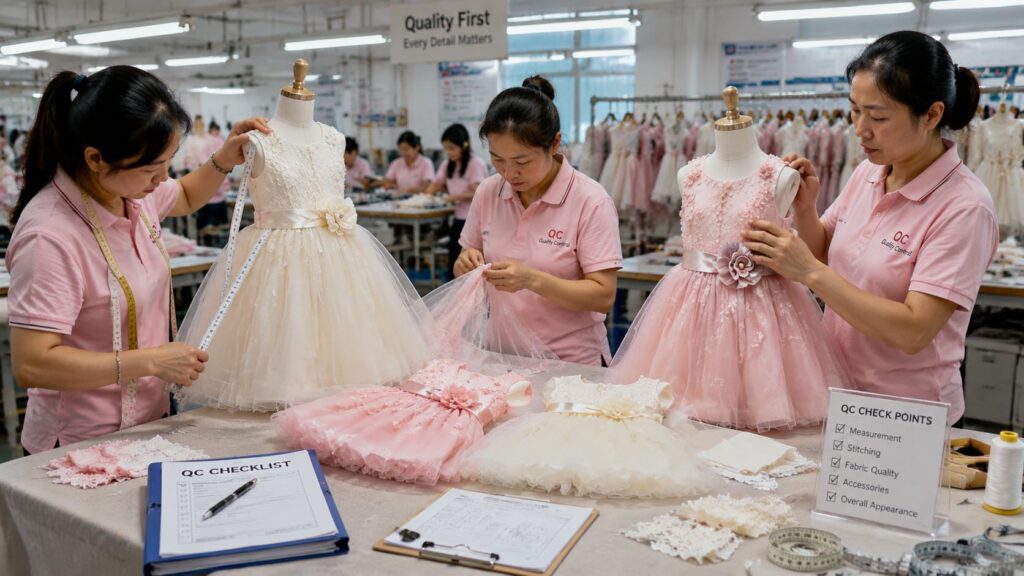
After working with global buyers for more than 24 years, we have found that offering variations of the same design is often more practical than developing completely different styles for every market. Adjusting sleeve options, fabric weight, or decoration details allows one collection to meet different seasonal and regional requirements.
This approach helps buyers control development costs while creating a more flexible product range. It is especially useful for bridal boutiques and wholesalers that need to balance trend appeal with inventory planning.
Buyers building a complete wedding collection can also explore related categories such as girls’ formal dresses to expand beyond flower girl styles and serve more occasion-wear customers.
Common Mistakes When Choosing Flower Girl Outfits
When selecting flower girl collections, buyers should consider more than appearance. Focusing only on trends, ignoring comfort, or choosing unsuitable sizing can lead to customer complaints and limited product performance.
While details such as oversized bows, layered tulle, and decorations can attract attention, a balanced collection should also include classic styles that fit different wedding themes. Buyers should also pay attention to fabric softness, lining quality, and size consistency to improve the wearing experience.
Seasonal demand is another important factor. Lightweight styles are often preferred for spring and summer weddings, while long-sleeve designs and warmer fabrics are suitable for cooler seasons. Retailers can also refer to our flower girl dress size guide when planning size ranges for different age groups.
Tips for Retailers Building a Flower Girl Collection
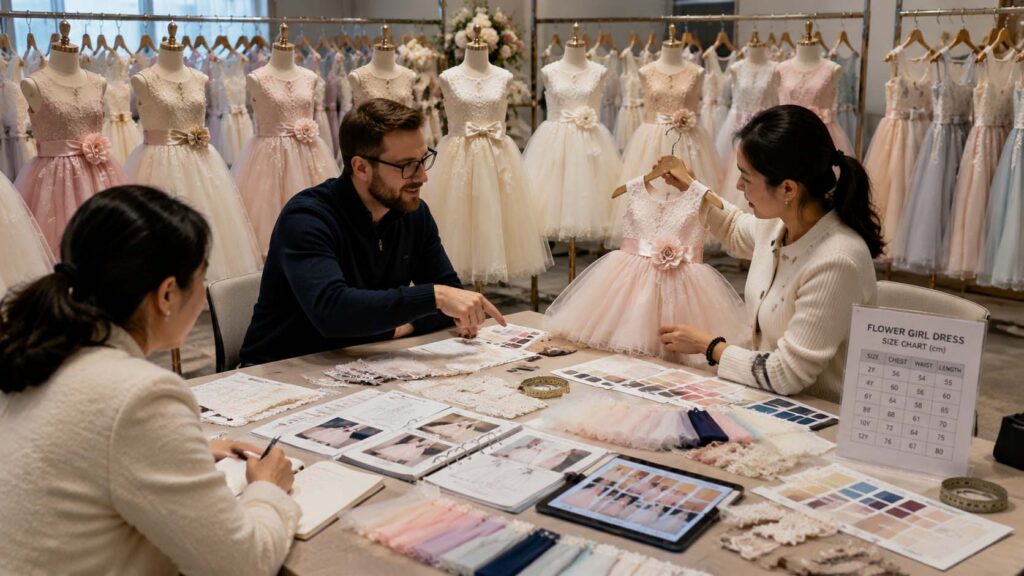
For wedding boutiques and wholesalers, a successful flower girl collection should balance style variety with inventory control. Instead of developing too many unrelated designs, buyers can focus on key categories such as classic lace dresses, soft tulle styles, satin formal designs, and seasonal wedding options.
Color selection is also important when planning collections. Popular shades such as ivory, champagne, and blush can work across different wedding themes, while flexible color options help retailers meet regional preferences without increasing inventory pressure.
Working with an experienced supplier can also simplify product development. Through OEM and ODM children’s clothing manufacturing support, buyers can customize fabrics, colors, sizing, and design details to create collections that better match their target markets.
FAQ
1. What should a flower girl wear to a wedding?
A flower girl usually wears a formal dress that matches the wedding theme and colors. Popular options include tulle, lace, and satin flower girl dresses. Comfort, season, and age should also be considered when selecting the right style.
2. Should a flower girl dress match the bride or bridesmaids?
A flower girl dress does not need to match exactly. Many weddings use similar colors, fabrics, or details to create a coordinated look while keeping the child’s outfit unique.
3. What fabrics are best for flower girl dresses?
The best fabric depends on the wedding style and season. Soft tulle is popular for princess styles, while satin, lace, and chiffon are commonly used for formal, classic, or outdoor weddings.
4. What accessories should a flower girl wear?
Common accessories include shoes, hair accessories, flower baskets, bows, and seasonal layers. Matching accessories with dresses can help retailers create more complete wedding collections.
5. How can retailers choose the right flower girl dress collection?
Retailers should consider wedding trends, seasonal demand, customer preferences, and size ranges. A balanced collection with classic and trendy styles can help meet different market needs.
6. Can flower girl dresses be customized for wholesale orders?
Yes. Manufacturers can customize fabrics, colors, sizes, embroidery, and branding. OEM and ODM children’s clothing manufacturing services allow buyers to develop collections based on their target markets.
Conclusion
Building a successful flower girl collection requires a balance between design appeal, comfort, and market demand. Buyers need to consider wedding themes, seasonal preferences, fabrics, and sizing to create styles that meet different customer expectations.
For wedding retailers, wholesalers, and brands, working with an experienced manufacturing partner can help develop versatile designs, improve product consistency, and adapt collections for different markets.
Looking to develop your next flower girl dress collection?
Contact us to discuss your designs, customization needs, and production requirements.