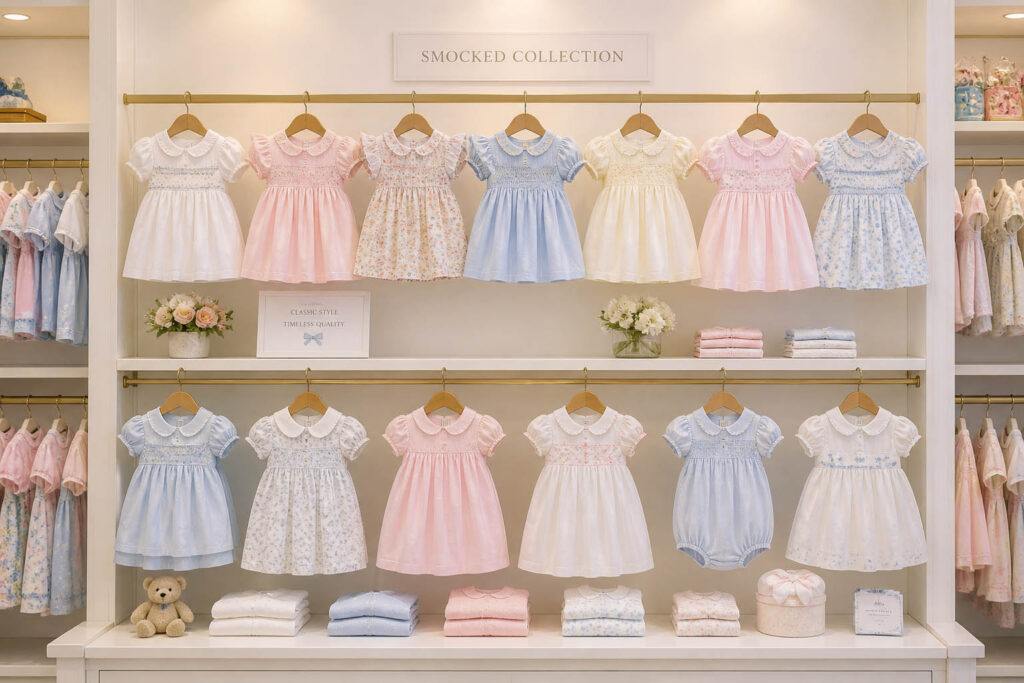
Smocked baby clothes have remained popular for generations — not just for their delicate look, but for the emotional value and premium craftsmanship they represent.
For wholesale buyers, boutique owners, and brands, smocked styles are more than classic designs — they are proven bestsellers in special occasion and boutique markets.
If you are planning your next babywear collection, understanding sizing is also critical. You can refer to this practical baby clothing size guide to ensure accurate product development.
What Are Smocked Baby Clothes?
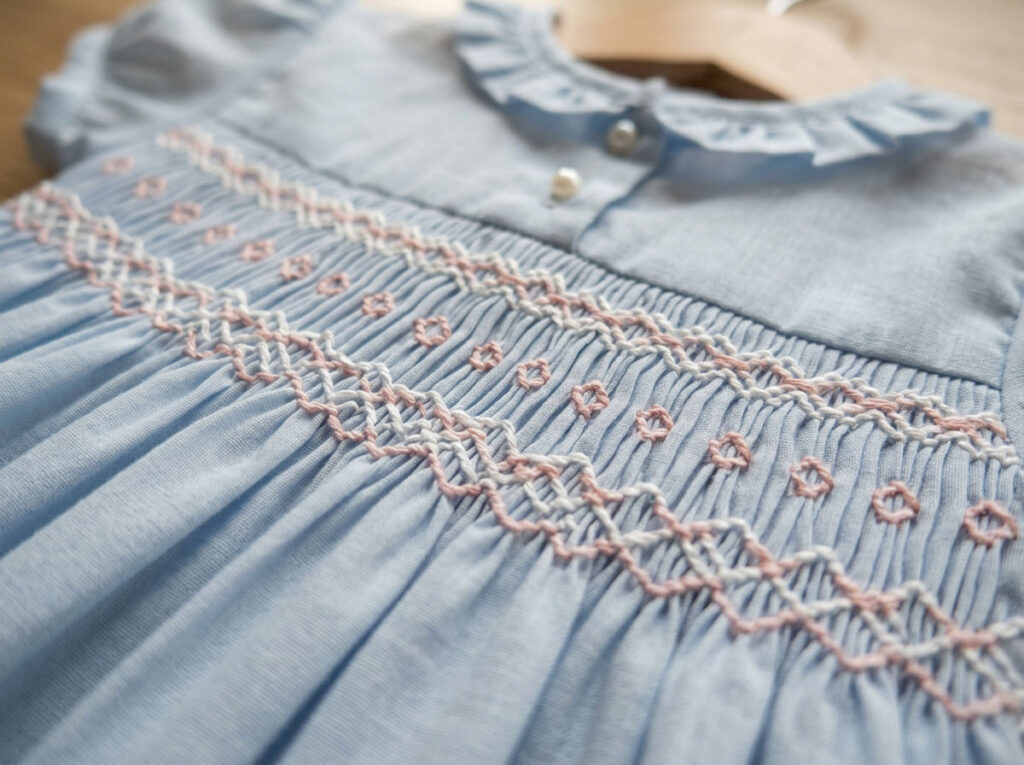
Smocking is a traditional embroidery technique that gathers fabric into pleats and secures it with decorative stitching.
This technique creates:
- Stretchable, comfortable fit
- Elegant handmade appearance
- Premium, boutique-level value
From a safety and comfort perspective, fabric choice matters. According to the American Academy of Pediatrics, soft and breathable fabrics like cotton are ideal for infants.
For more insights into fabric selection, you can also explore our detailed guide on the best fabrics for baby clothes.
Market Trend: Why Smocked Baby Clothes Are Gaining Popularity Again
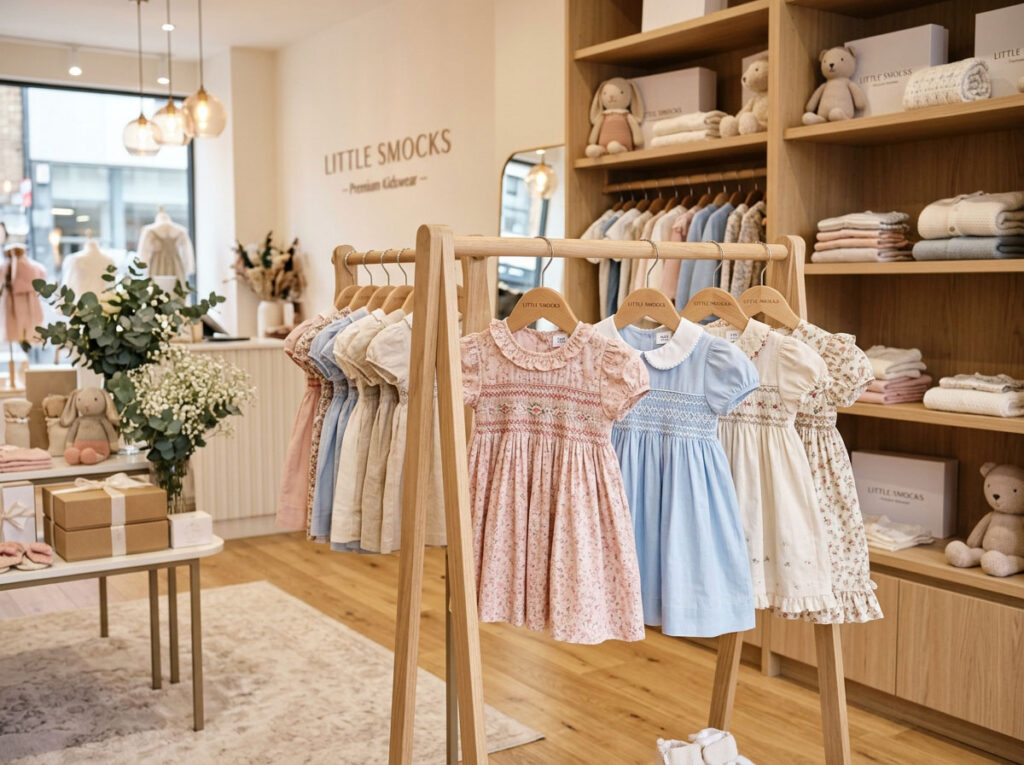
In recent years, smocked baby clothes have seen a strong comeback, especially in boutique and premium kidswear markets.
This trend is driven by several key factors:
- Return to classic styles: Consumers are shifting away from fast fashion toward timeless, heritage-inspired designs
- Growth of boutique retail: Independent stores prefer differentiated, high-value products
- Rising demand for premium kidswear: Parents are more willing to invest in quality and craftsmanship
According to insights from the global fashion industry, the demand for higher-quality, emotionally driven apparel continues to grow, particularly in niche and premium segments (source: McKinsey Fashion Industry Report).
For wholesale buyers, this means smocked styles are not just traditional — they are a strategic product category with strong long-term sales potential.
Why Smocked Styles Never Go Out of Fashion
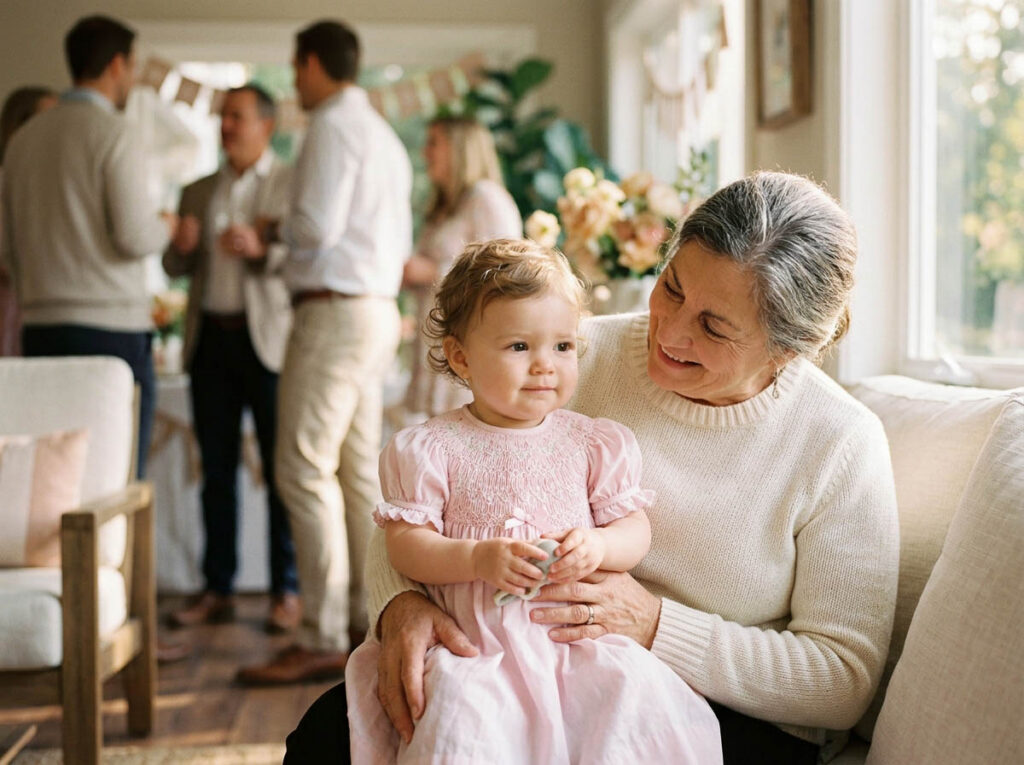
Unlike fast-fashion prints, smocked baby clothes are rooted in tradition and craftsmanship.
They are commonly associated with important cultural and family moments. According to BBC Religion, ceremonial clothing plays a meaningful role in many traditions.
This is why smocked styles are especially popular in:
- North America boutique markets
- European heritage brands
- Middle East premium segments
If you’re targeting this niche, understanding product positioning is key, similar to how we explain in our girls’ dress wholesale guide.
Best Occasions for Smocked Baby Clothes

Smocked designs perform best in high-value occasions, including:
- Baptism & christening outfits
- Birthday and holiday wear
- Family photos & special events
For example, many parents prefer traditional white garments for religious ceremonies, as explained in our why babies wear white for Baptism guide.
You can also explore a broader cultural background from the Vatican Catechism on baptism.
Smocked vs Printed Baby Clothes
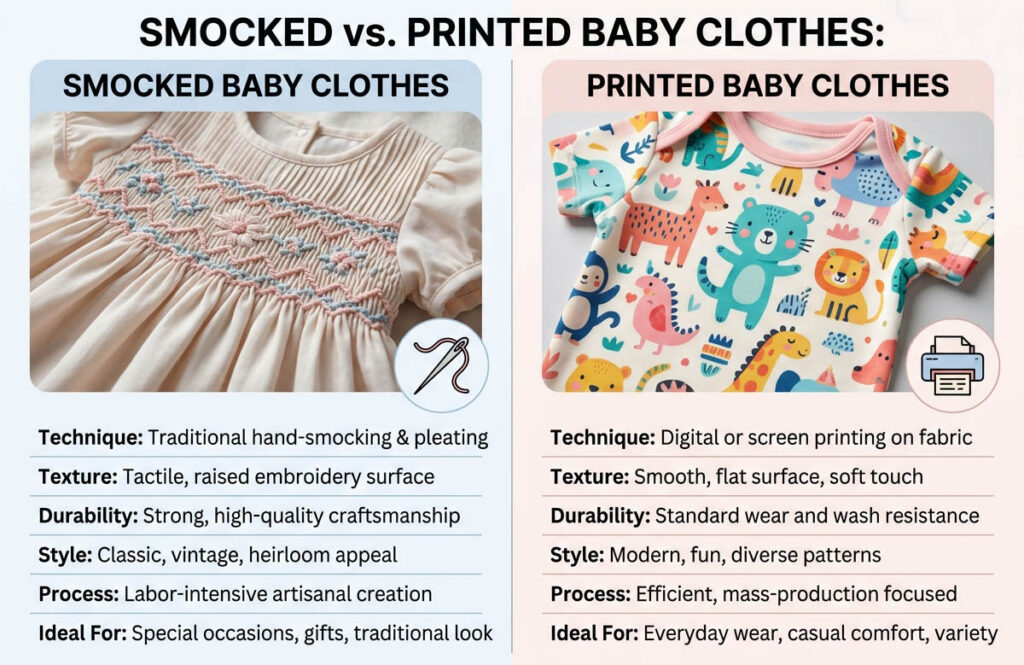
| Feature | Smocked Clothing | Printed Clothing |
|---|---|---|
| Visual appeal | Premium & textured | Flat & graphic |
| Price positioning | Higher margin | Lower cost |
| Target market | Boutique / gift | Mass market |
| Durability | Long-lasting | Print may fade |
For buyers building a balanced product line, combining different materials and styles is often the best strategy — similar to what we discuss in cotton vs polyester in kidswear.
What Buyers Should Check Before Ordering
For B2B buyers, quality differences in smocked clothing can be significant.
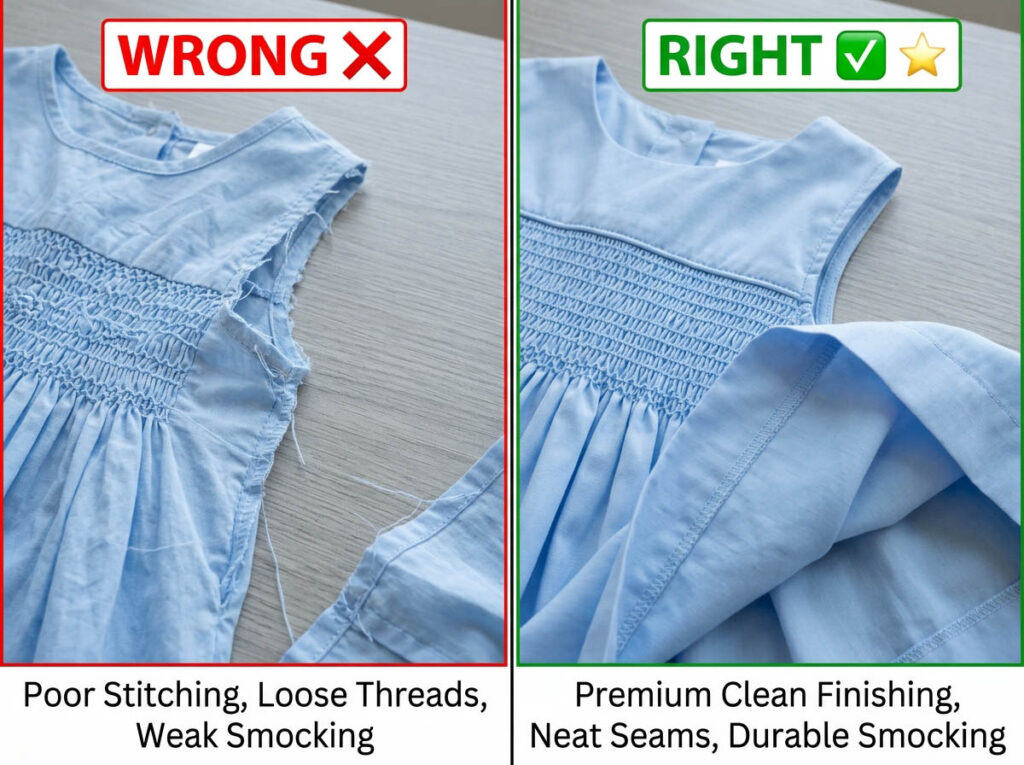
Key factors to evaluate:
- Stitch density and neatness
- Fabric quality
- Smocking technique
- Bulk consistency
Industry-wise, the global apparel manufacturing process is complex, as outlined by Britannica’s clothing industry overview.
You can also review general sourcing insights from Fibre2Fashion industry articles.
For a deeper understanding of our supplier capabilities, we also recommend visiting our About Us page.
How Smocked Baby Clothes Are Produced
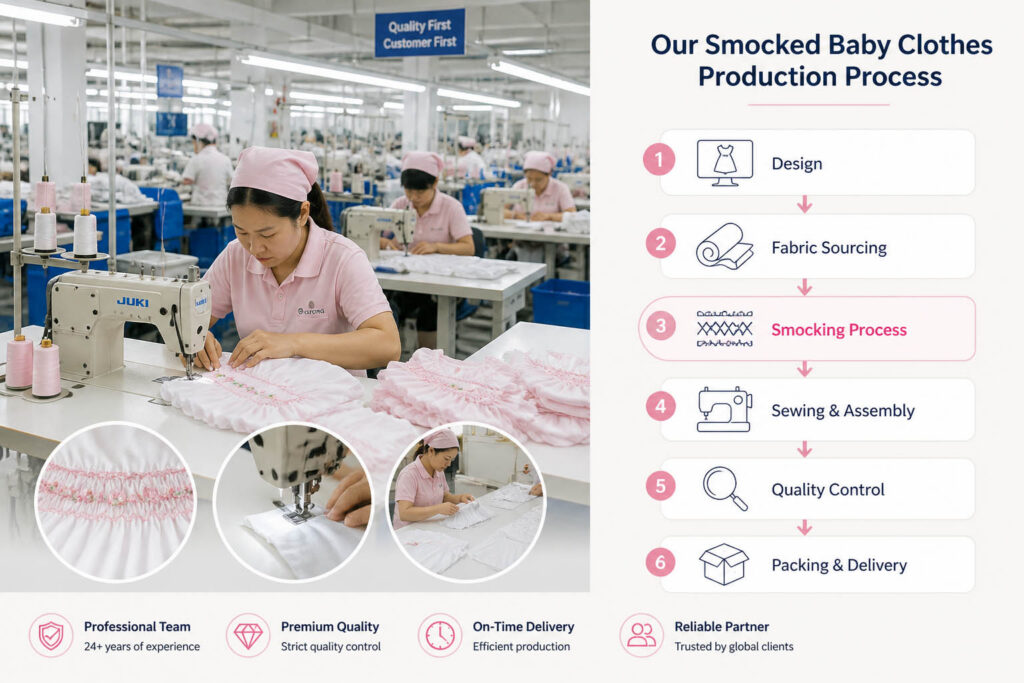
A typical production process includes:
- Design & development
- Fabric sourcing
- Smocking process
- Sewing & assembly
- Quality control
- Packing & delivery
If you want to understand production timelines in detail, you can read our kids’ clothing production timeline guide.
Smocking is the most critical step and directly impacts product value and production time.
Case Study: Boutique Brand Success
A U.S. boutique client sourced a smocked dress collection for the holiday season.
Challenges:
- Premium positioning
- Fast delivery
- Consistent quality
Solution:
- Custom design support
- Fabric optimization
- Strict quality control
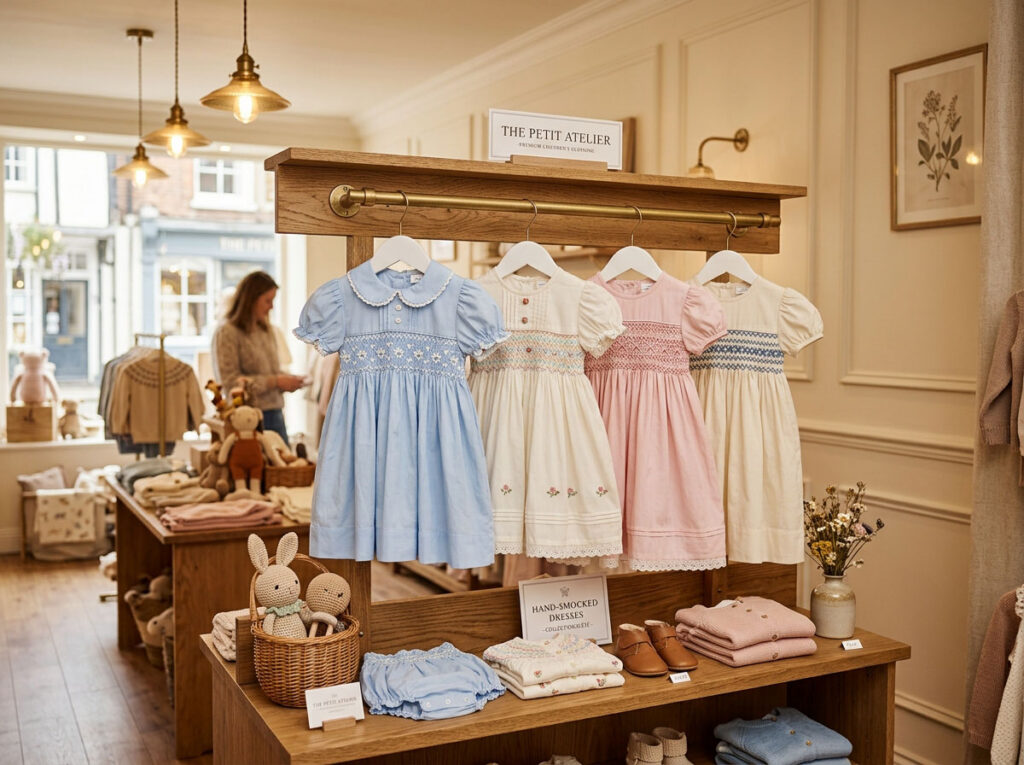
Result:
1. Sold out within 6 weeks
2. Repeat orders secured
This is similar to how we support clients across different categories, including baby clothing collections.
Why Choose Outong for Smocked Baby Clothes?
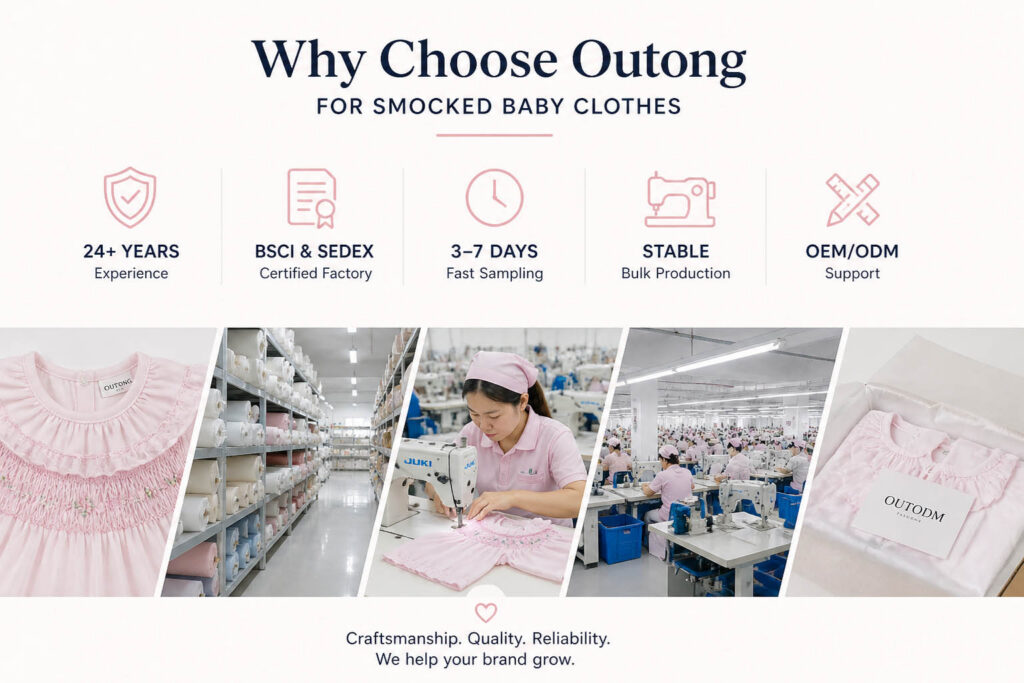
Choosing the right supplier is critical when developing smocked baby clothing — especially for buyers who need consistent quality, scalable production, and reliable delivery.
At Outong Fashion, we combine craftsmanship with manufacturing strength to support your business growth:
- 24+ years of experience in kidswear manufacturing, with deep expertise in boutique and special occasion clothing
- BSCI & Sedex certified factory, ensuring ethical production and reliable compliance for global markets
- Fast sampling (3–7 days), helping you quickly test new designs and respond to market trends
- Stable bulk production, with strict quality control at every stage
- Flexible OEM/ODM support, from custom designs to full collection development
Whether you are a boutique brand, wholesaler, or retail chain, we help you turn classic smocked styles into high-performing, scalable products.
Explore our baby clothing product range to evaluate styles, quality, and customization options for your business.
FAQ
1. What fabric is best for smocked baby clothes?
Cotton and cotton blends are the most popular choices due to comfort and safety.
2. Are smocked clothes suitable for bulk production?
Yes. With modern machinery, smocked clothing can be produced at scale while maintaining consistency.
3. Why are smocked baby clothes more expensive?
They require additional craftsmanship and detailed production processes.
4. Can you develop samples based on our design or reference images?
Yes. We support custom sample development from your designs, sketches, or reference images.
Simply send us your idea, and our team can help turn it into a real product with accurate details and fabric matching.
5. Do you offer free design support for buyers?
Yes. We have an experienced in-house design team that provides free design assistance for our clients.
Whether you need new collections, style improvements, or market-driven ideas, we can help you develop trend-ready products for your market.
Conclusion
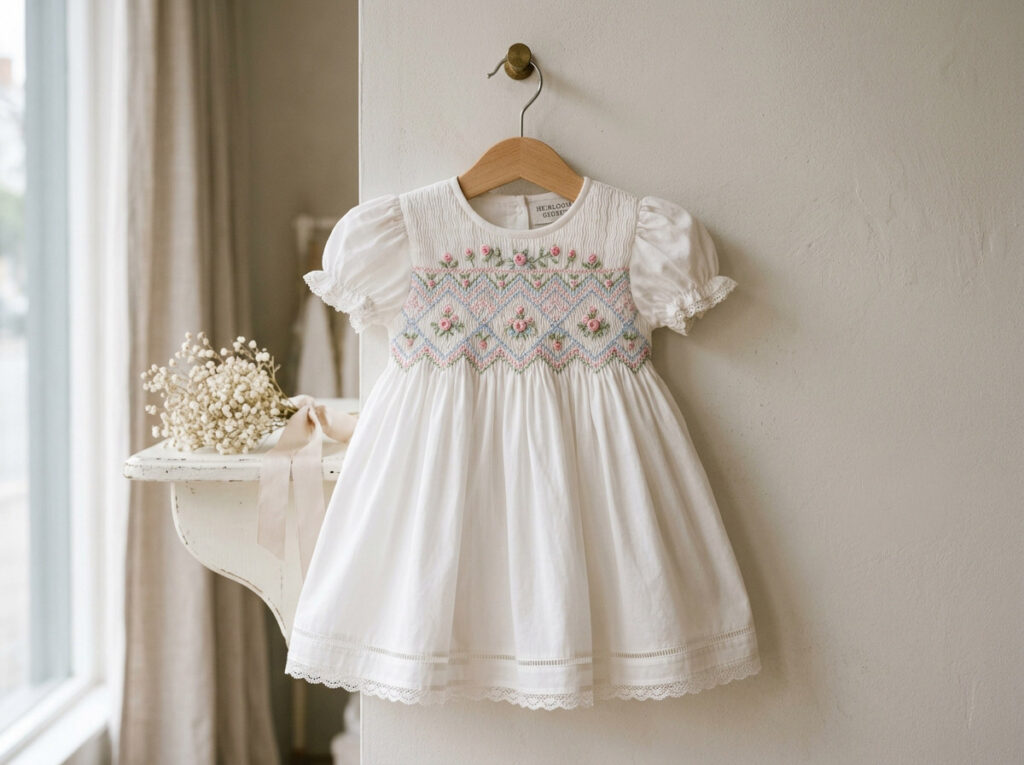
Smocked baby clothes are not just a classic — they are a high-margin, stable-demand category.
For buyers, working with the right manufacturer ensures:
- Better quality control
- Faster turnaround
- Scalable production
Looking to develop your own smocked baby clothing collection?
Contact us today to get the latest catalog and wholesale pricing.