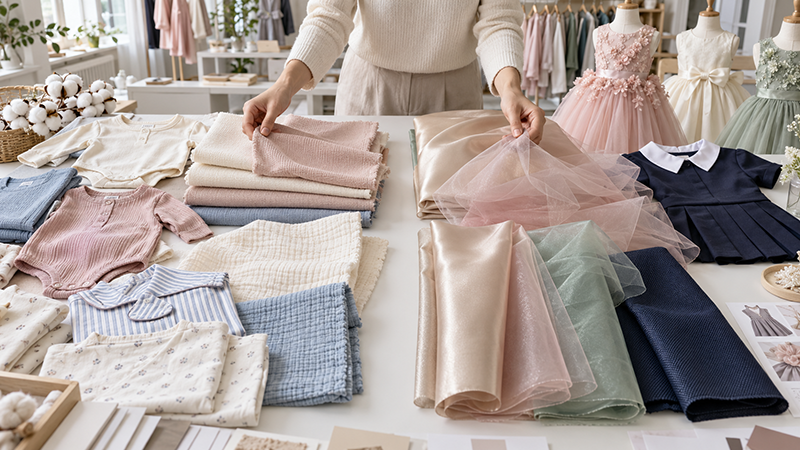
Cotton and polyester are both widely used in children’s clothing, but they perform differently. Cotton is usually preferred for softness, breathability and direct skin contact, while polyester offers better shape retention, faster drying and durability. For brands, wholesalers and retailers, the right choice depends on the garment, target market, season and price point.
This guide compares cotton vs polyester for kidswear from a practical sourcing perspective. We will also explain where blends work best and what buyers should check before approving fabric for bulk production.
Cotton vs Polyester: Quick Comparison
| Feature | Cotton | Polyester |
|---|---|---|
| Fiber type | Natural fiber | Synthetic fiber |
| Softness | Naturally soft | Depends on yarn and finish |
| Breathability | Generally high | Depends on fabric construction |
| Moisture behavior | Absorbs moisture | Absorbs less and dries faster |
| Wrinkle resistance | Lower | Higher |
| Shape retention | Moderate | Generally strong |
| Shrinkage risk | Usually higher | Usually lower |
| Color retention | Varies by dyeing process | Generally good |
| Best applications | Babywear, pajamas, basics | Dresses, uniforms, outer layers |
| Production cost | Often higher | Often more economical |
| Common blend | Cotton-polyester | Cotton-polyester |
Neither fiber is automatically better for every product. Fabric construction, weight, finishing and garment design can matter just as much as fiber content.
What Is Cotton Fabric?
Cotton is a natural fiber valued for its soft hand feel, breathability and moisture absorption. These qualities make it a common choice for products worn directly against a child’s skin, including rompers, bodysuits, T-shirts, underwear and pajamas.
According to CottonWorks, cotton’s natural breathability, absorbency and softness support comfort, while fabric testing can evaluate airflow, moisture handling, drying speed and durability. However, cotton fabrics can still vary considerably depending on yarn quality, knitting structure, fabric weight and finishing.
Advantages of cotton in kidswear
- Soft and comfortable against the skin
- Breathable for warm climates and daily wear
- Absorbs moisture effectively
- Suitable for printing, embroidery and garment washing
- Familiar and trusted by many consumers
- Available in jersey, rib, interlock, muslin and woven constructions
Limitations buyers should consider
Cotton may shrink if the fabric and finished garment are not properly controlled. Dark or bright colors can also show fading after repeated washing if the dyeing process is weak.
Pure cotton can wrinkle more easily than polyester and may take longer to dry. Buyers should therefore evaluate the actual fabric and sample instead of approving a garment based only on a “100% cotton” label.
What Is Polyester Fabric?
Polyester is a synthetic fiber commonly used in children’s party dresses, school uniforms, jackets, sportswear and decorative fabrics. It is valued for strength, dimensional stability, color performance and relatively easy care.
Not all polyester fabrics feel the same. Fine polyester jersey can feel light and smooth, while tulle, satin and organza are designed to provide structure or visual volume. The result depends on yarn size, weave or knit construction, finishing and garment application.
Advantages of polyester in kidswear
- Good shape and wrinkle retention
- Lower shrinkage risk than many cotton fabrics
- Dries relatively quickly
- Suitable for pleats, layered skirts and structured silhouettes
- Supports bright colors and decorative finishes
- Often cost-efficient for repeat bulk production
Limitations buyers should consider
Polyester generally absorbs less moisture than cotton. In close-fitting garments or warm climates, a poorly selected polyester fabric may feel less comfortable.
Static, pilling and surface shine can also vary between fabric qualities. For garments worn close to the skin, buyers should check the hand feel, breathability and inner seams rather than selecting fabric based only on price.
Which Is Better for Baby Clothes?
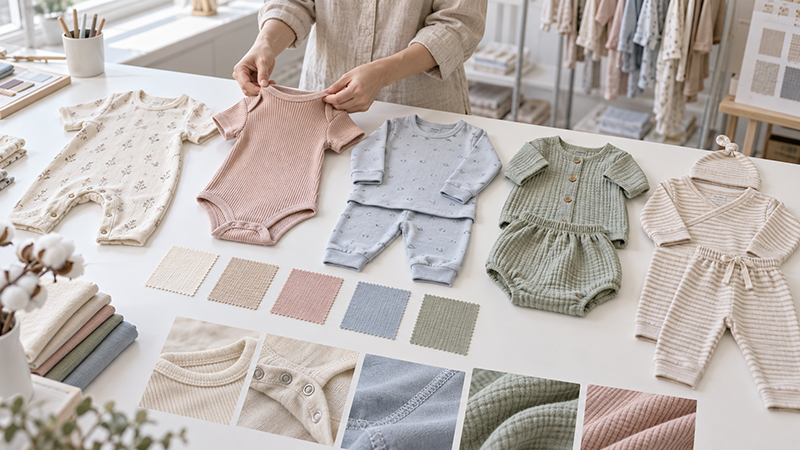
Cotton is usually the more practical starting point for babywear because softness and direct skin contact are major considerations. Cotton jersey, rib, interlock and muslin are commonly used for rompers, bodysuits, sleepwear and coordinated baby sets.
However, fiber content alone does not determine quality. A coarse or poorly finished cotton fabric may perform worse than a well-developed blend. Buyers sourcing baby clothing should also evaluate:
- Fabric weight and seasonal suitability
- Surface softness
- Shrinkage after washing
- Colorfastness
- Seam comfort
- Snap and zipper security
- Chemical testing requirements
- Size stability after repeated laundering
For baby products, buyers can also request fabrics or finished garments tested to relevant standards. OEKO-TEX STANDARD 100 covers textiles tested for harmful substances, from yarn and fabric to finished components.
Which Is Better for Kids’Pajamas?
Cotton and cotton-rich fabrics are popular for children’s pajamas because they feel soft and breathable. Cotton jersey and interlock are especially useful for everyday sleepwear, while flannel can be considered for colder seasons.
Polyester and blended fabrics may offer faster drying, improved shape retention and easier care. However, pajama requirements depend on the target country, garment construction and applicable children’s sleepwear regulations. Buyers should confirm compliance requirements before approving bulk production.
For a dedicated comparison of pajama materials, see our guide to the best fabrics for kids’ pajamas.
Which Is Better for Girls’Dresses?
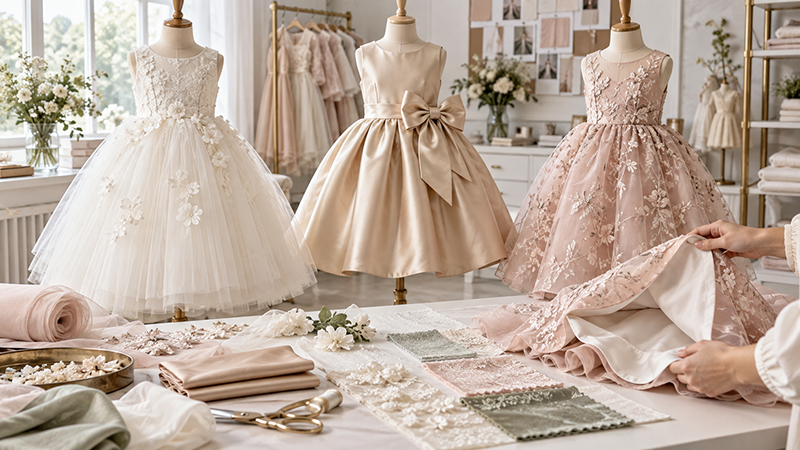
Polyester is often suitable for the outer layers of girls’ occasion dresses because it can create volume, hold pleats and support decorative construction. Tulle, organza, satin and many lace fabrics used in party dresses are made entirely or partly from polyester.
Comfort still matters, especially at the neckline, armholes, waist and skirt lining. For this reason, many well-made girls’ dresses use a structured polyester outer layer with a softer cotton or cotton-rich lining.
This construction can provide:
- A clean and structured appearance
- Better skirt volume
- Comfortable skin contact
- Reliable color consistency
- More manageable production costs
The exact combination should be selected according to the dress design, selling price and target market.
When Is a Cotton-Polyester Blend Better?
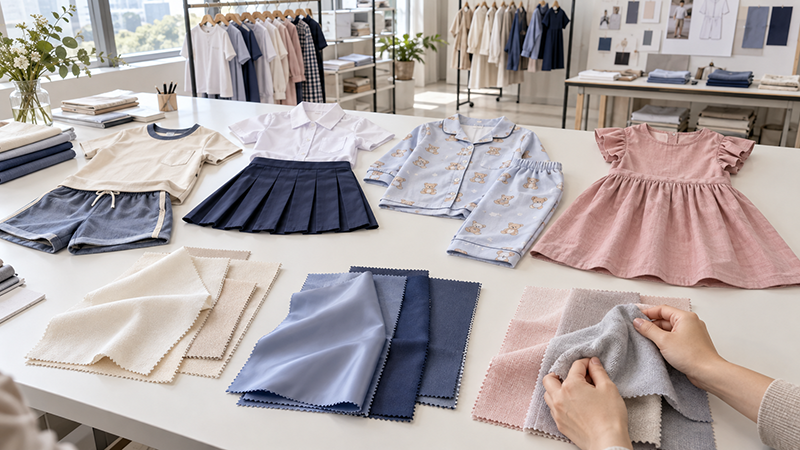
Cotton-polyester blends combine some of the comfort of cotton with the durability and shape stability of polyester. Common ratios include cotton-rich blends and balanced blends, but there is no single ratio that works for every product.
A cotton-rich blend may suit T-shirts, casual sets and pajamas that require softness with better dimensional stability. A higher polyester percentage may suit uniforms or frequently washed garments where durability and fast drying are priorities.
Before confirming a blend, buyers should ask for the exact fiber percentage. If products are sold in the United States, the Federal Trade Commission’s textile labeling guidance requires most textile products to disclose fiber content, country of origin and the responsible manufacturer or marketer.
Best Fabric by Kidswear Category
| Product category | Recommended starting point | Main reason |
|---|---|---|
| Baby rompers | Cotton jersey or interlock | Softness and skin comfort |
| Baby gift sets | Cotton or cotton-rich fabrics | Comfort and coordinated presentation |
| Kids’ pajamas | Cotton, cotton blends or seasonal fabrics | Breathability and practical care |
| Girls’ party dresses | Polyester outer layer with soft lining | Structure and decorative performance |
| Flower girl dresses | Satin, tulle or lace with comfortable lining | Appearance and wearability |
| School uniforms | Cotton-polyester blends | Durability and easier care |
| Casual dresses | Cotton or cotton-rich woven fabric | Comfort and natural appearance |
| Jackets and outerwear | Polyester or blended fabrics | Strength and weather performance |
These are starting points rather than fixed rules. Buyers should approve fabric based on the final garment design and actual sample performance.
What Buyers Should Test Before Bulk Production
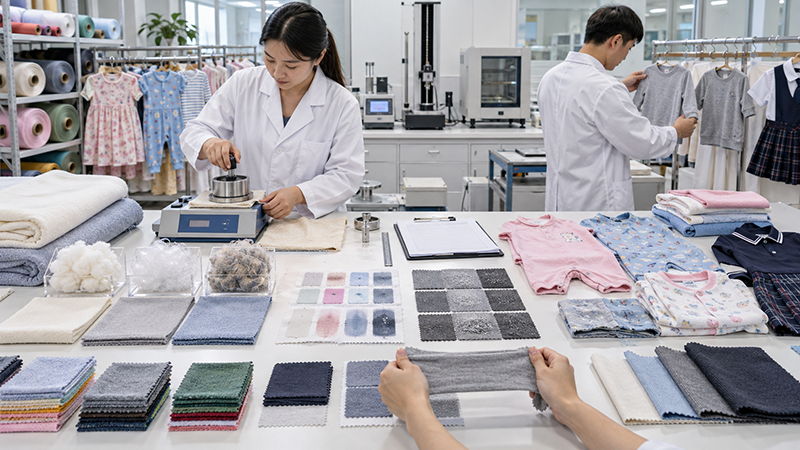
A fabric may look good in a swatch but behave differently after cutting, sewing and washing. For bulk kidswear orders, buyers should approve both the fabric and a complete garment sample.
1. Fiber content
Confirm the stated cotton and polyester percentages. The composition on the label, specification sheet and test report should be consistent.
2. Fabric weight
Check GSM against the approved specification. Fabric that is too light may appear transparent or lose structure, while fabric that is too heavy may affect comfort and cost.
3. Shrinkage and dimensional stability
Wash the sample according to its intended care instructions. Measure garment length, chest width, sleeve length and other key points before and after washing.
4. Colorfastness
Check whether color transfers during washing, rubbing or perspiration testing. This is especially important for dark colors, bright prints and garments combining white and colored fabrics.
5. Pilling and abrasion
Evaluate the fabric surface after wear and washing. Pilling can reduce the perceived quality of pajamas, casualwear and knitted sets.
6. Hand feel and skin-contact areas
Inspect necklines, armholes, waist seams, labels and linings. Even an attractive fabric can create complaints if the finished garment feels rough or stiff.
7. Bulk consistency
Compare production fabric with the approved sample for color, weight, stretch and surface appearance. Shade variation should be controlled before cutting.
How Outong Helps Buyers Select Kidswear Fabrics
With more than 24 years of children’s clothing manufacturing experience, Outong supports brands, wholesalers and retailers from fabric selection through sampling and bulk production.
During product development, our team reviews the garment’s intended use, season, target price and market requirements. We can help compare fabric options, develop samples and check measurements, workmanship and overall appearance before bulk production.
Our main product lines include girls’ dresses, boys’ formalwear, baby clothing and children’s pajamas. OEM and ODM support is available for buyers developing private-label collections.
Frequently Asked Questions
Is cotton always better than polyester for children?
No. Cotton is often preferred for softness and breathability, while polyester may perform better when durability, shape retention or decorative structure is required. The best choice depends on the garment.
Is polyester suitable for children’s clothing?
Yes, polyester is widely used in children’s apparel. Buyers should select the appropriate fabric construction, lining and finish and confirm that the finished product meets the requirements of the destination market.
Which fabric is better for baby clothes?
Cotton and cotton-rich fabrics are common starting points for baby clothes because of their soft feel and breathability. Shrinkage, colorfastness, garment construction and chemical compliance should also be checked.
Does cotton shrink more than polyester?
Cotton generally has a higher shrinkage risk, although performance depends on fabric construction and finishing. A pre-production wash test should be completed before bulk approval.
Are cotton-polyester blends good for kidswear?
Yes. Blends can offer a useful balance of comfort, durability, dimensional stability and cost. Buyers should select the ratio according to the product rather than using one blend across the entire collection.
What fabric information should buyers request from a supplier?
Request the fiber composition, fabric weight, width, construction, color standard, shrinkage results, colorfastness information and relevant test reports. A finished sample should also be approved before bulk production.
Conclusion
The cotton vs polyester decision should be based on product use rather than a simple “natural versus synthetic” comparison. Cotton is often suitable for babywear, sleepwear and everyday basics, while polyester is valuable for structured dresses, uniforms and decorative outer layers. Blends can provide a practical balance when buyers need comfort, stability and controlled costs.
The most reliable approach is to test the actual fabric in a finished garment. Fiber content, GSM, shrinkage, colorfastness, pilling and lining quality should all be confirmed before bulk production.
Develop the Right Fabric Solution for Your Collection
Planning a babywear, kids’ pajama or girls’ dress collection?
Outong provides fabric selection, OEM/ODM development, 3–7 day sampling and bulk production support for brands, wholesalers and retailers. Contact our team to discuss your product, target market, quantity and fabric requirements.