
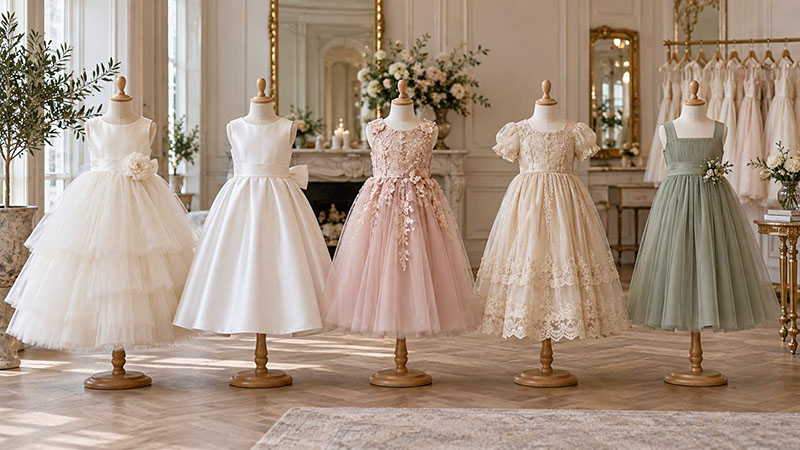
A flower girl dress should suit the wedding and feel comfortable throughout the day. The child may wear it for the ceremony, photographs, dinner, and hours of sitting or walking. A product photo cannot show whether the neckline feels rough or the skirt catches underfoot. This guide covers the styles, fabrics, and fit details that matter when choosing a dress or selecting a boutique collection.
1. Start with the Wedding Setting
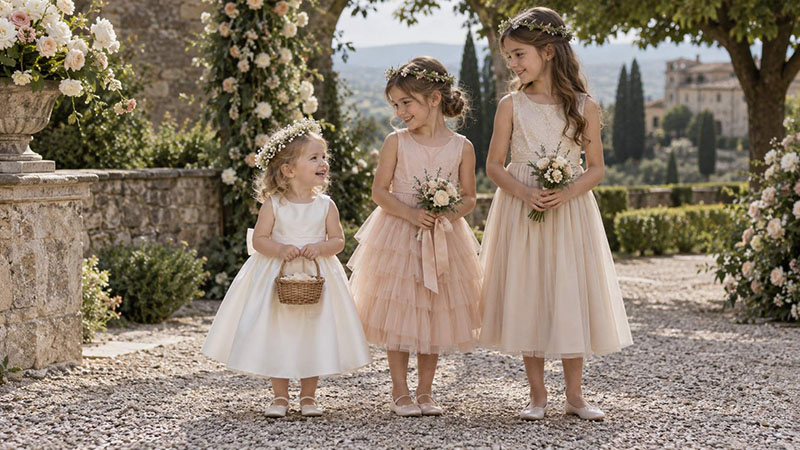
A formal indoor ceremony may suit a satin dress or a fuller skirt. For a garden wedding, a softer A-line shape or lighter layers may fit the setting better. If the ceremony is outdoors, consider the weather and the surface the child will walk on. A long skirt that works indoors may be harder to manage on grass.
Color offers another way to connect the dress to the wedding. White and ivory are familiar choices, but champagne, blush, and other soft shades can work with the couple’s palette. The flower girl’s outfit does not need to match the bride’s gown exactly. If the shade matters, compare the finished dress rather than relying on a color name or photograph; our ivory versus white flower girl dress guide explains why different fabrics can change how a color appears.
2. Compare Flower Girl Dress Styles
| Dress style | Overall look | Suitable wedding setting |
|---|---|---|
| Tulle or A-line | Soft or classic | Traditional and romantic weddings |
| Satin | Smooth and polished | Formal indoor ceremonies |
| Lace bodice | Detailed and delicate | Traditional weddings |
| Boho or vintage-inspired | Relaxed and textured | Garden and informal weddings |
| Tea-length or knee-length | Light and easy to move in | Weddings with younger flower girls or outdoor activities |
Classic Tulle and A-Line Dresses
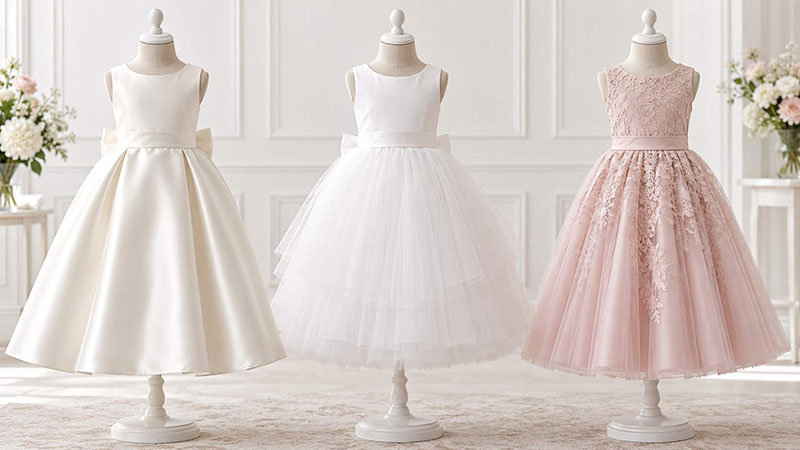
Tulle creates the soft, full skirt often associated with flower girl dresses. An A-line dress offers a gentler shape, fitting closer through the upper body before widening toward the hem. Both can suit a traditional wedding; the choice depends on how much volume the family wants and how easily the child can move in it.
Look beneath the visible tulle when reviewing a sample. The lining, waist seam, and number of skirt layers affect how the dress feels when the child sits or walks. A full skirt should hold its intended shape without getting in her way.
Satin Flower Girl Dresses
Satin gives a dress a smooth, polished appearance that can work well for a formal ceremony. It may be left simple or combined with bows, embroidery, lace, or a tulle overlay. Satin fabrics vary in weight and feel, so inspect the actual sample instead of deciding from the fabric name alone.
Check how the skirt hangs and whether the bodice remains comfortable when the child moves. If you are choosing between these two common looks, our satin versus tulle flower girl dress guide compares them in more detail.
Lace, Boho, and Vintage-Inspired Dresses
Lace can add detail to a bodice, sleeve, or skirt without covering the entire dress in decoration. Its placement matters as much as its appearance. Check the neckline and armholes, where a stiff edge or exposed seam may touch the child’s skin.
Boho and vintage-inspired designs often feature softer shapes, embroidery, or less structured skirts. They can suit garden weddings or ceremonies with a relaxed style. These labels describe a look rather than a standard fit, so check the shoulder, sleeve, and bodice measurements for each design.
Tea-Length and Knee-Length Dresses
A shorter skirt can make walking and sitting easier, particularly for a younger child. Knee-length styles offer a shorter look, while tea-length dresses fall farther down the leg. Neither label tells you exactly where the hem will sit on a particular child.
Ask for the finished shoulder-to-hem measurement and check the dress with the shoes planned for the wedding. If the family prefers a floor-length style, make sure the child can walk without stepping on the front of the skirt.
3. Look Beyond the Outer Fabric
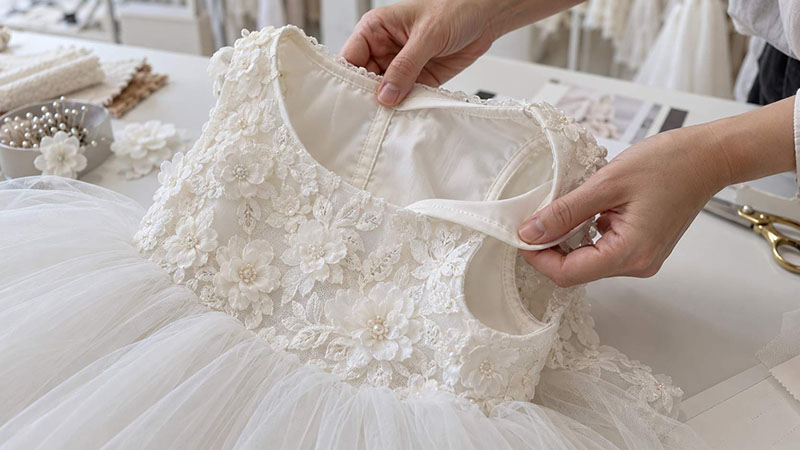
Tulle, satin, lace, and cotton serve different purposes in a dress. Tulle can add volume, satin gives a smooth outer surface, and lace adds pattern or texture. Cotton may be used in a simpler dress or as part of its lining. What matters to the child is how these materials feel once they are assembled into a finished garment.
When our team at Outong Fashion reviews a flower girl dress sample, we look beyond its appearance on a hanger. For designs with lace bodices, dimensional flowers, or layered tulle, we check the neckline, armholes, lining, and seams where the dress may touch the child’s skin. We also examine how the skirt moves when the child walks or sits.
If a detail needs adjustment, we work out whether the fabric, decoration placement, or construction is causing the issue. That lets us address the part affecting wear while keeping the intended design. Our guide to fabrics for Communion and flower girl dresses covers material choices in greater detail.
4. Check How the Dress Fits
Use Measurements for the Specific Style
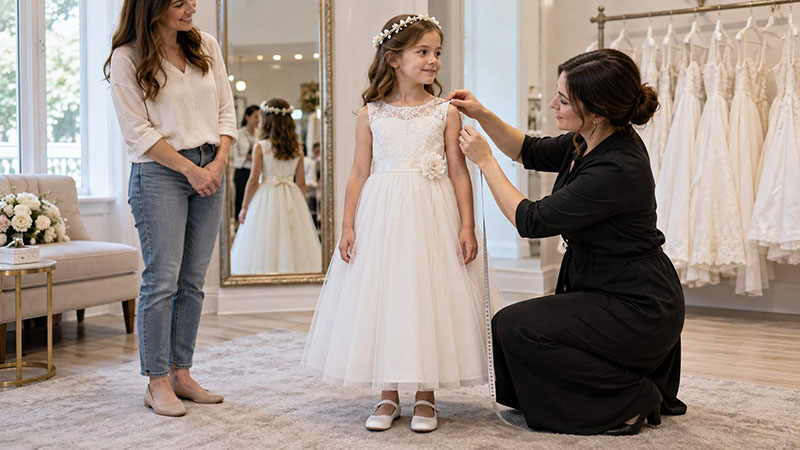
Start with the measurements required for the dress you have chosen. Chest and waist measurements are important for a fitted bodice, while length helps establish where the hem will fall. A dress with fitted sleeves may also require shoulder width or sleeve length.
Take body measurements with the tape resting against the child without pulling it tight. Then check whether the supplier’s chart shows body measurements or finished garment measurements. They are different figures, and an age label alone cannot tell you how a particular bodice will fit.
Review the Bodice Before the Hem
The dress should stay in place without pulling across the chest or restricting the shoulders. Ask the child to raise her arms, sit, and walk a few steps. If the neckline shifts, the armholes pull when she lifts her arms, or the waist seam sits noticeably away from its intended position, review the bodice measurements before changing the skirt length.
At Outong Fashion, chest and shoulder fit are among the first points we check on a sample. Two children of the same age may need different fits, particularly in a dress with a structured bodice. We compare the measurements for that style before deciding whether a different size or a pattern adjustment is needed.
If the upper body is too tight, changing the hem will not solve the problem. If the bodice fits and only the skirt is too long, length becomes the main detail to review. For detailed measuring steps, see our flower girl dress size guide.
Decide What to Do Between Sizes
First, identify where the size difference occurs. A slightly long skirt presents a different decision from a tight chest or restrictive shoulder. Check whether the dress has an adjustable sash and ask what alterations its construction will allow.
The wedding date matters when a dress is selected well in advance. Arrange another fit check nearer the event rather than assuming an early measurement will still be exact. There is no rule that every child between sizes should wear the larger one; use the specific dress chart and the fit of its bodice to guide the decision.
5. Plan Alterations and a Final Fitting
Some dresses can be hemmed or adjusted at the waist, but the available changes depend on their construction. A skirt with several decorated layers may take more work to shorten than a plain hem. Altering a lace bodice or embellished neckline may be more complicated still.
Have an alterations professional examine the actual garment before promising a customer that a particular change can be made. Once the dress arrives, check its fit and plan another fitting closer to the wedding. Use the intended shoes at the final check, and make sure the child can walk and sit without the hem catching or the bodice pulling.
6. Confirm the Sample Before Ordering for Your Boutique
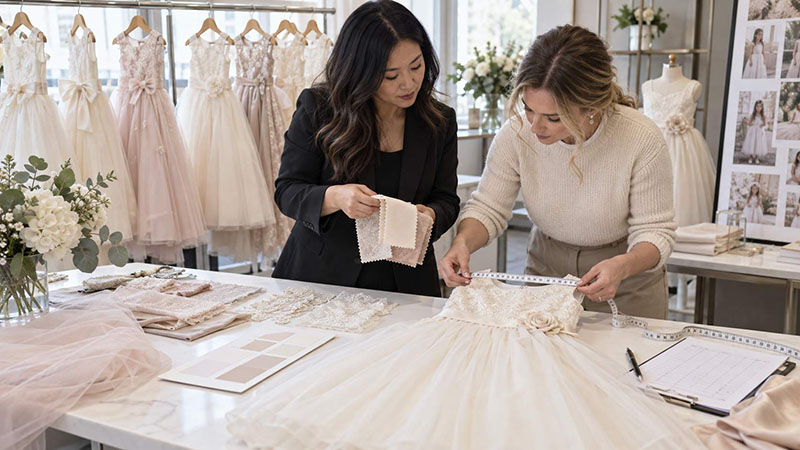
A flower girl dress collection should give customers useful choices across wedding settings, colors, and sizes. Decide which customers each style is meant to serve. A formal satin design and a lighter dress for a garden ceremony may answer different requests, even though both belong in the same category.
Before confirming a wholesale or private label order, review these details with your supplier:
- The approved physical sample, including lining, closure, and decoration placement.
- The color reference for each fabric used in the finished dress.
- The size chart and key finished measurements for every ordered size.
- Any pattern or construction changes agreed after sampling.
In our work with buyers at Outong Fashion, we review the sample and its key measurements before production. We also confirm which version reflects the agreed fabric, color, and construction details. Keeping that approved version as a reference helps both teams discuss the same dress when checking later samples and production pieces.
7. Frequently Asked Questions About Flower Girl Dresses
How Long Should a Flower Girl Dress Be?
There is no required length. A knee-length or tea-length dress may make movement easier, while a longer dress may suit a formal ceremony. Check the hem on the child wearing her wedding shoes and make sure she can walk without stepping on it.
Should a Flower Girl Dress Match the Bride’s Dress?
An exact match is optional. The outfits can coordinate through color, fabric, or a small design detail while keeping the flower girl’s dress suitable for a child. Ask the couple what kind of connection they want between the outfits before selecting a style. The Knot’s flower girl attire guide also notes that coordinating with the wedding party does not require an exact match. (www.theknot.com)
Is Tulle Comfortable for a Flower Girl?
It can be, depending on the lining, seams, and how the layers are constructed. Check the finished dress, especially at the waist and anywhere tulle may touch the skin. The same outer fabric can feel different in two dresses with different construction.
How Do You Choose a Size When a Child Is Between Sizes?
Compare the child’s measurements with the chart for the exact dress. Identify whether the concern is at the chest, shoulders, waist, or hem, then check which adjustments are possible. Do not choose solely by age or assume the larger size is always best.
What Should Buyers Check Before Ordering in Bulk?
Review a physical sample and confirm its fabric colors, lining, closure, decoration, size chart, and finished measurements. Agree on any changes during sampling and keep a record of the approved version. This gives the buyer and supplier a shared reference for production.
Can a Flower Girl Dress Be Altered Before the Wedding?
Some alterations may be possible, but the design determines what can be changed. A plain hem, a layered skirt, and an embellished bodice each require a different assessment. Ask an alterations professional to examine the dress and allow time for a final fitting.
Conclusion
Start with the wedding setting, then choose a suitable silhouette and fabric before checking measurements and movement. Look inside the dress as carefully as you look at its front. A dress that fits well and feels comfortable is prepared for the whole wedding day, not only the photographs.
Build Your Flower Girl Dress Collection with Outong Fashion
Outong Fashion works with boutiques, brands, and importers sourcing flower girl dresses for wholesale collections. Contact our team to request a catalog, and tell us your target styles, size range, and estimated order quantity. We can then discuss suitable samples and any OEM/ODM requirements.