
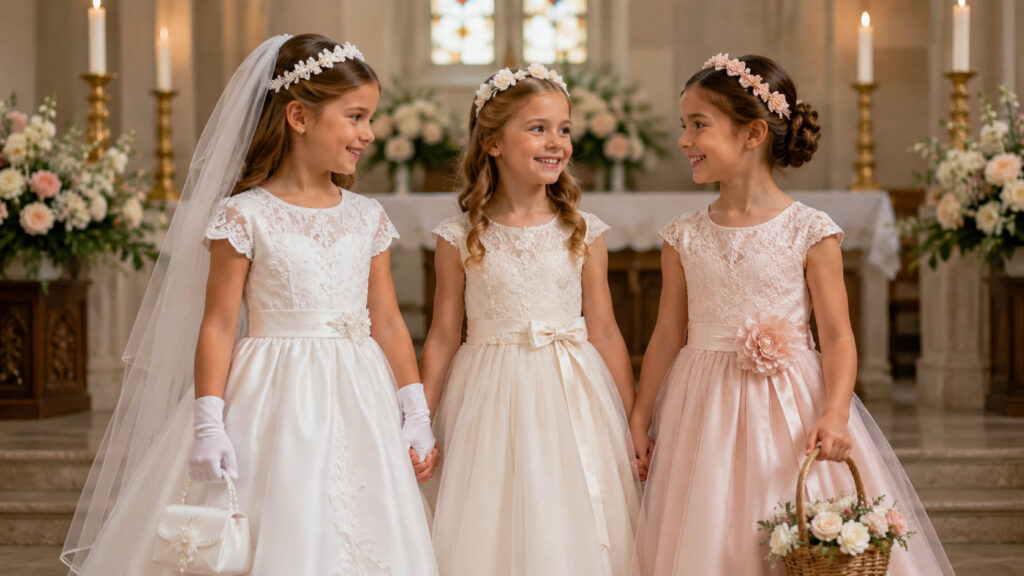
Choosing the right fabric makes a real difference to how a Communion or flower girl dress looks and feels. Satin and lace are often used for traditional First Communion dresses, while tulle, organza and chiffon are popular for flower girl styles. What works best depends on the design, the season and how comfortable the dress feels on the child.
What Should You Look for in a Communion or Flower Girl Dress Fabric?
A fabric may look beautiful in a sample, but that does not always mean it will work well in a child’s dress. We usually look at how it feels against the skin, whether it gives the skirt enough shape, and what happens when it is lined or layered.
Communion and flower girl dresses are often worn for several hours. A fabric that feels fine at first can become uncomfortable later, especially if the tulle is rough, the seams are stiff, or the decoration is heavy. On the other hand, very soft fabrics may not give a fuller skirt enough shape.
For summer weddings, lighter fabrics are usually more comfortable, especially outdoors. Satin and layered styles can work well in cooler weather or for more formal indoor ceremonies. You can find more practical tips in our guide to choosing a comfortable party dress for girls.
What Are the Best Fabrics for Communion & Flower Girl Dresses?
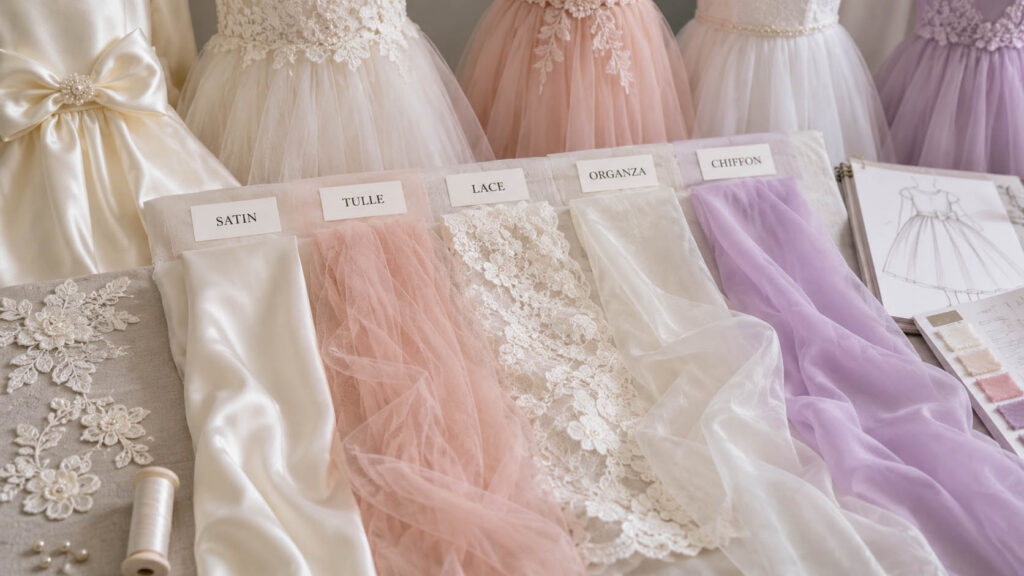
Most Communion and flower girl dresses use more than one fabric. Satin may give the dress its shape, while tulle adds volume and lace brings in detail. When we develop a style, we look at how these fabrics work together once the lining, skirt layers, and decoration are added.
Satin
Satin is a practical choice for Communion dresses, especially in white and ivory. It gives the dress a clean, formal shape and pairs easily with lace or tulle. In production, we pay close attention to weight. A heavier satin can hold a skirt beautifully, but once lining and extra layers are added, it may feel bulky on a child. The aim is to keep enough structure without adding unnecessary weight.
Tulle
Tulle is often used when a skirt needs more volume, which is why it appears so often in flower girl dresses. Some tulle is soft and moves easily, while stiffer types are better at holding a fuller shape. We choose between them depending on the design rather than simply adding more layers. Too much tulle can make a dress warmer and heavier than it needs to be.
For a closer comparison, see our satin vs. tulle flower girl dress guide.
Lace
Lace usually adds detail rather than structure. On Communion dresses, it works particularly well on bodices, sleeves and necklines. We also check the reverse side, especially around the neck and arms, because dense embroidery can feel rough even when the front looks soft. A good lining or backing makes a noticeable difference. The Encyclopaedia Britannica overview of lace provides more background on this traditional fabric.
What About Organza and Chiffon?
Organza and chiffon are more common in flower girl styles. Organza has enough body to hold layered skirts, bows, and overlays, while chiffon falls softly and works well for summer or outdoor weddings. Both usually need a comfortable lining—organza can feel crisp against the skin, while chiffon is often too sheer to use on its own.
In many dresses, two or three fabrics work better than one. What matters is how they come together in the finished dress, not how impressive each fabric looks on its own.
How Do the Most Popular Dress Fabrics Compare?
The differences become easier to understand when the fabrics are compared according to their performance in a finished dress.
| Fabric | Appearance | Structure | Comfort | Best Season | Best For |
|---|---|---|---|---|---|
| Satin | Smooth and polished | High | Good with proper lining | All seasons | Formal and traditional dresses |
| Tulle | Light and romantic | Medium–High | Depends on softness | Spring/Summer | Full and layered skirts |
| Lace | Detailed and classic | Medium | Depends on backing | All seasons | Communion and traditional styles |
| Organza | Crisp and airy | Medium–High | Best with lining | Spring/Summer | Lightweight structured skirts |
| Chiffon | Soft and flowing | Low | Lightweight | Spring/Summer | Outdoor and relaxed weddings |
We often use different fabrics in the same dress. Satin works well for the bodice, while tulle can give the skirt more volume. Lace is usually added only where the design needs a little more detail, such as the sleeves or neckline.
Which Fabrics Are Best for First Communion Dresses?
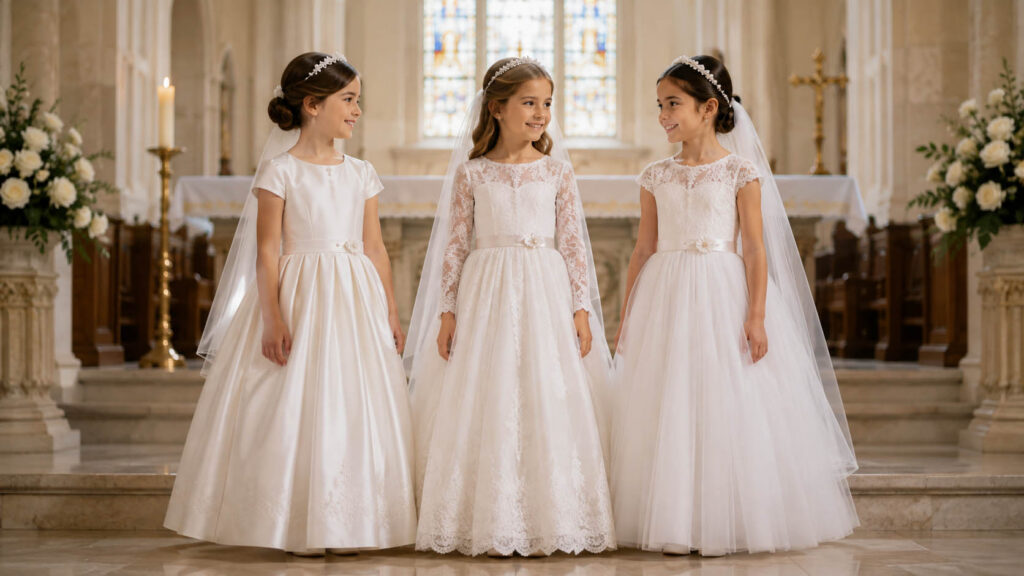
For First Communion dresses, satin and lace are still two of the fabrics we use most often. White or ivory satin gives the dress a clean, traditional look, while lace works well on sleeves, bodices, and necklines. Soft tulle can be added for a fuller skirt, although Communion styles are usually more restrained than flower girl or party dresses.
Church requirements are not always the same, so families should check with their parish before choosing a dress. Some churches have guidelines on sleeve length, dress length, or how much decoration is appropriate. Catholic Answers is also a useful resource for general information about Catholic traditions.
When we develop Communion dresses, we usually keep the fabric combination fairly simple. A good satin, comfortable lining, and a small amount of lace or embroidery are often enough. Extra beads, flowers, or skirt layers can add weight without necessarily improving the dress. You can see more examples in our First Communion dresses collection.
Which Fabrics Are Best for Flower Girl Dresses?
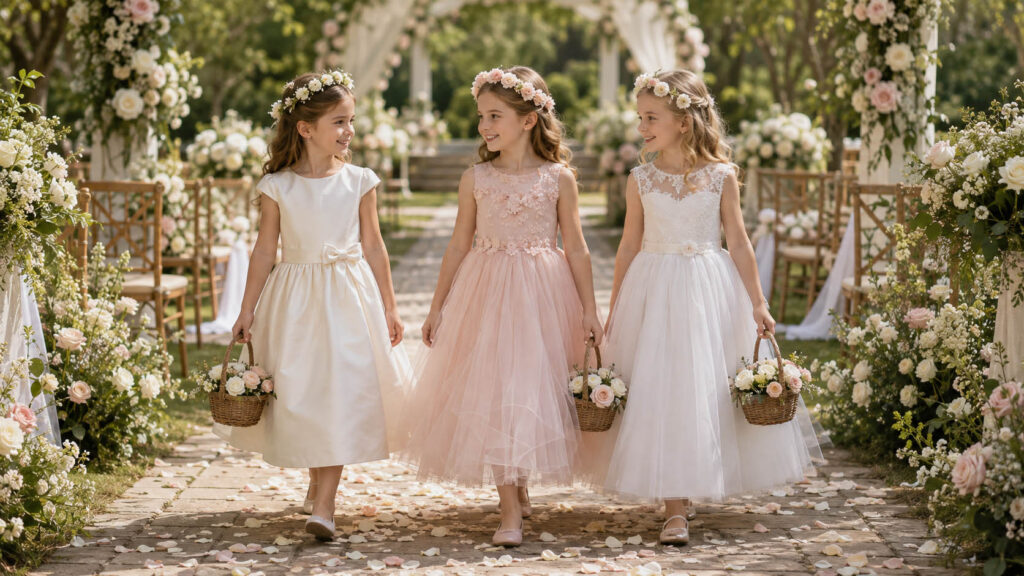
Flower girl dresses give us more room to work with fabrics than Communion dresses. For a church or ballroom wedding, satin with lace or tulle is still a reliable choice. For garden weddings, we often use softer tulle, organza, or embroidered mesh, especially when the dress needs to feel lighter.
Summer and destination weddings are a little different. Chiffon works well when the dress needs a softer fall, while tulle is useful when the skirt still needs some volume. We also look at the bride’s dress and the wedding colors before deciding on the final fabric combination. The Knot has more inspiration for coordinating flower girl outfits with the wedding style.
| Occasion | Recommended Fabrics | Why They Work |
|---|---|---|
| First Communion | Satin, lace, soft tulle | Formal, traditional and suitable for white or ivory dresses |
| Church Wedding | Satin, lace, tulle | Creates a polished and ceremonial appearance |
| Garden Wedding | Tulle, organza, lace | Light appearance with enough structure for decorative styles |
| Beach/Destination Wedding | Chiffon, soft tulle | Lightweight and easier to wear in warm conditions |
| Luxury Formal Wedding | Satin, embroidered tulle, lace | Supports more detailed and premium-looking designs |
| Summer Wedding | Organza, chiffon, soft tulle | Helps reduce visual and physical heaviness |
Color can make the same fabric look quite different. Ivory satin has a more traditional feel, while blush tulle is softer and more romantic. With chiffon, muted shades such as sage or dusty blue often work well for outdoor and summer weddings. When we review samples, we usually look at the fabric and color together, since a shade can look quite different depending on the texture and finish of the material.
If you are planning different colors for your collection, see our guide Can a Flower Girl Dress Be a Different Color? for more ideas on matching flower girl dresses with the wedding palette.
Does the Lining Matter as Much as the Outer Fabric?
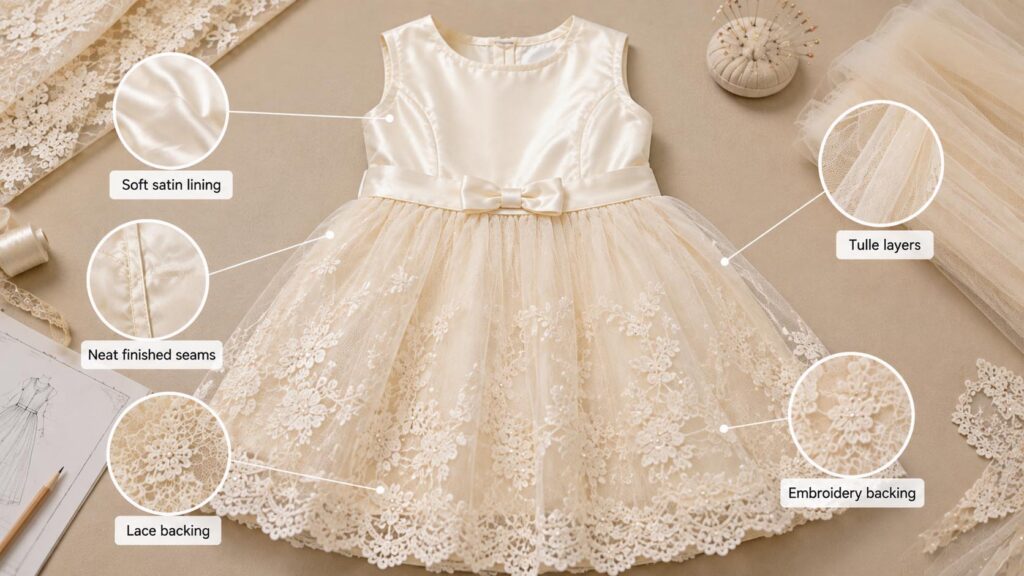
Yes. A soft lining is important, especially in dresses with tulle, lace, embroidery, or beading. These materials may look fine from the outside but can feel rough if the backing or stitching touches the skin.
When we check a sample, we run our hands over the inside of the bodice, neckline, and armholes. We also check the waist seam and the back of any embroidery or beadwork. These are often the areas where a child will notice discomfort first.
Communion and flower girl dresses can be worn for several hours, so we check the inside of the dress before approving the sample, not only how it looks from the outside.
How Does Fabric Affect Dress Quality?
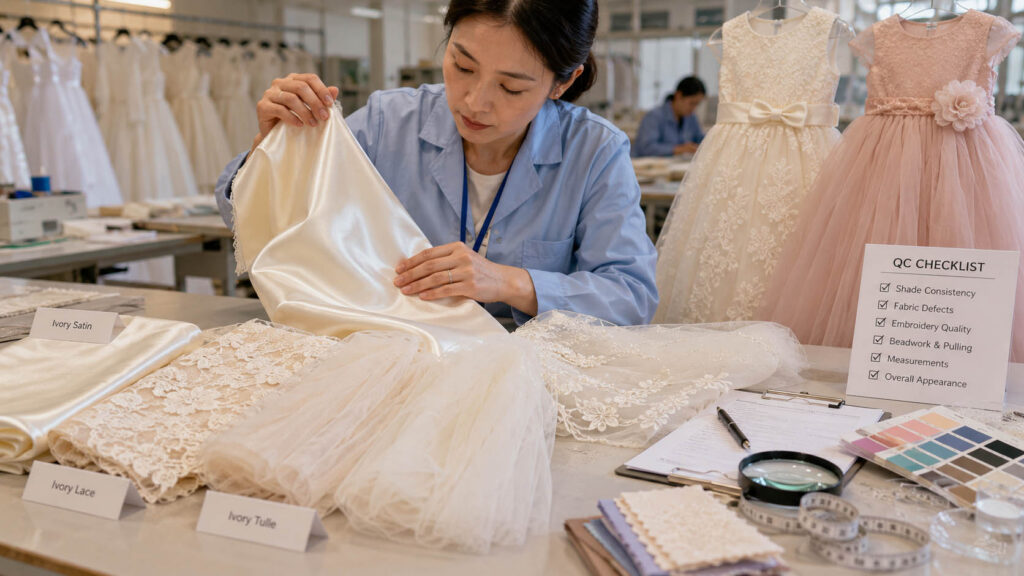
Fabric problems are not always obvious from a swatch. We have had cases where the satin, lace, and tulle were all listed as “ivory,” but the difference became obvious once they were used on the same dress. This is especially common with white, ivory, and champagne, so we prefer to compare the actual fabrics together before the sample is approved.
Decoration can change the fabric as well. Heavy beadwork may pull a soft tulle skirt out of shape, and dense embroidery can make a lightweight fabric much stiffer than expected. When that happens, we may use a different base fabric, adjust the embroidery, or reduce some of the decoration. It is much easier to make those changes at the sample stage than during bulk production.
Material safety is another point buyers may want to check. OEKO-TEX STANDARD 100 covers testing for harmful substances in textiles, trims, and other components used in garments.
What Should Retailers and Wholesale Buyers Consider?
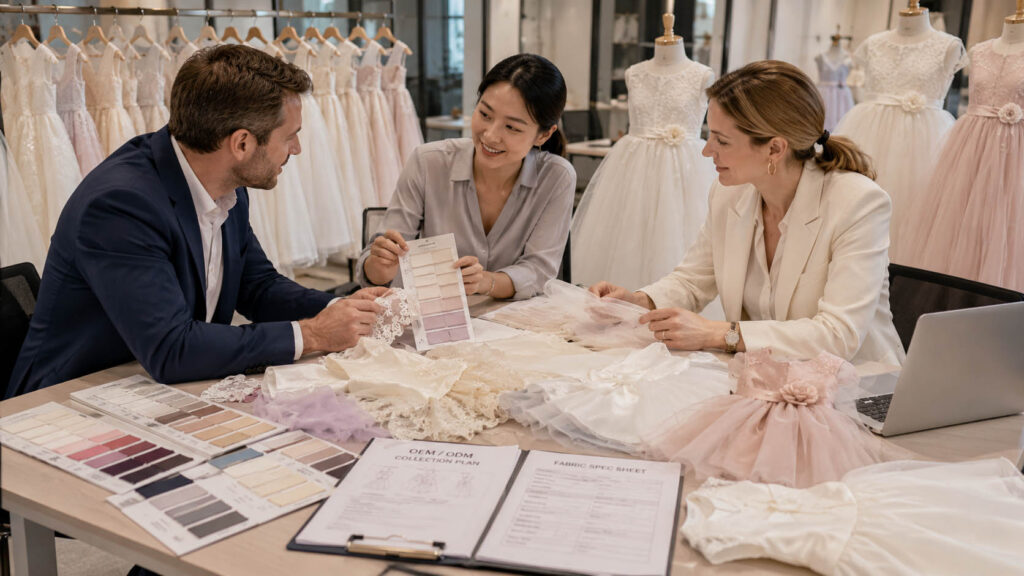
A Communion collection for Europe may call for classic white and ivory styles, while a wedding boutique may be looking for more tulle, lace, and seasonal colors. We also think about the climate. Several layers of tulle may be fine for an indoor ceremony, but the same dress can feel too warm in a hot market.
When we send samples to buyers, we usually ask them to check more than the overall look. Feel the lining, check the skirt volume and compare the shades where satin, lace and tulle are used together. Embroidery and beadwork are worth checking closely too. For styles that run across several sizes, we also check whether the waistline, skirt and decoration still look balanced on both smaller and larger dresses.
Before bulk production, these are the points we usually go through with the buyer:
| What to Check | Why It Matters in Bulk Production |
|---|---|
| Fabric hand feel | Affects comfort and perceived quality |
| White/ivory color consistency | Reduces visible shade differences between production batches |
| Lining quality | Directly affects children’s comfort |
| Skirt structure and layers | Determines whether the finished silhouette matches the approved sample |
| Lace/embroidery compatibility | Prevents distortion, stiffness or excessive weight |
| Embellishment attachment | Helps reduce loose pearls, sequins or appliqués |
| Size consistency | Ensures the same design performs properly across the full size range |
When we develop a new dress, we prefer to see the fabric in an actual sample before approving it. A fabric can look fine on the swatch but behave differently once it is cut, layered, or embroidered. Sometimes the color changes slightly next to another fabric; sometimes the skirt does not hold the shape we expected. These are much easier to fix at the sample stage.
We have been making children’s formalwear for more than 24 years, and fabric selection is still something we take time with on every new style. For buyers developing their own collection, our OEM & ODM children’s clothing service includes fabric sourcing, sampling and adjustments before bulk production.
FAQs
What is the best fabric for a First Communion dress?
Satin and lace are the most common choices. Satin gives the dress a clean, traditional look, while lace adds detail without making the style too elaborate.
Is satin or tulle better for a flower girl dress?
It depends on the style. Satin holds its shape better, while tulle is lighter and works well for fuller skirts. We often use the two together.
Is lace comfortable for children’s dresses?
Yes, as long as the lace is soft or properly lined. We pay extra attention to the neckline and armholes, where rough embroidery is more likely to bother the skin.
What fabric is best for a summer flower girl dress?
Soft tulle, organza, and chiffon all work well for summer weddings. We also keep the lining and skirt layers light so the dress does not become too warm.
What is the difference between organza and tulle?
Organza is smoother and crisper, while tulle has a net-like texture and is easier to layer for volume. Both are commonly used in flower girl skirts.
Which fabric makes a flower girl dress look more expensive?
Good satin, fine lace, and embroidered tulle can all give a dress a more premium look. The fabric matters, but so do the fit, lining, stitching, and quality of the decoration.
Which Fabric Should You Choose?
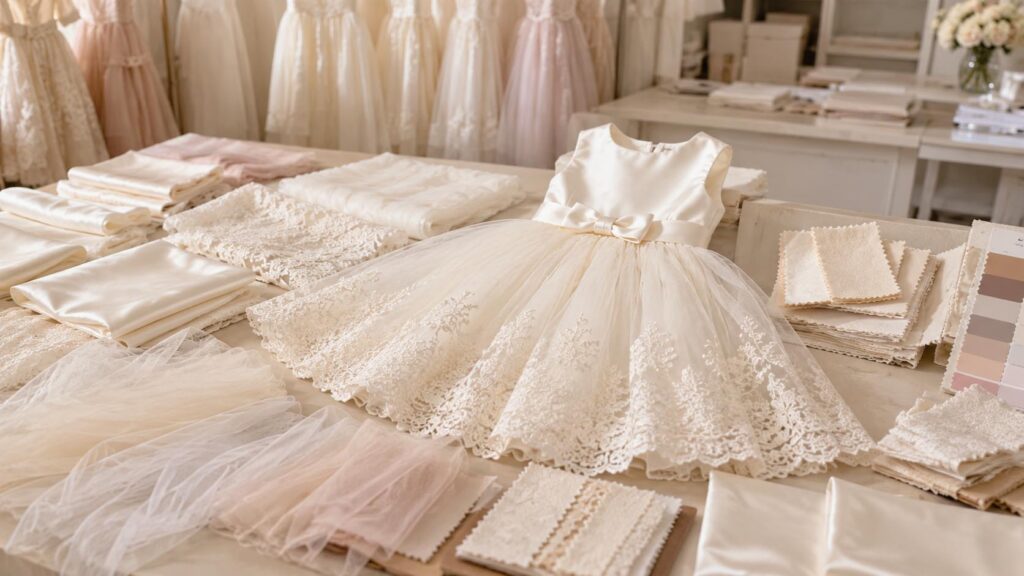
There is no need to choose just one fabric. Satin, tulle, and lace are often used together in Communion and flower girl dresses. The right combination depends on the style of the dress and how comfortable it feels once everything is put together.
For Communion dresses, we usually keep the fabrics and decoration more traditional. Flower girl dresses give us more room to work with color, texture, and lighter fabrics, especially for summer or outdoor weddings.
If you are buying for a collection, look at the fabric on the finished sample rather than relying on the swatch alone. Check the weight, lining, and overall shape, and see how the dress feels when all the layers and decoration are in place.
Planning Your Next Communion or Flower Girl Collection?
The right fabric is easier to judge when you can see and feel it in a finished sample. If you are developing new Communion or flower girl styles, we can work with you on fabric choices, samples, and the details that need adjusting before production.
Contact us to start a new style.