
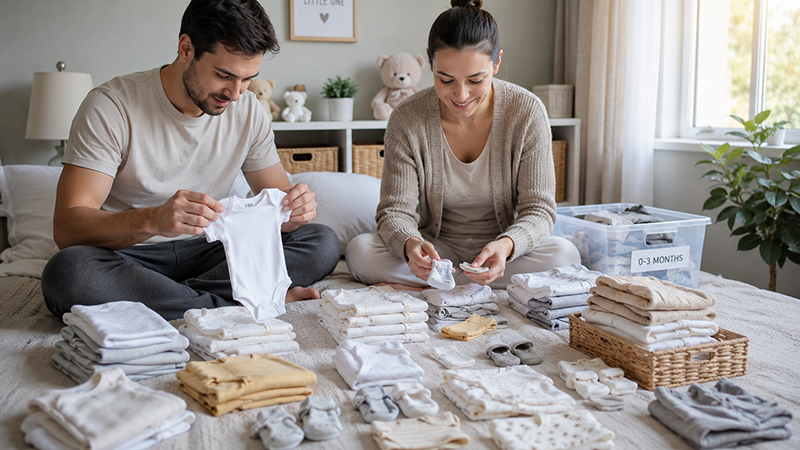
Preparing for a new baby comes with a long checklist of decisions, and one of the most common questions parents ask is surprisingly simple: How many baby clothes do I actually need? Between baby showers, online shopping, and endless adorable outfit options, it’s easy to assume that a newborn needs a fully stocked wardrobe from day one. In reality, most parents quickly discover that babies wear the same comfortable essentials far more often than the cute outfits hanging in the closet.
The truth is that there is no single number that works for every family. The amount of clothing your baby needs depends on factors such as how often you do laundry, the season your baby is born, and how quickly your little one grows. Instead of focusing on buying as much as possible, it’s usually better to build a practical baby wardrobe filled with versatile pieces that can handle everyday life.
How Many Baby Clothes Do You Really Need?
For most families, having enough clothing for about one week is a practical starting point. This typically means a selection of everyday essentials such as bodysuits, sleepers, pants, socks, and a few layering pieces. Babies often need outfit changes throughout the day because of spit-up, diaper leaks, or feeding accidents, so having several clean options available can make life much easier.
| Clothing Item | Recommended Quantity |
|---|---|
| Bodysuits / Onesies | 6–8 |
| Sleepers / Pajamas | 4–6 |
| Pants or Leggings | 3–5 |
| Sweaters or Jackets | 2–3 |
| Socks | 6–8 Pairs |
| Hats | 2–3 |
| Special Occasion Outfits | 1–2 |
However, buying too much clothing in one size is rarely a good idea. Babies grow incredibly fast during their first year, and many parents find themselves packing away barely worn outfits after only a few weeks. A smaller collection of well-chosen essentials is usually more useful than a closet full of clothes that may never be worn.If you’re unsure which size to buy, our Baby Clothes Size Chart can help you choose the right fit for each growth stage.
Why New Parents Often Buy Too Many Baby Clothes
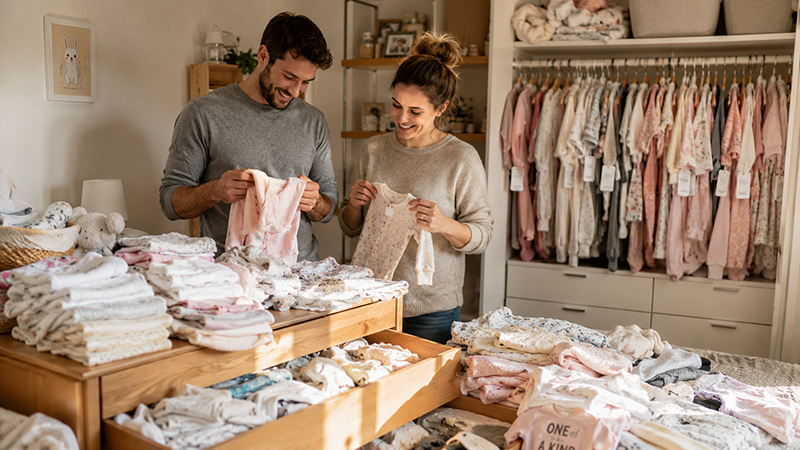
It is completely understandable to get carried away when shopping for a new baby. Baby clothing is adorable, and friends and family often give outfits as gifts before the baby arrives. By the time the nursery is ready, many parents already have drawers full of newborn-sized clothing.
The problem is that babies don’t stay newborn-sized for very long. Some babies outgrow newborn clothing within weeks, while others are born large enough to wear bigger sizes immediately. Because growth rates vary from child to child, many parents underestimate how quickly clothing sizes change during the first year. The CDC Growth Charts provide a helpful reference for understanding infant growth patterns.
Many experienced parents later admit that they bought far too many special occasion outfits and not enough everyday basics. While a fancy dress or miniature suit may look wonderful in photos, comfortable bodysuits and soft sleepers tend to become the most frequently worn items in a baby’s wardrobe.
Building a Practical Baby Wardrobe
When choosing baby clothes, comfort should always come before style. Choosing clothing that is easy to layer can also help parents adapt to changing temperatures throughout the day. Guidance from the NHS highlights the importance of keeping babies comfortable without overdressing, particularly during sleep and indoor activities.During the first few months, babies spend most of their time sleeping, feeding, and being carried, so clothing needs to be soft, breathable, and easy to change.
Bodysuits are often considered the foundation of a newborn wardrobe because they work well on their own during warm weather and can easily be layered when temperatures drop. Sleepers are another everyday essential because they keep babies comfortable while making nighttime diaper changes much easier for parents.
Simple pants, leggings, lightweight sweaters, and jackets can be added depending on the season. Rather than purchasing complete outfits, many parents find it more practical to choose pieces that can be mixed and matched.
Factors That Affect How Many Clothes Your Baby Needs
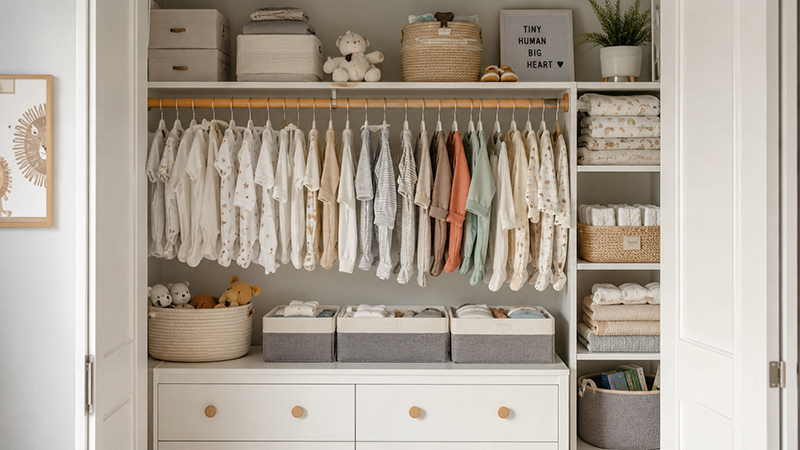
Every family has different routines, which is why clothing needs can vary significantly. One of the biggest factors is laundry frequency. Parents who wash baby clothes every couple of days can comfortably manage with fewer items, while families who prefer doing laundry once a week usually need a larger clothing rotation.
The local climate also makes a difference. Babies born during colder months often need extra layers, sweaters, and outerwear. Summer babies may spend much of their time in lightweight bodysuits and require fewer clothing items overall.
Parents should also pay attention to signs of overheating rather than simply adding more layers. Another factor that surprises many new parents is how often babies need outfit changes. Some babies rarely spit up and stay relatively clean throughout the day, while others seem to need fresh clothes after every feeding.
Do Babies Need More Clothes in Winter?
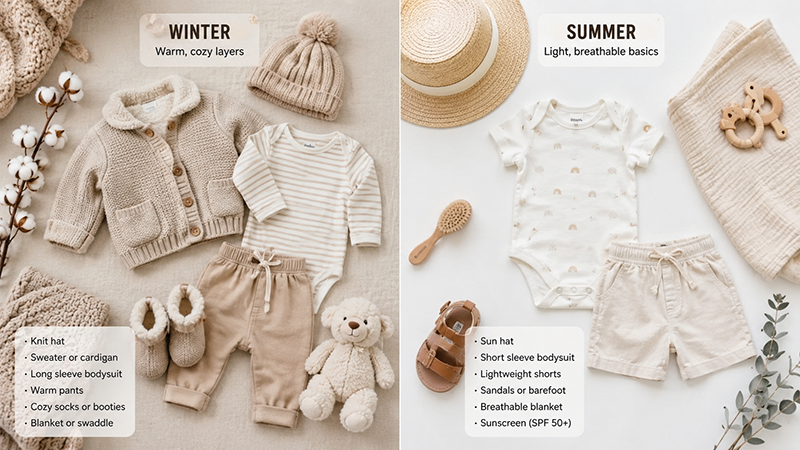
The season your baby is born can have a significant impact on how many clothes you’ll actually need. Babies born during colder months often require additional layers such as sweaters, jackets, hats, and warm sleepwear to stay comfortable. Since winter weather can vary throughout the day, parents typically rely on layering to adjust their baby’s clothing as temperatures change.
In contrast, summer babies usually need fewer clothing items overall. Lightweight bodysuits, breathable cotton outfits, and comfortable sleepwear are often enough for everyday wear. In warmer climates, babies may spend much of their time in simple, lightweight clothing, reducing the need for bulky layers or outerwear.
It’s also important to consider where you live. Families in colder regions may need a larger rotation of seasonal clothing, while those in mild or warm climates can often manage with fewer items. Rather than buying a large number of clothes in advance, it’s usually best to focus on versatile essentials that can be layered or adjusted according to the weather.
When planning your baby’s wardrobe, think about your local climate and daily routine. This will help you buy the right amount of clothing without overcrowding your baby’s closet with items that may only be worn a few times.
Which Baby Clothes Get the Most Use?
Ask experienced parents which baby clothes they used most often, and you’ll hear the same answers again and again. Cotton bodysuits, soft sleepers, and easy-to-wear pants consistently become wardrobe favorites because they are practical, comfortable, and suitable for everyday wear.
Parents also tend to appreciate clothing made from breathable fabrics that are gentle on sensitive skin. Materials such as cotton and muslin remain popular because they help regulate temperature while providing all-day comfort.
Common Mistakes to Avoid When Buying Baby Clothes
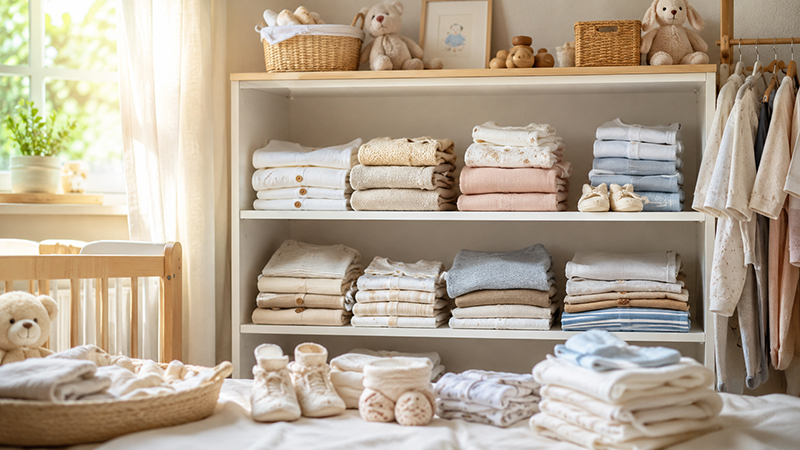
One of the most common mistakes is purchasing too many clothes in newborn sizes before the baby arrives. While it feels reassuring to be fully prepared, babies grow so quickly that large quantities often go unused.
Another mistake is choosing style over practicality. Clothing with complicated buttons, stiff fabrics, or difficult fastenings may look attractive but can quickly become frustrating during daily diaper changes.
It’s also important to consider fabric quality. Babies have delicate skin, and soft, breathable materials are generally more comfortable than synthetic fabrics that may trap heat or cause irritation.
Frequently Asked Questions
How many baby clothes do I need for the first three months?
Most families find that one week’s worth of clothing is enough for the first three months. A practical wardrobe usually includes bodysuits, sleepers, pants, and a few layering pieces, with extra outfits available for unexpected messes.
How many outfits does a newborn go through in a day?
Most newborns go through two to four outfits per day, depending on feeding habits, diaper leaks, and spit-up frequency.
How many onesies does a newborn need?
Most parents find that six to eight onesies provide a good starting point. This allows enough flexibility for multiple outfit changes throughout the week.
Should I buy a lot of baby clothes before my baby is born?
It’s generally better to start with the essentials and add more clothing later if needed. This helps avoid overbuying items that may not fit or suit your baby’s needs.
Conclusion
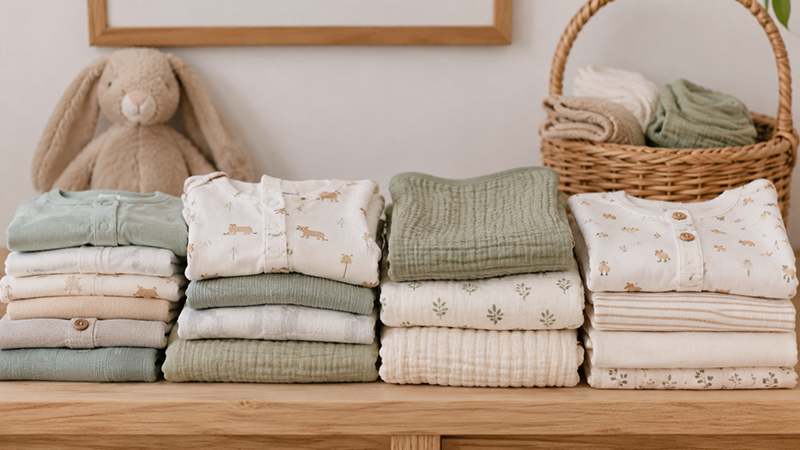
When it comes to baby clothes, more isn’t always better. A carefully chosen collection of comfortable, practical essentials is often all you need during the first few months. By focusing on quality, versatility, and your family’s daily routine, you can build a wardrobe that keeps your baby comfortable without filling every drawer with unnecessary clothing.
Remember that babies grow quickly, and their needs change just as fast. Starting with the basics allows you to adapt over time while avoiding one of the most common mistakes new parents make—buying far more clothes than their baby will ever wear.
Explore Quality Baby Clothing from Outong
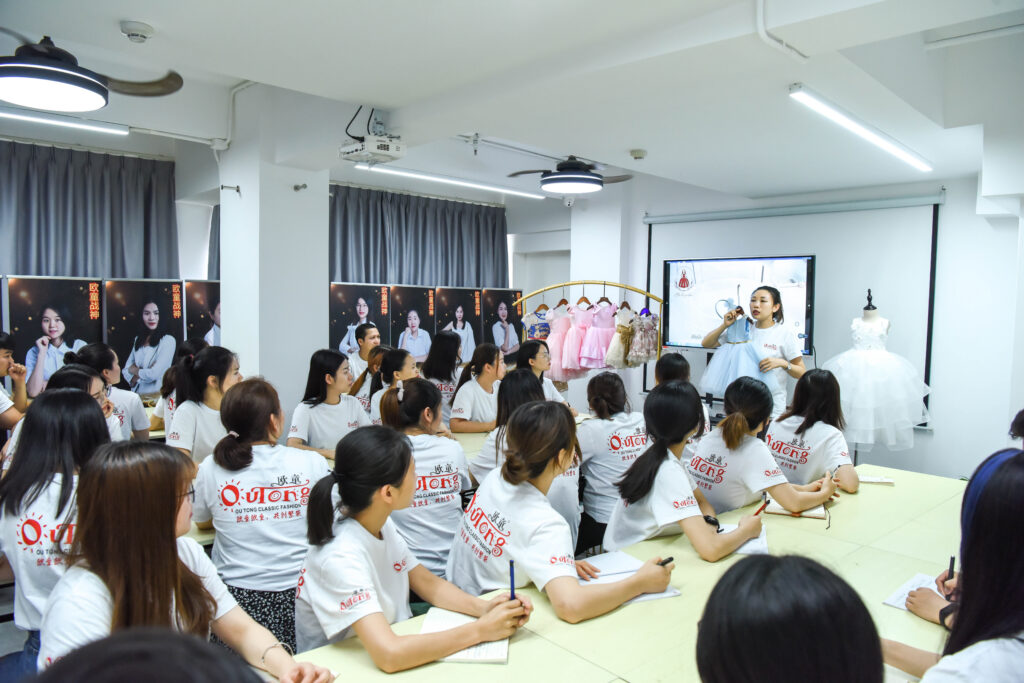
Building a practical baby wardrobe starts with choosing clothing that is comfortable, durable, and designed for everyday life. Whether you’re looking for soft cotton rompers, breathable muslin outfits, baby dresses, or seasonal essentials, selecting the right pieces can make daily dressing easier for both parents and babies.
At Outong, we specialize in designing and manufacturing high-quality children’s clothing for brands, retailers, wholesalers, and distributors worldwide. With years of experience in baby and kidswear production, we focus on comfortable fabrics, reliable craftsmanship, and styles that meet the needs of modern families.
If you’re sourcing baby clothing for your business or looking for a trusted children’s wear manufacturer, explore our latest collections or contact our team to learn more about our OEM and ODM services.