
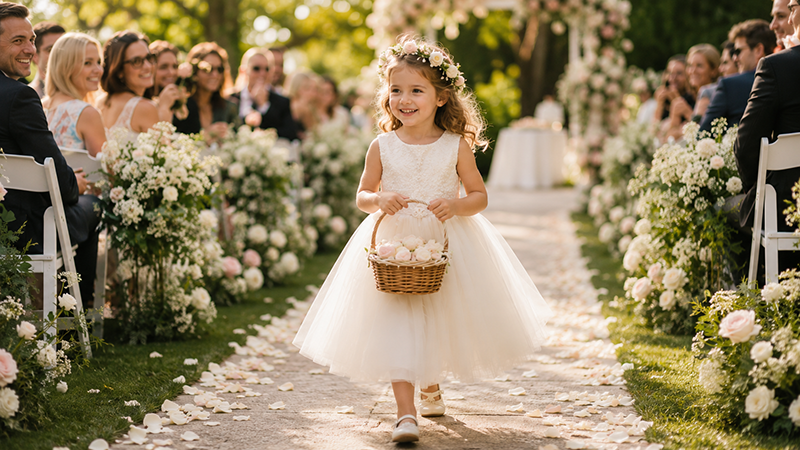
Most flower girls are between 3 and 8 years old. However, there is no strict age rule. Some weddings include toddlers as young as 2, while others choose older girls who may take on a junior bridesmaid role.
The best flower girl isn’t necessarily the youngest child in the family. In most weddings, personality and confidence matter more than age alone.
This guide explains the ideal flower girl age range, how to know if a child is ready for the role, and what to do if she’s younger or older than the traditional age.
Why Most Flower Girls Are Between 3 and 8 Years Old
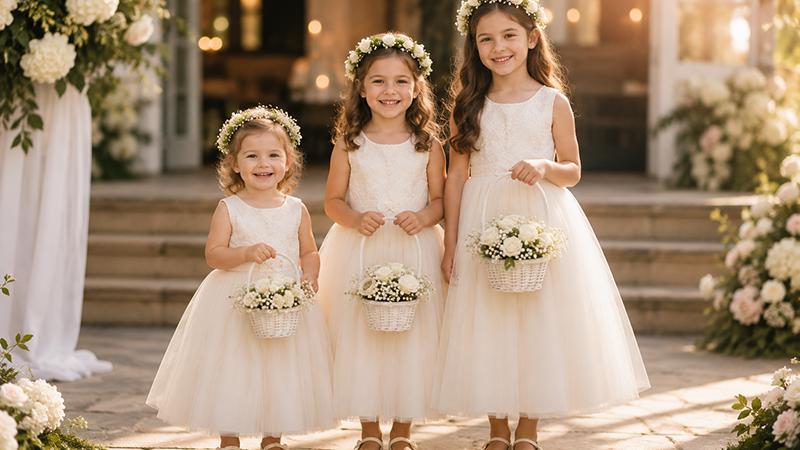
According to wedding industry research from The Knot Real Weddings Study, children continue to play an important role in modern wedding ceremonies.
The traditional flower girl age range didn’t appear by accident.
Children between 3 and 8 years old are usually at the perfect stage for the role. They’re young enough to bring the sweet, playful energy people associate with flower girls, but old enough to follow simple instructions.
At this age, most children can:
- Walk independently down the aisle
- Carry a flower basket or bouquet
- Participate in photos
- Understand basic directions
- Enjoy being part of the wedding party
This is why you’ll see so many flower girl dresses designed specifically for girls in this age group.
But age alone doesn’t tell the whole story.
Some 4-year-olds confidently perform in dance recitals and school events. Others may feel overwhelmed standing in front of 100 wedding guests.
That’s why personality often matters more than the number on a birthday cake.
Can a 2-Year-Old Be a Flower Girl?
Absolutely.
In fact, some of the most memorable wedding photos come from toddler flower girls.
The catch is that toddlers rarely follow the plan.
A 2-year-old flower girl might:
- Stop halfway down the aisle
- Sit on the floor unexpectedly
- Drop her basket
- Run toward a parent
- Wave at every guest she sees
And honestly, guests usually love it.
If you’re considering a toddler flower girl, the key is adjusting expectations. Instead of expecting a perfectly rehearsed walk, think of the role as a fun moment rather than a performance.
Many couples choose to have an older sibling, ring bearer, or parent walk nearby. This helps younger children feel secure while still allowing them to participate.
If the child is happy and comfortable, age isn’t a problem.
Choosing the right dress can also help younger children feel more comfortable during the ceremony. Learn how to choose the perfect flower girl dress.
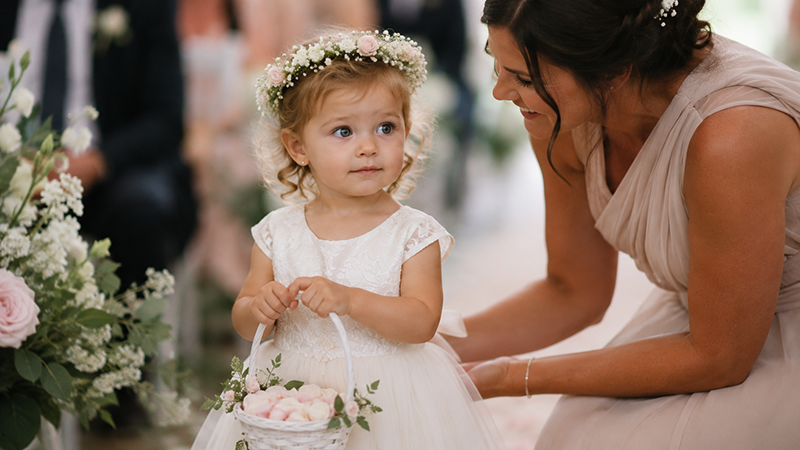
The Sweet Spot: Ages 4 to 6
Ask most wedding planners, and they’ll tell you that ages 4 to 6 are often the easiest years for flower girls.
Children in this age range are usually excited about dressing up and being included in something special.
They’re old enough to understand what they’re supposed to do but still young enough to fit the traditional flower girl image.
Many parents find that girls around this age enjoy:
- Choosing their dress
- Practicing for the ceremony
- Carrying a flower basket
- Taking wedding photos
They’re also more likely to cooperate during fittings and rehearsals than younger toddlers.
By ages 4 to 6, many children are developing the confidence and social skills needed to participate in group activities and ceremonies, according to guidance from HealthyChildren.org.
For many weddings, this age group strikes the perfect balance between cuteness and reliability.
What About Older Flower Girls?
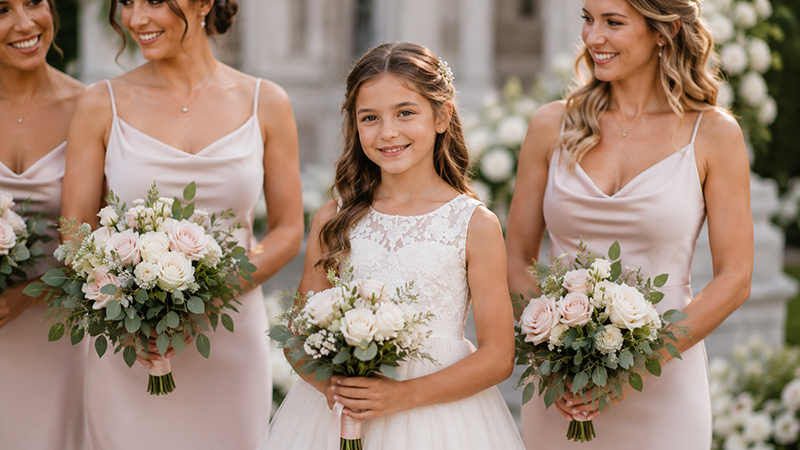
A common concern among parents is whether a child is becoming “too old” for the flower girl role.
The answer depends on the wedding.
Girls who are 8, 9, or even 10 years old can still be wonderful flower girls, especially if they have a close relationship with the couple.
However, older children sometimes prefer a role that feels a little more mature.
This is where the junior bridesmaid role comes in.
A junior bridesmaid typically:
- Walks with the bridal party
- Wears a more sophisticated dress
- Participates in additional wedding activities
There isn’t a universal age when a flower girl should transition to a junior bridesmaid. Some families make the change around age 9, while others wait until age 11 or 12.
The best approach is simply asking the child how she feels.
Many older girls are excited to be flower girls. Others prefer a role that feels more grown-up.
A Quick Flower Girl Age Guide
| Age | Recommendation |
|---|---|
| 2 Years Old | Possible with assistance |
| 3 Years Old | Very common |
| 4–6 Years Old | Ideal age range |
| 7–8 Years Old | Excellent choice |
| 9–10 Years Old | Depends on preference |
| 11+ Years Old | Junior bridesmaid may be a better fit |
Think of this table as a guideline rather than a rulebook.
Every child is different.
How to Tell If a Child Is Ready to Be a Flower Girl
Instead of focusing only on age, ask yourself a few simple questions.
Can She Walk Comfortably on Her Own?
The flower girl role is usually simple, but walking down the aisle can feel intimidating.
If a child is comfortable walking independently in front of other people, she’s likely ready.
Does She Enjoy Attention?
Some children love being in photos and talking to guests.
Others become shy when everyone is looking at them.
Neither personality is wrong, but it helps determine whether the role will feel fun or stressful.
Can She Follow Simple Instructions?
A flower girl doesn’t need to memorize a script.
She simply needs to understand basic directions such as:
- Walk slowly
- Follow the bridesmaids
- Stand beside the wedding party
Is She Excited About It?
This may be the most important factor of all.
Children who genuinely want to participate usually have the best experience.
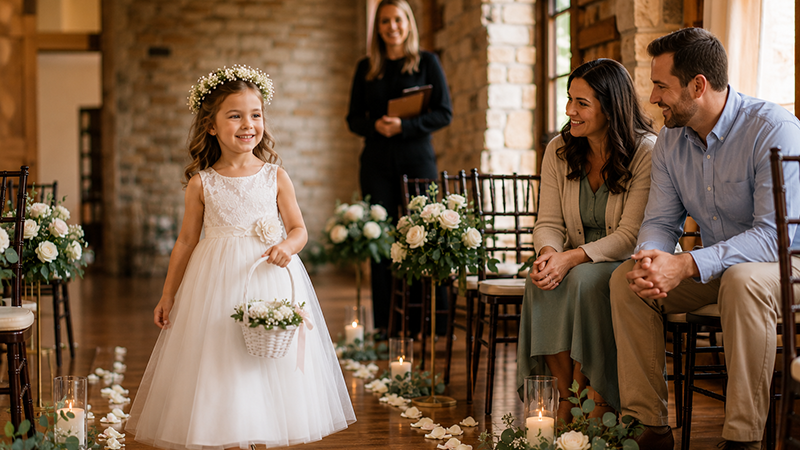
What If Your Flower Girl Gets Nervous?
This is more common than people think.
Even children who seem excited during rehearsals can become shy once the ceremony begins.
If that happens, don’t panic.
Experienced wedding coordinators often suggest:
- Letting siblings walk together
- Having a parent nearby
- Practicing the aisle walk beforehand
- Keeping expectations relaxed
Guests rarely judge a nervous flower girl.
If anything, those little unexpected moments often become the stories families remember years later.
Choosing a Flower Girl Dress for Different Ages
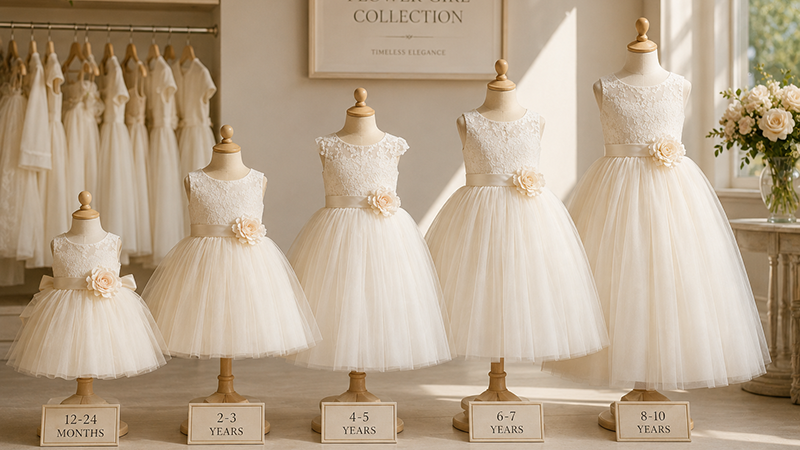
A flower girl should feel comfortable before she looks picture-perfect.
For toddlers, soft fabrics and lightweight skirts are usually the best choice. Heavy dresses can feel uncomfortable and make it harder to move naturally.
Girls between 4 and 8 years old often enjoy classic flower girl styles with tulle skirts, lace details, and floral accents.
Older flower girls may prefer more elegant designs that feel slightly more mature while still coordinating with the wedding theme.
The goal isn’t to choose the fanciest dress. It’s to choose one the child can wear confidently throughout the ceremony, photos, and reception.
For formal weddings, some dresses include extra layers underneath. Here’s why flower girl dresses need petticoats.
Final Thoughts
So, how old should a flower girl be?
For most weddings, the ideal age falls somewhere between 3 and 8 years old. But there is no official rule that says a flower girl must fit within a specific age range.
A confident 2-year-old may steal the show. An older child may be the perfect choice because of her relationship with the couple.
Rather than focusing only on age, think about the child’s personality, comfort level, and excitement about participating.
When a child feels happy and included, she’ll do exactly what a flower girl is meant to do—bring joy to the wedding day.
Frequently Asked Questions
Is 2 years old too young to be a flower girl?
Not necessarily. Many toddlers successfully participate as flower girls, especially when a parent, sibling, or wedding attendant is nearby to help. The most important factor is whether the child feels comfortable and enjoys being part of the wedding.
Is 10 too old to be a flower girl?
No. While some older girls prefer the role of junior bridesmaid, many 9- and 10-year-olds still make wonderful flower girls. It often depends on the child’s personality and the wedding style.
Who usually chooses the flower girl?
The couple typically chooses a close family member or family friend, such as a daughter, niece, cousin, or goddaughter. The role is often given to a child who has a special connection with the couple.
Does a flower girl have to throw petals?
No. Many modern weddings use flower hoops, small bouquets, ribbon wands, or decorative baskets instead of flower petals, especially when venues have restrictions.
Can a flower girl wear a color other than white?
Absolutely. While white and ivory remain classic choices, many flower girls now wear blush, champagne, sage green, dusty blue, or other colors that match the wedding theme.
Choosing the Right Flower Girl Dress
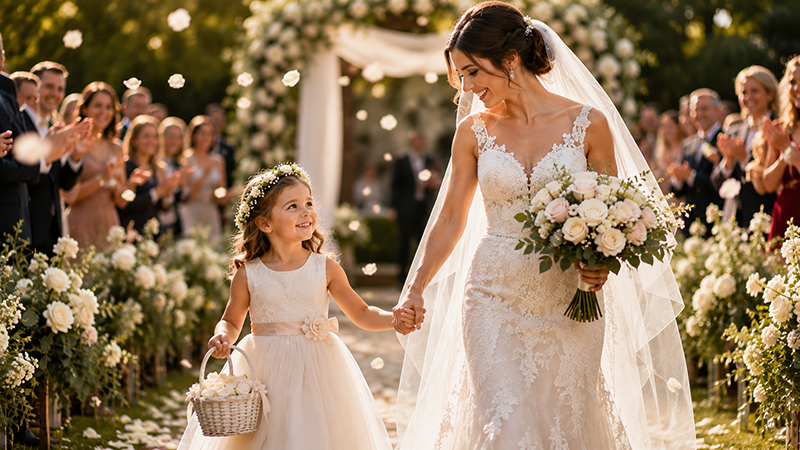
At Outong, we’ve seen flower girls as young as 2 and as old as 10 successfully take part in weddings. The biggest factor isn’t age—it’s whether the child feels comfortable and confident.
Choosing the right dress, size, and fabric can help make the experience more enjoyable for both the child and the family.