
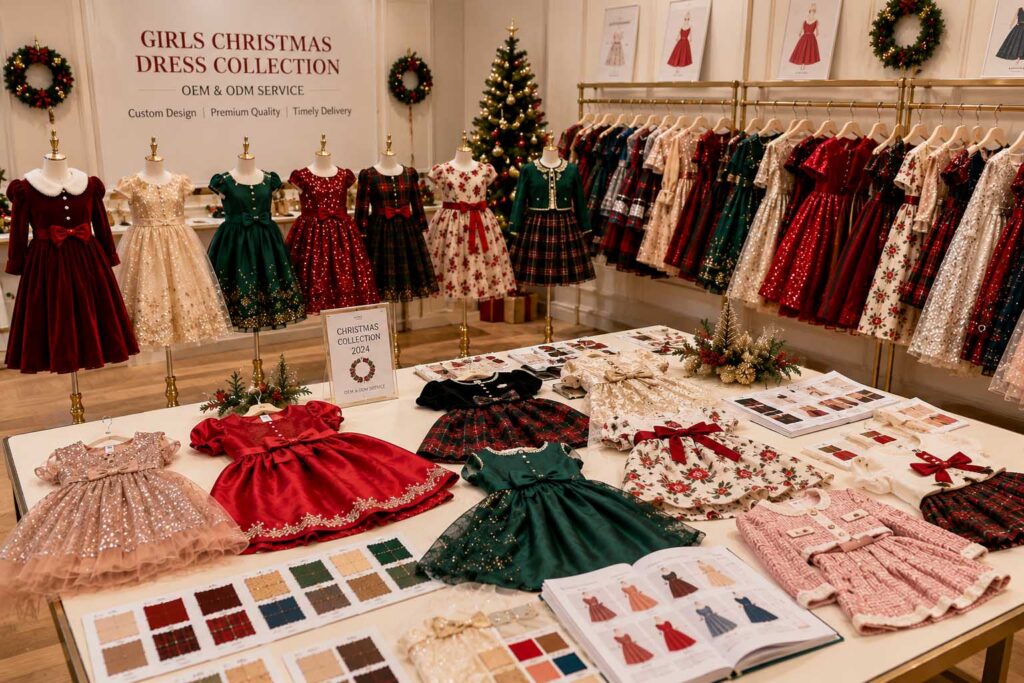
Christmas is one of the most important selling seasons for children’s apparel businesses. For boutiques, wholesalers, online sellers, and retail chains, girls’ Christmas dresses are often among the best-performing products of the year. However, many retailers focus on style selection and pricing while overlooking a factor that can have an even greater impact on profitability—ordering time.
Ordering too late can lead to production delays, limited style choices, and expensive shipping costs, while ordering too early may increase inventory pressure. A well-planned purchasing schedule helps retailers reduce risk, secure production capacity, and maximize holiday sales opportunities.
Why Does Timing Matter for Christmas Dress Orders?
Unlike everyday children’s clothing, Christmas dresses are highly seasonal products with a short selling window. Most sales take place between October and December, especially around Black Friday and Cyber Monday. As holiday shopping often starts earlier each year, retailers should ensure their girls’ Christmas dress collections are ready before peak demand begins.
Production timing is equally important. Popular fabrics and festive styles become harder to secure as the season approaches. Research on holiday shopping insights shows that retailers who prepare earlier are often better positioned to capture seasonal demand. Buyers sourcing girls’ formal dresses and other occasion wear collections typically enjoy greater flexibility in style selection and production scheduling.
When Do Retailers Usually Start Ordering Christmas Dresses?
The ideal purchasing timeline depends on the type of retailer. Large retail chains often begin planning 6 to 9 months in advance and may start discussing Christmas collections during the first quarter of the year. Their longer planning cycles allow sufficient time for product development, production scheduling, and marketing preparation.
Boutiques and specialty children’s stores generally begin purchasing between June and August. This gives them enough time to review samples, confirm styles, and receive inventory before peak demand begins. Many retailers also evaluate their girls’ party dress collections during this period because customers frequently purchase dresses for multiple holiday events. Online sellers typically place orders between July and September, depending on inventory strategy and shipping methods.
Ordering Timelines in Different Markets
Although Christmas is celebrated globally, purchasing schedules vary slightly by market.
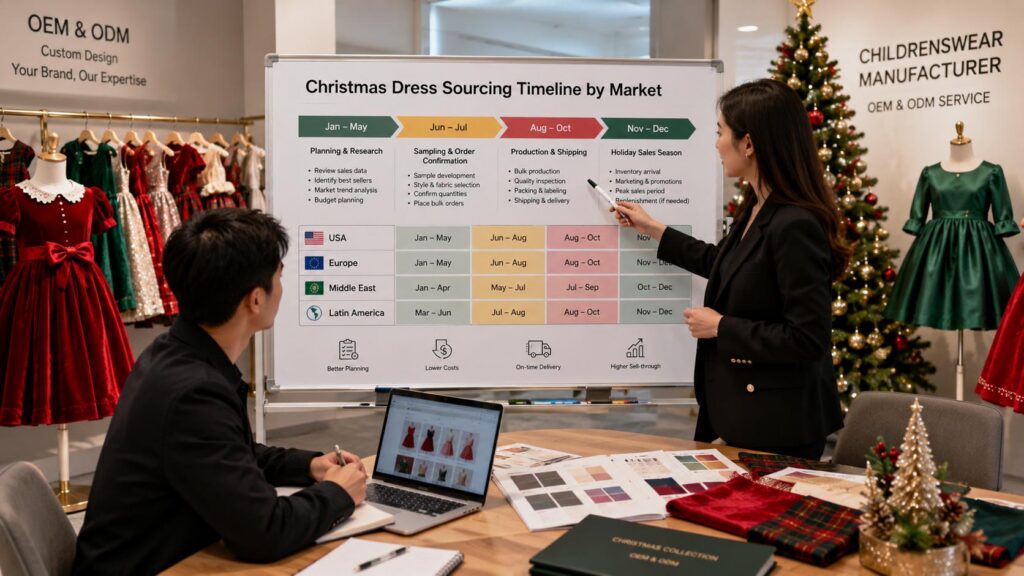
| Market | Recommended Ordering Time |
|---|---|
| United States | June – August |
| Europe | June – August |
| Middle East | May – July |
| Latin America | July – August |
Based on our production experience, buyers in the Middle East often begin planning holiday collections slightly earlier because many retailers combine Christmas purchasing with year-end occasion wear programs. Understanding regional buying patterns helps retailers secure production slots and avoid peak-season delays.
The Ideal Timeline for Christmas Dress Purchasing
A successful Christmas dress program usually begins long before the holiday season arrives. During the first half of the year, retailers review sales data, analyze previous best sellers, and monitor upcoming fashion trends. This planning stage helps buyers identify products most likely to perform well in their markets.
By late spring and early summer, retailers typically begin evaluating samples and selecting styles. This is also the ideal time to discuss private label projects and custom development with suppliers. Businesses looking to create exclusive collections often benefit from working with manufacturers that provide OEM and ODM children’s clothing services.
Between July and August, most bulk orders are finalized, and production schedules are confirmed. Production, quality inspections, and shipping generally take place between August and October, allowing inventory to arrive before holiday promotions begin.
How Long Does Production and Delivery Take?
Many retailers underestimate the time required to move a Christmas dress from concept to store shelves. Even standard wholesale products must go through sampling, fabric sourcing, production, inspection, packing, and transportation.
For most Christmas dresses, sample development requires three to seven days, while fabric sourcing may take one to two weeks. Bulk production generally takes between 25 and 45 days, especially during busy seasons. Understanding the children’s clothing manufacturing process helps buyers create more realistic purchasing schedules.
Retailers interested in sustainable sourcing can also follow updates from Textile Exchange, which provides valuable insights into responsible textile materials and supply chains.
Sea Freight vs Air Freight: Which Is Better?
Choosing the right shipping method is just as important as selecting the right products.
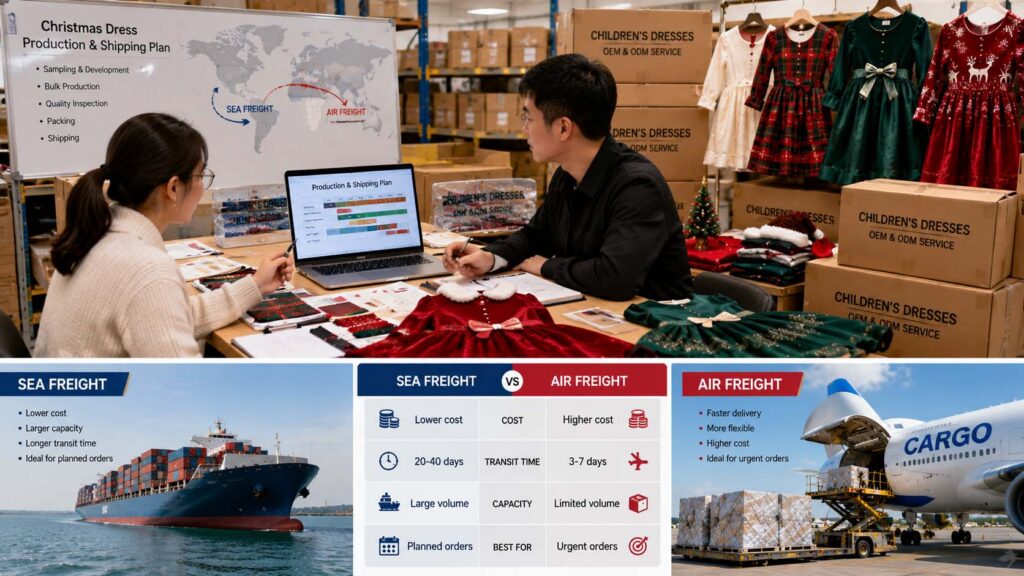
| Shipping Method | Transit Time | Best For |
|---|---|---|
| Sea Freight | 20-40 Days | Large Orders |
| Air Freight | 5-10 Days | Urgent Orders |
| Express Courier | 3-7 Days | Samples |
For retailers ordering between June and August, sea freight is usually the most cost-effective option. Buyers who delay purchasing until September or October often need to rely on air freight, significantly increasing landed costs. Following best practices in global supply chain planning can help businesses reduce transportation risks and improve inventory readiness.
Which Christmas Dress Styles Sell Best?
Although trends change every year, several Christmas dress styles consistently perform well across major markets. Traditional red dresses remain a safe choice because they are closely associated with holiday celebrations. Plaid dresses continue to sell well in North America and Europe, while velvet dresses remain popular among boutique retailers seeking a premium look.
In recent years, layered tulle dresses featuring bows, embroidery, and sparkling embellishments have become increasingly popular. Many of these designs share elements with classic flower girl dresses, making them suitable for retailers specializing in occasion wear. In the Middle East, elegant satin dresses with embroidery details often perform well because they can be worn for multiple celebrations throughout the year.
Our Experience: Why Successful Retailers Order Earlier
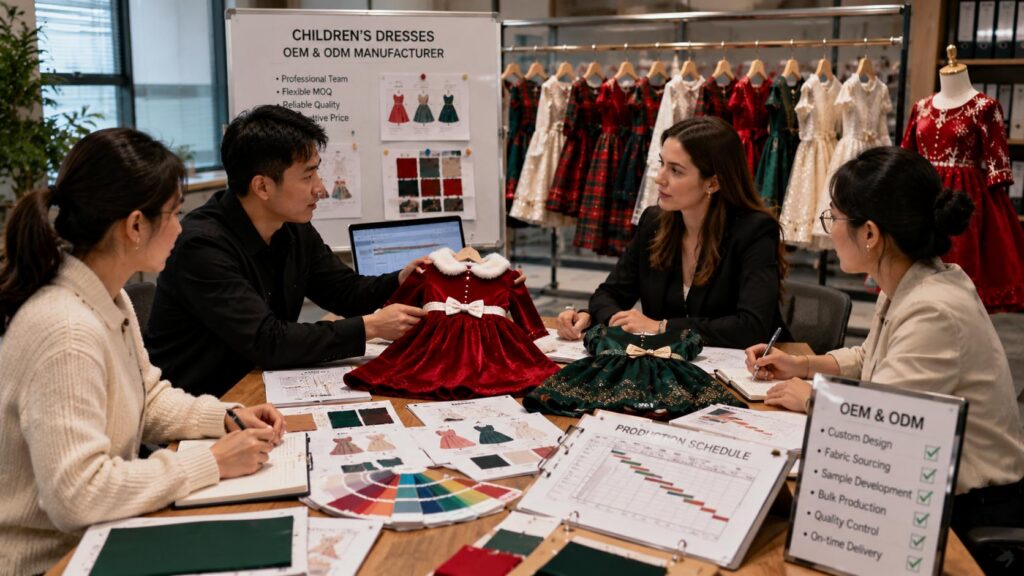
Based on our experience supplying girls’ formal dresses to customers in North America, Europe, and the Middle East, many successful retailers begin discussing Christmas collections much earlier than new buyers expect. While consumers typically purchase during the fourth quarter, conversations about Christmas programs often start in June, and July through August is usually one of the busiest periods for Christmas dress production.
Retailers that confirm orders during this period generally gain access to a wider range of fabrics, more customization options, and greater delivery certainty. Buyers who wait until September frequently face tighter production schedules and reduced flexibility.
How Can Retailers Reduce Inventory Risk?
Managing seasonal inventory requires balancing opportunity with caution. Many retailers begin with proven best-selling products and gradually introduce a smaller number of trend-driven styles. This strategy creates a stable sales foundation while still allowing opportunities to capture emerging demand.
Historical sales performance should also guide purchasing decisions. Retailers that rely on actual sales data often achieve better results than those depending solely on forecasts. Applying proven inventory management best practices can help businesses maintain healthier stock levels and improve cash flow throughout the holiday season.
Our Experience: Custom Christmas Dresses Need Extra Time
Retailers planning exclusive collections should understand that custom programs usually require additional lead time. In our factory, custom Christmas dress projects often involve embroidery development, exclusive color matching, branded packaging, and special trim sourcing. These additional steps typically add two to four weeks to the development schedule.
For this reason, retailers planning private-label collections generally achieve better results when development discussions begin before August. Starting early provides sufficient time for revisions, approvals, and production planning while reducing the risk of delays during peak manufacturing periods.
Christmas Dress Trends to Watch in 2026
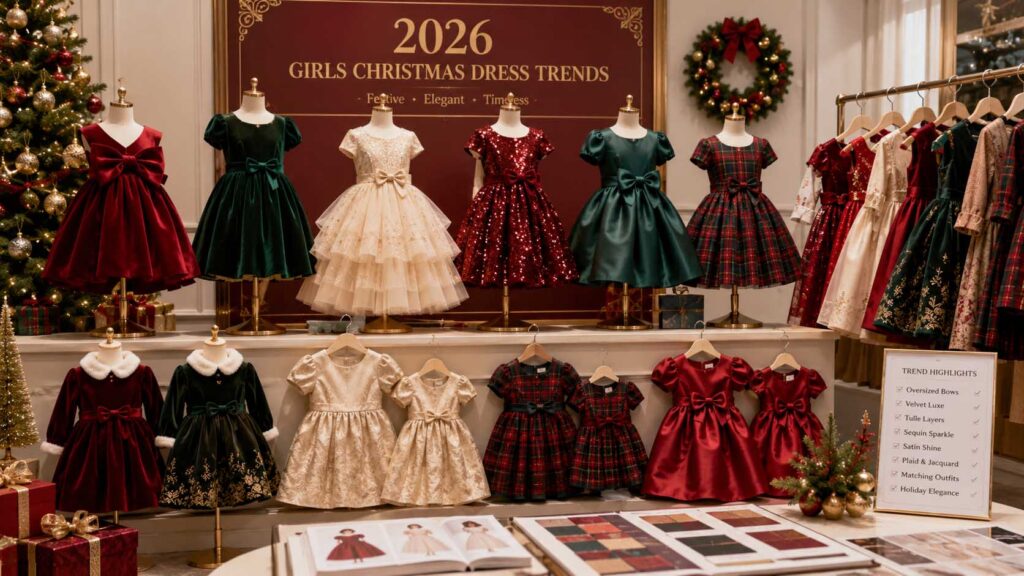
Several trends are expected to remain strong in 2026. Oversized bows, burgundy and forest green color palettes, and combinations of velvet bodices with layered tulle skirts continue to attract consumer attention. Matching sister outfits and coordinated family collections also remain popular due to growing demand for holiday photography and social media content.
According to leading fashion trend forecasting platforms, consumers are increasingly seeking occasion wear that can be worn beyond a single holiday season. Retailers following Kids Dress Trends 2026 are seeing stronger demand for versatile dresses suitable for Christmas, birthday parties, and family celebrations.
FAQ
Is September too late to order Christmas dresses?
Not necessarily, but retailers may face fewer style options, tighter production schedules, and higher shipping costs. Custom collections should ideally be confirmed before August.
How many Christmas dresses should a boutique stock?
The ideal quantity depends on previous sales performance, customer demographics, and marketing plans. Most boutiques start with proven best sellers and expand gradually.
Should retailers choose ready-made or custom Christmas dresses?
Ready-made styles offer faster delivery and lower development costs, while custom programs provide greater brand differentiation and exclusivity.
What is the Best Month to order girls’ Christmas Dresses?
June to August is usually the best time to place orders. This gives retailers enough time for production, shipping, and holiday sales preparation.
What Shipping Method Is Best for Christmas Dress Orders?
Sea freight is ideal for planned orders, while air freight is better for urgent shipments. The best option depends on delivery deadlines and budget.
Conclusion
For most boutiques, online sellers, and wholesale buyers, the best time to order girls’ Christmas dresses is between June and August. This schedule provides enough time for sampling, production, shipping, and inventory preparation before holiday demand begins. Retailers that plan generally enjoy more style options, greater production flexibility, and lower supply chain risks. If you are preparing your next holiday collection, contact our team early to discuss wholesale and custom Christmas dress opportunities.