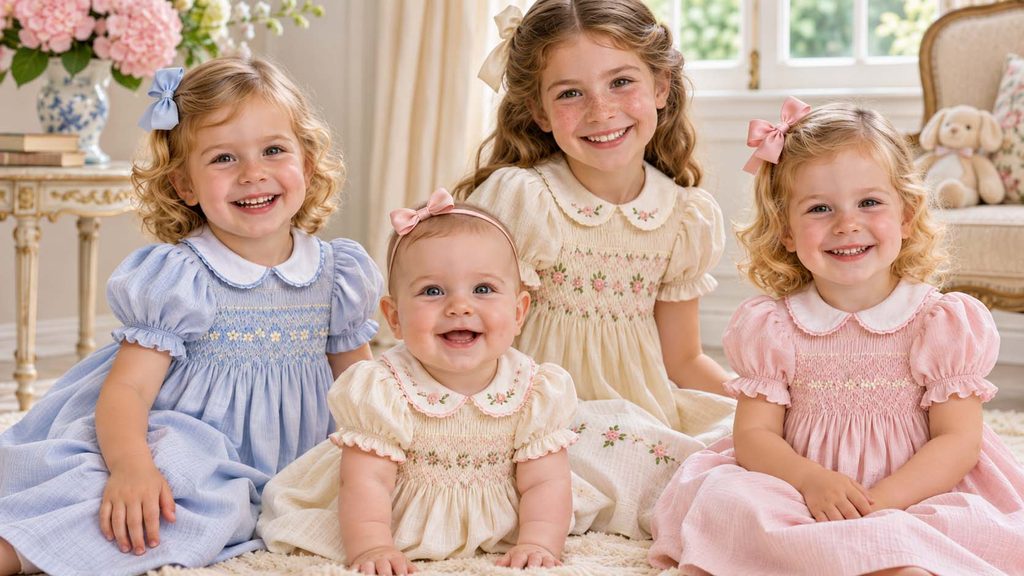
Smocked baby dresses combine classic embroidery, gathered fabric, and timeless designs. However, a beautiful appearance does not always mean a dress is well-made. Fabric quality, stitching, comfort, and accurate sizing all matter. This guide explains how to identify quality smocked baby dresses and what retailers should check before placing bulk orders.
What Are Smocked Baby Dresses?
Smocking is a decorative sewing technique that gathers fabric into controlled folds and holds them in place with stitching. It creates textured patterns across the garment, usually around the chest or bodice.
Smocked baby dresses are popular for their traditional appearance and decorative details. Depending on the design, they may feature hand-smocked panels, embroidered motifs, Peter Pan collars, or puff sleeves.
Popular Smocked Baby Dress Styles
Common styles include:
- Traditional smocked dresses: Feature decorative stitching across the chest, often with floral or geometric embroidery.
- Peter Pan collar dresses: Combine rounded collars with classic smocked bodices.
- Sleeveless cotton dresses: Suitable for warmer weather and everyday occasions.
- Embroidered smocked dresses: Add floral, seasonal, or personalized decorative details.
When choosing a style, consider the intended occasion, fabric, and age range.
Choosing the Right Fabric for Smocked Baby Dresses
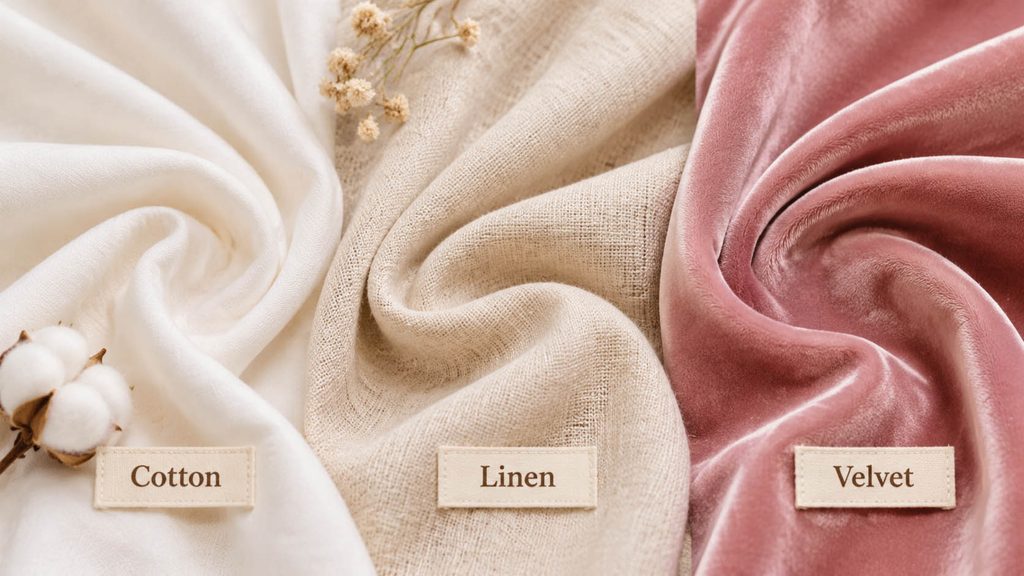
Fabric affects more than appearance. It influences softness, breathability, garment weight, and how well the smocked details maintain their shape.
The right choice depends on the season, design, and intended use. For more information, see our guide to Baby Clothing Fabrics.
Cotton for Everyday Comfort
Cotton is a popular choice for baby smocked dresses because it is available in different weights and textures.
Lightweight cotton fabrics are suitable for warm-weather clothing, while slightly heavier options can provide more structure. When selecting cotton, check whether the surface feels smooth and whether the fabric works well with the intended embroidery.
Linen for Lightweight Summer Dresses
Linen is known for its breathable structure and natural texture. It can create a relaxed appearance for summer dresses.
However, linen wrinkles more easily than many cotton fabrics. Retailers should consider the expected appearance after washing and wearing.
Velvet and Other Fabrics for Special Occasions
Velvet can create a richer appearance for cooler-weather and formal styles. Decorative fabrics may also be used to achieve different textures and finishes.
For these designs, pay particular attention to the lining and inner construction. A beautiful outer fabric should not make the garment uncomfortable against a baby’s skin.
| Fabric | Main Characteristics | Suitable Applications |
|---|---|---|
| Cotton | Soft, versatile, breathable | Everyday and summer dresses |
| Linen | Lightweight, natural texture | Warm-weather dresses |
| Velvet | Rich texture, heavier feel | Cooler-weather occasions |
| Cotton blends | Different textures and properties | Various seasonal styles |
How to Identify Quality Smocking Craftsmanship
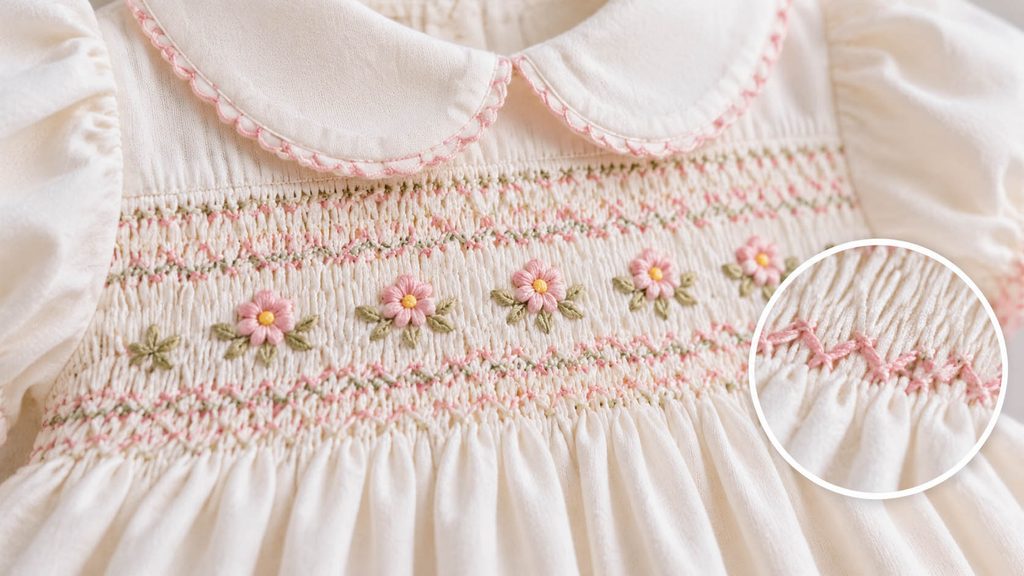
Smocking is one of the most noticeable features of these dresses. Uneven gathers, misplaced embroidery, or inconsistent stitching can affect the entire appearance.
A well-made smocked dress should have balanced decorative details and consistent workmanship.
Check Smocking Alignment and Symmetry
Lay the dress flat on a clean surface and use the center front as a reference point.
Check whether the smocking rows are evenly arranged and whether the embroidery is positioned correctly on both sides. The left and right sections should look balanced.
Pay attention to visible fabric shifting, uneven gathers, and decorative patterns that appear off-center.
Inspect Stitching and Embroidery Finishing
Look closely at the stitching around the smocked panel.
Check for loose threads, skipped stitches, uneven thread tension, and unfinished edges. Decorative elements should also be securely attached.
For additional quality-checking guidance, read our article on 5 Details That Show Premium Kids Clothing Quality.
Outong Factory Experience: Sample Approval and Bulk Inspection
During sample approval, our team lays the dress flat and checks the smocking rows, pattern placement, and left-right symmetry against the center front.
During bulk inspection, finished garments are compared with the approved sample. Minor thread or localized stitching issues can be trimmed or repaired.
However, visible misalignment, asymmetry, or incorrect measurements require adjustments at the relevant production stage. Pressing and finishing should never be used to hide underlying workmanship problems.
This is why pre-production sample approval matters: it helps identify construction and measurement issues before bulk manufacturing begins.
You can also explore our guide to Baby Girl Dress Quality: 7 Details Buyers Should Check for more practical garment inspection tips.
What Makes a Smocked Baby Dress Comfortable?
A dress may look beautiful on a hanger but feel uncomfortable when worn. For baby clothing, skin contact and freedom of movement deserve particular attention.
The inner construction is just as important as the outer appearance.
Choose Soft Linings and Skin-Friendly Materials
Check whether the lining feels smooth and whether seams or decorative materials create rough contact points.
Lace and sequin fabrics may need additional lining or protective finishing, especially when they touch the skin directly.
When selecting fabrics for baby clothing, retailers should also consider recognized textile certifications. The OEKO-TEX® STANDARD 100 provides information about testing textiles for harmful substances, while the Global Organic Textile Standard (GOTS) outlines requirements for certified organic textiles and their processing
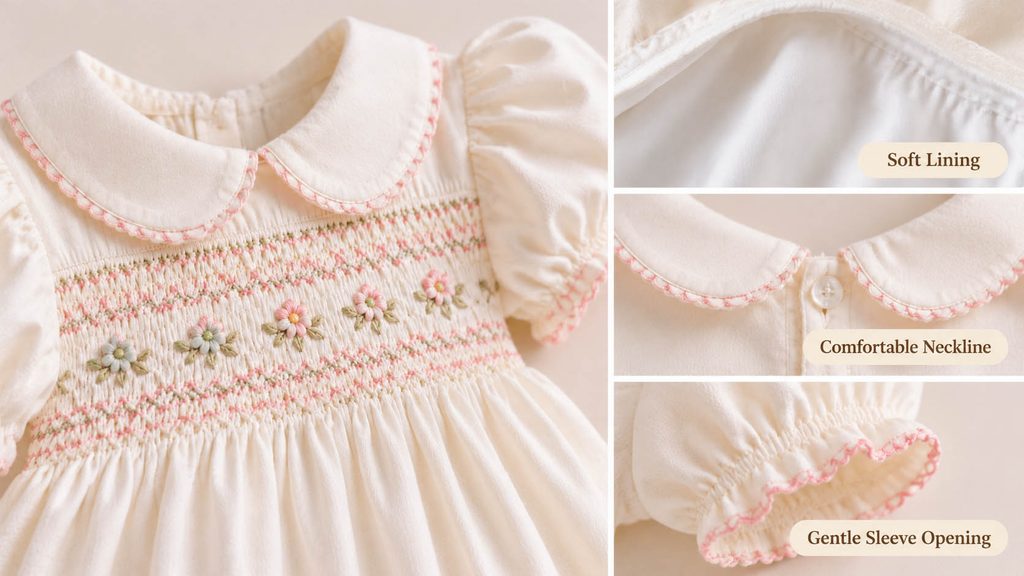
Check Necklines, Sleeves, and Decorative Details
The neckline should allow comfortable movement without excessive tightness. Sleeve openings should also provide enough room.
For dresses using sequin fabrics, protective binding around the neckline and sleeve openings can help prevent direct contact with rough surfaces. Lace may require an additional soft lining.
Allow Enough Room for Baby’s Movement
A comfortable dress should not pull backward or restrict movement when a baby raises their arms or moves their head.
Outong Factory Experience: Comfort Adjustments During Development
During product development, we check lining softness, neckline and sleeve finishing, and whether decorative materials may rub directly against the skin.
If the lining feels unsuitable, we consider replacing or adjusting it. When a neckline feels too tight, we adjust the neckline ease and pattern proportions.
For decorative sequin fabrics, we consider protective binding around the neckline and sleeve openings. Lace designs may require additional soft lining.
These adjustments address three practical concerns: skin irritation, restricted movement, and changes in garment appearance after washing.
Choosing the Right Size for Smocked Baby Dresses
Baby clothing sizes can vary between manufacturers. Therefore, parents and retailers should not rely exclusively on age labels.
Measurements provide a more useful reference when comparing different styles.
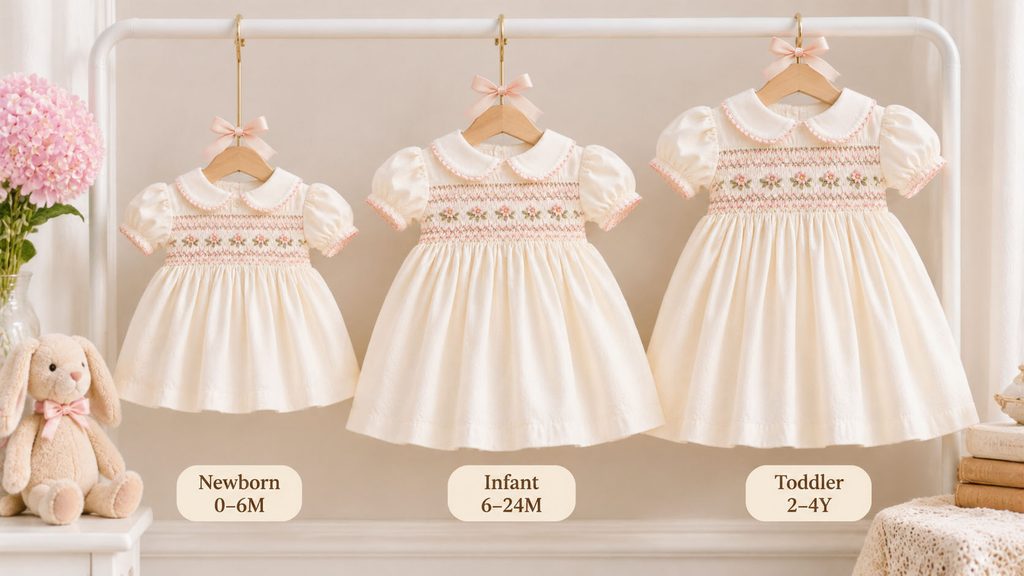
Understand Newborn, Infant, and Toddler Sizes
Smocked dresses are available for different age groups, including newborns, infants, and toddlers.
When selecting sizes, consider the baby’s actual measurements, garment construction, and intended wearing period.
For more detailed guidance, see our Baby Clothing Size Chart: A Step-by-Step Guide.
Check Dress Measurements and Smocked Proportions
Pay attention to chest width, dress length, and waist measurements.
The smocked section should fit comfortably without becoming excessively tight. Its decorative proportions should also remain balanced across different sizes.
A larger dress should not simply have longer measurements while retaining an incorrectly scaled embroidery design.
Quality Checks Before Ordering Smocked Baby Dresses in Bulk
For retailers and baby clothing brands, checking one approved sample is only the beginning. Bulk production requires consistent standards across sizes, fabrics, and finished garments.
Three areas deserve particular attention.
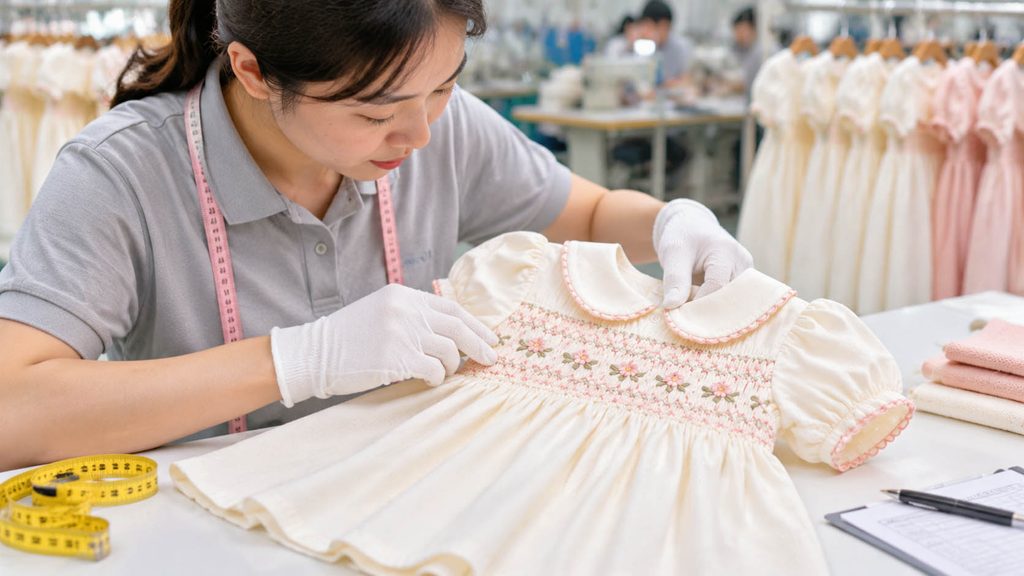
Check Smocking Proportions Across Different Sizes
When grading a design into multiple sizes, the smocking width and embroidery placement should be reviewed.
Simply increasing the dress length and chest measurements may change the visual balance of the garment.
Check key sizes before production and compare finished garments with the approved samples.
Compare Bulk Fabric Colors with the Approved Sample
Fabric colors may vary between production batches.
Before manufacturing, compare bulk fabric with the approved sample and agree on acceptable color variation. During inspection, garments can be compared under natural light, with a light box used when necessary.
If color differences exceed the agreed range, confirm a solution before continuing production or shipment.
Inspect Measurements, Stitching, and Embellishments
A practical bulk inspection should cover several details:
| Inspection Area | What to Check |
|---|---|
| Smocking | Symmetry, pattern placement, and consistent proportions |
| Measurements | Dress length, waist, and chest dimensions |
| Stitching | Skipped stitches, broken threads, and loose ends |
| Embellishments | Secure attachment and clean finishing |
| Fabric color | Consistency with the approved sample |
Outong Factory Experience: Three Common Bulk Production Risks
In our production work, we pay particular attention to three potential problems:
- Inconsistent smocking proportions: Key sizes are checked before production to ensure embroidery placement and smocking width remain visually balanced.
- Fabric color differences: Production fabric is compared with the approved sample, with acceptable color tolerances agreed upon in advance.
- Unstable workmanship and sizing: Finished garments are checked for measurements, stitch consistency, loose threads, and decorative attachment. Products that fail to meet the approved standards require rework before shipment.
These checks help retailers receive products that remain consistent with the approved design and quality requirements.
Caring for Smocked Baby Dresses
Proper care helps maintain the appearance of embroidered details and gathered fabric.
The correct method depends on fabric composition, construction, and the garment’s care label. Our guide on How to Wash Baby Clothes Properly provides additional practical advice.
Washing and Drying
Follow the manufacturer’s care instructions before washing.
For delicate embroidery, gentle washing methods may help reduce friction. Avoid treating all cotton, linen, and velvet garments in the same way.
For garments sold in the United States, manufacturers and retailers should also understand the FTC Care Labeling Rule, which explains care-labeling requirements for clothing products.
Storing Smocked Dresses
Store dresses in a clean, dry place. Avoid placing heavy items directly on embroidered panels, as excessive pressure may flatten the decorative details.
Keep delicate embellishments away from objects that could cause snagging.
How to Choose a Reliable Smocked Baby Dress Supplier
For wholesalers, boutiques, and baby clothing brands, choosing a supplier involves more than comparing prices.
A reliable manufacturer should be able to explain its sample development process, fabric options, size grading, and quality inspection procedures.
Before placing a bulk order, consider asking:
- Can the supplier provide a sample for approval?
- Can the smocking design and embroidery placement be adjusted?
- Can the manufacturer maintain consistent proportions across different sizes?
- How are bulk fabric colors compared with approved samples?
- What inspection procedures are followed before shipment?
- Does the supplier offer OEM/ODM customization?
Brands developing their own collections can also read our guide to OEM vs. ODM Children’s Clothing: What’s the Difference? to understand different manufacturing and product development approaches.
Clear communication before production can help reduce misunderstandings and unnecessary revisions.
Frequently Asked Questions About Smocked Baby Dresses
Q1: Are Smocked Baby Dresses Comfortable for Babies?
They can be comfortable when the fabric, lining, neckline, and overall fit are properly selected. Check for rough seams, tight openings, and decorative details that may irritate the skin.
Q2: What Is the Best Fabric for Smocked Baby Dresses?
Cotton is a popular option for everyday and warm-weather styles. Linen offers a lightweight natural texture, while velvet is often considered for cooler-weather occasions. The best choice depends on the design and intended use.
Q3: Are Hand-Smocked Baby Dresses Different from Machine-Smocked Dresses?
Yes. They may differ in construction methods and decorative finishing. However, workmanship should be evaluated through stitching consistency, pattern alignment, durability, and overall appearance rather than assuming one method is always superior.
Q4: How Do You Know If a Smocked Baby Dress Is Well-Made?
Check the symmetry of the smocked panel, embroidery placement, stitching, lining, garment measurements, and decorative finishing. A well-made dress should also allow comfortable movement.
Q5: What Should Retailers Check Before Ordering Smocked Baby Dresses Wholesale?
Retailers should review approved samples, size grading, fabric color consistency, stitching quality, and embellishment attachment. They should also confirm inspection standards before bulk production begins.
Final Thoughts: Quality Matters in Every Smocked Baby Dress
A well-made smocked baby dress combines attractive design with thoughtful construction. Fabric selection, balanced embroidery, comfortable lining, accurate sizing, and consistent finishing all contribute to the final result.
For retailers and brands, checking these details before and during bulk production can help maintain product quality and customer satisfaction.
Work with Outong Fashion
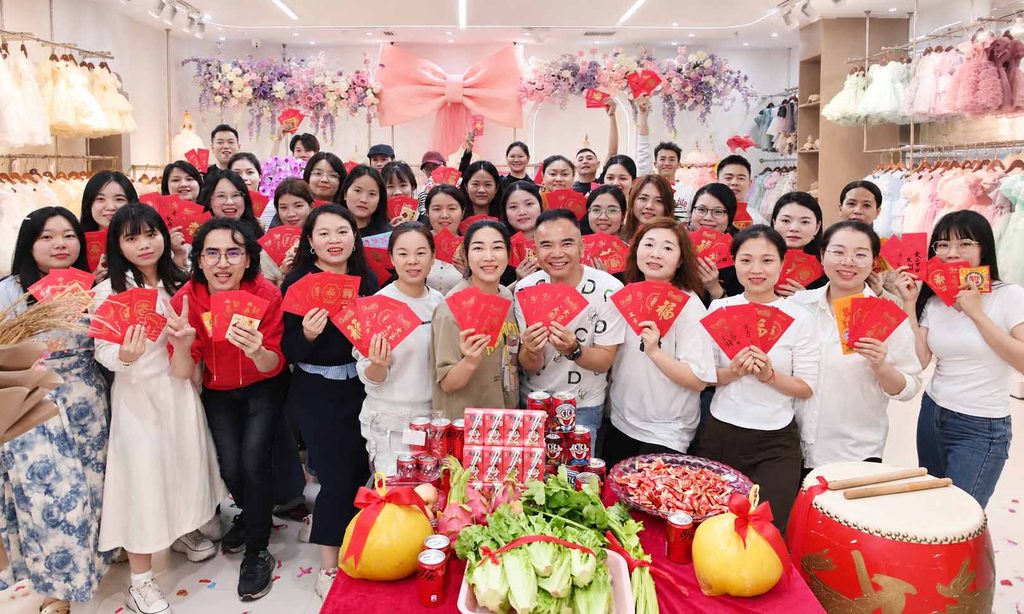
At Outong Fashion, we specialize in children’s clothing manufacturing, including babywear and girls’ occasionwear. With OEM/ODM capabilities, we help brands, wholesalers, and retailers develop collections according to their product requirements.
If you are planning a new smocked baby dress collection, contact our team to discuss fabric options, sample development, and wholesale production.