When sourcing children’s clothing, buyers often come across two manufacturing models: OEM and ODM. Both can be used for custom kidswear, but they differ in who develops the product and how much input the buyer needs to provide.
Understanding the difference makes it easier to choose the right model for your collection, timeline, and sourcing plan.
What Is OEM in Children’s Clothing?
OEM stands for Original Equipment Manufacturer. In most OEM projects, the buyer already has a clear product concept or finished design.
This may include a tech pack, reference sample, measurements, fabric requirements, colors, trims, or embroidery artwork. The manufacturer then develops the pattern and sample before moving into bulk production.
For example, a children’s clothing brand may provide a complete design for a girls’ party dress. The manufacturer sources the required materials, develops the pattern, makes the sample, adjusts the fit, and produces the approved design in bulk.
OEM gives buyers more control over product details, but it also requires more preparation before development begins.
OEM is generally suitable for:
- Established children’s clothing brands with their own designs
- Buyers with tech packs or detailed specifications
- Companies developing exclusive collections
- Brands with specific fabric, sizing, or construction requirements
The clearer the specifications are at the beginning, the easier it is to develop an accurate sample.
What Is ODM in Children’s Clothing?
ODM stands for Original Design Manufacturer. Instead of starting with a complete buyer-developed design, ODM allows buyers to work from styles or product concepts already developed by the manufacturer.
For example, you might select an existing flower girl dress and change the fabric, color, sleeves, embroidery, bow, or skirt volume. Private labels and packaging can then be added for your market.
This reduces the amount of development work required from the buyer and can shorten the time needed to build a collection.
ODM is often a practical choice for wholesalers, importers, and growing brands that want more product options without developing every style from scratch. Buyers still deciding between existing products and full customization can also compare ready stock vs custom kidswear before choosing a development model.
OEM vs ODM Children’s Clothing: Key Differences
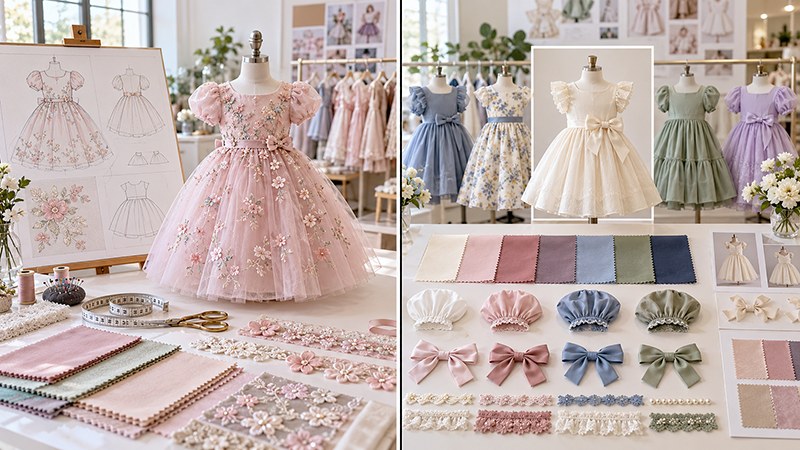
The biggest difference is the starting point: OEM begins with the buyer’s design, while ODM begins with the manufacturer’s product development.
| Factor | OEM | ODM |
|---|---|---|
| Starting point | Buyer’s design or specification | Manufacturer’s design or existing style |
| Design involvement | Mainly buyer-led | Manufacturer-led or collaborative |
| Buyer preparation | More detailed | Less initial design work |
| Customization | High | Moderate to high |
| Development time | Usually longer | Usually faster |
| Best for | Brands with established designs | Buyers needing development support |
Neither option is automatically better. It depends on your design resources, timeline, and how much control you need over the final product.
When Does OEM Make More Sense?
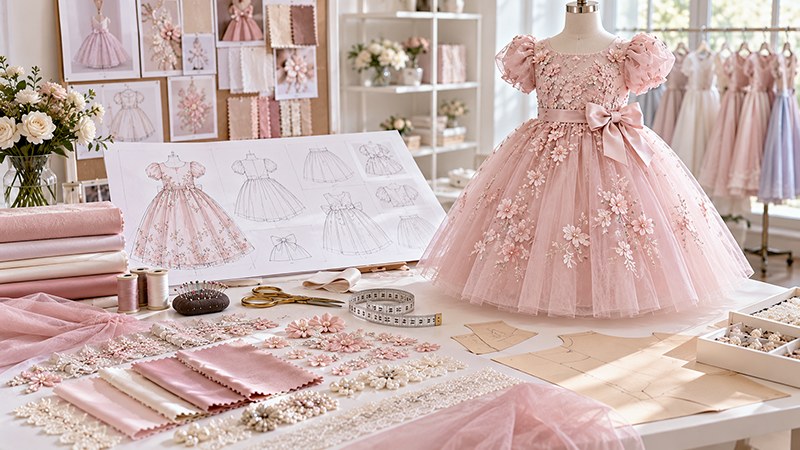
OEM is usually the better route when your team already knows exactly what it wants to produce.
If you have detailed sketches, measurements, fabrics, colors, and construction requirements, the manufacturer can focus on turning those specifications into a production-ready garment.
This is particularly useful for brands developing distinctive products. Details such as skirt proportions, embroidery placement, lining construction, fabric weight, or trim size can all affect the final look and feel.
A good OEM manufacturer should also review whether the design works in real production. Children’s clothing needs to balance appearance with comfort, movement, construction, and age-appropriate details.
When Is ODM the Better Choice?
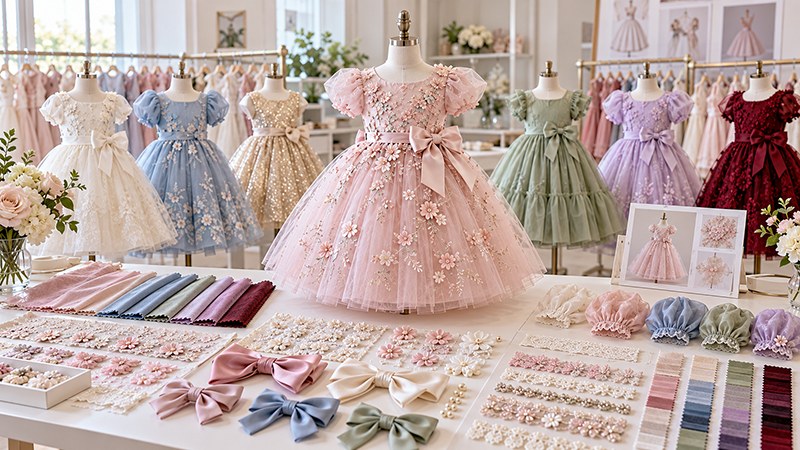
ODM can be more efficient when you want to build or refresh a collection without developing every pattern independently.
A buyer might like the silhouette of an existing party dress but want it in a different color with simpler embroidery. Another may select a boys’ suit and change the fabric, buttons, lining, and branding.
Because the basic product structure already exists, there is often less development work involved.
This makes ODM useful for buyers introducing more styles, preparing seasonal collections, or testing a new product direction before investing in deeper customization.
What Can Be Customized?
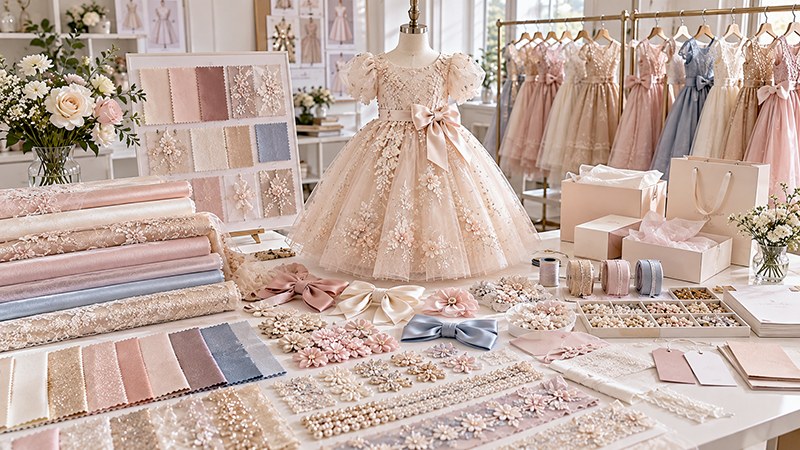
Customization depends on the product and manufacturer, but common options include:
Fabric and color: Different fabrics, linings, textures, weights, and colors can be selected according to the product and target market.
Design details: Sleeves, necklines, skirt layers, bows, lace, embroidery, sequins, buttons, and other trims can often be adjusted.
Fit and sizing: Measurements and size grading can be developed around your market or existing brand standards.
Branding: Woven labels, care labels, hangtags, and other private-label elements can be added.
Packaging: Polybags, cartons, gift boxes, barcode labels, and other packing requirements can also be customized.
It is best to confirm these details before sampling. Major changes after sample approval can add both time and cost to the project.
What Should You Check Before Choosing a Manufacturer?
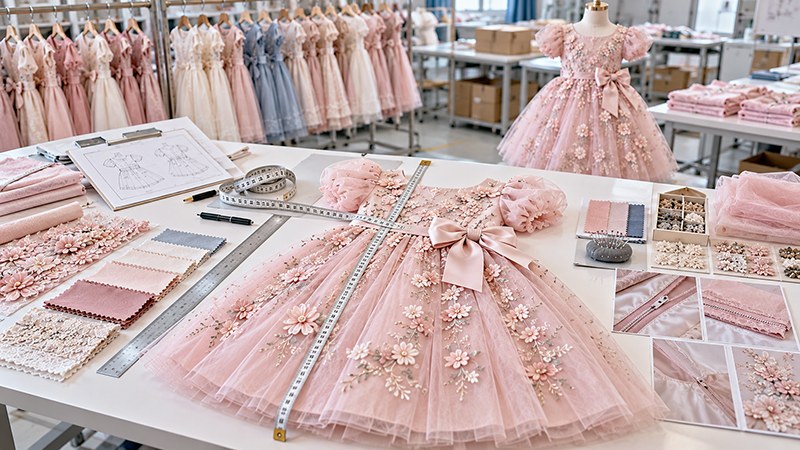
Whether you choose OEM or ODM, the manufacturer’s actual development and production ability matters more than the label itself.
Sampling
Ask how samples are developed, how revisions are handled, and how your comments are recorded. Sampling is where measurements, construction, materials, and appearance should be checked before bulk production.
Fabric and Trim Sourcing
Material selection can change the entire result of a garment.
This is especially noticeable with products such as tulle party dresses, lace ceremony dresses, babywear, and boys’ formalwear. Fabric weight, hand feel, lining, color consistency, and trim quality all need attention. For buyers with specific material requirements, standards such as OEKO-TEX® STANDARD 100 can also help when evaluating textiles for children’s clothing.
Children’s Clothing Experience
Kidswear has different considerations from adult clothing. Fit, movement, lining, decorative attachments, and construction need to suit the intended age group.
A manufacturer with regular children’s clothing production experience will usually identify these issues earlier in development.
Quality Control
Ask how measurements, stitching, colors, fabric defects, decorative details, finishing, and packing are checked.
For repeat wholesale orders, consistency between production batches is just as important as getting the first sample right.
Compliance
Requirements vary by product and destination market. Testing and compliance expectations should therefore be discussed early rather than after production has started.
For products sold in the United States, buyers can review current children’s product requirements from the U.S. Consumer Product Safety Commission (CPSC) when planning testing and compliance.
Can OEM and ODM Be Used Together?
Yes. Many buyers do not need to choose only one model for an entire collection.
A brand might use OEM for several signature designs while adding ODM styles to broaden the range. An ODM product that performs well can also become the starting point for deeper customization in the next season.
For many buyers, this offers a practical balance between product originality, development time, and cost.
How We Support OEM and ODM Kidswear Projects
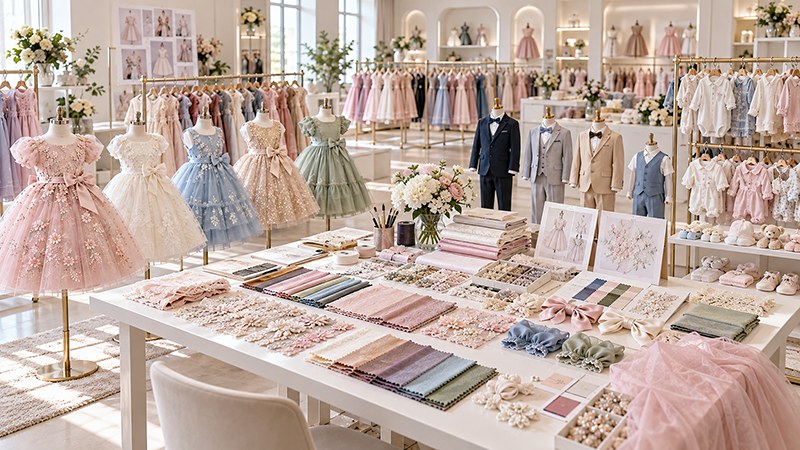
At Outong Fashion, we work with professional buyers on both OEM and ODM children’s clothing projects, covering girls’ dresses, flower girl and party dresses, boys’ formalwear, babywear, and other kidswear categories.
Depending on the project, buyers can provide their own designs or develop products from our existing styles. Our team supports fabric sourcing, pattern development, sampling, color and detail adjustments, private labels, packaging, bulk production, and quality control.
We focus on choosing a development approach that fits the buyer’s collection rather than pushing every project through the same process.
OEM or ODM: Which Is Right for Your Business?
Choose OEM if you already have detailed designs and want greater control over the finished product.
Choose ODM if you want to use the manufacturer’s existing designs and development resources to build a collection more efficiently.
Some businesses benefit from combining both.
Before deciding, consider how complete your designs are, how much development work your team can handle, and how quickly you want to bring the collection to market.
Frequently Asked Questions
What is the difference between OEM and ODM clothing?
OEM normally starts with a design or specification provided by the buyer. ODM starts with a design or product concept developed by the manufacturer, which the buyer can select and customize.
Is OEM or ODM better for a new children’s clothing brand?
It depends on your resources. If you already have complete original designs, OEM may be more suitable. If you need more design and development support, ODM can make the process easier.
Can I put my own label on ODM children’s clothing?
In many cases, yes. Private labels, hangtags, packaging, and other branding elements can usually be added depending on the product and order requirements.
What do I need to provide for an OEM kidswear order?
A tech pack or reference sample is helpful, along with measurements, fabric requirements, colors, artwork, trims, size range, quantities, and packaging requirements.
Can an ODM design be customized?
Yes. Depending on the style, you may be able to change fabrics, colors, sleeves, embroidery, trims, sizing, labels, packaging, and other details.
Start Your OEM or ODM Kidswear Project
OEM and ODM offer different paths to the same goal: creating a children’s clothing collection that fits your market.
If you are planning a new collection, send us your designs, reference images, or product requirements. We can review the project and recommend whether OEM, ODM, or a combination of both is the more practical approach.
Contact us to discuss your project and request our latest kidswear collection.