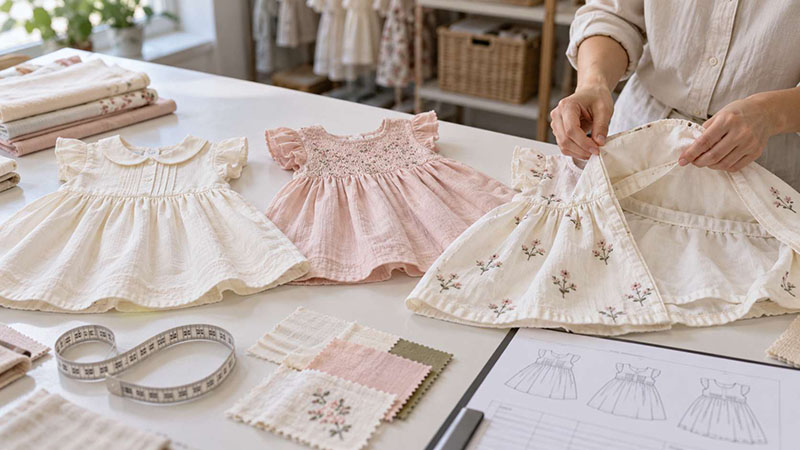
Beautiful product photos can help you shortlist baby girl dresses, but they cannot show how a waist seam feels inside or how the skirt looks after washing. For boutique buyers and brands, those details matter when approving samples and setting expectations for bulk production. Outong supplies babywear alongside other children’s clothing, with product development and wholesale support. This guide explains seven checks for dresses intended for ages 0–24 months, from fabric selection to written sample approval.
Before You Inspect: Confirm the Age and Intended Use
A cotton dress for everyday wear and a layered dress for a special occasion need different inspection priorities. Start with the intended age, occasion, sales market, and expected washing method. These decisions help you assess whether the fabric, lining, opening, and decoration suit the product you plan to sell.
If you are developing a mixed baby clothing collection, prepare a specification for each style. One attractive sample does not establish the quality of every size, color, or fabric option.
1. Check Fabric Softness, Weight, and Structure
Look Beyond the Cotton Label
Cotton baby girl dresses can vary considerably in thickness, texture, and construction. Feel the fabric on both sides, examine its drape, and check whether it suits the intended season. A lightweight outer fabric may still feel bulky when combined with several lining layers.
Ask for the fiber composition and any fabric specifications that form part of your order. Organic cotton claims should have supporting documentation; they do not replace checks of stitching, fit, or washing performance.
Confirm What a Certificate Actually Covers
Where a supplier offers OEKO-TEX certification, check the certificate number, validity, and article scope. OEKO-TEX STANDARD 100 addresses harmful substances, and Product Class 1 covers products for babies and children up to three years. It does not establish garment fit, seam durability, or every aspect of finished-product compliance.
Keep an approved fabric swatch or garment sample. If the production fabric changes, review the replacement before it is used.
2. Turn the Dress Inside Out to Check Comfort
Inspect the Areas That Touch the Skin
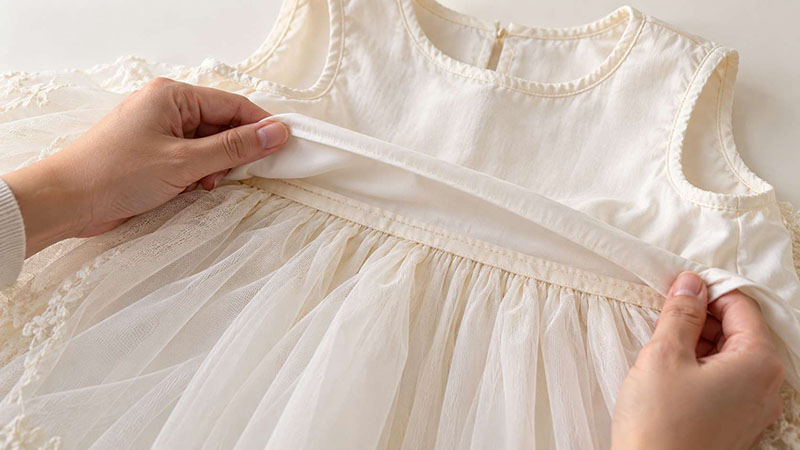
Run your fingers along the neckline, armholes, underarms, waist seam, and zipper backing. Look for rough seam allowances, stiff labels, uncovered tulle edges, or embroidery backing that extends beyond the lining. Check whether the lining stays in place when you gently move the skirt.
Soft outer fabric cannot compensate for a bulky join directly against the body. Inspect the complete garment rather than judging comfort from the fabric swatch alone.
Practical Inspection Note: A Neat Exterior Can Hide a Bulky Waist
A useful sample-review approach is to compare the outside and inside of the same waist seam. Several skirt layers may meet neatly on the outside while forming a thick ridge underneath. Possible adjustments include changing seam finishing or improving lining coverage, but the revised sample should also be checked for changes in shape.
Ask for an inside-out photograph and close-ups of the waist and armholes before approving a layered dress. Photographs help identify visible issues; they cannot fully replace handling the sample.
3. Examine Seams and Stitching
Look for Defects at Important Joins
Check armholes, waist seams, skirt joins, and garment openings for skipped stitches, open seams, puckering, and unsecured thread ends. Examine both sides of each join. Closely spaced stitches alone do not prove that a seam is suitable for the fabric or construction.
Compare Samples and Record Corrections
Where possible, compare several garments rather than relying on one presentation sample. Recurring puckering or uneven joins deserve a discussion about construction before production begins. Mark the affected area in a photograph and explain the correction you expect.
An approved sample should show the accepted finish. If the supplier corrects a defect, retain the revised version as the reference rather than approving the change only through a message.
4. Inspect Smocking, Embroidery, and Decorations
Check Decorative Work From Both Sides
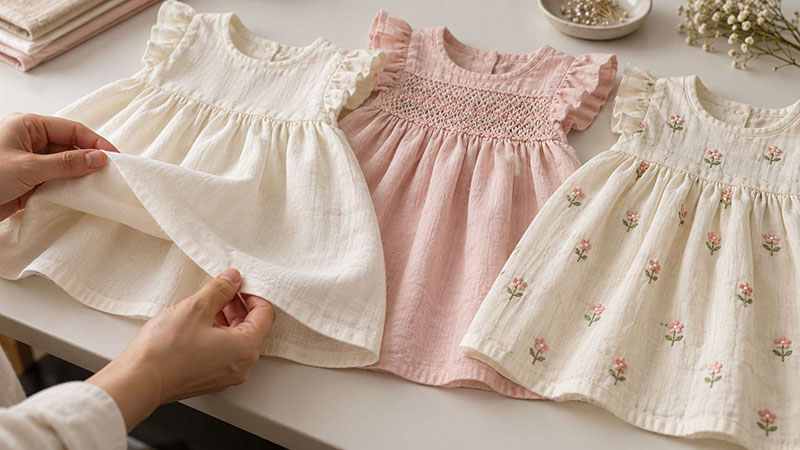
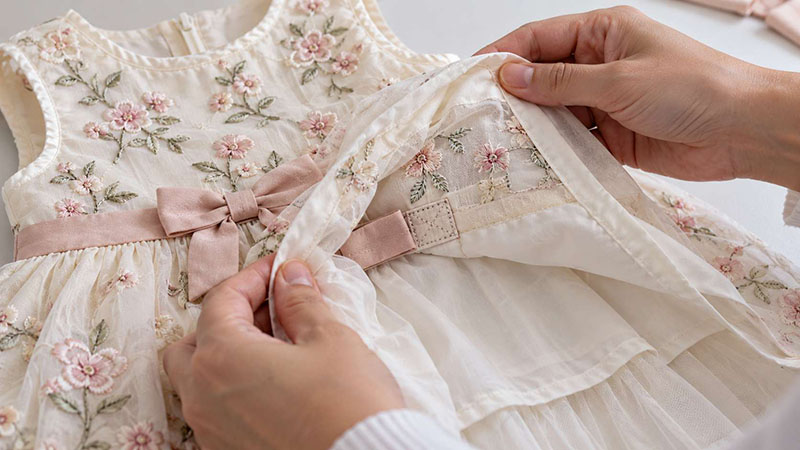
For smocked baby girl dresses, examine pleat spacing, tension, and the reverse-side finish. Check whether the smocked panel sits evenly without distorting the surrounding fabric. Handmade and machine-made work should both be assessed against the agreed appearance and construction requirements.
When inspecting an embroidered baby girl dress, look for puckering, long floating threads, and rough backing edges. Review how the embroidery interacts with the lining, especially where the design sits close to the chest or neckline.
Practical Inspection Note: Follow the Decoration to Its Attachment Point
For a bow or fabric flower, inspect the decoration, its connection to the dress, and the corresponding area inside. This helps reveal distortion or a hard lump that a front photograph may conceal. A prettier decoration does not necessarily have a better attachment method.
Ask the supplier to explain the fixing method and discuss appropriate attachment assessment for the product and market. A casual hand pull is not a formal strength test.
5. Check Buttons, Zippers, and Other Closures
Assess Function and Dressing Access
Open and close each fastening several times, watching for zipper catching, fabric bunching, and difficult operation. Check whether the opening provides practical dressing access without forcing the neckline. Inspect zipper ends, buttonholes, and snap areas for rough edges or visibly loose components.
Confirm Applicable Safety Requirements Separately
For the United States, the CPSC’s small-parts guidance lists children’s clothing and accessories among exemptions from that particular ban. This exemption is not a general assurance that every decoration or attachment is safe. Review the actual design with a qualified testing provider and establish relevant requirements for your destination market.
Specify the approved closure type and placement. Changing a button or snap during production should trigger a review of the affected specifications and documentation.
6. Verify Measurements and Size Consistency
Use Garment Measurements Alongside Age Labels
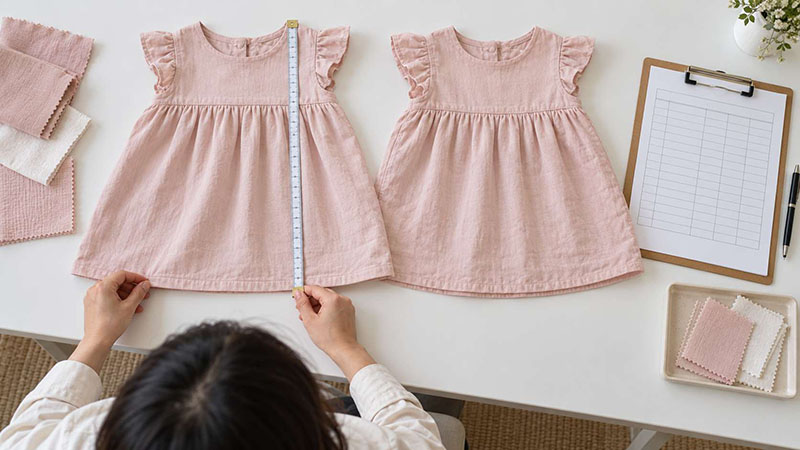
An age label is a starting point, not a complete fit specification. Compare chest width, dress length, and relevant opening measurements with the supplier’s size chart. Clarify whether a chest measurement represents flat width, full circumference, or a body measurement.
Avoid automatically choosing a larger size for every style. The appropriate allowance depends on the pattern, opening, fabric, and intended fit.
Agree on Measurement Methods and Tolerances
Define the measuring points, garment position, and acceptable variation for each key dimension. For smocked areas, state whether measurements are taken relaxed or stretched. Use the same method for sample approval and bulk inspection.
Check more than one size when possible. An acceptable middle size does not demonstrate that the smallest and largest sizes have been graded correctly.
7. Compare the Dress Before and After Washing
Record Changes Under Defined Conditions
Measure and photograph the garment before washing, then follow the proposed care instructions. After drying as directed, repeat the measurements using the same method. Look for changes in skirt shape, seam appearance, lining length, decoration, and contrasting colors.
The FTC’s care-labeling guidance explains that care instructions for covered garments must consider components such as lining and trim. For U.S. sales, confirm a reasonable basis for the proposed instructions rather than copying a label from another product.
Practical Inspection Note: Investigate Each Material
If the outer skirt and lining change differently after washing, the hem may no longer sit as intended. If puckering appears around embroidery, investigate the fabric, thread, backing, and construction rather than assuming the outer fabric alone caused it. Before-and-after photographs help locate the change and guide the next sample revision.
A sample wash is useful for screening issues. When you need quantified shrinkage or colorfastness results, agree on the test method, conditions, and acceptance criteria with the supplier and testing provider.
Turn Sample Findings Into Bulk Order Requirements
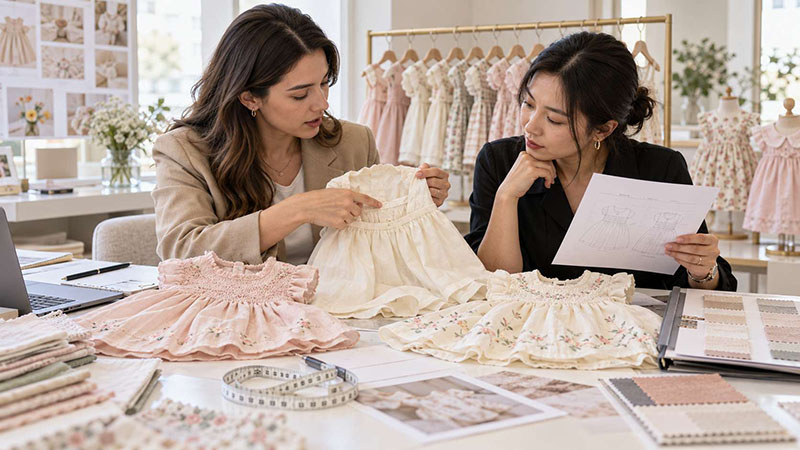
When sourcing baby girl dresses wholesale, record the approved details before placing the order. A retained sample works best alongside a written specification, especially when several sizes and colors are involved.
| Check | Record Before Production |
|---|---|
| Fabric and lining | Composition, agreed specifications, and approved references |
| Inside finish and seams | Detail photographs and acceptable workmanship |
| Decorations and closures | Components, placement, fixing methods, and relevant assessments |
| Measurements | Size chart, measuring points, grading, and tolerances |
| Washing performance | Care instructions, comparison records, and agreed tests |
| Material or design changes | Who approves substitutions and how approval is recorded |
Separate appearance approval from testing and compliance documentation. If you need a customized collection, discuss these requirements during OEM and ODM development, while the design can still be adjusted.
Frequently Asked Questions
What Should Buyers Check First in Baby Girl Dress Samples?
Confirm the intended age and use, then inspect the fabric, inside finish, and key measurements. These checks establish whether the sample suits the product brief before you assess smaller decorative details.
Are Cotton Baby Girl Dresses Always the Best Choice?
No single fiber guarantees the best result for every style. Consider fabric construction, finishing, lining, season, and washing performance together. Assess the complete garment against its intended use.
What Should Buyers Inspect on Smocked and Embroidered Dresses?
Check tension, pleat consistency, puckering, loose threads, and reverse-side finishing. For attached decorations, inspect the connection and inner surface as well as the front appearance.
How Can Buyers Check Baby Girl Dress Sizing?
Compare the garment with an approved size chart using defined measuring points. Confirm whether measurements are flat or circumferential and whether elasticated areas are measured relaxed. Agree on tolerances before bulk inspection.
Is a Sample Wash Enough to Confirm Quality?
It can reveal visible changes under the conditions used, but it does not verify every performance or safety requirement. Formal testing is needed where specified by applicable requirements or agreed quality criteria.
What Should Buyers Confirm Before a Wholesale Order?
Confirm the approved sample, materials, construction, size chart, care instructions, and relevant documentation. Establish how changes will be approved and how bulk goods will be checked against those references.
Conclusion
Before your next sample approval, turn the dress inside out, record its measurements, and review the proposed washing method. Document the corrections and retain the accepted sample. These steps give you and your supplier a clearer reference for bulk production.
Discuss Samples for Your Babywear Collection
Outong supports brands, wholesalers, and retailers with children’s clothing, including babywear and OEM/ODM development. Share your target age range, sales market, preferred styles, and estimated quantities through our baby and newborn clothing enquiry page to discuss suitable products and sampling options.