
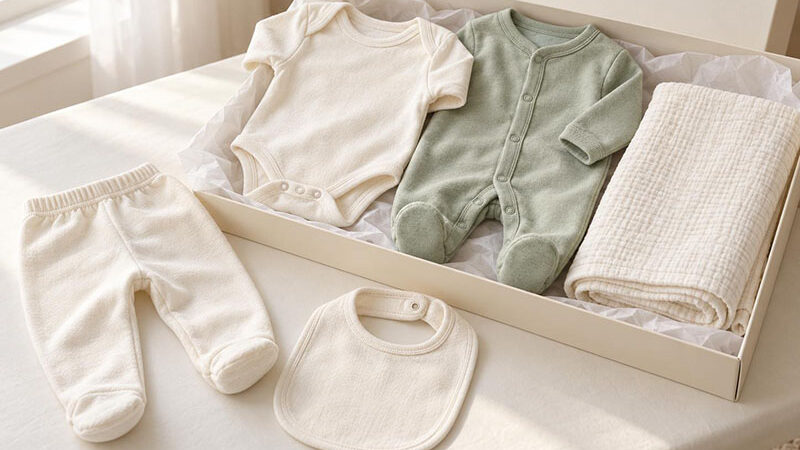
Choosing a newborn gift set is easier when you look beyond the matching colors and gift box. Start with clothing the baby can use, a size suited to the intended wearing period, and fabric information you can verify. Then consider how easily the garments open, wash and work with other clothes.
This guide focuses on clothing-based gift sets and explains the details that help you compare them before buying. For a closer look at common clothing combinations, see our guide to what to include in a newborn gift set.
1. Start with the Contents, Not the Piece Count
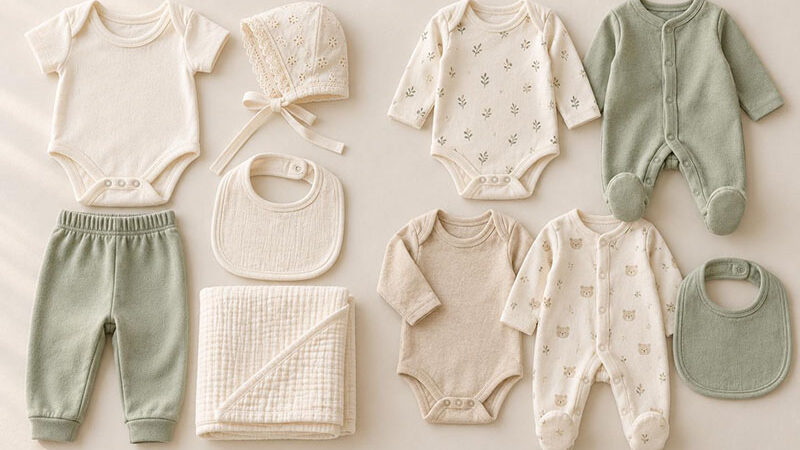
A “five-piece set” can mean several different things. One may contain a bodysuit, trousers, hat, bib and blanket, while another includes two bodysuits, two sleepers and a bib. The count is the same, but the amount of clothing—and its usefulness to the recipient—is different. Read the individual contents before using the piece count to judge value.
For an everyday gift, consider whether the main garments can be worn separately. A bodysuit and matching trousers offer more combinations if they also coordinate with clothing the family already owns. Accessories can complete the presentation, but they should have a clear purpose rather than simply increase the advertised number of pieces.
Where a Baby Layette Set Fits In
A baby layette generally refers to clothing and related essentials prepared for a baby’s early months. A baby layette set brings a selection of those items together, often including bodysuits, sleepers or matching separates. It does not necessarily contain a complete newborn wardrobe.
A layette set can also be a newborn gift set when packaged for gifting. Rather than choosing by the name, compare the garments, size range and intended use. If the parents have a registry or have requested particular items, use that information to avoid unnecessary duplication.
2. Compare the Fabric and the Finished Garment
Fabric deserves attention, but the fiber name is only the beginning. Two cotton garments can differ in thickness, stretch, surface texture and construction. Read the composition label, then examine the finished clothing to understand what you are buying.
Cotton, Cotton Blends and Modal or Viscose
Cotton jersey is a knitted fabric commonly used for bodysuits and everyday separates. When comparing options, look at its weight, stretch and surface finish rather than assuming every cotton garment feels the same. A lightweight jersey and a heavier interlock fabric may serve different purposes, even when both are labeled cotton.
Cotton blends need the same close reading. Check which additional fibers are included and in what proportions; a blend containing elastane, for example, differs from one containing polyester. The relevant question is how the finished garment fits, feels and should be cared for.
Modal and viscose are other options you may encounter. Compare their care instructions, fabric construction and finished appearance alongside cotton alternatives. No single fiber label tells you whether the whole set will be the best match for the recipient.
If a product is marketed as bamboo, look for a precise composition statement. The Federal Trade Commission’s bamboo textile guidance distinguishes actual bamboo fiber from rayon or viscose made using bamboo as a plant source. The plant name should not replace clear information about the finished textile.
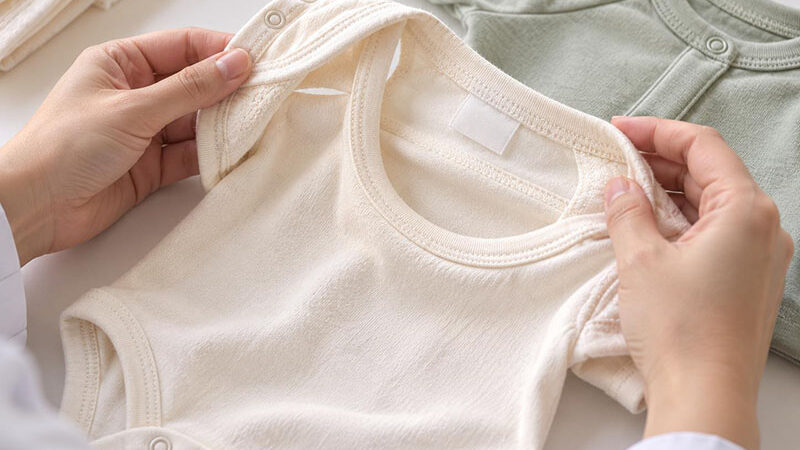
Look Inside the Clothing
Turn the garment inside out, or look for photographs showing the inside. Pay attention to the neckline, armholes, labels and embroidery backing. A smooth outer surface can hide bulky seam allowances or stiff details that are difficult to assess in a styled product image.
Useful questions include:
- Are the inside seams and label edges clearly shown?
- Is the back of decorative stitching covered or exposed?
- Are composition and care instructions available for each garment?
Certification provides additional information when the claim can be verified. OEKO-TEX STANDARD 100 concerns testing textiles for harmful substances, with Product Class 1 covering products for babies and children up to three years. Check what the certificate covers; a fabric certificate should not automatically be interpreted as certification of the complete gift set.
A Practical Check: Compare Before and After Washing
For sample approval, we recommend comparing the same garment before and after washing according to its proposed care instructions. Record the original dimensions, then check neckline shape, seam alignment, surface appearance and dimensions afterward. For a coordinated set, compare all the pieces together, because their appearance after care matters as much as their appearance when new.
Gift shoppers may not have access to a tested sample, but the same principle helps frame questions for the seller. Ask for clear care information and specific evidence behind washing-performance claims. Check the exchange policy before washing if the size is uncertain.
3. Choose the Size for the Intended Wearing Period
Newborn and 0–3 months should not be treated as interchangeable labels. Start with the brand’s size chart and check whether it lists the baby’s height and weight or the measurements of the garment itself. Those are different types of information, so make sure you understand what the chart describes. If the set includes a romper, our baby romper size guide explains which measurements to check beyond the age label.
If the baby has already arrived, the parents’ current size preference is often more useful than the age label alone. For a gift bought before birth, follow any requested size and consider including a gift receipt. This gives the family flexibility without requiring you to predict the baby’s exact fit.
Connect Size with Timing and Season
A gift intended for the first days at home needs a different approach from clothing saved for later. Consider the expected wearing period and the likely weather at that time. Buying a larger seasonal outfit is less helpful if it will fit during a season for which it was not designed.
Avoid automatically choosing oversized clothing, particularly for sleep. Follow the product’s fit and sizing instructions instead. If the information is unclear, an exchangeable option is more practical than relying on a general “size up” rule.
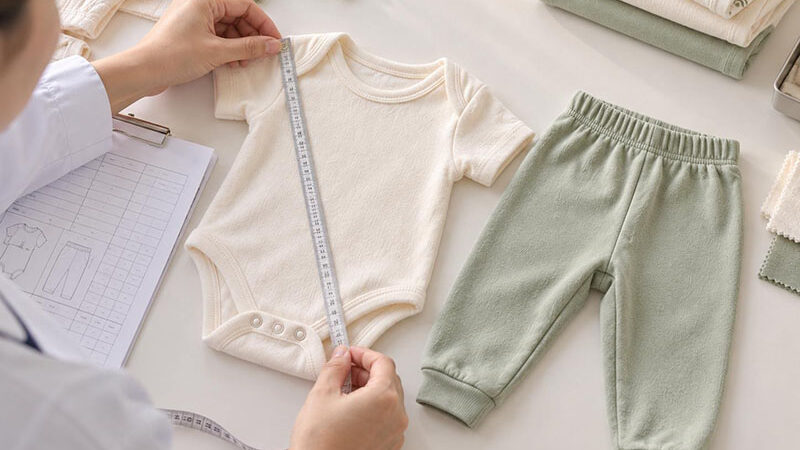
A Practical Check: Measure Each Piece Separately
For coordinated clothing samples, we recommend checking each piece against its own size specification. A bodysuit requires suitable body length, while trousers need appropriate waist and leg measurements. Identical age labels do not establish that both garments will fit well at the same time.
When shopping, look for size details for the main garments rather than only one description on the box. This is especially useful for a newborn gift set combining a bodysuit, top and trousers. If the listing provides insufficient information, ask the seller how the pieces have been sized together.
4. Check the Features That Affect Daily Use
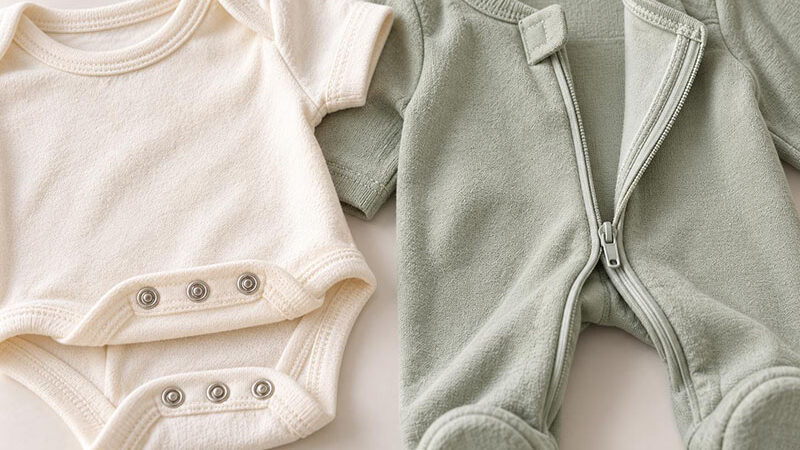
An attractive outfit should also have an understandable dressing method. Look at the neckline and the position of the openings: does the garment pull over the head, open at the shoulder or fasten down the front? For bodysuits and sleepers, check whether diaper changes require removing most of the clothing.
Snaps and zippers offer different opening options, but their placement and finish matter alongside the fastening type. Inspect the stitching around snaps and the covering near the top of a zipper. A two-way zipper may provide convenient access on some designs, although it is not a requirement for a useful gift set.
Decorative details deserve a separate look. Embroidery and bows may suit a special gift, but consider whether they add bulk, complicate dressing or require extra care. Choose a special-occasion garment for that purpose rather than expecting it to work like a simple everyday sleeper.
Accessories should also be understood according to their intended use. A blanket or soft toy included in the box is not automatically suitable for the baby’s sleep space. The American Academy of Pediatrics’ safe-sleep guidance advises keeping loose bedding and soft objects out of that space.
5. Match the Set to the Season and Care Routine
Assess seasonal suitability through fabric weight, coverage and layering options. A short-sleeved bodysuit with separate trousers offers a different combination from a heavier long-sleeved outfit. Color names and seasonal product labels provide less useful information than photographs and garment specifications.
Think about the conditions in which the clothing will be worn, including the indoor environment. A set does not need the greatest possible number of layers to be useful. It needs pieces that suit the expected conditions and can be combined appropriately.
Care requirements are equally important. Check every item, because the garments, blanket and decorative accessories may have different instructions. A coordinated appearance does not guarantee that everything can go through the same washing and drying routine. Our guide to washing baby clothes explains how to read care instructions and plan a suitable washing routine.
For regular use, straightforward care can be a meaningful advantage. Follow the individual labels rather than applying one water temperature or drying method to the entire box. If care information is missing from the listing, request it before purchasing.
6. Balance Presentation with Product Value
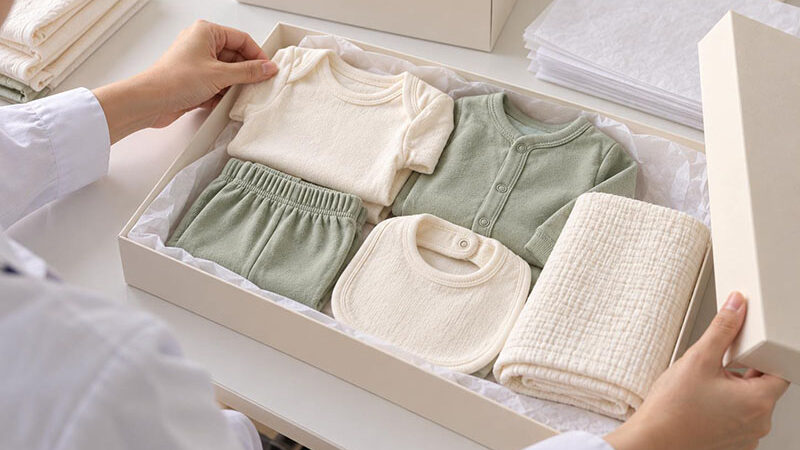
A gift box adds presentation, but compare the clothing before deciding what that presentation is worth. Two similarly priced sets may contain different numbers of substantial garments or provide very different levels of product information. A lower price per piece can be misleading when several pieces are small accessories.
Decide which extras matter to the recipient. Personalized embroidery may be meaningful, while a reusable box may be appreciated by another family. Neither replaces clear sizing or useful clothing, so weigh those extras after the basic requirements are met.
A Practical Check: Review the Fully Packed Set
For packaging approval, we recommend placing every actual item inside the proposed box before confirming it. Check whether the lid closes comfortably, the garments avoid excessive compression, and the contents remain easy to recognize. A box illustration or an empty packaging sample cannot show how the complete set will arrive.
For shoppers, a full open-box photograph is the closest equivalent. Compare it with the written contents list, especially when display props appear in the image. You should be able to distinguish the purchased items from objects used only for styling.
Before ordering personalized products, confirm:
- The exact spelling and placement of the personalization.
- Whether the selected size can be exchanged.
- Which return conditions apply to customized items.
7. Use a Checklist to Make the Final Comparison
Once you know the intended size and wearing period, compare your shortlisted sets using the same criteria. This keeps presentation from distracting you from missing product information.
| Selection factor | What to check | Why it matters |
|---|---|---|
| Contents | Individual garments and accessories | Shows what the piece count actually represents |
| Fabric | Composition, construction and inside finish | Gives a clearer picture than marketing terms |
| Size | Brand chart and main garment measurements | Helps assess fit and timing |
| Practical features | Neckline, diaper access and fastening finish | Explains how the clothing works in use |
| Season | Weight, coverage and layering options | Connects the set to expected conditions |
| Care | Instructions for each item | Shows whether the routine is manageable |
| Packaging | Fully packed photographs and clear labels | Clarifies what will arrive |
| Purchase flexibility | Exchange and personalization terms | Helps manage uncertainty about size |
Frequently Asked Questions
What Is the Difference Between a Newborn Gift Set and a Baby Layette Set?
A newborn gift set emphasizes gifting and presentation, while a baby layette set usually centers on clothing and related early essentials. The categories can overlap. A layette packaged in a gift box may be described using both names.
Should I Choose Newborn or 0–3 Months?
Follow the brand’s size chart and the parents’ requested size where available. Consider whether the clothing is intended for immediate or later use. Do not assume the two labels describe identical measurements.
What Should I Do If I Do Not Know the Baby’s Size?
Choose a seller with clear sizing information and suitable exchange terms. Include a gift receipt where possible. If you can ask the parents which size they need without spoiling the gift, that may remove much of the uncertainty.
Is Cotton Always the Best Choice?
Cotton can be one option, but the fiber name does not establish the quality of the complete garment. Compare construction, thickness, inside finish and care requirements. Avoid choosing solely because one material is advertised as universally superior.
Does a Larger Piece Count Mean Better Value?
No. Some sets count several small accessories, while others contain more wearable garments. Compare the individual contents, likely use and total price rather than the count alone.
Is a Personalized Newborn Gift Set Worth Choosing?
It can be, if the recipient will appreciate the detail and the size is reasonably certain. Confirm the spelling, design placement and return conditions before ordering. Personalization is an optional benefit rather than a substitute for practical clothing.
Conclusion
Choose a newborn gift set by establishing when it will be used and which size information you need. Then compare the garments’ composition, inside finish, openings and care requirements. Once those details meet your needs, use the presentation, optional personalization and budget to make the final choice.
Sourcing Newborn Gift Sets for Your Store or Brand?
Outong supports retailers, wholesalers and private-label brands with baby clothing collections and baby and newborn product development. Share your target market, size range, preferred clothing combination and packaging requirements to discuss samples and OEM/ODM options for your wholesale collection.