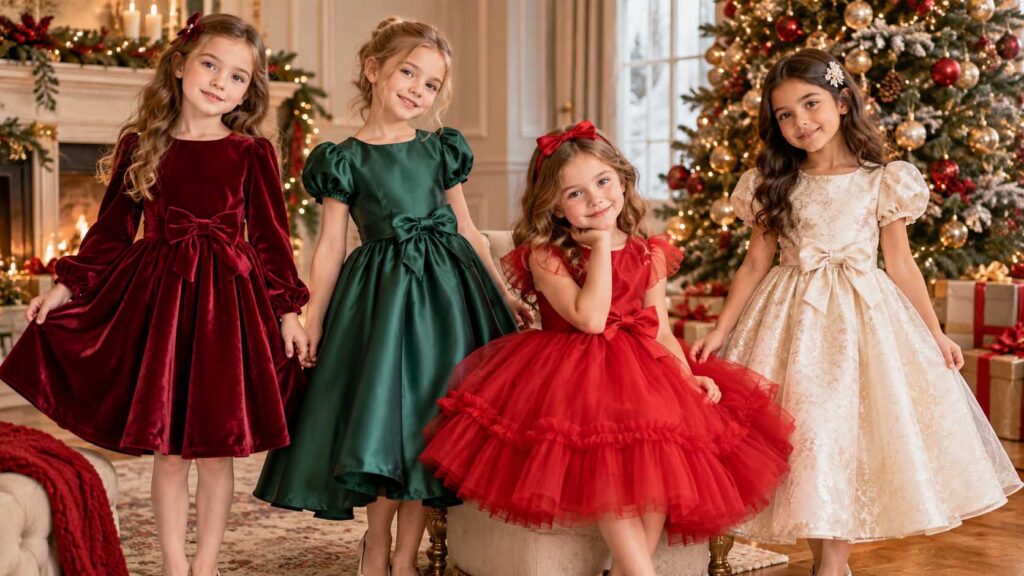
Girls Christmas dresses should balance festive style, comfort, and practicality. Velvet, satin, tulle, long sleeves, and classic A-line styles are all popular choices, depending on the age, occasion, and climate.
For retailers and kidswear buyers, the right choice also depends on fabric, color, sizing, and seasonal timing. This guide covers what works best—and what to check before placing a Christmas dress order.
What Styles of Girls Christmas Dresses Work Best?
There is no single silhouette that defines a good Christmas collection. A customer shopping for a church service has different needs from someone looking for a dress for holiday photos or a Christmas party.
For retailers, that makes a mixed collection more useful than repeating one look in several colors. Velvet, satin, tulle, long sleeves, and classic A-line dresses each fill a slightly different role.
Velvet Christmas Dresses
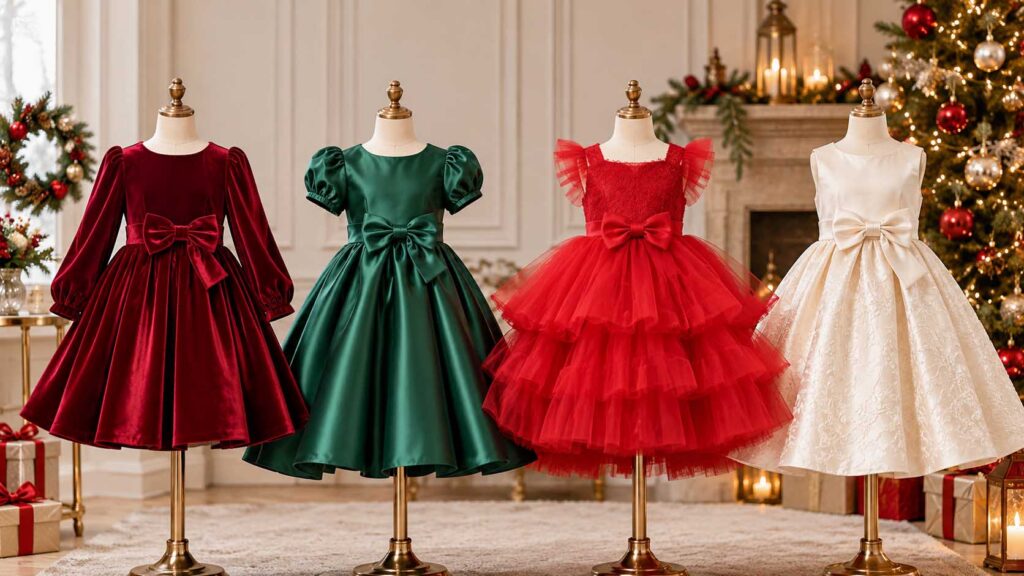
Velvet feels naturally suited to winter. Its soft surface gives burgundy, dark red, emerald green, and navy more depth, so even a fairly simple silhouette can look dressed up without needing much decoration.
For church services, Christmas parties, and family photos, a clean velvet dress with a bow or defined waist is often enough. We would still check the lining and overall weight at the sample stage, particularly for younger girls who may spend several hours in the dress.
Satin Christmas Dresses
Satin has a cleaner, more formal look and works especially well with structured skirts, pleats, and statement bows. Burgundy, champagne, ivory, and dark green satin styles can also move easily between Christmas parties and other winter events.
One detail worth checking is fabric weight. Satin that is too light may not support a large bow or structured skirt properly, while a very heavy fabric can make a children’s dress unnecessarily stiff.
Tulle Christmas Party Dresses
Tulle is useful when the collection needs a fuller party style. A layered tulle skirt can be paired with a satin or velvet bodice, subtle embroidery, or a bow without making the dress look overloaded.
What we pay close attention to is the layer underneath. Rough tulle should not sit directly against the child’s skin, especially around the waist and legs. A smooth lining makes a noticeable difference when the dress is worn for more than a short photo session.
Long-Sleeve Christmas Dresses
Long sleeves make sense for colder markets, but the fabric and construction matter more than sleeve length alone. Velvet, cotton, lace, and sheer sleeves can all work depending on the occasion and level of formality.
During sampling, cuffs and internal seams are worth checking closely. A sleeve can look beautiful on a hanger but become uncomfortable if lace edges or stiff seams repeatedly rub against the wrist.
Classic A-Line and Bow Dresses
A Christmas dress does not need snowflakes or reindeer to feel seasonal. A well-cut A-line dress in red, burgundy, dark green, or champagne can achieve the same effect with a bow or restrained decorative detail.
These simpler styles are particularly useful for retailers because they are not tied to one date on the calendar. They can sit comfortably alongside other girls’ dresses for winter weddings, birthdays, family events, and New Year celebrations.
What Colors Work Best for Girls Christmas Dresses?
Red and green still lead most traditional Christmas palettes, but they are not the only practical choices. Burgundy, ivory, champagne, navy, and muted pink can broaden the collection while keeping the overall look appropriate for the season.
Color choice also becomes a production issue when several styles are meant to coordinate. A shade that looks almost identical in individual samples can become noticeably different when garments are displayed side by side.
Red and Burgundy Christmas Dresses
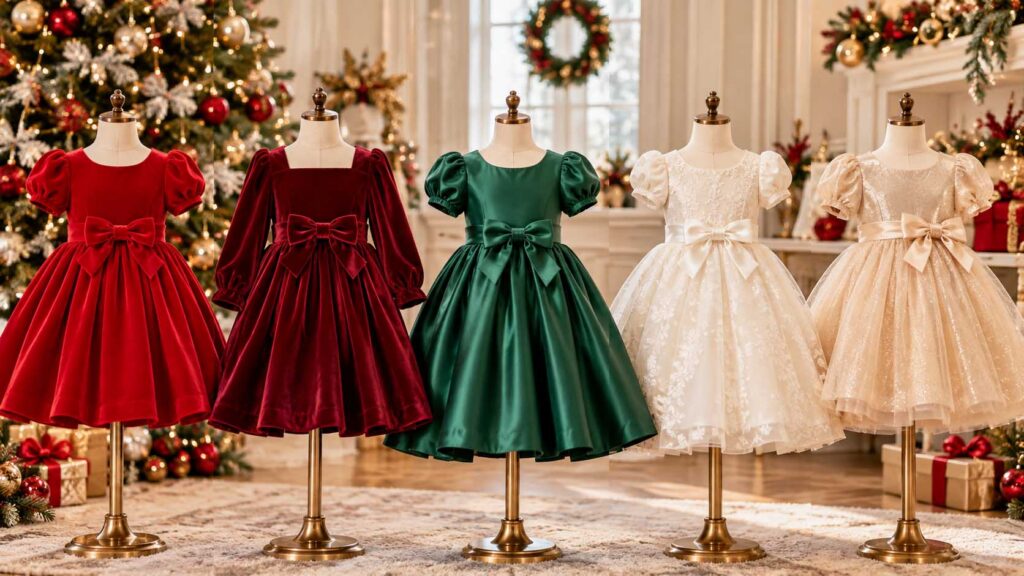
Bright red gives a dress an unmistakable Christmas feel, while burgundy is quieter and usually more formal. Both pair easily with ivory, gold, or neutral accessories.
There is one production detail buyers should know. We have seen red and burgundy fabrics shift slightly between separate dye lots. For a coordinated collection, we prefer to confirm quantities early and use fabric from the same batch where possible rather than trying to match separate lots later.
Green Christmas Dresses
Emerald and forest green are good alternatives to red, particularly in velvet and satin. The depth of these colors tends to bring out the texture of the fabric and creates a more formal appearance.
Very bright green has a stronger novelty feel. Darker shades are easier to carry into other winter occasions, which can be useful when planning a collection with a longer sales window.
Ivory, Champagne, and Gold Dresses
Ivory and champagne are good options when the collection needs something softer than the traditional Christmas palette. They work particularly well for church events, winter weddings, formal parties, and family photography.
These colors also pair naturally with gold embroidery, pearl details, or subtle sparkle. The result can still feel festive without relying on an obvious Christmas theme.
Plaid and Alternative Holiday Colors
Plaid works well for traditional family photography and coordinated sibling outfits. Burgundy, navy, cream, and forest green combinations tend to be easier to style than designs that mix several bright Christmas colors at once.
Blush, dusty pink, and pale blue can also have a place in a holiday collection. For boutiques with a softer visual identity, these shades offer a seasonal alternative without changing the overall brand aesthetic.
Best Girls Christmas Dress Styles by Age
Age affects much more than the number printed on a size label. Skirt volume, closures, decoration, dress length, and freedom of movement all need to change as children grow.
Baby Girl Christmas Dresses
For babies, we would keep the construction relatively simple. Soft necklines, smooth lining, and easy closures are more useful than heavy decoration, particularly when the dress needs to be removed quickly for changing.
Velvet, soft cotton, or properly lined tulle can all create a festive look. The color and silhouette can do most of the visual work without relying on loose embellishments.
Toddler Girls Christmas Dresses
Toddlers rarely stay still for long, so a dress needs enough room for walking, sitting, and playing. A very full skirt may photograph well but can become awkward during a long family gathering.
A comfortable waist and manageable skirt volume usually work better. At this age, durability also matters because the garment is likely to face more movement than a formal dress worn by an older child.
Christmas Dresses for Little Girls
A-line dresses, smocked styles, tulle skirts, bows, and classic collars all fit naturally into this age group. There is room for more decorative detail, but movement should still be easy.
The occasion helps narrow the choice. A fuller tulle dress suits a party or holiday photo session, while a classic velvet or smocked style may be more practical for church or a long family meal.
Christmas Dresses for Older Girls
Older girls often suit cleaner silhouettes and more restrained decoration. Satin, velvet, structured skirts, and smaller embellishments can feel festive without making the style look too young.
Knee-length, below-knee, and tea-length silhouettes are all useful here. The best option depends on height, occasion, and how formal the collection is intended to be.
Which Fabrics Are Best for Girls Christmas Dresses?
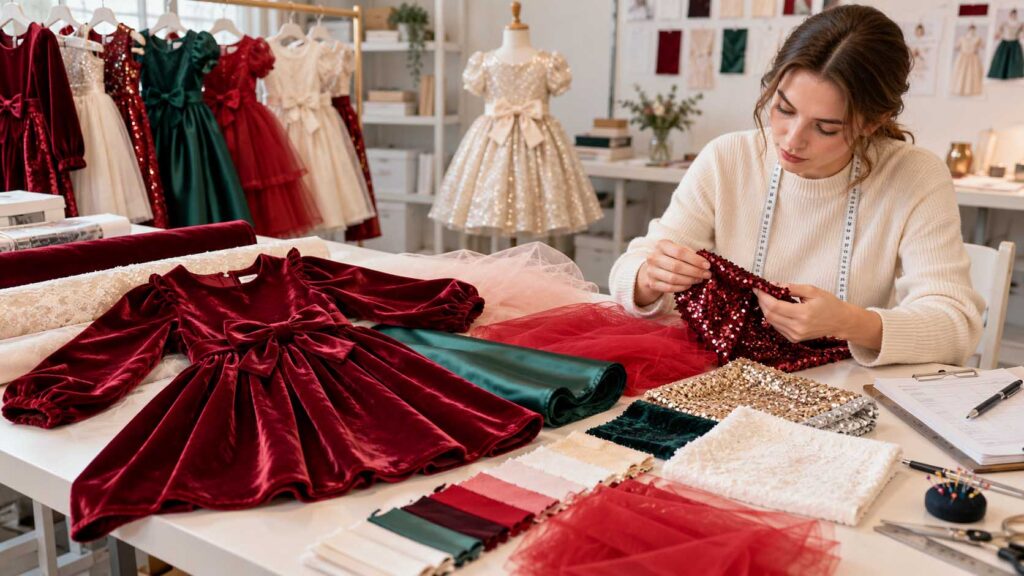
Fabric affects much more than appearance. It determines how the skirt falls, how comfortable the dress feels, how well decorative details hold their shape, and how the garment looks after packing and transportation.
For that reason, we would never approve an important seasonal fabric from photos alone. The sample tells you far more about weight, hand feel, lining, and actual construction.
Velvet
Velvet is one of the easiest fabrics to associate with winter. Red, burgundy, emerald, and navy all gain depth from its surface, even when the dress itself is relatively simple.
Check the pile direction, garment weight, lining, and appearance after folding. A beautiful fabric on the roll still needs to perform well once it has been cut, sewn, packed, and shipped.
Satin
Satin works best when its weight matches the design. Structured skirts and large bows need enough body to keep their shape, while softer silhouettes can use a lighter fabric.
The sample should also be checked for seam appearance and wrinkling. These details often become more visible on smooth satin than on textured fabrics.
Tulle
Tulle gives party dresses volume without requiring a very heavy skirt. Different numbers of layers can change the silhouette considerably, so it is worth checking the finished garment rather than judging the fabric swatch alone.
The lining is equally important. A smooth inner layer keeps rough tulle away from the skin and can make the difference between a dress that looks good and one a child actually wants to keep wearing.
Cotton and Cotton Blends
Cotton and cotton blends are better suited to relaxed holiday styles, smocked dresses, and younger children. They are breathable and generally easier to care for than formal party fabrics.
For family gatherings or daytime Christmas events, that practicality can be an advantage. Seasonal colors, embroidery, or a classic collar can provide enough holiday character without using formal fabrics.
For buyers evaluating textiles used in children’s clothing, material safety can also be part of supplier selection. OEKO-TEX® STANDARD 100 is a certification system under which textile products are tested for harmful substances, with requirements that vary according to the product’s intended use.
Sequins and Embellished Fabrics
Sequins are useful for statement party dresses, but this is one area where expectations need to be realistic. Some shedding is caused by the construction of the sequin fabric itself and cannot always be eliminated completely.
We normally prefer to check this before bulk production. Gently rubbing, folding, and handling the sample gives a much better idea of how the material behaves than looking at a photograph. If the loss is already excessive during sampling, changing the fabric is safer than hoping production will solve it.
For markets with specific children’s product requirements, buyers should also check the regulations that apply at the destination. The U.S. Consumer Product Safety Commission provides information on children’s products and applicable safety requirements.
Matching Girls Christmas Dresses to Different Holiday Occasions
A dress that works beautifully for a twenty-minute photo session may not be the best choice for a child spending an entire afternoon at a family gathering. Matching the style to the actual event makes fabric and construction decisions much easier.
| Occasion | Suitable Style | Fabric Options | Color Ideas |
|---|---|---|---|
| Christmas Party | Tulle or bow party dress | Tulle,satin, velvet | Red, burgundy, gold |
| Church Service | Classic A-line or long sleeve | Velvet, cotton | Burgundy, green, ivory |
| Family Gathering | Comfortable A-line | Cotton, velvet | Red, plaid, green |
| Holiday Photos | Structured or classic dress | Velvet, satin | Red, green, ivory |
| Winter Wedding | Formal party dress | Satin, tulle | Ivory, champagne, burgundy |
For longer events, we would put more weight on lining, waist comfort, and movement. For formal photographs or shorter occasions, a more structured silhouette can make sense as long as the garment still fits comfortably.
Should Christmas Dresses Use Obvious Holiday Details?
For retailers, this is partly a design question and partly an inventory question. The more strongly a garment is tied to Christmas, the shorter its natural sales window becomes.
Highly Seasonal Christmas Designs
Christmas trees, Santa motifs, reindeer, snowflakes, and obvious holiday embroidery create an immediate seasonal identity. They make sense when the customer specifically wants a Christmas-themed outfit.
The limitation appears after the holiday. A dress covered in Christmas motifs becomes much harder to reposition for a January birthday or winter wedding.
Versatile Holiday-Inspired Designs
A burgundy velvet dress with a bow can look festive without using a single Christmas symbol. Dark green satin, champagne tulle, subtle gold embroidery, and ivory party dresses can do the same.
This is the approach we generally find more flexible for a commercial collection. Buyers can still include several strongly seasonal designs, but the rest of the range has somewhere to go once Christmas has passed.
What We Have Learned From Seasonal Orders
We have seen buyers choose too many designs with obvious Christmas elements and then face a much narrower selling opportunity after December. The dresses were not necessarily poor sellers; they simply had a very clear expiry point from a merchandising perspective.
For a retailer, mixing a few recognizable Christmas pieces with more versatile seasonal kidswear can reduce that pressure. The collection still looks festive, but not every SKU depends on Christmas Day.
How Should a Girls Christmas Dress Fit?
Fit becomes particularly important when a child will wear the dress for several hours. A garment that looks correct while standing still can feel very different when the child sits, walks, eats, or plays.
Check Chest, Waist, Height, and Dress Length
Age labels are a starting point, not a complete sizing method. Chest, waist, height, and dress length should be compared with the supplier’s actual measurements before choosing a size.
Sizing also varies between brands and markets. Two dresses carrying the same age label can have noticeably different finished measurements, particularly around the chest and waist.
Consider the Dress Silhouette
An A-line dress allows movement differently from a fitted-waist party dress. Smocked bodices, full tulle skirts, and bishop silhouettes also change where the garment needs extra room.
When developing a size range, we prefer to look at the complete silhouette on a fitting sample rather than reviewing measurements separately. Proportion often reveals issues that a specification sheet does not.
Allow Room for Winter Layers
In colder markets, a Christmas dress may be worn with tights, an undershirt, or a cardigan. Those layers need to be considered when reviewing the finished measurements.
That does not mean automatically moving up one size. Comparing body measurements with actual garment measurements is a better way to judge whether additional room is necessary.
Check the Dress Length
Above-knee styles tend to feel younger and more playful, while knee-length and below-knee dresses suit classic holiday looks. Tea-length styles work particularly well for formal parties and winter weddings.
The right length depends on the child’s height, age, silhouette, and occasion. Our flower girl dress size guide also explains how body measurements and dress length can be considered when reviewing children’s formalwear sizing.
What Should Retailers Check Before Ordering Girls Christmas Dresses?
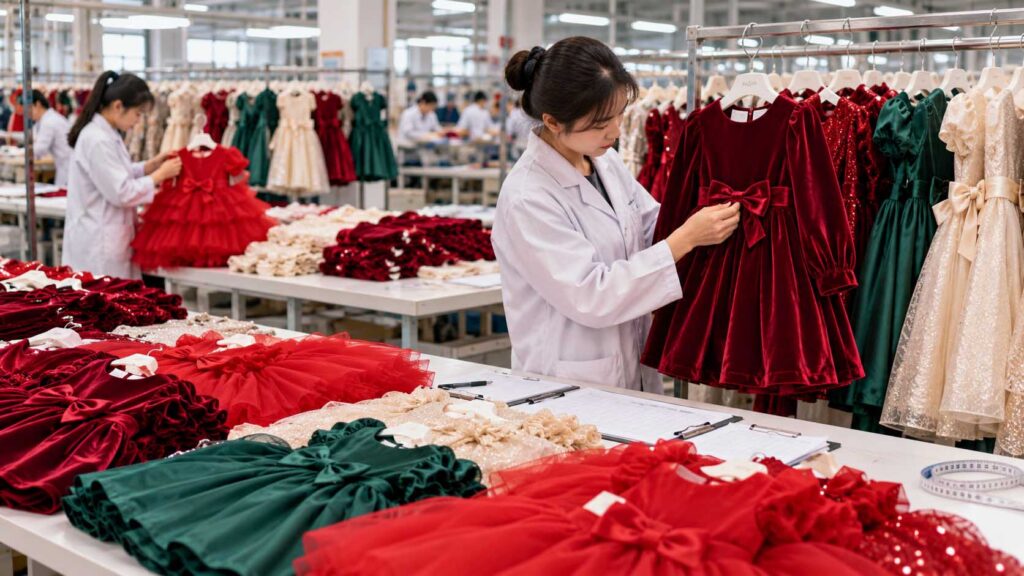
For a seasonal collection, a beautiful sample is only one part of the decision. Before confirming an order, three practical questions deserve attention: how much you need to buy, when the goods can arrive, and whether the approved sample is ready to become the bulk-production standard.
Buyers selling textile products into the U.S. should also review the applicable labeling requirements. The Federal Trade Commission’s Threading Your Way Through the Labeling Requirements Under the Textile and Wool Acts explains requirements covering areas such as fiber content, country of origin, and manufacturer or dealer identification.
Confirm the MOQ
MOQ should be checked before developing too many colors or styles. Ready-stock and custom orders often work differently, so buyers need to know whether the required quantity fits the expected sales volume.
Seasonality should influence that decision too. A heavily themed Christmas dress carries more inventory risk than a burgundy party style that can remain in the collection through winter.
Confirm the Production Lead Time
Sampling, revisions, fabric preparation, production, quality control, packing, and transportation all sit inside the sourcing timeline. Looking only at the sewing period gives an incomplete picture.
The safest approach is to work backward from the planned retail launch. A Christmas dress arriving in mid-December may technically arrive before the holiday, but the retailer has already lost a large part of the selling season.
Approve a Sample Before Bulk Production
A final sample gives both buyer and manufacturer something concrete to work from. Check the color, fabric hand feel, fit, lining, stitching, skirt length, silhouette, and decorative details before approval.
This is also the right stage to flag issues with sequins, bows, embroidery, or fabric behavior. For buyers developing their own styles, an OEM/ODM kidswear development process should leave enough room for these checks before bulk production begins.
When Should Retailers Order Girls Christmas Dresses?
Seasonal sourcing often needs to begin earlier than new buyers expect. Custom colors, labels, fabrics, sizing, packaging, and sample revisions all add time before the first bulk garment reaches the production line.
Start Planning Around Six Months in Advance
From the seasonal orders we have handled, late confirmation is one of the easiest ways to lose valuable selling weeks. For a custom Christmas collection, starting around six months before the intended selling season gives much more room to deal with sampling and revisions without rushing later stages.
Ready-stock orders can move faster, but there is another trade-off: popular colors and sizes become less predictable as the season approaches. Buyers who need a complete size run should not assume the same stock will still be available a few weeks later.
Build a Realistic Christmas Sourcing Timeline
| Timing | Main Task |
|---|---|
| 5-6 months before selling season | Select styles, colors, supplier, and quantities |
| 4-5 months before | Develop and review samples |
| 3-4 months before | Confirm fabrics, colors, sizes, and bulk order |
| 2-3 months before | Complete bulk production and quality control |
| Before launch | Shipping, photography, listings, marketing, and store preparation |
The exact schedule changes with order complexity and shipping method, but the principle stays the same: work backward from the day the collection needs to be selling, not from December 25.
How to Build a More Sellable Girls Christmas Dress Collection
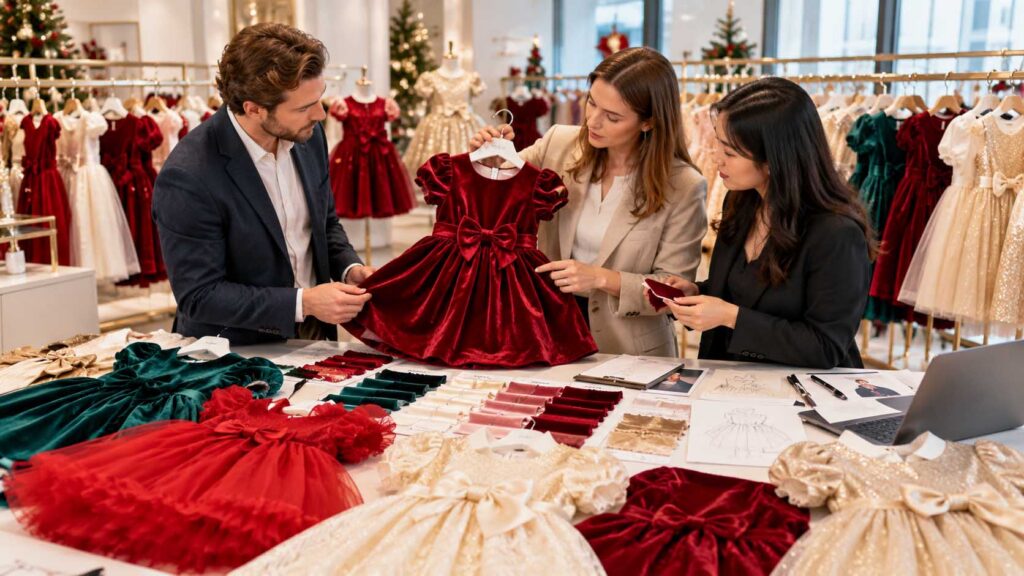
A balanced holiday range does not need ten versions of the same red dress. Different fabrics, colors, silhouettes, and levels of formality give customers more reasons to buy while reducing dependence on one narrow Christmas look.
A practical starting assortment could include:
- A classic red velvet dress and a burgundy or dark green formal style
- A satin bow dress and a fuller tulle party dress
- An ivory or champagne occasion dress, plus one or two clearly Christmas-themed styles
This gives the collection a recognizable holiday identity while keeping part of the assortment useful for church events, winter weddings, birthdays, family photos, and New Year celebrations.
FAQ
Q1: What Colors Are Best for Girls Christmas Dresses?
Red, burgundy, emerald, and forest green remain the most recognizable holiday choices. Ivory, champagne, gold, blush, and muted alternatives are useful when the retailer wants styles that can move into other winter occasions.
Q2: Is Velvet a Good Fabric for Girls Christmas Dresses?
Yes, particularly for formal winter events. The important checks are not limited to appearance: garment weight, lining, pile direction, and comfort should all be reviewed on the sample.
Q3: Are Long-Sleeve Christmas Dresses Better for Winter?
They are practical in colder climates, but indoor temperature and event type still matter. A comfortable short-sleeve dress with a cardigan may work better in some situations than a heavy long-sleeve style.
Q4: What Should Girls Wear to a Christmas Party?
Velvet, satin, and tulle dresses suit more formal parties, especially when paired with bows or restrained embellishment. For relaxed family events, an A-line cotton or cotton-blend dress can be easier to wear for several hours.
Q5: When Should Retailers Order Girls Christmas Dresses?
For custom collections, around six months before the intended selling season is a useful planning point. It allows time for sampling, revisions, production, quality control, and transportation rather than forcing every stage into the final weeks before Christmas.
Q6: How Can Retailers Reduce Leftover Christmas Inventory?
Keep the most obvious Christmas motifs to a limited part of the assortment. Velvet, satin, tulle, bows, burgundy, dark green, ivory, and champagne can still look seasonal while remaining suitable for other winter occasions.
Conclusion
The best girls Christmas dresses are not necessarily the ones with the most decoration. A strong holiday style balances fabric, fit, comfort, color, and occasion, while still giving the child enough freedom to enjoy the event.
For retailers and brands, the same thinking should continue into sourcing. Color consistency, realistic fabric expectations, sample approval, order quantity, and early planning can prevent problems that are much harder to correct once the Christmas selling season has started.
Source Girls Christmas Dresses for Your Collection
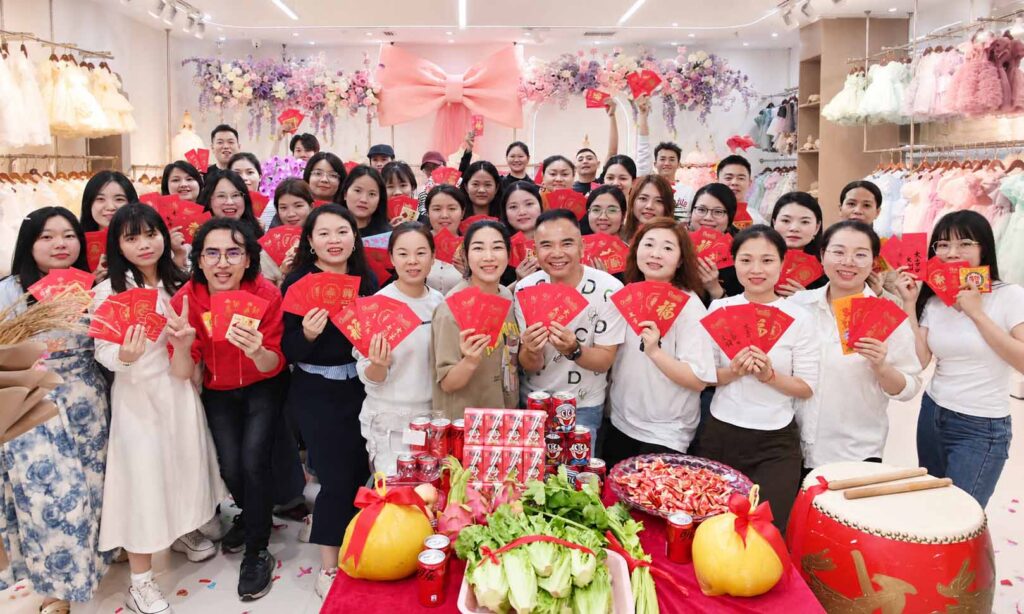
Outong develops girls’ party dresses, special-occasion dresses, and seasonal childrenswear for wholesale buyers, importers, retailers, and private-label brands. We support ready-stock sourcing, sample development, OEM/ODM, private-label customization, and bulk production.
If you are preparing a Christmas or winter collection, contact Outong to discuss available styles, samples, wholesale requirements, or custom girls Christmas dress development.