
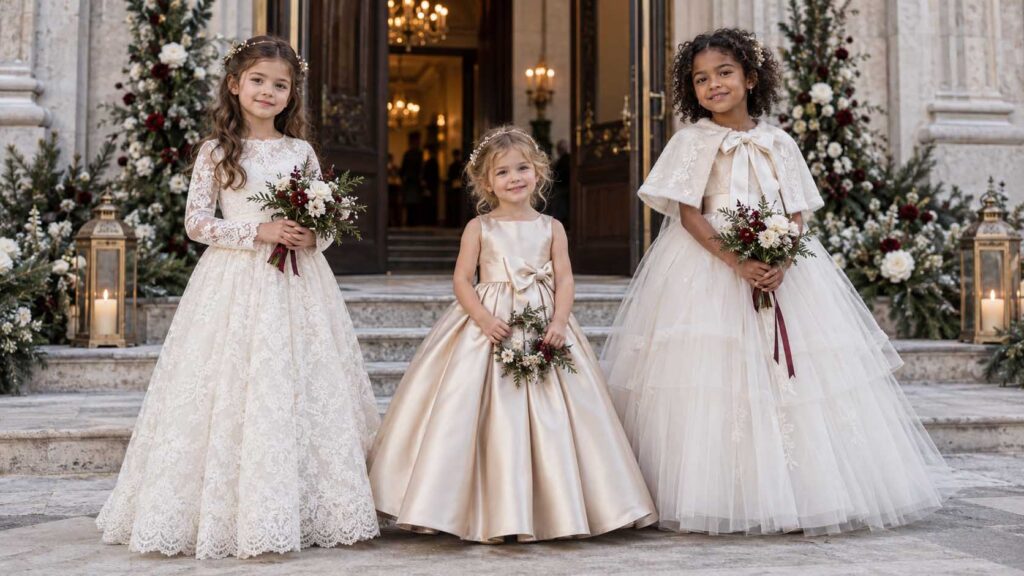
Choosing flower girl dresses for winter weddings involves more than finding the heaviest fabric. The right gown should suit the venue, local climate, and how long the child will spend outdoors, while staying comfortable all day.
For bridal retailers, wholesalers and children’s clothing brands, there are also practical buying decisions to consider. This guide compares the main winter flower girl gown styles, fabrics, colors and lengths, then explains what buyers should check when planning stock, developing samples and preparing for bulk production.
What Makes a Flower Girl Gown Suitable for Winter?
Start with the wedding schedule. Will the ceremony take place in a church, hotel or outdoor setting? How long will the photographs take? Will the flower girl move between different locations?
These details often matter more than fabric thickness. A lighter gown can work in cold weather with tights, closed-toe shoes and a suitable cape or coat. A heavily layered dress, meanwhile, may become uncomfortable during a long indoor reception.
Winter buyers commonly request long-sleeve lace gowns, structured satin dresses and tulle designs with matching boleros or capes. When reviewing a sample, we also check the sleeve openings, lining softness, and skirt weight.
With more than 24 years of children’s clothing manufacturing experience, our designers, pattern technicians, and production team evaluate each gown as a complete garment before it moves into bulk production.
Buyers planning a wedding collection can explore our wholesale girls’ and flower girl dresses to compare fabrics, silhouettes and decorative styles.
The Best Flower Girl Gown Styles for Winter
The following styles suit different venues, climates and levels of formality.
| Style | Best for | Main advantage | What to check |
|---|---|---|---|
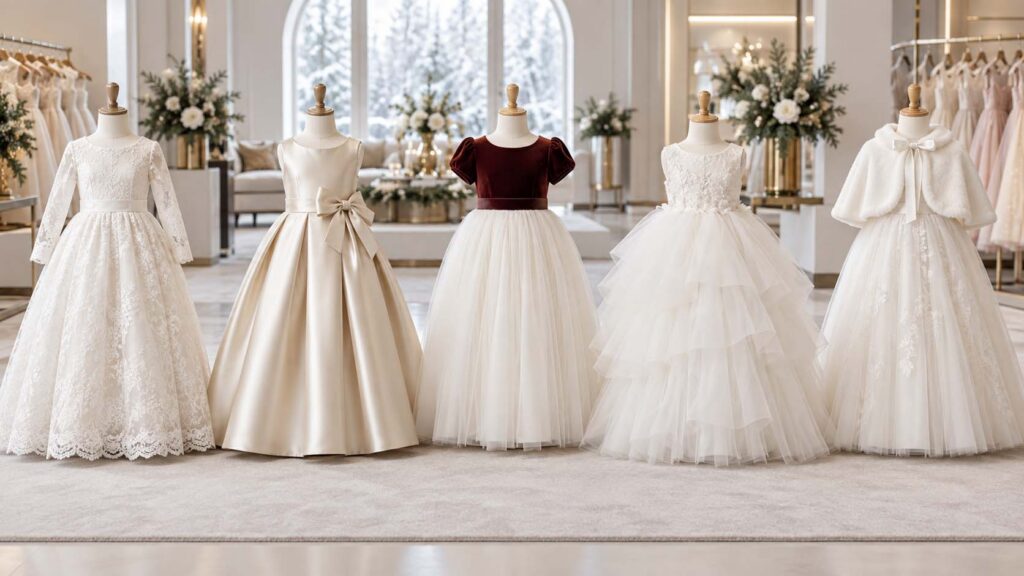
| Long-Sleeve Lace Gowns | Church and traditional weddings | Delicate appearance with added coverage | Sleeve softness, cuffs and shoulder movement |
| Satin Flower Girl Gowns | Hotels, ballrooms and formal weddings | Structured and elegant silhouette | Finished weight,lining and packingcreases |
| Velvet Flower Girl Dresses | Christmas and evening weddings | Rich texture and a seasonal look | Warmth, pile direction and color consistency |
| Layered Tulle Gowns | Princess-style and formal weddings | Light volume and graceful movement | Tulles tiffness, skirt layers and lining |
| Gowns With Boleros or Capes | Indoor and outdoor celebrations | Removable coverage | Shoulder movement and covered dress details |
Long-Sleeve Flower Girl Dresses
A long-sleeve flower girl dress in soft lace is a natural choice for traditional, church and formal winter weddings. It provides more coverage than a sleeveless gown while keeping the design delicate.
Dense embroidery, rough seams or narrow cuffs may irritate the arms or restrict movement. Look for soft lace, clean seam finishing and enough room around the shoulders. Because lace offers limited insulation, an outer layer may still be needed outdoors.
Satin Flower Girl Gowns
Satin is a dependable option for formal winter weddings. Its smooth surface and structured drape work well in churches, hotels and ballrooms, especially when paired with bows, pearl waistbands or lace.
The finished weight matters more than the satin alone. Once lining, tulle and decorations are added, the gown may become heavier than expected. Satin can also crease during packing, so retailers should check how the sample recovers after unpacking.
For a closer material comparison, read our guide to satin vs tulle flower girl dresses.
Velvet Flower Girl Dresses
Velvet creates an immediate winter feel and suits Christmas weddings, evening ceremonies and vintage-inspired themes. Burgundy, navy and forest green have a stronger seasonal look, while ivory and champagne feel softer.
The entire dress does not need to be velvet. A velvet bodice, sash, bow or bolero can create the same effect with less weight. During production, the pile direction and fabric batches must also be checked for color consistency.
Layered Tulle Gowns
A fully lined tulle gown can work well in winter without relying on a heavy outer fabric. However, adding too many layers increases weight and packing volume, while stiff tulle may be uncomfortable when the child sits or walks.
For younger flower girls, a lighter skirt with controlled volume is usually more practical. A cape or bolero can provide outdoor coverage without adding unnecessary weight to the gown.
Gowns With Boleros or Capes
A removable outer layer can be worn outdoors or in a cold church, then taken off at the reception. Boleros suit classic gowns, while capes create a softer, more romantic look.
Check that the outer layer does not hide the bow, flowers or bodice details. It should also allow the flower girl to raise her arms and carry a basket comfortably.
Which Fabric Is Best for a Winter Flower Girl Gown?
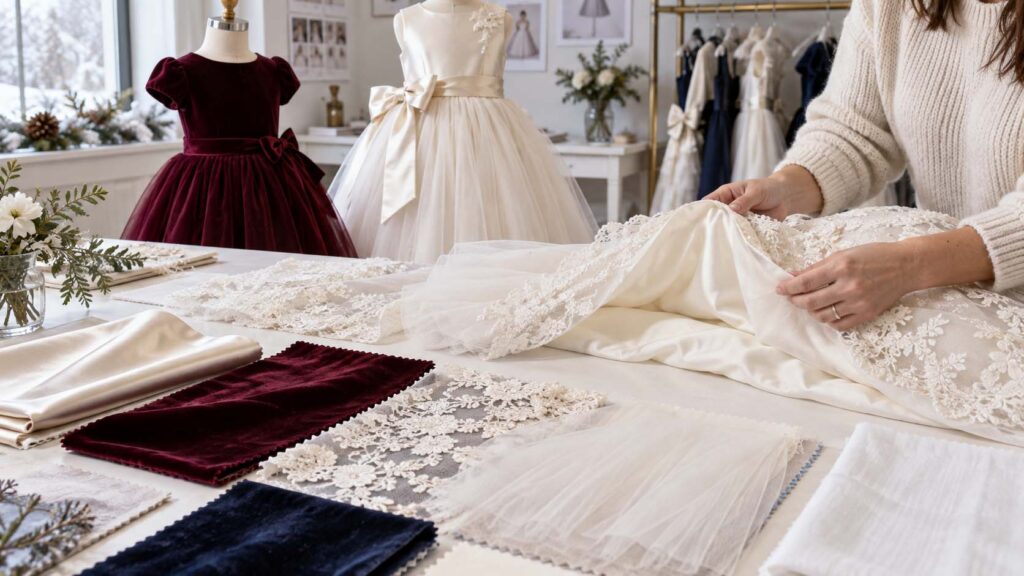
No single fabric works for every winter wedding. Satin provides structure, velvet adds seasonal texture, lace brings delicate detail, and tulle creates volume.
| Fabric | What it adds | Works well for | What to check |
|---|---|---|---|
| Satin | Structure and a formal finish | Church, hotel and ballroom weddings | Weight, lining, creases and color |
| Velvet | Rich texture and a seasonal look | Christmas and evening weddings | Pile direction, warmth and shade |
| Lace | Delicate traditional detail | Church and classic weddings | Softness, seams and sleeve comfort |
| Tulle | Light volume and movement | Princess and formal styles | Stiffness, layers and lining |
| Cotton sateen | A softer, less glossy finish | Daytime and traditional weddings | Shrinkage and finished appearance |
Lighter dresses can still work in winter when layered properly. Brides’ winter wedding dress guide shows how lace jackets, capes, wraps and long sleeves can adapt different styles for colder celebrations.
Buyers should evaluate the finished sample rather than the fabric swatch alone. Lining, skirt construction and decorations can significantly change the weight and feel of a gown.
Match the Dress to the Climate and Venue
A winter wedding flower girl dress should be selected for the actual destination. In some markets, most winter weddings still take place inside heated venues.
For mild climates or indoor celebrations, satin, soft lace and fully lined tulle are usually practical. Colder outdoor settings may require tights, closed-toe shoes and a proper winter coat in addition to a decorative cape.
Before recommending styles to a wholesale buyer, we normally ask about the target country, selling season and typical wedding venue. A range developed for Northern Europe may need a different product mix from one intended for the Middle East or a mild coastal market.
Best Colors for Winter Flower Girl Dresses
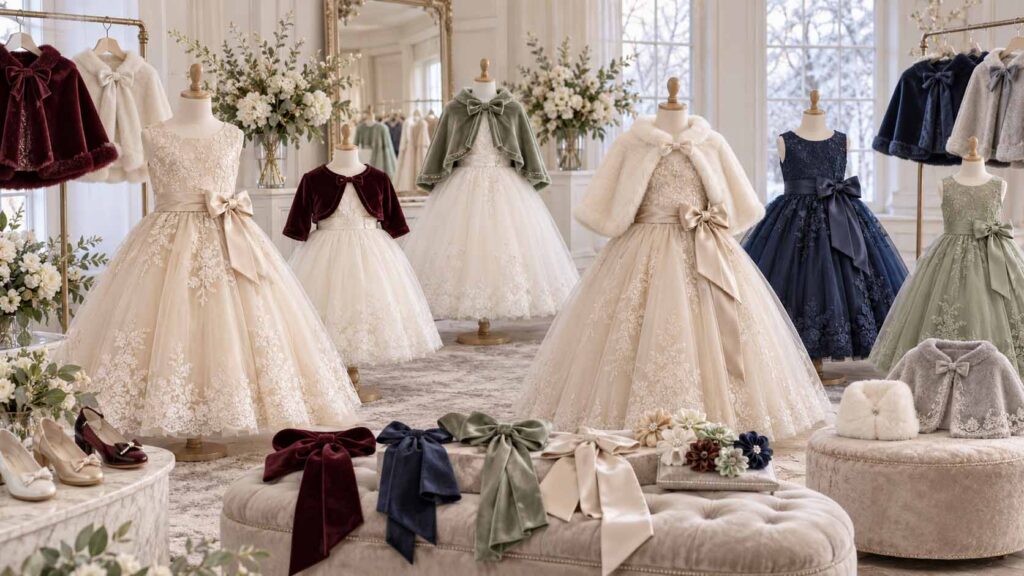
White, ivory and champagne remain the most versatile colors for winter flower girl gowns. They coordinate easily with bridal dresses and suit both traditional and modern weddings.
The same shade can look different across fabrics. White satin often appears brighter than white tulle, while ivory lace over a warm lining may look creamier. Our ivory vs white flower girl dress guide explains why color should be confirmed on the finished sample.
Burgundy, navy, dusty blue, sage and silver grey can be introduced through sashes, bows, flowers or capes. For retailers, white and ivory are safer core colors, while stronger seasonal shades can be tested in smaller quantities.
How to Keep a Flower Girl Warm at a Winter Wedding
Layering allows the child to adjust between outdoor and indoor spaces. A bolero or cape may suit the ceremony, while tights, closed-toe shoes and a fine-knit cardigan provide additional warmth.
For longer periods outdoors, the child should still have a proper winter coat. The complete outfit should also be tried on before the wedding because an underlayer may change the fit around the arms, chest and waist.
Choosing the Right Flower Girl Dress Length and Fit
Floor-length gowns offer a formal appearance, but the hem must be checked carefully. Even a slightly oversized dress can be difficult for a young child to manage.
Tea-length dresses are easier to walk in and allow tights and shoes to become part of the outfit. They are particularly practical for younger flower girls and weddings involving several locations.
Do not choose a size based only on age. Compare the child’s chest, waist, height, shoulder width and required dress length with the supplier’s measurements. Our flower girl dress size guide explains how to take these measurements.
Once the dress arrives, ask the child to sit, walk, turn and raise her arms. Brides tested flower girl dresses on real children, considering comfort, fit and movement as well as appearance.
What Should Retailers Stock for Winter Weddings?
A winter range does not need to consist entirely of heavy or highly seasonal gowns. Classic satin and lace styles can form the core because they continue to sell beyond the coldest months.
Retailers sourcing wholesale flower girl dresses can combine long-sleeve lace, structured satin and lined tulle with a smaller number of velvet styles. Matching boleros and capes provide seasonal flexibility without requiring every gown to be redesigned.
White, ivory and champagne are suitable for core stock, supported by smaller quantities of seasonal colors. Offering both tea-length and floor-length designs also gives customers a choice between practicality and formality.
Ready-stock products can support shorter purchasing schedules. Custom and private-label collections need earlier planning because fabrics, colors, sleeves, branding and packaging must be approved before production. Buyers developing an exclusive range can read our private label flower girl dress sourcing guide.
When Should Retailers Order Winter Flower Girl Dresses?
Buyers sometimes calculate only the bulk-production period and overlook sampling, revisions and transportation.
Our sample development generally takes 3–7 days, while bulk production normally takes 25–50 days, depending on the design and order requirements. Special colors, velvet details and matching outer layers may require additional confirmation.
Because our trade term is FOB, buyers should also confirm the shipping schedule with their freight forwarder. The factory completion date is not the same as the arrival date in the destination market.
Quality Checks for Bulk Flower Girl Dress Production
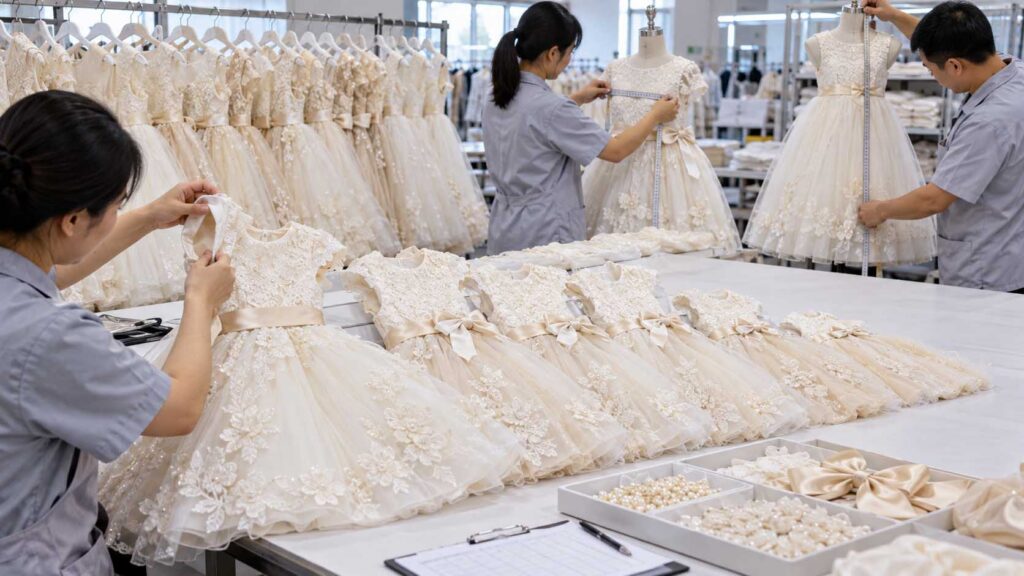
As a children’s clothing manufacturer supporting wholesale, OEM and ODM orders, we review each approved sample before production. Our checks cover fabric shade, garment measurements, sleeve openings, lining coverage, skirt weight and decorative details.
Satin, lace, tulle and lining can show slight shade differences after assembly, particularly in white and ivory gowns. Sleeve and shoulder movement must also be checked, especially if the dress may be worn over an underlayer.
Skirt volume, dress length and decorative placement should remain balanced across the size range. Pearls, crystals, bows and three-dimensional flowers must be securely attached, while the packaging should protect them without flattening the skirt.
Wear testing and packing checks help identify problems that may not be visible while the gown is lying flat on an inspection table.
Customizing a Winter Flower Girl Collection
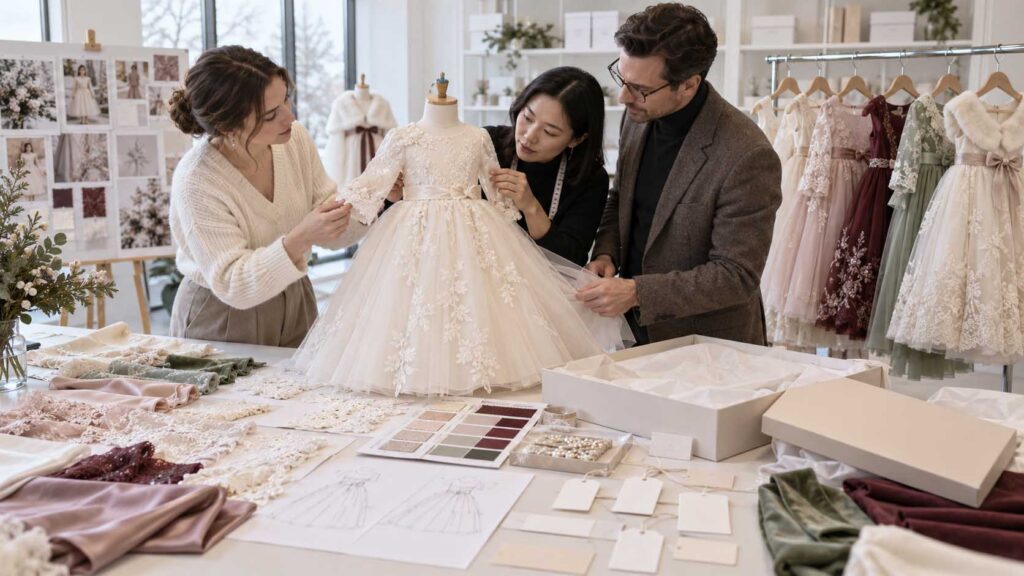
We support OEM and ODM development for wholesalers, bridal retailers and children’s clothing brands. Buyers can customize the fabric, color, sleeve shape, dress length, lace, appliqués and matching outer layers. Private-label services can also include woven labels, hangtags and customized packaging.
Our sample development normally takes 3–7 days. During this stage, our design, pattern and technical teams review how the fabric, lining and decoration work together. Changes to the sleeve opening, skirt weight, or decoration may be needed before approval.
Once the sample is confirmed, its specifications are followed during bulk production and quality inspection to maintain consistency across the ordered sizes.
Conclusion
The best winter flower girl gown is not necessarily the thickest. It should suit the venue, allow for practical layering and remain comfortable throughout the wedding day.
Long-sleeve lace, structured satin, velvet details and lined tulle can all work well. Retailers should also consider local demand, size distribution and purchasing schedules when building a winter range.
Backed by more than 24 years of children’s clothing manufacturing experience, our team supports buyers from sample development and material selection through bulk production and quality inspection. If you are planning a collection for a boutique, bridal retailer, brand or wholesale business, explore our girls’ and flower girl dress collection.
Contact us to discuss available styles and custom production.
FAQ
Q1. What should a flower girl wear to a winter wedding?
A flower girl can wear a long-sleeve lace, satin or lined tulle gown with a removable bolero or cape. The venue, local climate and amount of time spent outdoors should guide the choice.
Q2. What is the best fabric for a winter flower girl gown?
There is no single best fabric. Satin provides structure, velvet creates a seasonal look, lace works well for sleeves, and lined tulle adds volume. The overall construction matters more than the outer fabric alone.
Q3. Can a flower girl wear velvet?
Yes. Velvet suits Christmas, evening and vintage-inspired weddings. In a heated venue, a velvet bodice, bow or bolero may be more comfortable than a full velvet gown.
Q4. Does a flower girl need long sleeves in winter?
Not always. A short-sleeve or sleeveless gown can be paired with a removable bolero, cape or cardigan for an indoor wedding.
Q5. What colors work for a winter flower girl dress?
White, ivory and champagne are easy to coordinate. Burgundy, navy, dusty blue, sage and silver grey can be added through bows, sashes, flowers or outer layers.
Q6. When should retailers order winter flower girl dresses?
Custom orders should allow time for sampling, revisions, production and transportation. They should be arranged earlier than ready-stock purchases, especially when special fabrics, colors or matching outer layers are required.