
Baby romper sizes can be confusing because the age on the label doesn’t always match the baby’s actual measurements. One 6-month-old may fit comfortably in 3–6M, while another already needs 6–9M.
A useful baby romper size guide should therefore look at more than age. Height, weight, body length, diaper room, fabric, and the cut of the romper all affect the final fit. For retailers and babywear brands, these details also matter when building a consistent 0–24M size range.
Baby Romper Size Chart by Age
The chart below gives a general reference for common baby romper sizes.
| Baby Size | Approx. Height | Approx. Weight | Typical Age |
|---|---|---|---|
| Newborn | 50–56 cm | 2.5–4 kg | 0–1 month |
| 0–3M | 56–62 cm | 4–6 kg | 0–3 months |
| 3–6M | 62–68 cm | 6–8 kg | 3–6 months |
| 6–9M | 68–74 cm | 8–9 kg | 6–9 months |
| 9–12M | 74–80 cm | 9–10.5 kg | 9–12 months |
| 12–18M | 80–86 cm | 10.5–12 kg | 12–18 months |
| 18–24M | 86–92 cm | 12–14 kg | 18–24 months |
Use this baby romper size chart as a general reference rather than a fixed standard. Baby growth varies considerably, so age should only be used as a starting point. The WHO Child Growth Standards also use measurements such as length and weight to track infant growth rather than relying on age alone.
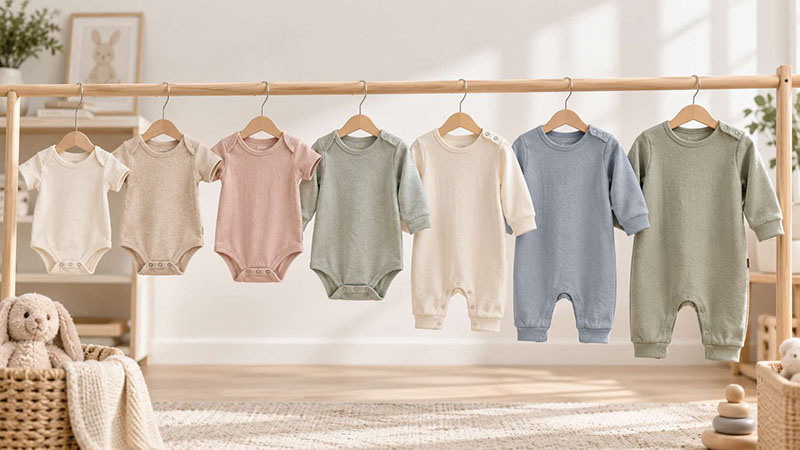
For wholesale or private-label orders, the finished garment measurements should always be confirmed before bulk production.
Should You Choose a Romper by Age, Height, or Weight?
Age is useful for quickly identifying a size range, but height usually gives a better starting point. Weight can then help confirm whether a baby may need a slimmer or roomier fit.
For example, two babies may both be six months old but have different heights and body proportions. Putting both into 6–9M simply because of their age may not give the same result.
The style makes a difference too. A stretchy rib-knit romper can fit closer to the body, while a woven cotton style normally needs more ease. The garment type itself can also affect fit and sizing, especially when comparing a romper with a bodysuit. If you’re not sure how the two differ, see our Romper vs Onesie: What’s the Difference? guide for a clearer comparison.
How Should a Baby Romper Fit?
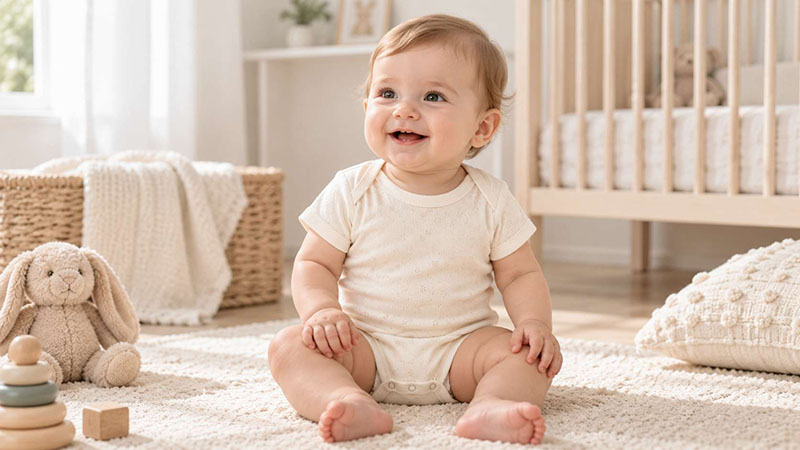
A romper should have enough room for movement and a diaper without looking excessively loose.
Check the fit around the chest and waist first, then look at the overall body length. The crotch should close comfortably without pulling at the shoulders, and the leg openings shouldn’t leave deep marks on the baby’s skin.
Diaper room is particularly important. A romper can look wide enough when laid flat but still feel short once a diaper is added. This often happens when the body length or crotch depth is too small.
For long-sleeve or long-leg styles, sleeve and inseam length also need to stay in proportion with the rest of the garment.
Fabric Can Change the Fit
Not every romper made to the same measurements will feel the same when worn.
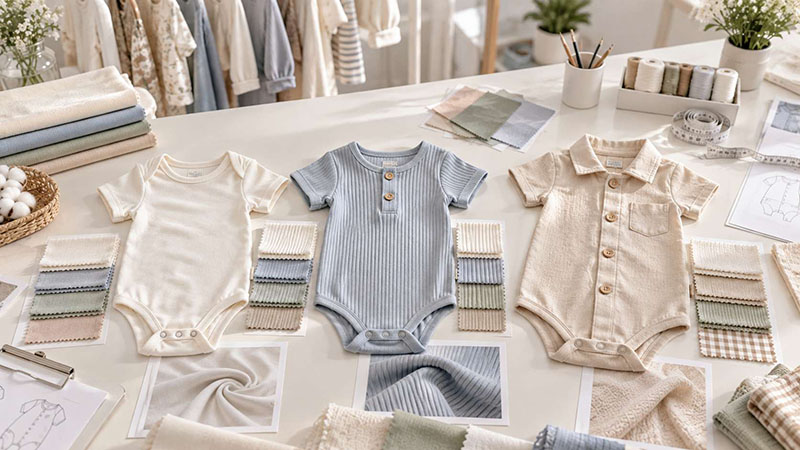
Cotton jersey and rib-knit fabrics generally have more stretch, so they can sit closer to the body while still allowing movement. Woven cotton, linen blends, embroidery, and other less-stretchy materials usually need more ease in the pattern.
Shrinkage also matters. If the fabric becomes shorter or narrower after washing, the romper may no longer fit as intended.
When developing a new baby romper, fabric selection and sizing should therefore be checked together rather than treated as two separate decisions.
Key Baby Romper Measurements
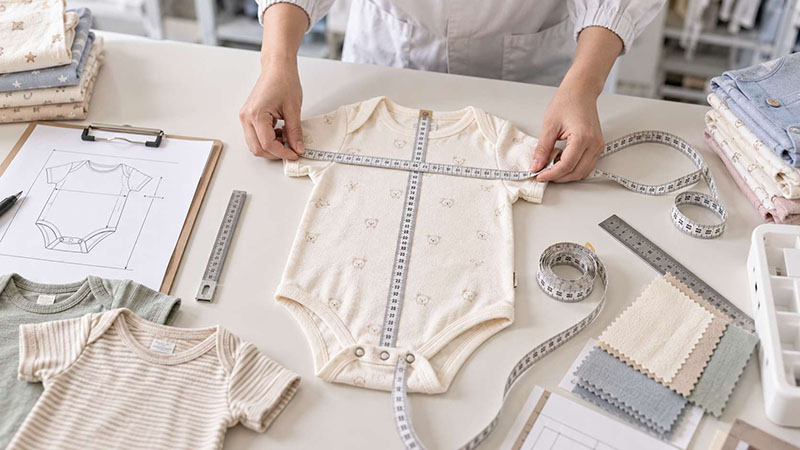
For most romper styles, these are the measurements worth checking:
- Chest width
- Total body length
- Shoulder width
- Crotch depth
- Hip width
- Leg opening
- Sleeve length for long-sleeve styles
- Inseam for long-leg styles
- Neck opening
The exact measurement points depend on the design. A sleeveless summer romper doesn’t need the same specification as a long-sleeve, full-length romper.
In our sample development work, body length and crotch proportion are two areas we pay particular attention to. Even a small difference here can noticeably change the fit once the baby is wearing a diaper.
What If the Baby Is Between Two Sizes?
If the baby’s height or weight falls between two sizes, the larger size is often the more practical choice because it provides some growing room.
That doesn’t mean the romper should be extremely oversized. The neckline, armholes, and leg openings should still sit correctly, and there shouldn’t be so much extra fabric that it affects comfort or movement.
For brands and retailers, the bigger question is whether each size progresses naturally into the next. Moving from 3–6M to 6–9M isn’t simply a matter of making every measurement slightly larger.
Chest, body length, crotch depth, sleeves, and legs may all require different grading increments.
Why Size Grading Matters for Wholesale Baby Rompers
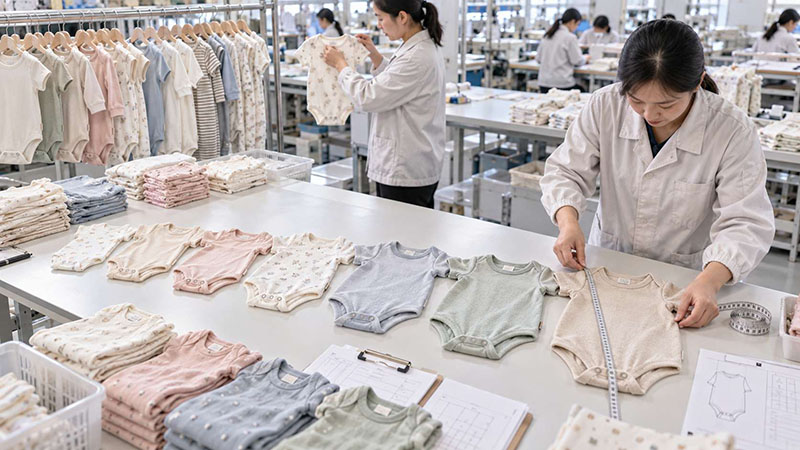
When sourcing baby rompers in bulk, approving one sample size isn’t always enough.
A 6–9M sample may look perfectly balanced while the smallest or largest size develops proportion problems after grading. For example, the 18–24M size could become too wide through the body without gaining enough length.
For a new private-label style, it is useful to review the key sizes before production and confirm the grading rules on the measurement specification.
Once the size range is approved, those measurements can also become the reference for future repeat orders, helping the brand maintain more consistent sizing from one production run to the next.
How Buyers Can Confirm Sizing Before Bulk Production
If you’re sourcing rompers for a retail business or private-label babywear collection, start with the market you’re selling to. Decide which sizes you need, then compare the supplier’s measurements with your existing products or your own size specification.
For custom styles, the sample stage is the best time to check the details that are difficult to judge from a size chart alone: fabric stretch, body proportion, diaper room, snap position, leg openings, and overall appearance.
Fit is only one part of babywear development. Brands selling into the U.S. should also review applicable CPSC guidance for children’s apparel when developing products for that market.
At Outong, we develop 0–24M baby clothing for wholesale and private-label buyers, including baby rompers. Measurements, fabrics, construction, and size grading can be reviewed during sampling before the style moves into bulk production.
Baby Romper Sizing Checklist for Buyers
Before approving an order, confirm:
- Target age and size range
- Height and weight reference
- Finished garment measurements
- Fabric stretch and shrinkage
- Body length and diaper room
- Size grading between sizes
- Measurement tolerance
- Pre-production sample
These details are especially useful when developing a new size specification or moving an existing babywear style to a new manufacturer.
Frequently Asked Questions
What size romper does a newborn wear?
Most newborns wear Newborn or 0–3M, depending on their height, weight, and the brand’s sizing standard. Checking the measurements on the size chart is more reliable than choosing by age alone.
Is 0–3M the same as newborn size?
No. Newborn sizing is generally smaller than 0–3M. Some babywear brands offer both sizes, while others start their collection at 0–3M.
How should a baby romper fit?
A baby romper should have enough room through the chest, body, and crotch for comfortable movement and a diaper. It shouldn’t pull at the shoulders or crotch, and the leg openings shouldn’t feel tight.
Should I size up for a baby romper?
If the baby’s measurements fall between two sizes, choosing the larger size can provide additional growing room. Always check height and garment measurements rather than automatically sizing up.
Why are baby romper sizes different between brands?
Brands use different size standards, patterns, fabrics, fit preferences, and grading rules. As a result, a 6–9M romper from one brand may have different measurements from the same labeled size from another.
Can baby romper sizes be customized for private-label orders?
Yes. Private-label baby romper measurements and size grading can be developed around the target market, garment style, fabric, and the brand’s existing size standards. Samples should be checked before bulk production.
Getting the Size Range Right
Choosing the right baby romper size isn’t just about matching an age to a label. Height, body proportions, diaper room, fabric, and garment construction all play a part.
For retailers and babywear brands, these same details become even more important when developing an entire size range. Getting the measurements and grading right at the sample stage helps keep the finished collection more consistent when it moves into bulk production.
Looking for baby rompers for your next collection?
Outong offers ready-stock babywear as well as OEM/ODM and private-label development for wholesale buyers. Contact us to discuss your styles, size range, samples, and bulk production requirements.