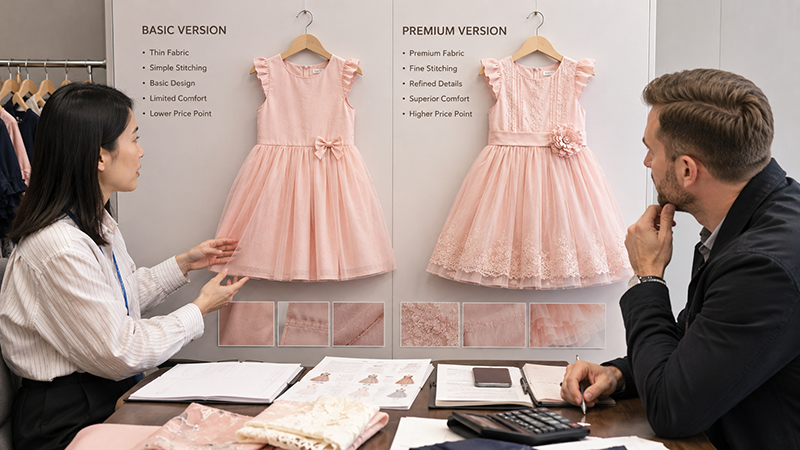
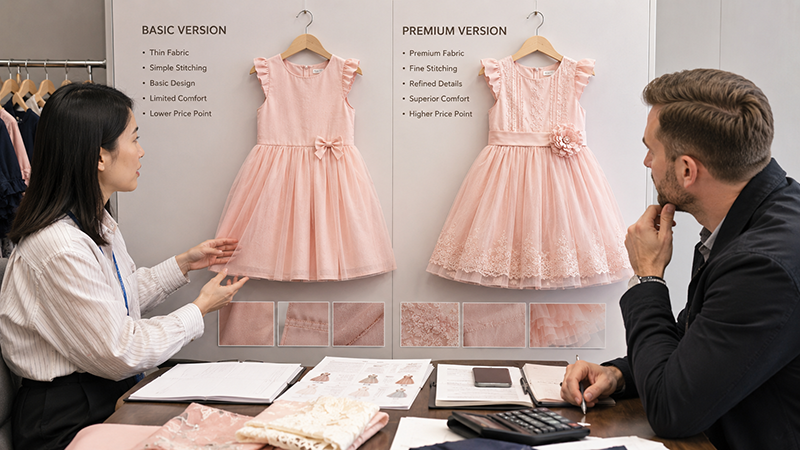
When sourcing kids clothing, many buyers wonder why similar dresses can have completely different prices.
One supplier may quote USD 6, while another quotes USD 18 for a similar-looking style.
In children’s clothing manufacturing, pricing is affected by factors like fabric quality, workmanship, and quality control.
Understanding these differences can help buyers choose the right supplier and avoid quality problems in bulk orders.
Why Similar Kids Clothes Can Have Completely Different Prices
Many online product photos hide the real differences between garments.
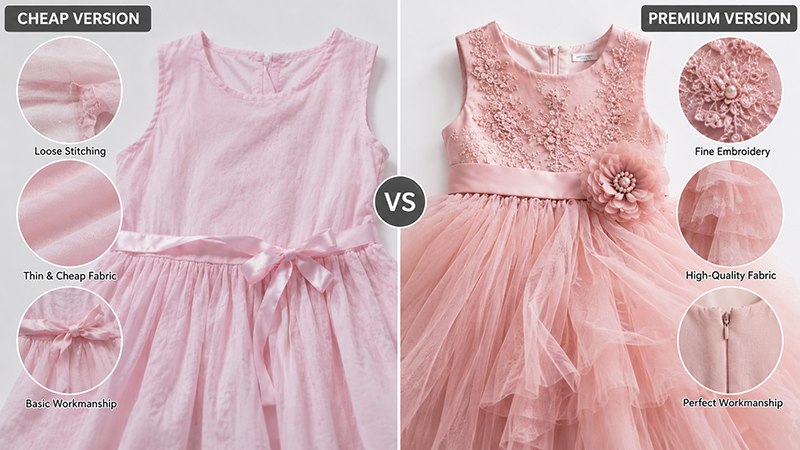
A flower girl dress may appear “luxury” in pictures, but once you receive the sample, you may notice:
- Thin fabric
- Rough stitching
- Poor lining
- Uneven embroidery
- Cheap accessories
- Uncomfortable fit
This is why experienced buyers rarely judge products by photos alone.
In children’s clothing manufacturing, especially for girls’ dresses and occasion wear, small production details can greatly affect both quality and cost.
| Production Detail | Lower-Cost Version | Premium Version |
|---|---|---|
| Tulle | Thin single-layer mesh | Soft multi-layer premium tulle |
| Lining | Polyester lining | Soft cotton lining |
| Sewing | Basic stitching | Reinforced clean stitching |
| Decoration | Printed patterns | Handmade embroidery or beading |
| QC | Random checking | Full inspection process |
These differences directly affect the final quotation.
Fabric Quality Makes a Big Difference
Fabric is one of the biggest factors behind clothing pricing.
In girls’ dresses, materials such as tulle, satin, chiffon, mesh, lace, and cotton lining can vary significantly in quality and cost.
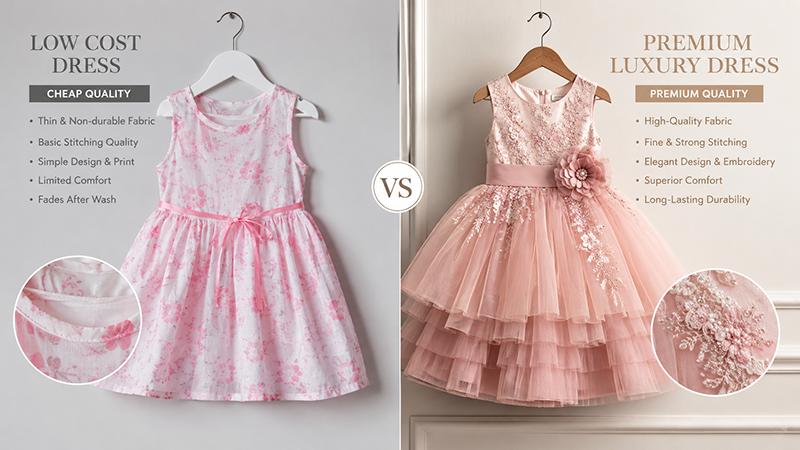
For example, soft premium tulle used in boutique dresses is much more expensive than ordinary hard mesh. Although both may look similar in product photos, the wearing experience is completely different.
Higher-quality fabrics usually offer:
- Better softness for children’s skin
- Improved durability
- Better shape and volume
- More elegant appearance
- Better comfort for long wear
Many low-cost suppliers reduce prices by using thinner fabrics or fewer fabric layers.
This is especially common in:
- Princess dresses
- Communion dresses
- Flower girl dresses
- Sequin party dresses
Buyers targeting boutique or premium markets should pay close attention to fabric specifications before placing bulk orders.
You can also learn more about different dress fabrics in our guide:
👉 Organza vs Tulle vs Chiffon for Girls Dresses
For additional fabric knowledge, the Textile Exchange also provides useful industry insights
Construction and Stitching Affect Cost
Good stitching is often invisible — until problems appear.
In children’s clothing, poor sewing quality may lead to:
- Loose seams
- Uneven hems
- Broken zippers
- Fabric puckering
- Shape deformation after washing
Factories with stricter workmanship standards usually spend more production time on:
- Reinforced stitching
- Neat seam finishing
- Symmetrical construction
- Cleaner inside finishing
- Better fitting adjustments
These processes increase labor costs but improve overall garment quality.
For boutique buyers and retailers, consistent stitching quality is important because it directly affects:
- Customer reviews
- Return rates
- Brand reputation
Handmade Details Increase Production Time
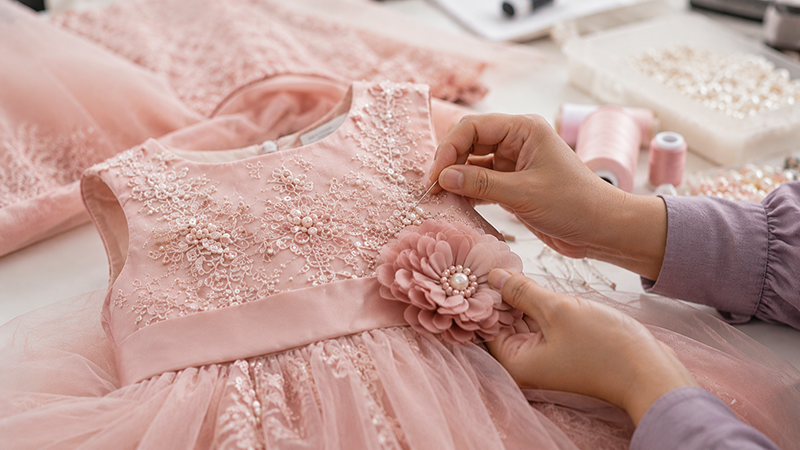
For girls’ dresses, decorative details can significantly change production costs.
Features such as:
- Hand embroidery
- Sequins
- Pearl beading
- Appliqué lace
- 3D flowers
- Smocking
usually require additional manual work.
A simple satin dress and a heavily decorated flower girl gown may require completely different production times, even if the silhouette looks similar.
In many premium dresses, workers manually attach decorations one by one to ensure consistency and appearance.
This is why high-end boutique dresses are usually more expensive than mass-market styles.
Why Quality Control Adds Value
One major difference between factories is how they manage quality control.
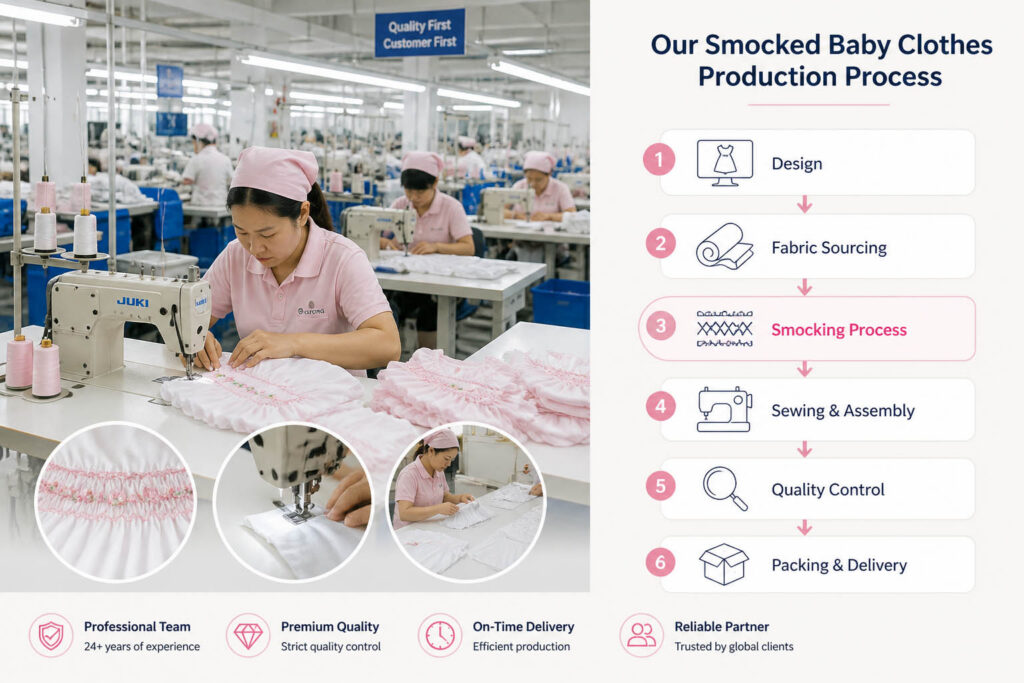
Some suppliers only perform random inspections before shipment.
Professional factories usually check:
- Fabric defects
- Measurement accuracy
- Color consistency
- Sewing quality
- Decoration security
- Ironing and finishing
- Packaging condition
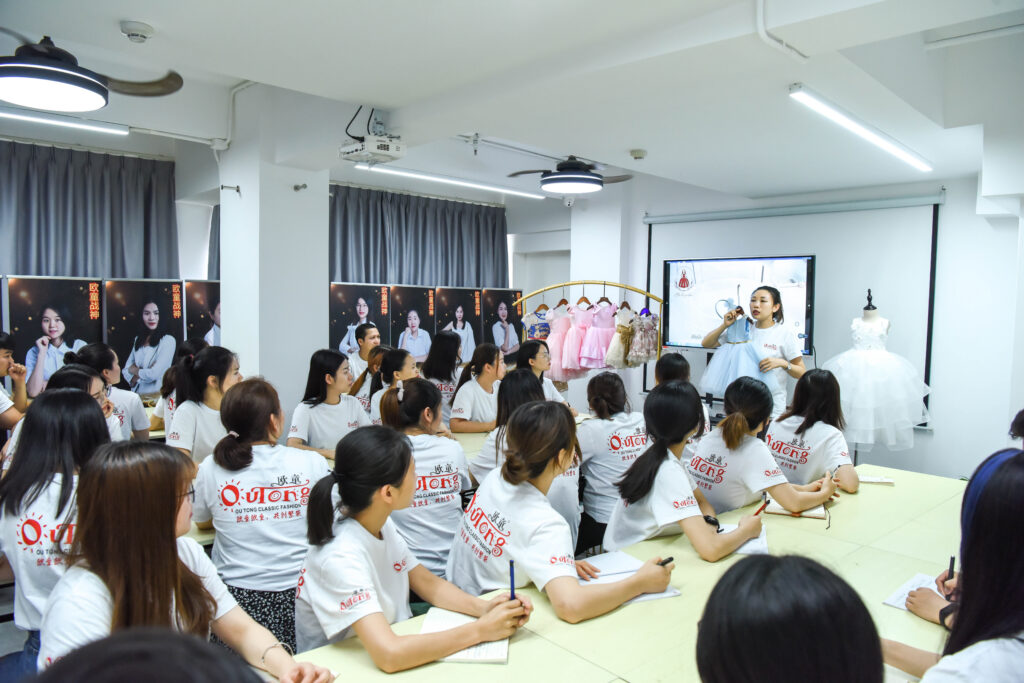
At Outong, every bulk order starts with sample confirmation before production. During manufacturing, our QC team checks products at multiple stages to reduce quality risks and improve consistency.
For wholesale buyers, strong QC management helps reduce:
- Customer complaints
- Product returns
- Delivery disputes
- Reorder problems
You can also read our related article:
👉 How to Control Quality When Sourcing Kids Clothing
The U.S. Consumer Product Safety Commission also provides safety guidelines for children’s apparel
The Difference Between Boutique and Mass Production
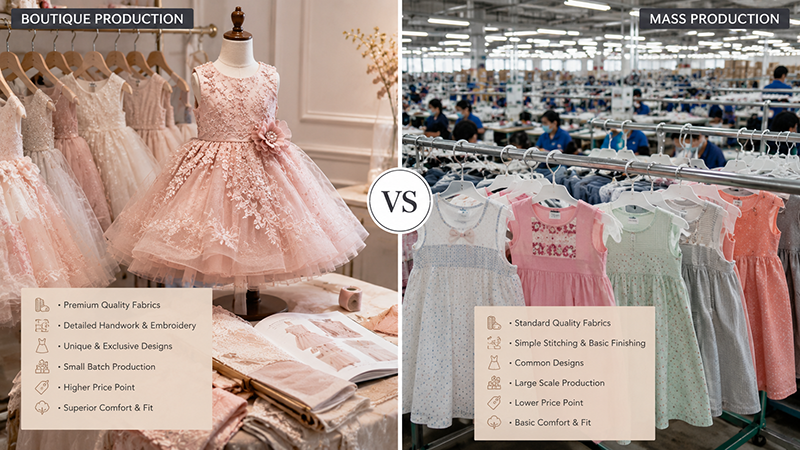
Not all factories serve the same market.
Some factories focus on:
- Ultra-low-cost production
- Large volume basic styles
- Fast quantity manufacturing
Others focus more on:
- Boutique quality
- Premium finishing
- Small detail consistency
- Higher-end retail markets
This is why two suppliers may quote very different prices for “similar” products.
Boutique-style production usually involves:
- Better fabrics
- More complex workmanship
- Lower defect tolerance
- More manual processes
- Smaller production runs
For buyers selling through boutiques, department stores, or premium online stores, these differences matter much more than the lowest price.
Shipping, Packaging, and Lead Time Also Affect Pricing
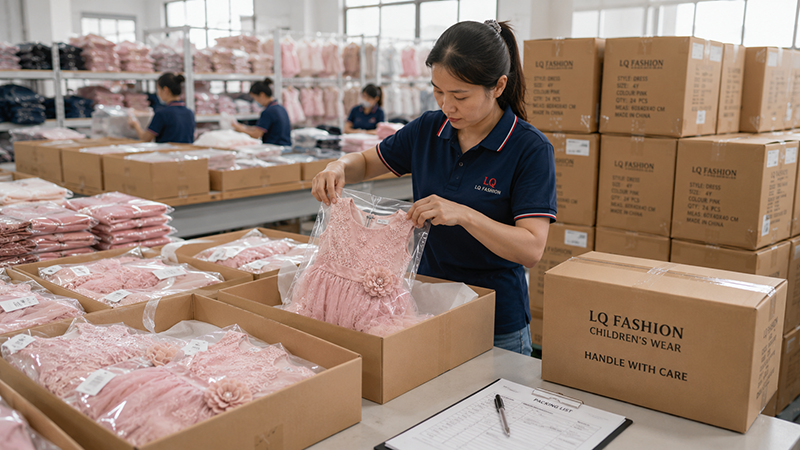
Many buyers only compare product prices, but total sourcing cost includes much more.
Factors such as:
- Custom packaging
- Brand labels
- Hangtags
- Urgent production schedules
- Shipping methods
- Export standards
can all influence final pricing.
For example, rush orders during peak seasons often require factories to increase labor and production coordination, which increases costs.
Factories with stable production management and better planning may offer more reliable delivery timelines, even if their prices are not the lowest.
How Buyers Can Evaluate Kids Clothing Prices More Professionally
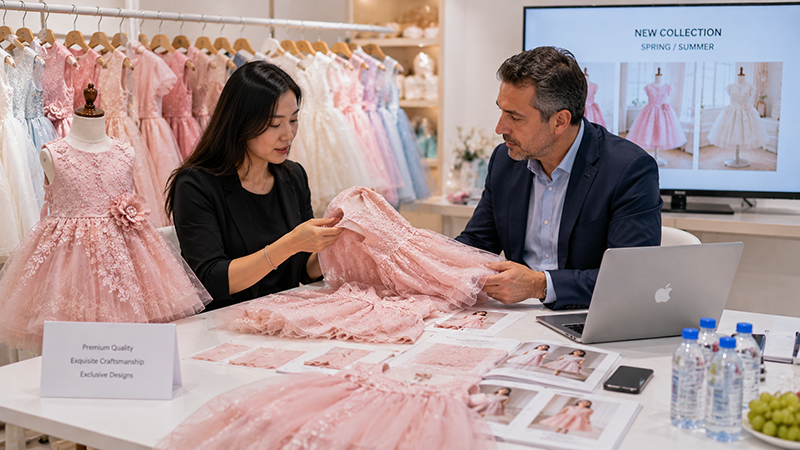
Instead of asking only:
“Who has the cheapest price?”
professional buyers usually ask:
- What fabric is being used?
- How many fabric layers are included?
- Is the lining comfortable for children?
- How is the stitching quality?
- Is there a QC process?
- Can the supplier provide production photos or videos?
- Is sample approval included before bulk production?
- How stable is the delivery schedule?
A lower quotation may sometimes lead to:
- Quality complaints
- Delayed shipments
- High return rates
- Lost customers
Choosing the right supplier is usually more important than choosing the cheapest supplier.
FAQ
1. Why do kids clothing prices vary so much?
Prices can vary because of differences in fabric quality, stitching, handmade details, quality control, and production standards. Even similar-looking dresses may use completely different materials and workmanship.
2. Does cheaper kids clothing mean lower quality?
In many cases, yes. Lower-cost products may use thinner fabrics, simpler construction, or less strict quality control, which can affect comfort, durability, and overall appearance.
3. What affects the cost of girls’ dresses the most?
The biggest factors are fabric quality, embroidery or beading, lining, sewing workmanship, and the amount of manual labor required during production.
4. Why are boutique kids dresses more expensive?
Boutique dresses usually use premium fabrics, cleaner finishing, softer lining, and more detailed handmade decorations, which increase both production time and cost.
5. How can buyers compare suppliers more professionally?
Instead of only comparing prices, buyers should also evaluate fabric quality, stitching, sample workmanship, QC standards, and delivery reliability before placing bulk orders.
6. Is sample approval important before bulk production?
Yes. Sample approval helps buyers confirm fabric, sizing, workmanship, and overall quality before mass production, reducing the risk of production mistakes or quality issue
Final Thoughts
Kids clothing prices vary because production quality varies.
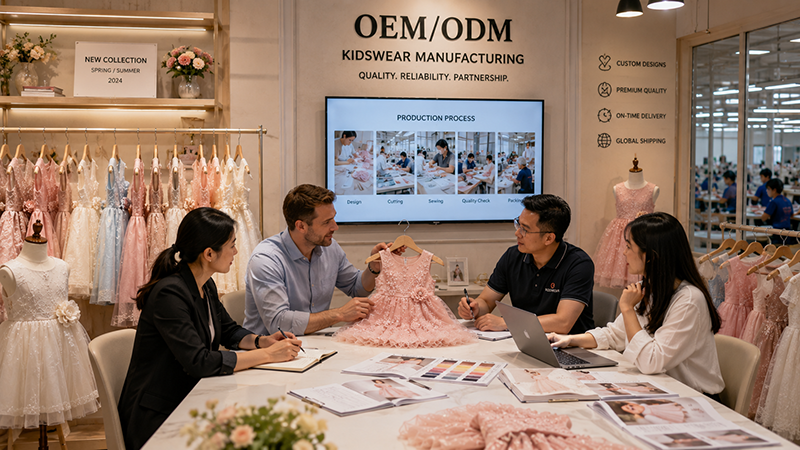
Fabric selection, workmanship, embroidery, quality control, production management, and supplier experience all affect the final cost of a garment.
For buyers, understanding these differences helps make better sourcing decisions and avoid unnecessary problems during bulk production.
Looking for Better Balance Between Price and Quality?
At Outong, we help wholesalers, boutiques, and retailers develop kids clothing with stable quality, reasonable pricing, and reliable delivery.
From fabric selection and sampling to bulk production and quality control, our team supports every step to help buyers reduce sourcing risks and improve product consistency.
📩 Contact us to get:
- Product catalogs
- Fabric recommendations
- Sampling support
- Wholesale pricing
- OEM & ODM solutions