
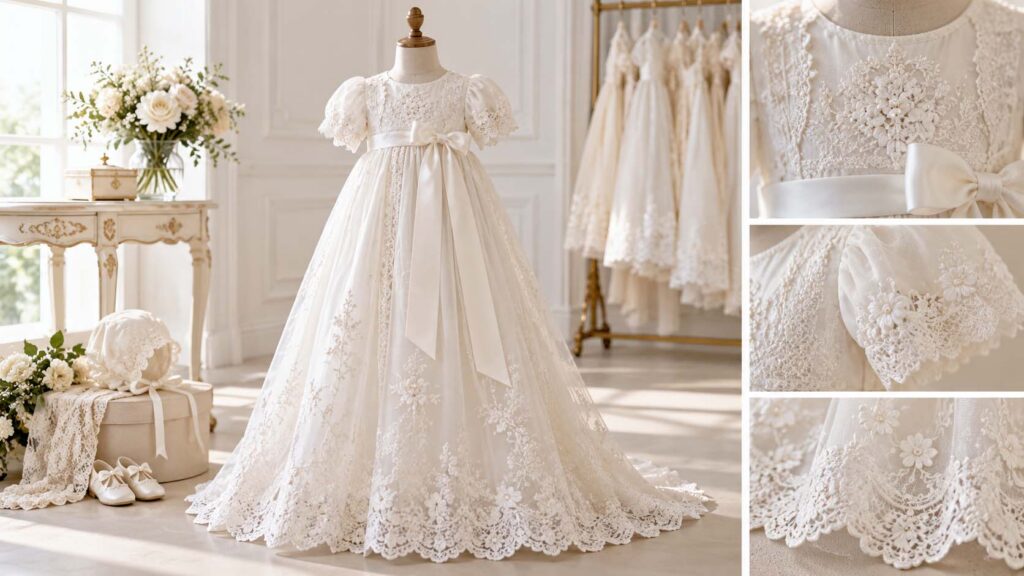
A christening gown is a special garment worn by a baby or young child for a christening or baptism ceremony. Traditional styles are usually white or ivory, with a long silhouette and delicate details such as lace, embroidery, or satin trims.
While the classic long gown is still widely used, christening wear today also includes shorter dresses, rompers, and formal outfits for boys. You may also see terms such as baptism gown, christening dress, and baptism dress used for similar styles, depending on the market and type of ceremony.
If you’re building a christening collection, it helps to understand these differences before choosing styles, fabrics, and sizes. For a closer look at related ceremonial clothing, see our guide to Baptism Dress vs First Communion Dress.
What Does a Traditional Christening Gown Look Like?
Traditional christening gowns are known for their long, flowing shape, usually extending below the baby’s feet. White is still the classic color, although ivory is also common and gives the gown a slightly softer look.
The details can range from very simple to quite elaborate. Some gowns use lightweight cotton with subtle embroidery, while more formal styles may feature lace overlays, pleats, satin ribbons, covered buttons, or delicate bows. These details give buyers room to offer both understated and more premium styles within the same collection.
For wholesale buyers, the differences are not only decorative. Fabric, lace quality, embroidery, and the amount of handwork can all affect the finished look and price of the gown. When selecting styles, it is usually more useful to offer a few clearly different designs than several gowns with only minor changes.
Why Are Christening Gowns White?
White has long been associated with baptism and traditionally represents new life in the Christian faith. That tradition is why white christening gowns are still the classic choice for many ceremonies today.
The Church of England, for example, describes the christening service as including a white shawl or garment after baptism. You can read more in its official guide to What happens at a christening?
White is not the only option buyers will see, though. Ivory and cream are also common, especially in gowns with lace, embroidery, or a softer vintage-inspired look.
How Long Should a Christening Gown Be?
There is no fixed length for a christening gown. Traditional gowns usually extend below the baby’s feet, while modern christening dresses are often shorter and easier to wear.
| Style | Typical Length | Common Use |
|---|---|---|
| Traditional christening gown | Extends below the feet | Traditional ceremonies |
| Christening dress | Knee to calf length | Modern ceremonies |
| Romper or formal set | Standard garment length | Boys and modern collections |
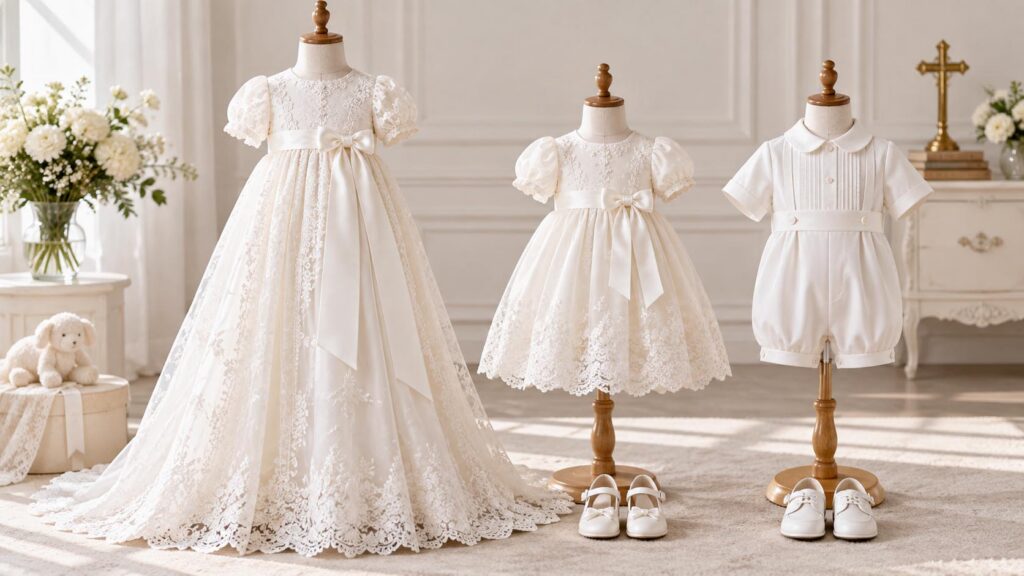
The longer length gives a traditional gown its distinctive ceremonial look. Shorter dresses, on the other hand, are easier to handle and can work well for both the ceremony and the celebration afterwards.
For buyers planning a collection, there is no need to stick to one length. A mix of traditional long gowns and shorter modern styles can cover different customer preferences.
What Fabrics Are Best for Christening Gowns?
There is no single best fabric for every christening gown. The right choice depends on the look you want, the climate, comfort, and the price range of the collection.
| Fabric | Main Characteristic | Suitable For |
|---|---|---|
| Cotton | Soft and breathable | Babies and warm climates |
| Satin | Smooth and formal | Classic formal styles |
| Lace | Delicate and traditional | Decorative gowns |
| Tulle | Light and layered | Modern girls’dresses |
| Organza | Crisp and lightweight | Structured occasion styles |
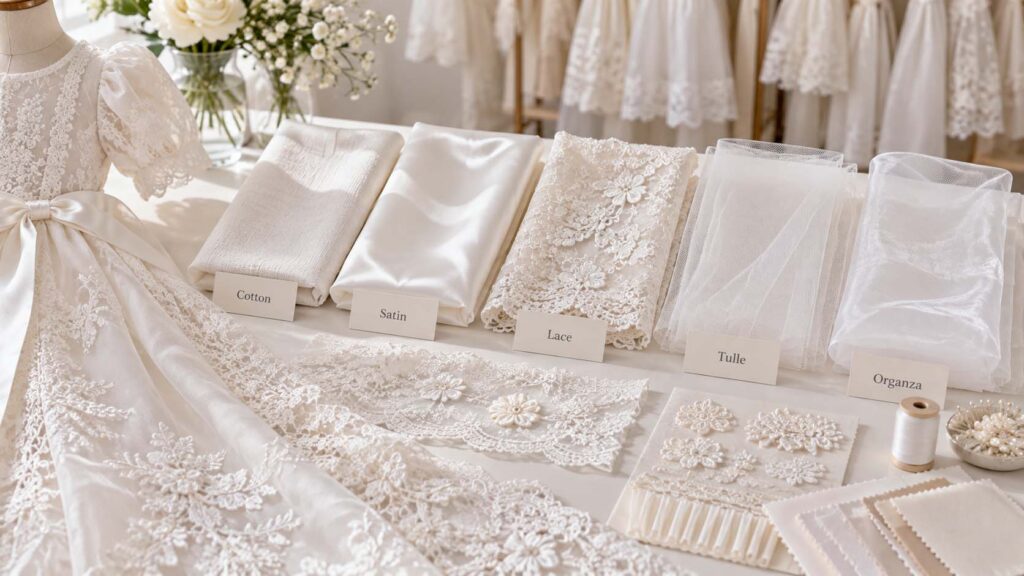
Cotton is a good choice for softer, more breathable gowns, especially for younger babies or warmer markets. Embroidery, pintucks, or lace trims can make a simple cotton style feel more ceremonial without adding too much weight.
Satin and lace create a more formal look. Satin works well for structured bodices, skirts, waistbands, and bows, while lace is often used on sleeves, bodices, hems, or as an overlay. With both fabrics, quality makes a visible difference—a satin that is too shiny or lace that varies in shade can affect the look of the finished order.
Tulle and organza are more common in modern christening dresses. They add volume without the weight of a traditional long gown and can also work for styles designed for other formal occasions.
For bulk orders, we pay particular attention to fabric shade, lace placement, embroidery, and consistency between pieces. Buyers can also ask about textile testing and certifications such as OEKO-TEX® STANDARD 100, which covers textiles tested for harmful substances.
Can Boys Wear Christening Gowns?
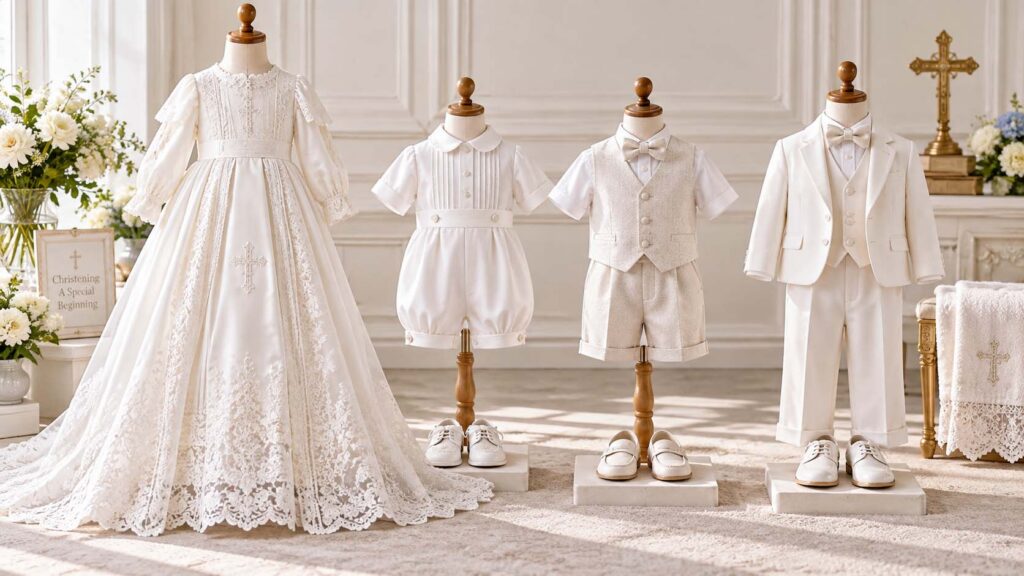
Yes. Traditionally, christening gowns were worn by both baby boys and girls, so the long white gown is not exclusively a girls’ style.
Today, boys’ christening wear is much more varied, from white rompers and shirt-and-shorts sets to waistcoats and small formal suits. Buyers building a baptism collection can explore our Boys’ Baptism Outfits guide for more ideas, or browse our Boys’ Formal Wear collection for modern formal styles.
Christening Gown vs Baptism Dress: What’s the Difference?
The two terms are often used interchangeably, and their meaning can vary by country, church, and retailer. A christening gown usually refers to the traditional long style worn by babies, while a baptism dress is more likely to describe a shorter, modern dress.
In practice, both may be worn for the same ceremony. For buyers, the more useful distinction is the style itself—its length, age range, fabric, and level of decoration—rather than the name on the product.
If you’re comparing other types of ceremonial wear, our Baptism Dress vs First Communion Dress guide explains how those two categories differ.
Traditional vs Modern Christening Outfits
Traditional christening gowns are still widely used, but modern collections often include shorter dresses, rompers, and boys’ formal outfits. The main differences are usually in length, detailing, and how the outfit is worn.
| Traditional Styles | Modern Styles |
|---|---|
| Long flowing gowns | Short dresses, rompers and suits |
| Mainly white or ivory | White,ivoryandsoftneutralshades |
| Lace and embroidery | Cleaner, simpler details |
| Strong ceremonial look | Ceremony and celebration use |
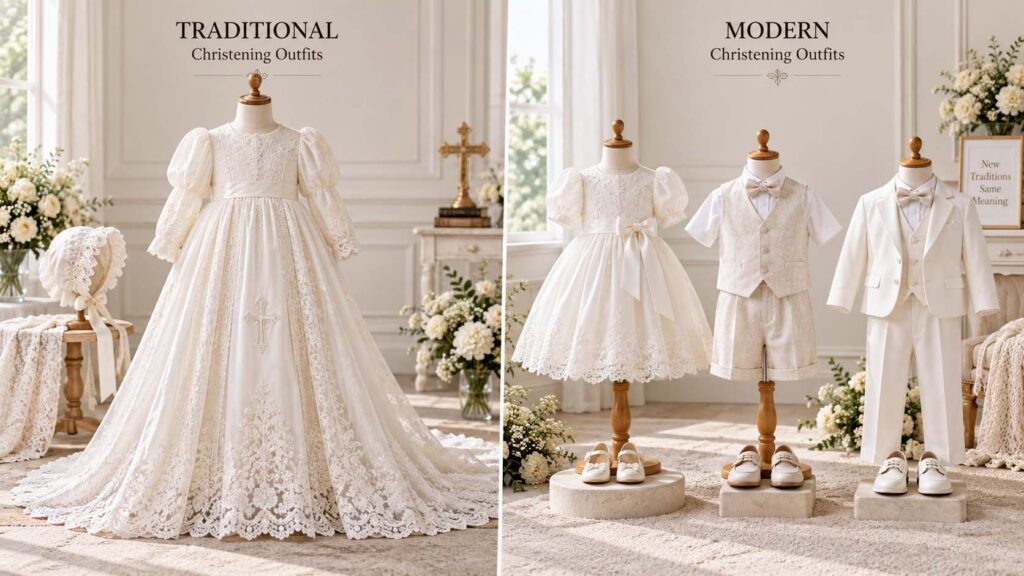
For wholesale collections, a mix of both styles is often more practical. Traditional gowns serve buyers looking for a classic ceremonial look, while modern styles add more choice in silhouette, detailing, and price range.
How to Choose Christening Gowns for Your Market
A good-looking sample does not always mean it will sell well in every market. Some customers prefer traditional long gowns with lace and embroidery, while others look for simpler dresses, lightweight fabrics, or modern boys’ outfits. Climate matters too—a heavily layered satin gown may be less practical in warmer regions, where cotton, lace, or lighter constructions can be easier to wear.
Size planning is just as important as style. Do not judge a gown from one sample size alone. As the size changes, the skirt length, sleeves, neckline, and embroidery placement may also need adjustment. If you’re planning a broader size assortment, our guide to What Sizes Sell Best in Children’s Clothing? covers this in more detail.
For a wholesale collection, variety does not mean adding more similar designs. A practical range might include a traditional long gown, a lighter cotton style, a lace design, several modern baptism dresses, and a few boys’ outfits. This gives buyers clear choices in style, fabric, and price without making the collection unnecessarily large.
What Should Wholesale Buyers Look for in a Christening Gown Supplier?
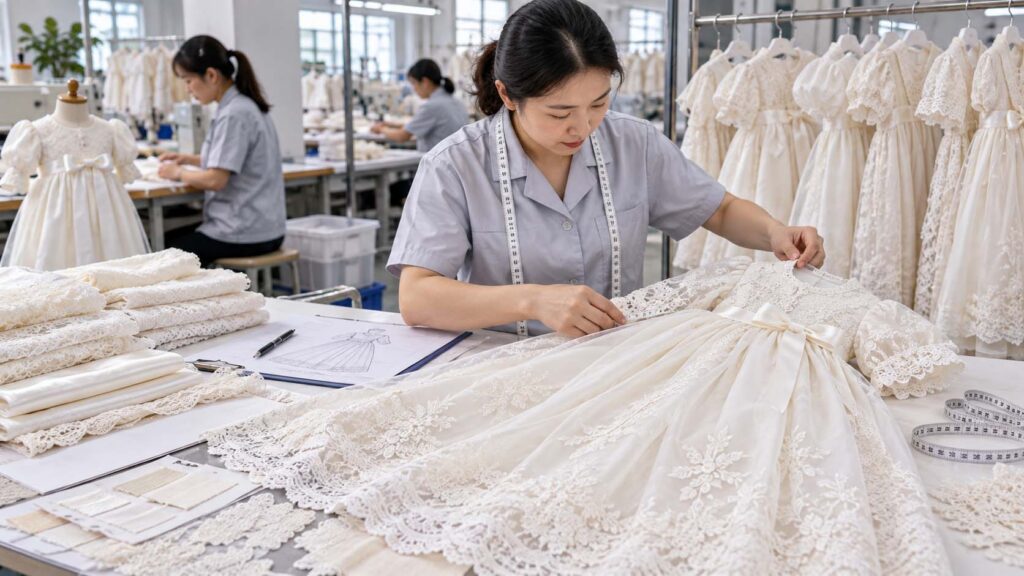
A good sample is only the starting point. For wholesale buyers, the real test is whether a supplier can keep the same quality, measurements, fabric shades, lace placement, and finishing across the full order.
At Outong, we develop and manufacture children’s formalwear for international wholesale buyers, including christening gowns, baptism dresses, girls’ occasion dresses, and boys’ formalwear. Our team supports the process from fabric and trim selection to sampling, size grading, bulk production, and quality control, so buyers can check key details before an order moves into production.
For custom collections, buyers can adjust fabrics, colors, lace, embroidery, sizing, labels, and packaging through our OEM/ODM service. Samples normally take 3–7 days, giving buyers a chance to check the actual fabric, proportions, workmanship, and overall look before confirming bulk production.
Quality and compliance also matter, especially when selling children’s clothing internationally. Our production meets BSCI and Sedex requirements, and we can support testing such as OEKO-TEX, CPSIA, and SGS based on the product and market. Buyers selling in the United States can also refer to the U.S. Consumer Product Safety Commission for applicable children’s product requirements.
Frequently Asked Questions About Christening Gowns
1. What is a christening gown?
A christening gown is a ceremonial outfit traditionally worn by babies or young children for a christening or baptism. Classic styles are usually long and come in white or ivory.
2. Is a christening gown the same as a baptism gown?
Often, yes. The names are frequently used for similar garments, although christening gown is more commonly associated with the traditional long baby style.
3. Why are christening gowns so long?
The extra length is part of the traditional ceremonial design. Modern christening dresses, however, can be much shorter and easier to wear.
4. Why do babies wear white for christening?
White has a long tradition in Christian baptism and is associated with new life. Ivory and cream are also commonly used for modern christening wear.
5. Can a boy wear a christening gown?
Yes. Traditional christening gowns can be worn by both boys and girls. Today, boys may also wear rompers, waistcoat sets, or small baptism suits.
6. What material is best for a christening gown?
It depends on the style and climate. Cotton is soft and breathable, while satin and lace are often chosen for a more formal or traditional look.
Build a Christening Collection That Fits Your Market
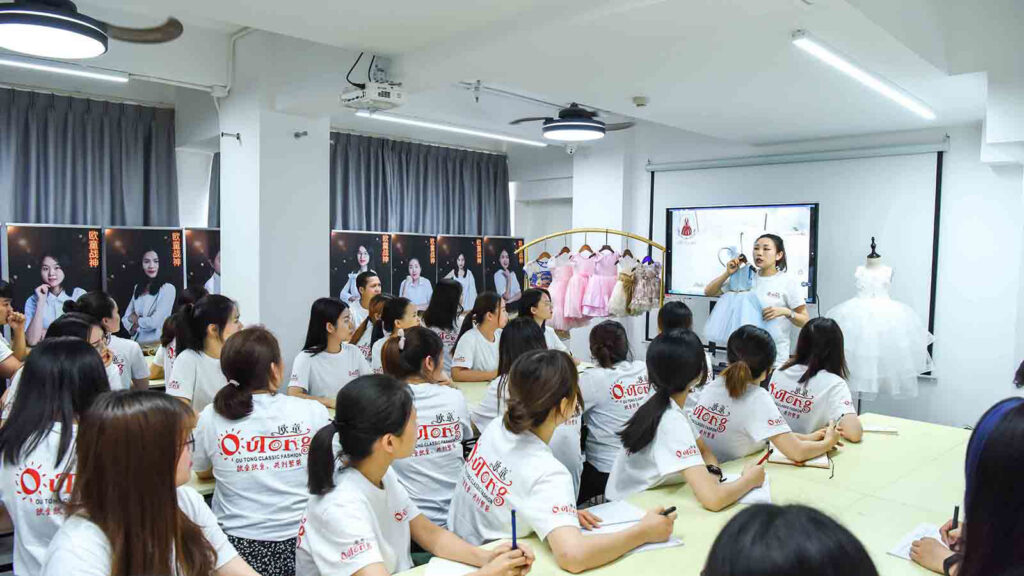
A strong christening collection does not need dozens of similar styles. A balanced mix of traditional gowns, modern baptism dresses, and boys’ outfits can give buyers enough choice while keeping the range focused.
At Outong, we work with wholesalers, brands, and chain-store buyers to develop children’s formalwear for different markets. Whether you need existing christening styles or a custom collection, our team can support you from sampling through bulk production.
Looking for christening gowns for your next collection?
Contact us for our latest catalog and wholesale prices, or send us your design requirements to discuss a custom order.