
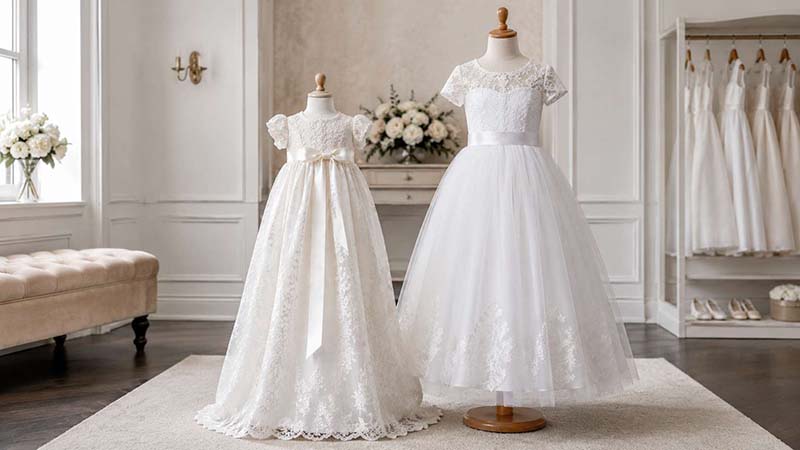

White dresses are commonly associated with both Baptism and First Communion, but the garments are not always interchangeable. The child’s age, the type of ceremony and the practical requirements of the day all influence the appropriate design. For retailers and buyers, understanding these differences makes it easier to select the right styles, sizes and fabrics for each market.
What Is a Baptism Dress?
A Baptism dress is worn during a Christian baptism or christening ceremony. Depending on the denomination and local tradition, the child may be a newborn, an infant, a toddler or an older girl. This creates a much wider range of product requirements than the term “white ceremony dress” may suggest.
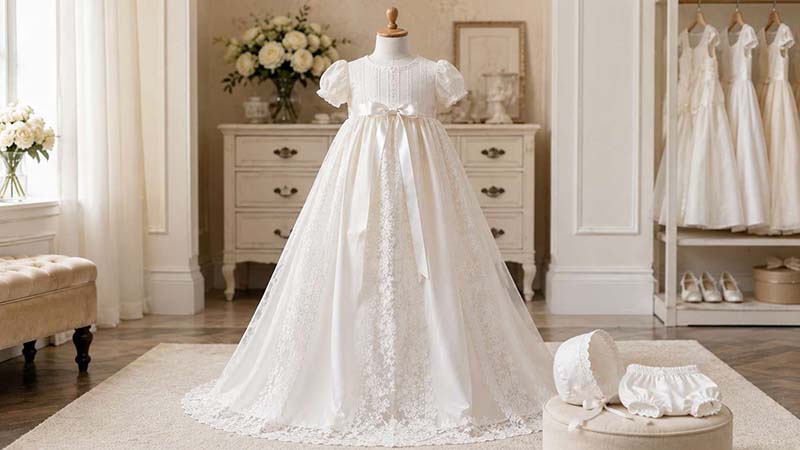
Infant Baptism gowns are often long and flowing, with soft lace, embroidery, satin ribbons or delicate handwork. Some extend well beyond the baby’s feet, giving them a traditional heirloom appearance. Dresses for toddlers and older children are usually shorter and easier to move in, although they still maintain a formal white or ivory look.
Comfort and convenience are especially important in this category. Soft linings, non-irritating trims, simple back openings and enough room for a diaper can matter more than an elaborate silhouette. Buyers should also consider matching bloomers, bonnets, headbands, capes or blankets when building a complete Baptism collection.
Buyers serving churches, boutiques and specialty retailers can explore different Baptism dresses for girls, from traditional infant gowns to practical styles for toddlers.
What Is a First Communion Dress?
A First Communion dress is worn by a school-age girl receiving the Eucharist for the first time. The exact age varies by church and region, but the child is generally old enough to dress and move more independently than a baby being baptized.
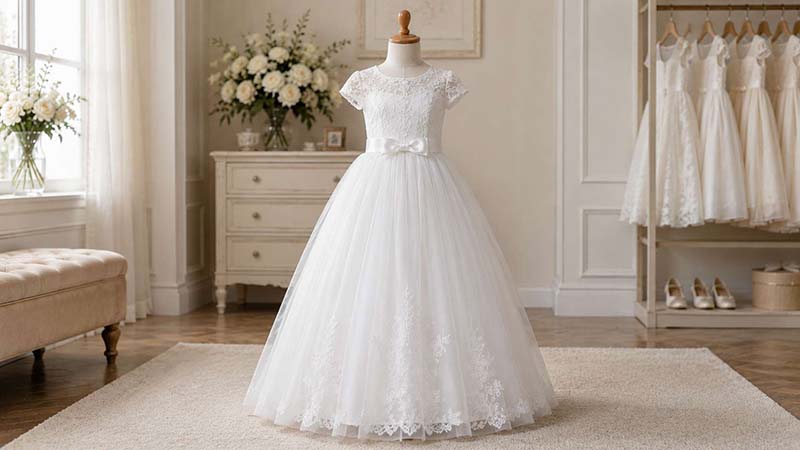
These dresses usually resemble simple bridal or formal occasion dresses. Common details include lace bodices, satin waistbands, cap sleeves, pearl accents, layered tulle skirts and modest necklines. Tea-length, ankle-length and floor-length silhouettes are all available, although individual churches may have their own dress guidelines.
The design needs to look ceremonial without becoming uncomfortable during a service that may include walking, sitting, kneeling and group photographs. A beautiful outer layer is not enough; the lining, sleeve opening, waist construction and skirt weight all affect how the dress feels throughout the day.
Retailers can also review our guide to choosing First Communion outfits for more information about dress styles, boys’ suits and ceremony-specific purchasing considerations.
Baptism Dress vs First Communion Dress: Key Differences
Although both categories commonly use white or ivory, they serve different age groups and practical needs.
| Feature | Baptism Dress | First Communion Dress |
|---|---|---|
| Typical wearer | Newborn, infant, toddler or young child | School-age girl |
| Main purpose | Baptism or christening ceremony | First reception of Communion |
| Common silhouette | Long infant gown or shorter child’s dress | Tea-length, ankle-length or floor-length formal dress |
| Design priority | Softness, easy dressing and infant comfort | Modesty, fit, movement and formal appearance |
| Common details | Embroidery, lace, ribbons, bonnets and bloomers | Lace bodices, tulle skirts, satin sashes, pearls and veils |
| Size planning | Often baby sizes, sometimes extended to toddlers | Mainly girls’ graded sizes |
| Retail season | Can sell throughout the year | Often concentrated around local Communion seasons |
Age and Size Range
The main difference is the wearer’s age. Baptism collections often begin with newborn sizes and may require extra room for diapers, while First Communion dresses are designed for school-age girls.
For Communion styles, accurate shoulder, bodice and skirt measurements are especially important. A clear size chart helps retailers reduce fitting problems and returns.
A clear and accurate children’s clothing size guide helps retailers select the right size range and reduce fitting problems.
Length and Silhouette
Traditional infant Baptism gowns may extend beyond the baby’s feet, creating a formal heirloom look. Shorter dresses are more practical for toddlers who need to walk comfortably.
First Communion dresses are commonly tea-length, ankle-length or floor-length. The best length depends on local church customs and customer preferences.
Fabric and Construction
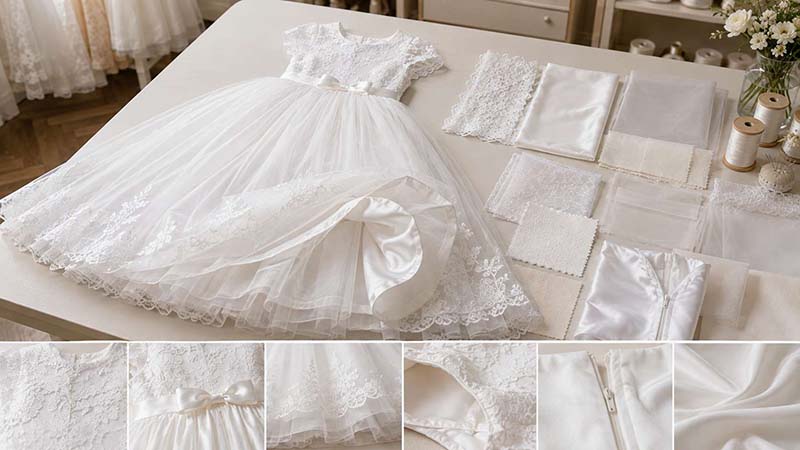
Baptism dresses should prioritize lightweight fabrics, soft seams and breathable linings. Stiff layers, rough lace and heavy embellishments may irritate a baby’s skin. When selecting fabrics and trims for children’s ceremonial clothing, buyers may also consider recognized textile testing and product-safety standards.
First Communion dresses can have more structure, but they still need to allow comfortable walking, sitting and kneeling. Buyers should check the lining, armholes, waist construction and overall skirt weight before placing a bulk order.
When selecting fabrics and trims for children’s ceremonial clothing, buyers may also consider recognized textile testing and product-safety standards.
Can the Same White Dress Be Used for Both Ceremonies?
In some cases, yes. A simple white dress with a modest neckline, comfortable lining and restrained decoration may work for the Baptism of an older child as well as for First Communion. However, the suitability depends on the child’s age, the church’s expectations and the dress proportions. Some simple white styles from a flower girl dress collection may also be suitable for First Communion when they have a modest neckline, appropriate length and restrained decoration.
An infant christening gown is generally unsuitable for First Communion, while a structured Communion dress will rarely meet the practical needs of a baby. Retailers should describe the intended use accurately instead of placing every white dress under both product names. Clear category labels help customers choose confidently and can improve the relevance of product pages in search results.
How Retailers Can Build a Strong Religious Dress Collection
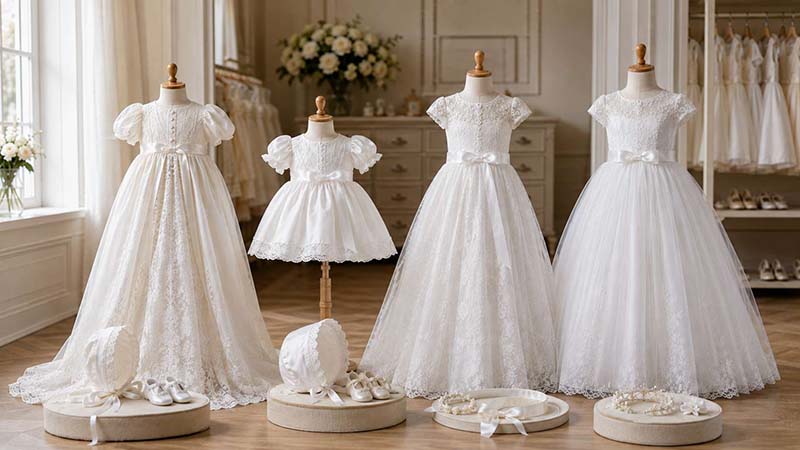
A balanced collection does not need dozens of similar white dresses. For Baptism, buyers can combine long infant gowns with practical shorter styles for toddlers and selected accessory sets. For First Communion, a simple entry-level dress, a classic lace style, a fuller tulle design and one premium option can cover different budgets. Mixing tea-length and longer silhouettes adds choice without creating excessive inventory.
Before placing an order, buyers should review:
- The target age and size range for each category
- Local ceremony dates and the required delivery schedule
- Church expectations regarding sleeves, necklines and dress length
- Fabric softness, lining coverage and garment weight
- Measurement tolerances and size consistency
- Accessory demand and opportunities for coordinated sales
- Reorder availability for best-selling styles
Ready-stock products can help retailers test demand or replenish quickly. Custom production is better suited to exclusive fabrics, details, labels or size specifications.
What Buyers Should Check Before Bulk Ordering
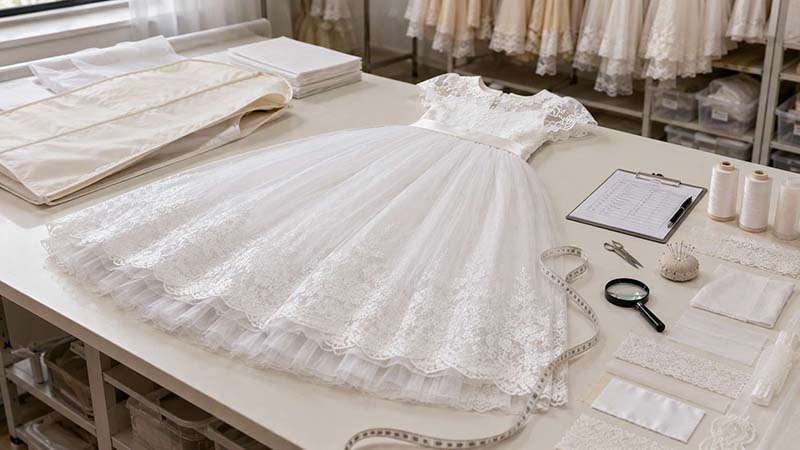
Construction problems are easy to notice on white ceremonial garments. During sample approval, check hems, lining coverage, lace edges, fastenings and decorative attachments. View the dress under natural and indoor light, as satin, lace and tulle may show slightly different shades of white. Independent inspection and testing services can help importers verify fabric performance, workmanship and product compliance before shipment
Confirm finished measurements rather than relying only on age labels. Packaging should also protect full skirts and delicate appliqués from crushing, dust and marks during shipment.
Choosing the Right Manufacturing Partner
A supplier experienced in children’s ceremonial clothing should provide accurate size grading, child-friendly construction, reliable fabric sourcing and consistent bulk production. Ask how samples are approved, how white and ivory shades are controlled and what inspections take place before shipment.
At Outong, we support wholesalers, importers, brands and specialty retailers with ready-stock and OEM/ODM children’s occasionwear. Ready-stock orders start from 30 pieces per style, while custom production starts from 240 pieces per style. Buyers can develop Baptism and First Communion collections with support for sampling, size grading, private labeling, packaging and bulk quality control.
Frequently Asked Questions
Are Baptism dresses always long?
No. Traditional infant gowns are often long, but Baptism dresses for toddlers and older children may be knee-length or tea-length for safer and easier movement.
Does a First Communion dress have to be pure white?
White is the most common choice, but some churches and families accept ivory or off-white. Retailers should consider local customs and advise customers to confirm any church-specific requirements.
Can a flower girl dress be sold as a First Communion dress?
Some simple white flower girl dresses may be suitable if they have a modest cut, appropriate length and restrained decoration. Highly colorful or bridal-party-focused designs may not meet the expectations of a Communion ceremony.
Which fabrics are best for Baptism dresses?
Soft cotton linings, lightweight satin, fine lace, organza and gentle tulle are common choices. The fabric touching the baby’s skin should be soft, breathable and free from rough trims.
What sizes should retailers stock for First Communion season?
The right size mix depends on the local customer base. Retailers should use previous sales data where available and request a detailed supplier size chart, since age labels alone may not provide an accurate fit.
How early should buyers order religious ceremony dresses?
Buyers should work backward from their local Baptism and Communion seasons, allowing time for sampling, production, shipping and in-store promotion. Custom collections require more preparation than ready-stock replenishment.
Build the Right Collection for Every Ceremony
Baptism and First Communion dresses may share a white color palette, but their wearers, proportions and practical requirements are different. Retailers that separate the two categories clearly can plan sizes more accurately, present products more effectively and give customers better guidance.
Looking for wholesale or custom religious ceremony dresses? Contact Outong to request our latest collection, wholesale pricing and OEM/ODM options for Baptism and First Communion dresses.