Starting a girls’ dress business can be a promising opportunity, but success depends on more than choosing attractive products. You need to understand your customers, build a focused product collection and work with a supplier that can deliver consistent quality. A carefully planned first order allows you to test the market before investing in more stock.
1. Define Your Market and Sales Channel
Start by deciding who you want to sell to. Girls’ dresses cover many categories, including everyday clothing, girls’ party dresses, flower girl dresses, birthday dresses and formalwear. Each category attracts different customers and requires a different price range, size plan and product presentation.
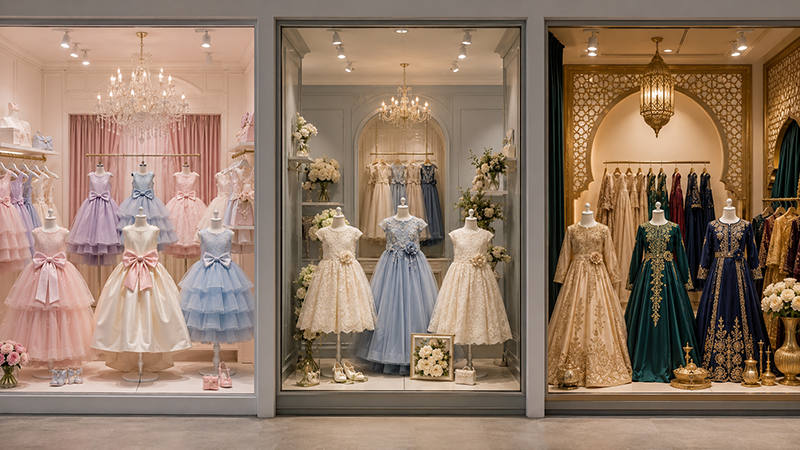
Your local market should influence your product selection. Buyers in warm regions often look for lightweight fabrics, soft linings and sleeveless styles. European and North American stores may need seasonal collections, while customers in Middle Eastern markets may prefer longer dresses, sleeves, embroidery and more elaborate details.
Before choosing products, research local demand, competitors and common retail prices. The U.S. Small Business Administration’s guide to market research and competitive analysis provides a useful framework for evaluating demand, market size, customer location and competition.
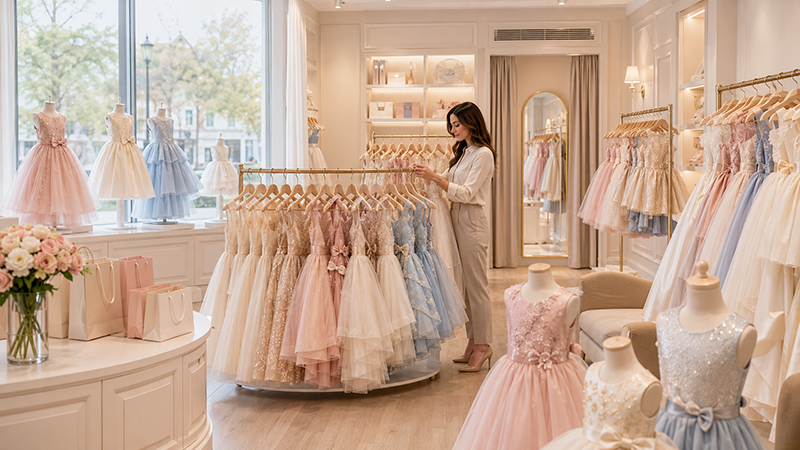
You should also decide where you will sell. A physical boutique can offer fittings and a personal shopping experience, while an online store depends on clear photos, accurate measurements and a practical return policy. You do not need to use every sales channel immediately. It is usually better to build one reliable sales channel before expanding.
2. Plan Your First Girls’Dress Collection
A common beginner mistake is selecting every dress according to personal taste. A beautiful collection will not necessarily sell if the styles, prices and occasions do not match local demand.
Your first collection should include a clear mix of products rather than too many unrelated designs. For example, a girls’ occasionwear store could combine simple satin dresses, commercial tulle styles, flower girl dresses for weddings and a few embroidered statement pieces. Understanding the difference between party and formal dresses can also help you build a more balanced assortment.
| Product role | Purpose in the collection |
|---|---|
| Entry-price styles | Attract price-conscious customers |
| Core commercial styles | Generate steady sales |
| Statement dresses | Create visual impact and support higher prices |
| Seasonal styles | Meet demand for weddings, holidays or special events |
Keep the initial color range controlled. Ivory, blush pink, champagne and light blue work across many wedding and party occasions, while brighter or trend-led colors can be tested in smaller quantities.
Sizes also need careful planning. Do not automatically order the same quantity in every size. Children of the same age can have different body shapes, so age labels alone are not enough. Our girls’ dress size guide explains how chest, waist, height and dress length should be used when selecting sizes.
Based on our experience working with international buyers, testing a new collection for 30 to 60 days provides more useful information than placing a large opening order. The first sales period will show which styles, colors and sizes deserve a larger reorder.
3. Find a Reliable Girls’Dress Supplier
Your supplier directly affects product quality, delivery time and customer satisfaction. Comparing quotations is important, but the lowest price does not always represent the best value. A cheaper version may use thinner fabric, fewer skirt layers, a rougher lining or less secure decorations.
When evaluating a supplier, confirm:
- Minimum order quantity
- Sample cost and preparation time
- Fabric, lining and color options
- Size range and measurement tolerance
- Production lead time
- Quality-control procedures
- Private labels and packaging
- Product testing or relevant certifications
You should also understand the difference between ready-stock and custom production. Ready-stock dresses are suitable for faster market testing and usually allow smaller orders. OEM or ODM production is more suitable when you need exclusive colors, adjusted sleeves, different skirt volume, private labels or original designs.
Customized production normally requires a higher minimum quantity and a longer lead time. However, it can help your store establish a clearer identity and reduce direct product comparison with competitors.
A dependable supplier should be able to explain the materials, construction and production process clearly. Before making a final decision, review these practical methods for avoiding quality problems when sourcing girls’ dresses. If a supplier discusses only price but avoids technical questions, proceed carefully.
4. Check Samples Before Ordering
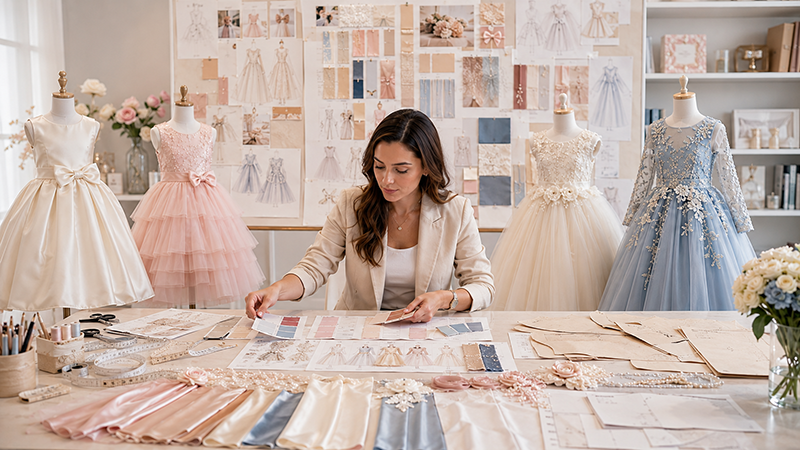
Supplier photos can help you shortlist products, but they cannot show the complete quality of a dress. Before placing a bulk order, request samples and inspect them as your customers would.
Check the fabric texture, lining softness, stitching, zipper and overall shape. Pearls, flowers, bows and other decorations should be firmly attached. Armholes, necklines and waist seams should feel comfortable because even a visually attractive dress may receive poor reviews if it irritates the child wearing it.
Pay attention to the fabric selected for each style. For example, different types of tulle fabric used in girls’ dresses can create noticeably different levels of softness, volume and structure.
Measure the sample and compare it with the supplier’s size chart. For layered tulle dresses, check the length again after steaming. The skirt can settle differently once it has been shaped properly, which may reveal measurement differences that were not obvious when the dress arrived.
The sample stage is also the right time to request changes. Adjusting the color, sleeve, lining or skirt volume before production is much easier than correcting a completed bulk order. Keep one approved sample or a complete specification sheet as the standard for future quality inspections.
5. Calculate Costs and Set Your Prices
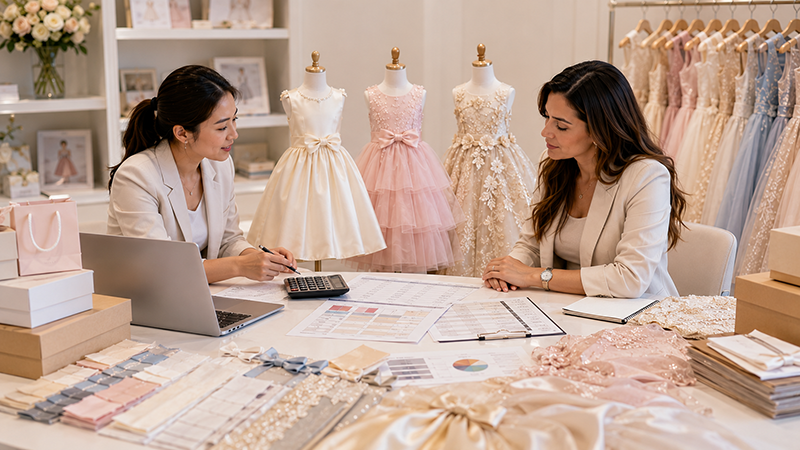
The wholesale price is only one part of your actual cost. Your budget may also need to cover samples, international freight, duties, packaging, storage, advertising, platform charges, payment fees and returns.
The SBA recommends identifying both one-time and monthly expenses when calculating startup costs. For a girls’ dress business, the calculation should include the landed cost of each product, not just the price shown in the supplier’s quotation.
| Cost area | Typical expenses |
|---|---|
| Product | Dress price, labels and packaging |
| Logistics | Freight, customs clearance and delivery |
| Sales | Advertising, platform and payment fees |
| Operations | Storage, rent, staff and order packing |
| After-sales | Exchanges, returns and damaged items |
Your selling price should cover these expenses and still leave enough profit to operate and reorder. Avoid copying a competitor’s price without knowing the quality of their products or their operating costs. The materials, skirt construction and decorative workmanship can create significant differences in flower girl dress costs, even when two dresses look similar in photos.
It is useful to offer more than one price level. An accessible style can bring customers into the store, while dresses with embroidery, hand-applied decorations or more complex construction can support a higher margin. This gives customers a choice without forcing the entire collection into one price range.
6. Launch Small and Reorder with Sales Data
Once your products are ready, focus on presenting them clearly. Online customers need front, back and detail photos, accurate size information, fabric descriptions and simple care instructions. Short videos showing the skirt movement, lining and decorative details can also help customers understand the product better.
Record sales by style, size and color from the first day. Do not evaluate a product only by likes or views. A dress that attracts less attention online may still generate consistent sales, while a highly viewed design may not convert because of its price or limited occasions.
After the initial testing period, reorder products with consistent sales and reduce styles that move slowly. Also consider the supplier’s production and shipping time. If a popular dress takes several weeks to restock, reorder before the remaining inventory becomes too low.
This test, review and reorder approach reduces pressure on cash flow and helps you build a collection based on real customer behavior.
Common Mistakes to Avoid
Many new girls’ dress businesses struggle because they buy too much stock before understanding the market. Others choose a supplier based only on the lowest quotation or skip samples to save time.
Another mistake is launching seasonal products too late. Flower girl, Christmas, Eid and First Communion collections should be planned early enough for sampling, production, shipping and promotion. Your customers need the dresses before the event season begins, not when demand is already at its peak.
Finally, avoid changing suppliers too frequently. If a supplier provides stable sizing, consistent quality and reliable delivery, that consistency has real value. Frequent changes can create differences in fit, color and workmanship across your collection.
Frequently Asked Questions
How much does it cost to start a girls’dress business?
The budget depends on your sales channel, product quality and opening quantity. An online store may require less investment than a physical boutique, but you still need to include inventory, samples, shipping, packaging and marketing costs.
How many dress styles should I start with?
There is no fixed number. Begin with a focused assortment that covers several price levels and customer needs. It is better to manage a smaller, balanced collection than a large range of unrelated products.
Should I choose ready-stock or custom dresses?
Ready stock is better for faster market testing and smaller opening orders. Custom production is more suitable when you need exclusive designs, colors, sizing or branding and are prepared for a higher minimum quantity.
What types of girls’dresses sell well?
Party dresses, flower girl dresses, satin styles and layered tulle dresses have broad appeal. Our guide to the best birthday dresses for girls provides additional ideas for building an occasionwear collection. However, the right products for your business still depend on local occasions, climate, customer age and spending level.
When should I reorder popular styles?
Review sales after the first 30 to 60 days, but do not wait until a product is completely sold out. Include production and shipping time in your plan so that popular sizes can be replenished before stock runs too low.
Conclusion
Starting a girls’ dress business does not require a very large collection. It requires a clear customer profile, carefully checked products and a controlled first order. Once your sales data reveals which styles, sizes and colors customers prefer, you can expand with greater confidence and less inventory risk.
Looking for a Girls’Dress Manufacturer?
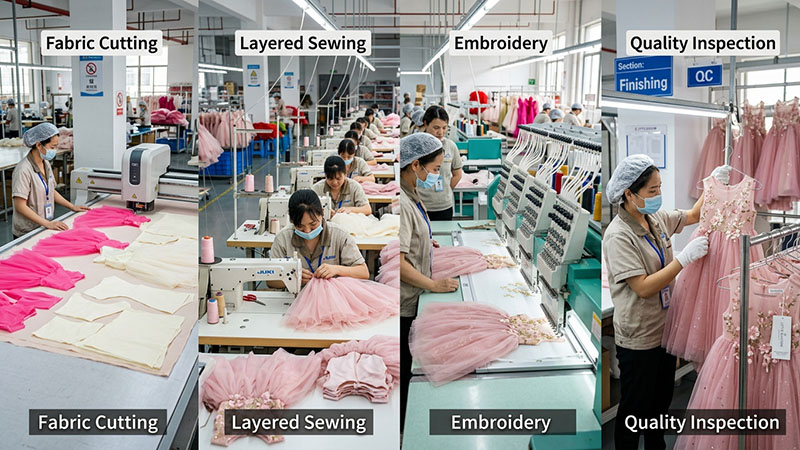
Outong has more than 24 years of experience producing girls’ dresses for wholesalers, boutiques and children’s clothing brands. We provide ready designs, OEM/ODM development, sampling, custom labels and packaging.
Contact our team to request the latest catalogue or discuss your first girls’ dress collection.