
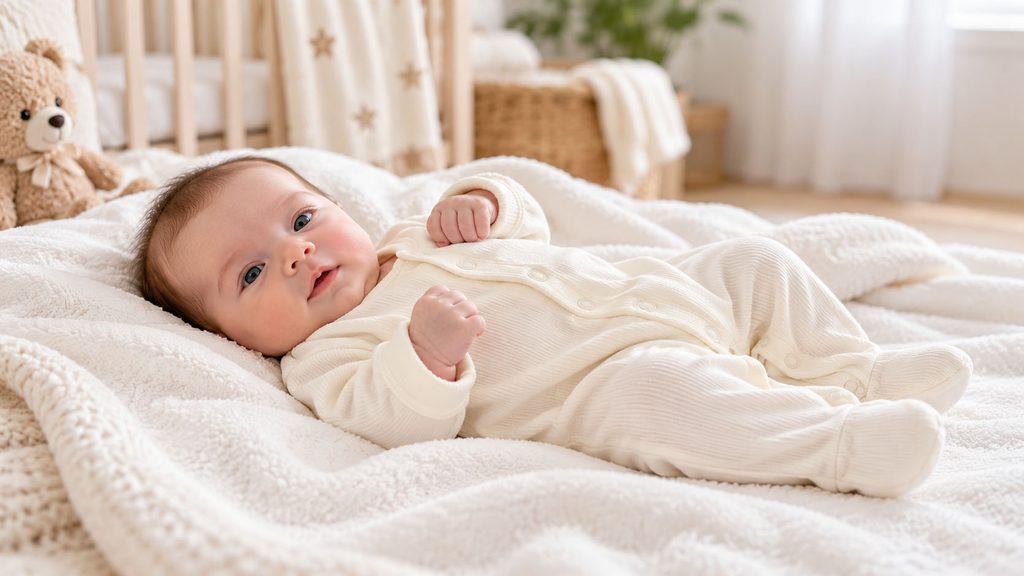
Knowing how to dress a newborn in winter involves more than choosing thick clothes. Babies need suitable layers, comfortable fabrics, and clothing designed for different temperatures and activities. Parents must also consider overheating, safe sleep, and appropriate garment fit. For baby clothing retailers, understanding these needs helps with product selection and seasonal collection planning. This guide combines practical dressing advice with real garment development and quality control experience.
Baby Winter Basics: How to Keep a Newborn Warm
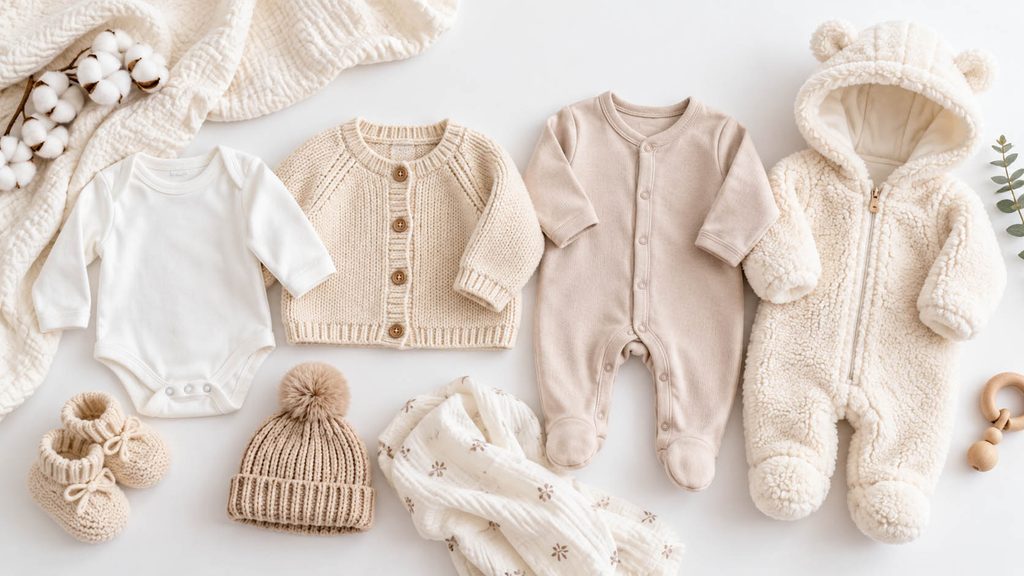
A common starting point is to dress a baby in approximately one more layer than an adult would comfortably wear in the same environment. However, this is a general guideline rather than a fixed rule. Indoor heating, outdoor temperatures, wind, and the baby’s condition all influence clothing choices.
Check the baby’s chest or the back of the neck to assess warmth. If the skin feels hot or sweaty, remove a layer when appropriate. Cold hands and feet alone do not necessarily mean a baby needs more clothing.
How to Dress a Newborn for Different Winter Conditions
The following table provides general examples of clothing choices. Actual needs depend on the environment, the baby’s condition, and the garment’s thermal properties.
| Situation | Clothing considerations |
|---|---|
| Heated indoor spaces | Comfortable base layer; avoid overheating |
| Cool indoor environments | Base layer with a suitable lightweight mid layer |
| Cold outdoor outings | Base layer, insulating layer, and appropriate outerwear |
| Winter stroller trips | Suitable layers and weather protection; check temperature regularly |
| Car journeys | Non-bulky clothing under a properly fitted harness |
For retailers, this highlights the value of offering practical layering options rather than relying entirely on thick winter garments. A versatile collection of baby clothing can serve different climates and indoor or outdoor needs.
Choose Comfortable Fabrics for Newborn Winter Clothes
The base layer sits next to a baby’s skin, making softness, fit, and fabric construction important. Cotton is widely used for everyday bodysuits, while merino wool and suitable knitted fabrics may offer additional thermal properties depending on their composition and construction.
Fabric thickness alone does not determine warmth or comfort. Buyers should also consider breathability, washing requirements, dimensional stability, and how the fabric feels against the skin. Physical samples are more useful than product descriptions alone when assessing these characteristics.
Real Manufacturing Experience: Why Fabric Samples Matter
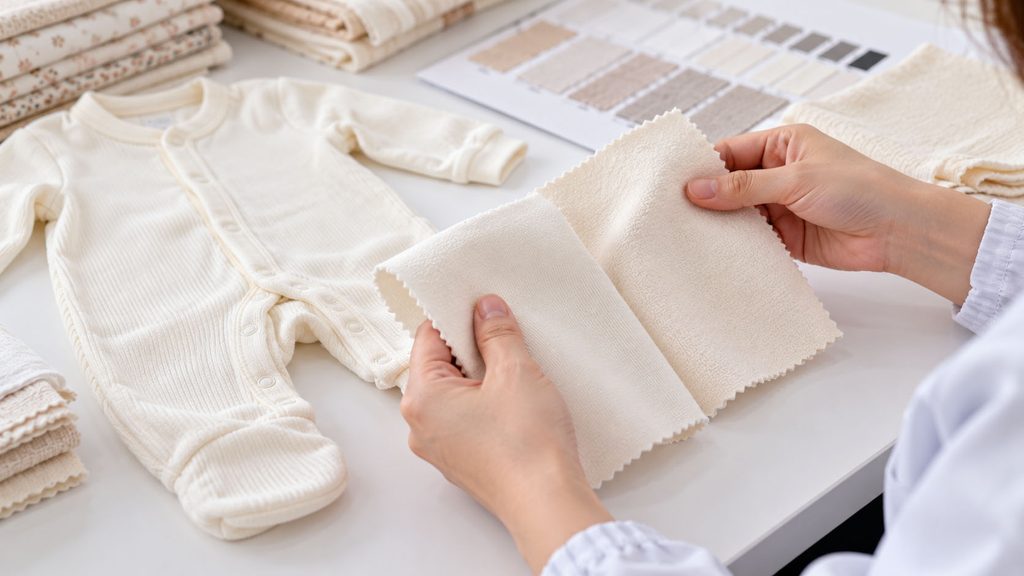
During our sample development process, we once found that an initially selected fabric felt too stiff after the first garment sample was produced. Instead of proceeding directly to bulk production, we searched for a similar material with a softer hand feel and arranged further sample confirmation.
This experience shows why fabric approval should involve more than checking a specification sheet. Buyers should confirm fabric composition, hand feel, thickness, and suitability for the intended garment before authorizing bulk production.
Mid Layers and Outerwear for Cold Weather
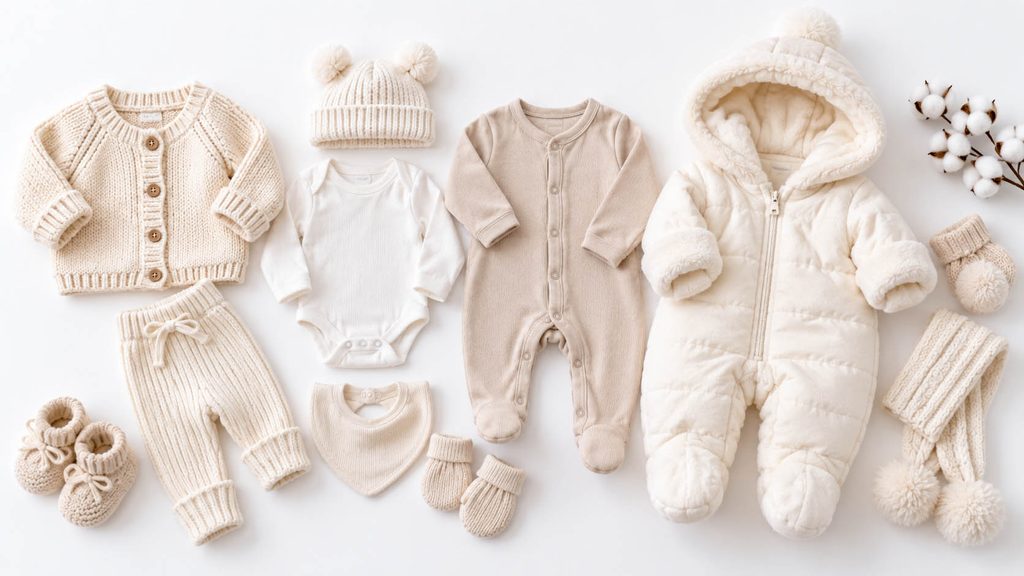
Mid layers, such as lightweight knitwear and suitable fleece garments, provide additional insulation when needed. The right choice depends on the temperature, the baby’s activity, and whether the garment will be worn indoors or outdoors. Layers should allow comfortable movement without unnecessary bulk.
Baby snowsuits and bunting suits can provide warmth during outdoor outings, but they are not suitable for every situation. Retailers should consider garment weight, ease of dressing, closures, and intended use when selecting winter products. Clear product descriptions help customers understand when each garment is appropriate.
For car journeys, bulky coats and snowsuits should be removed before securing a baby in a standard car seat because compressible padding can affect harness fit. Dress the baby in suitable, non-bulky clothing and follow the car seat manufacturer’s instructions. See the NHTSA car seat safety guidance for more information.
Indoor Dressing and Safe Winter Sleepwear
Indoor temperatures can differ significantly from outdoor conditions, so remove unnecessary outer layers when entering a heated room. Sleepwear should suit the room temperature and fit comfortably without creating excessive warmth.
Sleep sacks are available in different TOG ratings, which indicate thermal resistance. However, no single rating is suitable for every room or baby. Follow the manufacturer’s temperature guidance and monitor the baby for signs of overheating.
For safe sleep, place babies on their backs on a firm, flat sleep surface without loose bedding. Consult the NICHD Safe to Sleep guidance for authoritative recommendations.
Confirm Sizes, Lining, and Garment Construction
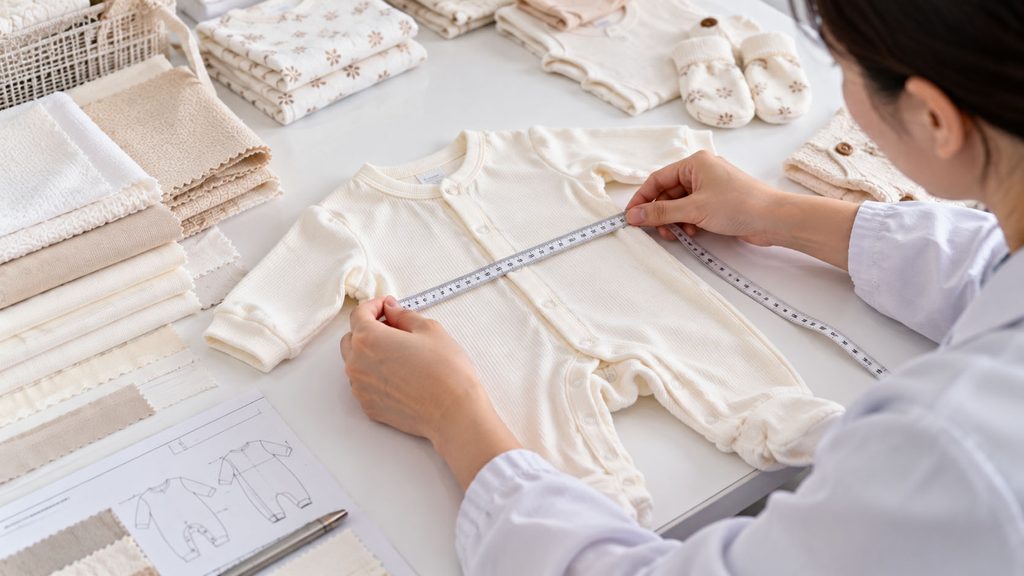
Age labels do not always provide a consistent fit across brands and markets. Before production, buyers should confirm their size chart, measurement points, and acceptable tolerances. For additional guidance on fit and measurements, buyers can also review our flower girl dress size guide as an example of how garment measurements are explained, although newborn sizing requires its own specifications.
Lining requirements should also be documented separately from the outer fabric specifications. Some buyers may require 100% cotton lining, so the composition and construction need to be confirmed before the order begins.
Real Manufacturing Experience: Preventing Specification Differences
During our manufacturing work, we have found that bulk garment measurements can differ from approved samples when specifications or measurement methods are not sufficiently aligned. We therefore recommend confirming the customer’s size chart or agreeing on a standard chart before production.
Buyers should also confirm lining composition, measurement tolerances, and sample specifications in writing. These checks help reduce misunderstandings and make it easier for both parties to evaluate finished garments against agreed requirements.
What Retailers Should Check Before Ordering Winter Baby Clothes
Before placing a wholesale order, evaluate fabric quality, garment construction, sizing, lining requirements, and applicable product safety standards. Check the neckline, seams, cuffs, crotch area, zipper guards, and decorative attachments rather than judging the garment by appearance alone.
Real Manufacturing Experience: Improving Decorative Attachment Safety
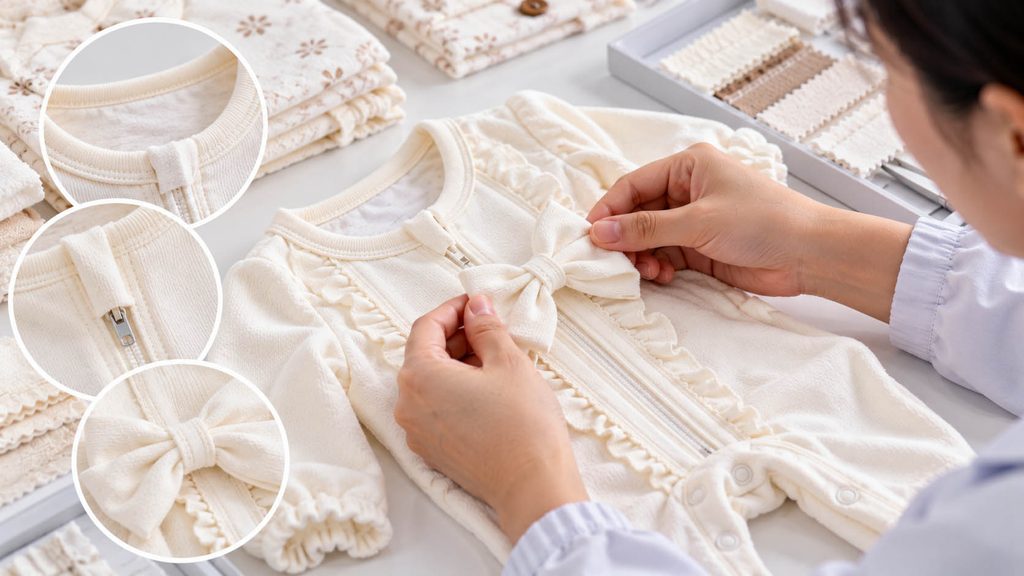
During one sample inspection, our team found a decorative bow attached with a safety pin. We identified a potential hazard and changed the construction so that the bow was sewn directly onto the garment.
This experience reinforced the importance of checking how decorative components are attached. Buyers should inspect sharp or detachable parts and confirm that garment construction meets applicable safety requirements. A construction change alone does not establish compliance, so relevant testing and inspection may still be necessary.
Our experience as a children’s clothing manufacturer has shown that clear product specifications and careful sample reviews are important parts of preparing for bulk production.
Wholesale Baby Clothing Pre-Order Checklist
Use this checklist to align product expectations before bulk manufacturing begins.
| Checkpoint | What buyers should confirm |
|---|---|
| Fabric | Composition, hand feel, thickness, and care instructions |
| Construction | Seams, zipper guards, closures, and decorative attachments |
| Sizing | Approved size chart, measurement points, and tolerances |
| Lining | Required composition, including any 100% cotton specification |
| Compliance | Applicable safety, labeling, and testing requirements |
| Production | Sample approval, MOQ, lead time, and inspection arrangements |
Clear written specifications help buyers and manufacturers work toward the same expectations and reduce avoidable misunderstandings.
Winter Dressing Checklist by Temperature
At approximately 5–10°C, a suitable base layer and an additional layer may be enough for some conditions, with appropriate outerwear for outdoor exposure. Below 0°C, more attention to insulation, wind protection, and exposure time is necessary.
These are general examples rather than universal prescriptions. The baby’s condition, wind, humidity, indoor heating, and time outdoors all matter. Avoid setting a fixed outdoor time limit without reliable, context-specific guidance, and remove bulky outerwear before using a standard car seat.
Common Winter Dressing Mistakes to Avoid
Common mistakes include choosing garments based on thickness alone, adding too many layers, overlooking fabric feel, and failing to confirm size and lining specifications before production. Insecure decorative attachments and poorly protected zipper components also deserve careful attention during sample inspection.
Caregivers should avoid bulky clothing under car seat harnesses and loose bedding in a baby’s sleep space. Retailers can help by providing clear product descriptions and checking garment construction, fit, and intended use before approving an order.
Conclusion
Knowing how to dress a newborn in winter means balancing warmth, comfort, appropriate layering, and safety. For baby clothing retailers, careful fabric selection, accurate sizing, clear lining specifications, and reliable garment construction are equally important. Evaluating physical samples and confirming product requirements before bulk production can help reduce avoidable errors and support consistent product quality.
Explore Wholesale Baby Clothing with Outong Fashion
At Outong Fashion, we support baby clothing buyers with product development, sample evaluation, and OEM/ODM manufacturing services. If you are planning a newborn or winter babywear collection, explore our girls’ clothing collection or learn more about our manufacturing capabilities.
Ready to develop your next baby clothing collection? Contact our team to discuss your designs, fabric requirements, sizing specifications, and wholesale order needs.
FAQ
Q1: How Many Layers Should a Newborn Wear in Winter?
A common starting point is approximately one more layer than an adult would comfortably wear in the same environment. Adjust clothing according to temperature and monitor the baby for signs of overheating.
Q2: What Should a Newborn Wear in a Car Seat During Winter?
Use comfortable, non-bulky clothing that allows the harness to fit correctly. Remove bulky coats and snowsuits before securing the baby, and follow the car seat manufacturer’s instructions.
Q3: Which Fabrics Are Suitable for Newborn Winter Clothing?
Cotton, merino wool, and suitable knitted or fleece fabrics may work for different garments. Consider composition, softness, construction, care requirements, and intended use.
Q4: What Should Retailers Check Before Ordering Wholesale Baby Clothing?
Retailers should confirm fabric composition, sizing, lining requirements, garment construction, applicable safety standards, sample approval, minimum order quantities, and production lead times.