Choosing between private label and white label kidswear is an important decision when building a children’s clothing brand. Both allow you to sell products under your own name, but they differ in customization, production costs, and minimum order quantities (MOQ). The right approach depends on how much control you need over your products and how much inventory your business can manage.
At Outong, we work with buyers sourcing existing children’s clothing styles and developing custom collections. This guide compares both models, explains the practical manufacturing differences, and helps brands, wholesalers, and retailers choose a suitable sourcing approach.
1. Private Label vs White Label: Key Differences
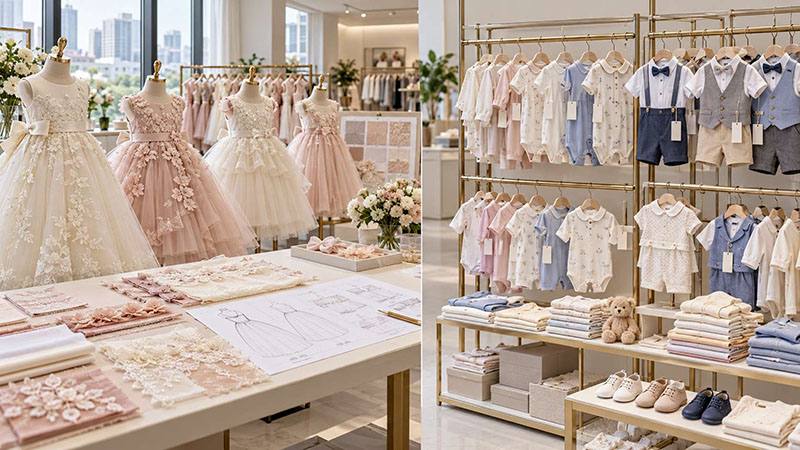
Private label clothing generally allows brands to develop or customize products according to their requirements. Buyers may choose fabrics, adjust sizing, modify construction, or introduce distinctive decorative details.
White label clothing usually starts with an existing design. Buyers select available products and sell them under their own branding, often without changing the garment itself.
However, manufacturers do not always use these terms in exactly the same way. Some suppliers describe existing garments with custom labels as private label products. Always confirm what the quoted service includes.
| Feature | Private Label | White Label |
|---|---|---|
| Product design | Customization available | Usually existing styles |
| Fabric and details | Greater flexibility | Limited changes |
| Branding | Custom labels and packaging | Custom labels and packaging |
| Exclusivity | Subject to agreement | Usually non-exclusive |
| MOQ | Based on production requirements | Based on stock and branding |
| Initial costs | Often higher | Often lower |
| Lead time | Includes development | May be shorter |
| Best for | Distinctive collections | Existing-product branding |
A new baby clothing brand may prefer existing romper designs to simplify product development. A premium occasionwear brand, however, may need custom fabrics, embroidery, and construction to create a recognizable collection.
2. What Is Private Label Kidswear?
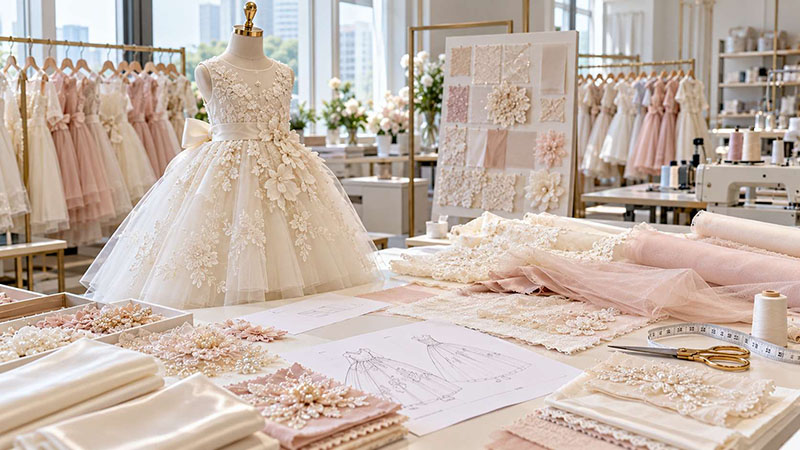
Private label kidswear refers to children’s clothing produced for sale under a buyer’s brand. Depending on the manufacturer, buyers can customize fabrics, colors, measurements, embroidery, trims, and packaging.
For example, a retailer developing a premium girls’ dress collection may request ivory satin, embroidered lace, layered tulle, and matching accessories. The manufacturer reviews these specifications, develops samples, and prepares production after approval.
Private label manufacturing is useful for brands that want more control over product design. Buyers can explore our girls’ clothing collection for examples of styles and construction details relevant to occasionwear development.
However, private label does not automatically mean exclusive ownership of a design. Trademark rights, design ownership, and production exclusivity should be confirmed separately.
3. What Is White Label Kidswear?
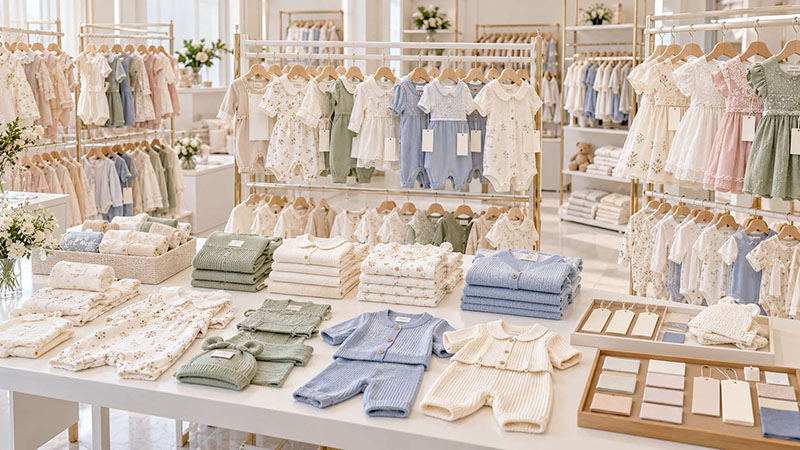
White label kidswear generally involves selecting existing clothing designs and selling them under your own brand. Instead of developing new garments, buyers choose suitable products and arrange branding changes with the supplier.
For example, a baby clothing retailer might select existing cotton rompers or matching sets and request custom brand labels or hangtags. This can reduce development work when the original designs already suit the target market.
At Outong Fashion, ordinary ready-stock wholesale orders start from 30 pieces. However, buyers who want to replace the brand label, care label, or hangtag must meet a minimum order quantity of 240 pieces.
This distinction matters because ready-stock wholesale and white label sourcing do not necessarily have the same MOQ. Buyers should confirm which products support custom branding and whether branding charges are included in the quotation.
White label may suit businesses testing a new category or expanding an existing collection, provided the available designs and order requirements match their needs.
4. 6 Key Differences in Kidswear Manufacturing
Design and Customization
Private label manufacturing offers more opportunities to develop products around a brand’s specifications. White label buyers generally work with existing designs, with fewer options to change the garment itself.
Consider a girls’ occasion dress. Changing the fabric, adding embroidery, adjusting beadwork, or increasing skirt layers can affect the construction and production requirements.
These details are particularly important in flower girl dresses, where fabric structure, embroidery, and skirt volume influence the finished design. Buyers should confirm their preferred materials and construction before requesting a custom quotation.
From our experience at Outong, these design changes can influence costs or lead times. Buyers should confirm the details before approving samples and comparing quotations.
This is particularly relevant to flower girl dresses, where fabric structure, decorative details, and skirt volume can significantly change the finished appearance.
Exclusivity and Branding
White label garments may be available to multiple retailers. Even with different labels, similar designs can appear in competing stores.
Private label development gives brands more opportunities to create distinctive products through fabric combinations, colors, and garment details. However, customization does not automatically guarantee exclusivity.
If exclusive production matters, ask whether the manufacturer can supply the same design to other buyers. Design ownership and any agreed restrictions should be documented before development begins.
MOQ and Production Costs
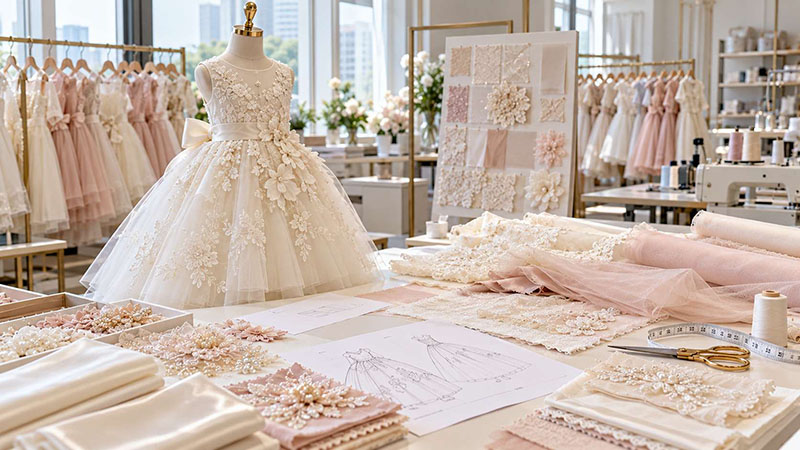
Minimum order quantities vary according to the sourcing arrangement. Existing-stock orders, branding, and new garment production involve different requirements.
At Outong Fashion, our standard order quantities are:
| Sourcing Option | MOQ |
|---|---|
| Ready-stock wholesale | From 30 pieces |
| Ready-stock with custom labels | From 240 pieces |
| Customized production | Generally 240 pieces per color |
These figures reflect Outong Fashion’s standard requirements, not universal industry minimums.
When buyers request only 100 pieces of a custom style, we generally recommend 240 pieces per color. Fabric purchasing, cutting consumption, and material waste can make smaller production runs less cost-efficient.
A lower quantity does not always result in a proportionally lower production cost. Buyers should compare the total investment, including sampling, materials, branding, packaging, and inventory.
For businesses still evaluating demand, existing ready-stock products may provide an alternative to developing an entirely new style.
Sampling and Lead Times
White label sourcing may be faster when suitable products are already available. Buyers can evaluate existing samples and confirm branding requirements without developing a new garment.
Private label production generally requires additional preparation, including design review, sampling, material confirmation, and production approval.
At Outong Fashion, sampling for applicable styles typically takes 3–7 days. Bulk production schedules depend on the design, materials, order quantity, and confirmed production arrangements.
Complex embroidery, beadwork, or layered skirts may require additional review. Buyers planning seasonal collections should allow time for approvals, manufacturing, inspection, and shipping.
Quality and Safety
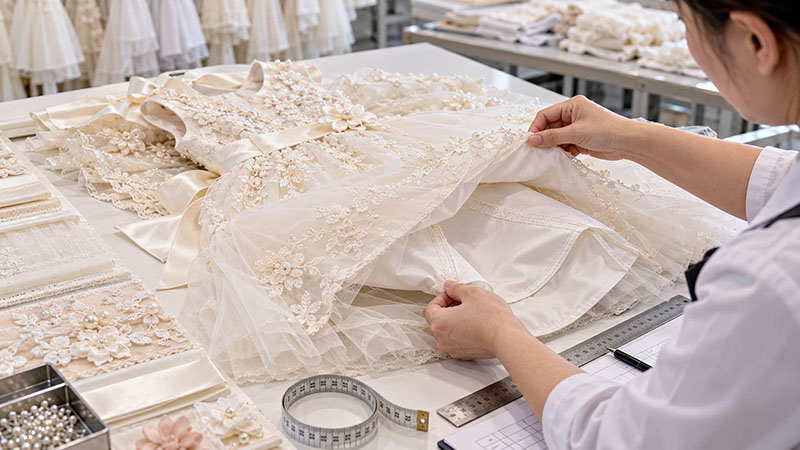
Both private label and white label children’s clothing require quality checks. Choosing an existing design does not remove the need to evaluate fabric quality, garment construction, sizing, or product safety.
For girls’ dresses, buyers should inspect lining comfort, seam finishing, measurements, and decorative attachments. For baby clothing, fabric suitability, closures, and garment construction deserve particular attention.
Safety requirements vary by destination market. For products sold in the United States, buyers can refer to the U.S. Consumer Product Safety Commission for guidance on children’s product safety and compliance requirements.
Before ordering, confirm which product tests, labels, and supporting documents apply to your market. A factory audit, fabric certificate, and finished-product test report serve different purposes.
Brand and Design Ownership
Selling clothing under your own trademark does not necessarily give you ownership of the garment design.
With white label products, manufacturers may continue supplying the same styles to other retailers. Private label projects may involve more original development, but ownership still depends on the agreed terms.
If your brand invests in exclusive designs, clarify ownership of patterns, artwork, and technical specifications before production. Written agreements can help avoid misunderstandings about future use of those designs.
5. Which Model Is Right for Your Brand?
The best choice depends on your budget, product requirements, and long-term business plans. Different buyers may benefit from different sourcing arrangements.
For New Kidswear Brands
New brands often need to balance product development costs with uncertain customer demand. Existing products with custom branding may be worth considering when suitable designs are available.
However, white label sourcing still has minimum order requirements. Buyers should confirm branding MOQ separately from ordinary wholesale MOQ.
If your brand requires distinctive designs from the beginning, private label development may be more suitable, provided your expected sales justify the investment.
For Established Brands
Established brands may have clearer customer preferences and more specific product requirements. Custom manufacturing can help them develop recognizable collections with consistent fabrics, colors, and construction details.
For example, a flower girl dress brand may want coordinated styles with matching embroidery and fabric combinations.
Brands considering custom development should also understand the differences between OEM and ODM manufacturing, particularly who is responsible for design development and technical specifications.
For Wholesalers and Retailers
Wholesalers and boutique retailers often need to balance product variety, inventory turnover, and seasonal demand. Existing styles may help expand an assortment without developing every product from scratch.
Customized production can be useful for collections requiring greater differentiation. Some retailers may combine ready-stock products with selected custom designs to serve different customer segments.
The decision should reflect expected sales, available inventory space, and the level of product uniqueness your customers value.
6. How to Start Kidswear Production
Whether you choose private label or white label, a clear sourcing process can reduce misunderstandings and unnecessary development costs.
Step 1: Define Your Requirements
Identify your target market, product categories, size range, preferred fabrics, and branding needs. For custom products, prepare reference images, sketches, or technical specifications.
Step 2: Compare Manufacturing Options
Ask whether suitable existing designs are available or whether new development is required. Confirm which changes the manufacturer can make and whether they affect MOQ or pricing.
If your project requires new designs, review the supplier’s OEM/ODM services to understand the available development and production options.
Step 3: Review Samples and Costs
Evaluate garment measurements, materials, stitching, closures, and decorative details. Confirm the MOQ, sample charges, branding costs, and estimated production schedule.
For products entering the European market, buyers should also review applicable safety obligations under the EU General Product Safety Regulation. Compliance requirements should be considered before finalizing production specifications.
Step 4: Approve Production Details
Before bulk production, confirm the final sample, fabric, colors, measurements, labels, and packaging.
Keep the approved specifications in writing and agree on relevant quality inspection arrangements. This provides a clear reference throughout production.
7. Questions to Ask Your Manufacturer
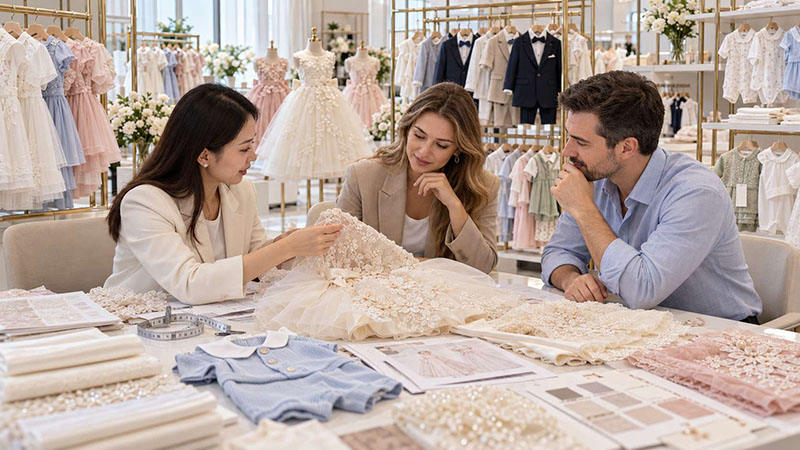
A product catalog shows what a supplier offers, but it may not explain the actual production arrangements. Before selecting a manufacturer, ask:
- What are the MOQs for ready-stock wholesale, white label branding, and custom production?
- Which fabrics, colors, measurements, labels, and packaging elements can be customized?
- What are the sample costs, approval steps, and production lead times?
- What quality checks, test reports, and factory audit documents are available?
- Are existing designs shared with other buyers, and is exclusivity possible?
- How are repeat orders, material changes, and production issues handled?
A reliable supplier should explain what is included in the quotation and which requirements need further confirmation.
When reviewing a supplier’s quality documentation, confirm which certifications and test reports apply to your products. The official OEKO-TEX STANDARD 100 explains how textiles are tested for harmful substances, although this certification does not replace finished-product safety checks.
Remember that textile certification does not replace finished-product safety checks or other applicable compliance requirements.
You can also review Outong Fashion’s company background when evaluating our manufacturing capabilities and sourcing services.
8. Frequently Asked Questions
Is private label the same as white label?
No. Private label generally offers more opportunities for product customization, while white label usually involves existing designs sold under a buyer’s branding. The exact service scope depends on the manufacturer.
Is private label more expensive?
Private label can involve higher development and production costs when new fabrics, patterns, or construction details are required. White label may reduce development work, but branding and MOQ still affect the total investment.
Can I start a kidswear brand with a small MOQ?
It depends on the sourcing model. At Outong Fashion, ordinary ready-stock wholesale starts from 30 pieces, while ready-stock branding requires at least 240 pieces. Standard customized production generally starts from 240 pieces per color.
Can white label clothing have custom logos?
Yes, when the supplier offers branding services. At Outong Fashion, eligible ready-stock products can have custom brand labels, care labels, or hangtags, subject to a 240-piece MOQ.
How does private label differ from OEM/ODM?
Private label describes a branding and sourcing arrangement. OEM and ODM refer to manufacturing and development services. OEM commonly follows buyer-provided specifications, while ODM generally includes manufacturer-supported product development.
How do I choose a reliable kidswear manufacturer?
Review the manufacturer’s samples, product capabilities, MOQ, customization options, and production communication. Confirm relevant quality documentation, delivery arrangements, and repeat-order conditions before placing a bulk order.
Conclusion: Making the Right Choice
Private label and white label kidswear serve different business needs. Private label may suit brands seeking greater design flexibility, while white label can be practical for businesses using existing styles under their own branding.
Before choosing a supplier, compare customization requirements, minimum quantities, total costs, and production timelines. An approved sample and clear written specifications can help you move forward with fewer sourcing risks.
Work with Outong Fashion
Outong Fashion has been involved in children’s clothing manufacturing since 1999, supplying girls’ occasion dresses, boys’ formalwear, and baby clothing for wholesale and OEM/ODM production.
If you’re planning a kidswear collection, contact our team with your product references, estimated quantities, and branding requirements. We can discuss suitable products, customization options, and production arrangements.