
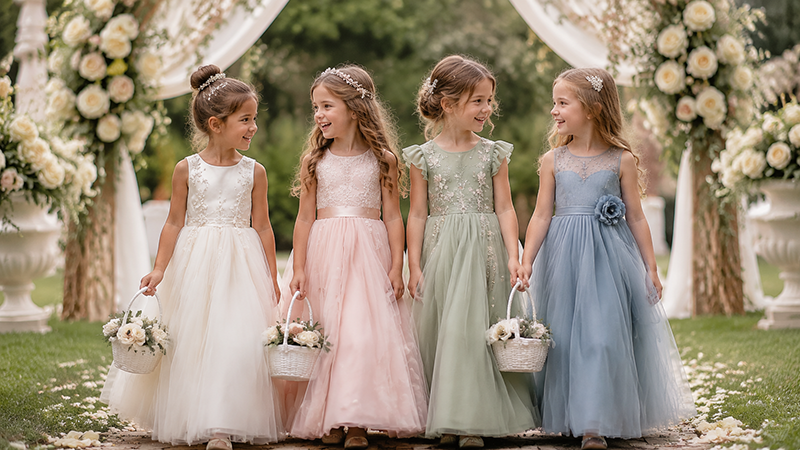
Yes. A flower girl dress can be a different color from the bride’s gown or the traditional white and ivory shades. Blush pink, champagne, sage green, dusty blue and even deeper seasonal colors can all work beautifully.
The right choice depends on the wedding palette, venue and level of formality. More importantly, the dress should feel connected to the celebration while remaining comfortable and appropriate for the child.
Does a Flower Girl Dress Have to Be White?
A flower girl dress does not have to be white. There is no formal rule requiring the flower girl to match the bride, although white remains popular because it creates a traditional look and helps her feel naturally connected to the bridal party.
Modern weddings often use a much broader range of colors. When choosing the complete outfit, consider the dress color together with the style, fabric and wedding setting. Some couples choose an ivory dress with a colored sash, while others prefer an entirely blush, champagne or sage green design. Floral prints can also suit garden, beach and informal outdoor weddings.
The final decision normally comes down to the couple’s preferences. Before purchasing a dress, the flower girl’s parents should confirm the preferred color rather than assuming that white is required.
Should the Flower Girl Match the Bride or Bridesmaids?
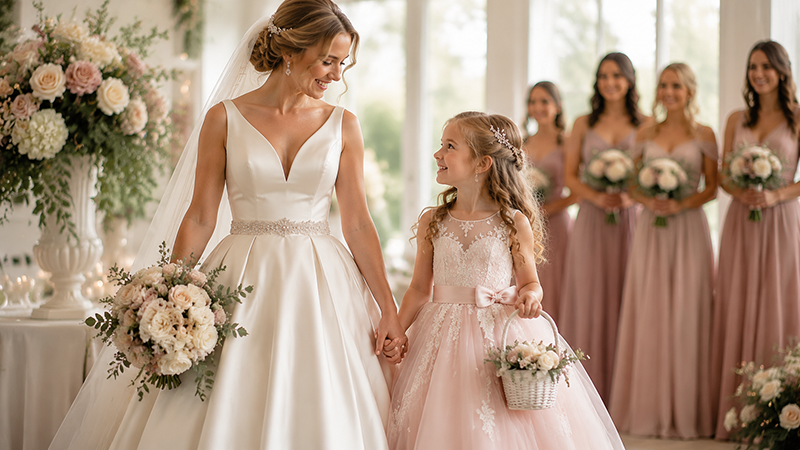
The flower girl can complement the bride without wearing an exact copy of her gown. A small shared detail—such as lace, satin, floral appliqués or a bow—is often enough to make the dresses feel coordinated.
For example, an ivory tulle dress with lace details can complement an ivory bridal gown. If the bride is wearing smooth satin, the flower girl might wear a child-friendly satin dress in blush or champagne. The colors are different, but the fabric creates a visual connection.
Another option is to coordinate the flower girl with the bridesmaids. She could wear the same color in a lighter shade or use the bridesmaid color on a sash, bow, headband or flower basket. This keeps the bridal party connected without making every outfit identical.
If close color coordination matters, compare the fabrics under natural light. White, ivory and champagne can look similar in product photos but noticeably different when placed beside one another.
Popular Flower Girl Dress Colors
White and ivory are still timeless choices, but they are far from the only options. The following colors work well across different wedding styles:
| Dress color | Suitable weddings | Overall effect |
|---|---|---|
| White | Traditional, church and formal weddings | Classic and ceremonial |
| Ivory | Vintage, elegant and warm-toned weddings | Soft and refined |
| Blush pink | Romantic, spring and garden weddings | Sweet and delicate |
| Champagne | Luxury, autumn and evening weddings | Warm and sophisticated |
| Sage green | Rustic, botanical and outdoor weddings | Natural and modern |
| Dusty blue | Coastal, winter and elegant weddings | Calm and understated |
| Lavender | Spring and garden weddings | Light and playful |
| Floral print | Outdoor, destination and informal weddings | Cheerful and seasonal |
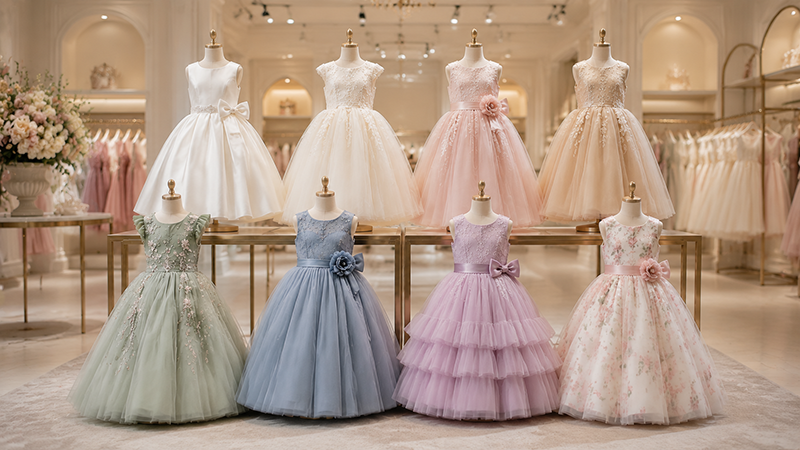
The Knot’s flower girl color guide also highlights blue, soft pink, lavender, pale yellow, mint green and floral designs as alternatives to traditional white. Deeper colors can also be appropriate. Burgundy, navy and emerald green work especially well for autumn and winter celebrations. When using a strong color, choosing a soft fabric or simple silhouette can keep the dress looking youthful.
How to Choose the Right Flower Girl Dress Color
Start with the overall wedding palette, but do not try to include every color in one dress. A simple design with one main shade and one coordinated accent usually looks more polished. Couples can also explore flower girl dresses for different wedding themes before deciding which colors will work best.
An ivory dress with a sage sash, for example, can suit a botanical wedding without looking overly themed. A blush tulle dress can complement dusty rose bridesmaid dresses, while champagne satin works well with warm beige and gold decorations.
The season and venue should also guide the choice. Blush, lavender, sage and floral prints feel natural at spring garden weddings. Ivory, dusty blue and other pale shades suit summer or coastal ceremonies, while champagne, burgundy and richer neutrals work well in autumn. Winter weddings can support navy, emerald or deep red, especially in formal indoor venues.
Very bright or neon colors may dominate wedding photographs, while an all-black dress can feel too serious for some celebrations. However, there are no universally forbidden colors. Black, red or other bold shades may be completely suitable for a cultural, themed or evening wedding—the key is to confirm the choice with the couple.
Can Multiple Flower Girls Wear Different Colors?
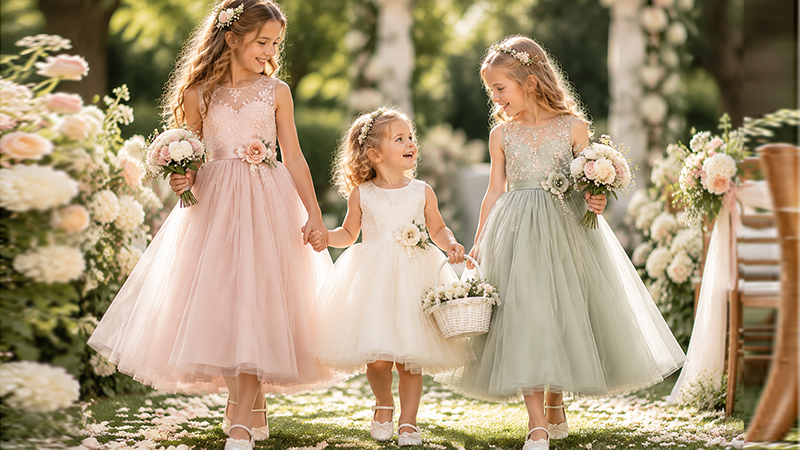
Multiple flower girls can wear different colors, particularly when the shades come from the same wedding palette. Two children might wear blush and ivory, while a larger group could wear coordinated pastel shades such as sage green, dusty blue and champagne.
To keep the group visually connected, choose a shared element. This could be the same dress silhouette, fabric, sash, flower detail or accessory. The dresses do not need to be identical.
Different styles may actually be more practical when the children are different ages. A younger flower girl may be comfortable in a fuller tulle skirt, while an older child may prefer a simpler and more mature silhouette. Using coordinated colors allows each child to wear an appropriate style without making the group look mismatched.
What to Check Before Ordering the Dress
Once the couple has approved the color, request a fabric swatch whenever possible. Screen settings, studio lighting and photo editing can all affect how a color appears online. The actual fabric may be warmer, cooler or darker than expected.
It is also important to consider how different materials reflect light. Satin may make a color look richer and brighter, while layered tulle fabric can make the same shade appear softer. Lace placed over a colored lining may create another variation.
Color should never be considered separately from comfort. Look for a soft lining, smooth seams, comfortable armholes, secure decorations and an age-appropriate fit. Scratchy tulle, stiff embellishments or a heavy skirt can make it difficult for the flower girl to enjoy the ceremony, no matter how beautiful the color looks.
If possible, order the dress early enough to allow time for alterations. Children’s sizing varies between brands, and a well-fitting dress will look better and feel more comfortable throughout the wedding.
A Practical Note for Wedding Boutiques and Retailers
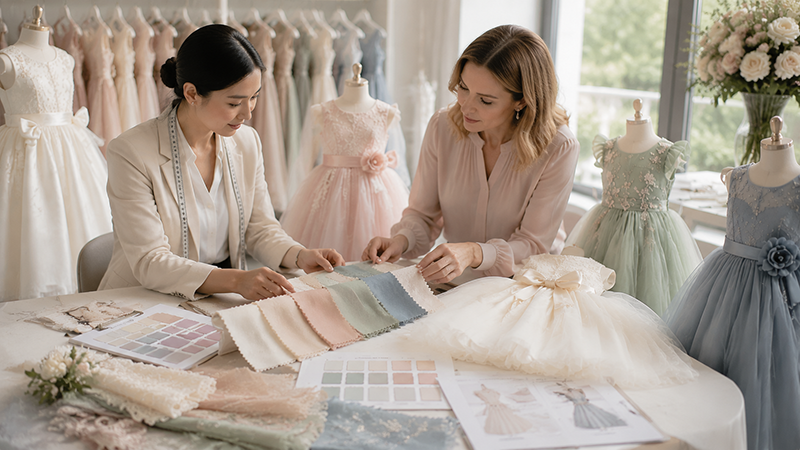
Wedding boutiques and children’s occasionwear retailers can serve more customers by offering several dependable colors instead of stocking only pure white. White, ivory, blush and champagne make a strong core selection, while sage green, dusty blue and richer seasonal shades can add variety.
From our experience developing children’s formalwear, the same dress design can look noticeably different across satin, lace and layered tulle. For this reason, color should be approved on the actual fabric rather than selected from a digital image alone. Comparing approved swatches and finished samples before bulk production also helps reduce color differences between the sample and final order.
Frequently Asked Questions
Can a flower girl wear the same color as the bridesmaids?
Yes. She can wear the same color or a lighter version of it. A different fabric, skirt shape or age-appropriate detail can help her outfit remain distinctive.
Can a flower girl wear ivory if the bride wears white?
Yes. The colors do not need to match exactly, but it is worth comparing them in natural light because ivory has a noticeably warmer tone.
Is blush pink appropriate for a flower girl dress?
Blush is one of the most versatile alternatives to white. It works particularly well for romantic, garden, spring and summer weddings.
Can a flower girl wear a patterned dress?
Yes. Small floral prints can be beautiful for garden, destination and informal weddings. A simple pattern is usually easier to coordinate with the bridal party.
Should the flower girl match the ring bearer?
They do not need to match exactly. A shared accent, such as a sash, bow tie or similar color, is usually enough to connect their outfits.
Who chooses the flower girl dress color?
The couple usually makes the final decision. The child’s parents can help with comfort, sizing and budget, but they should confirm the color before ordering.
Conclusion
A flower girl dress can absolutely be a different color. White and ivory remain classic choices, but blush, champagne, sage green, dusty blue and other shades can look equally appropriate when they complement the wedding.
Rather than following a strict tradition, consider the wedding palette, venue, season and the child’s comfort. The best dress is one that feels connected to the celebration while allowing the flower girl to move, smile and enjoy her special role. A thoughtfully selected style may also allow the flower girl dress to be worn again at birthdays, family celebrations and other formal events.
Explore Flower Girl Dress Color Options
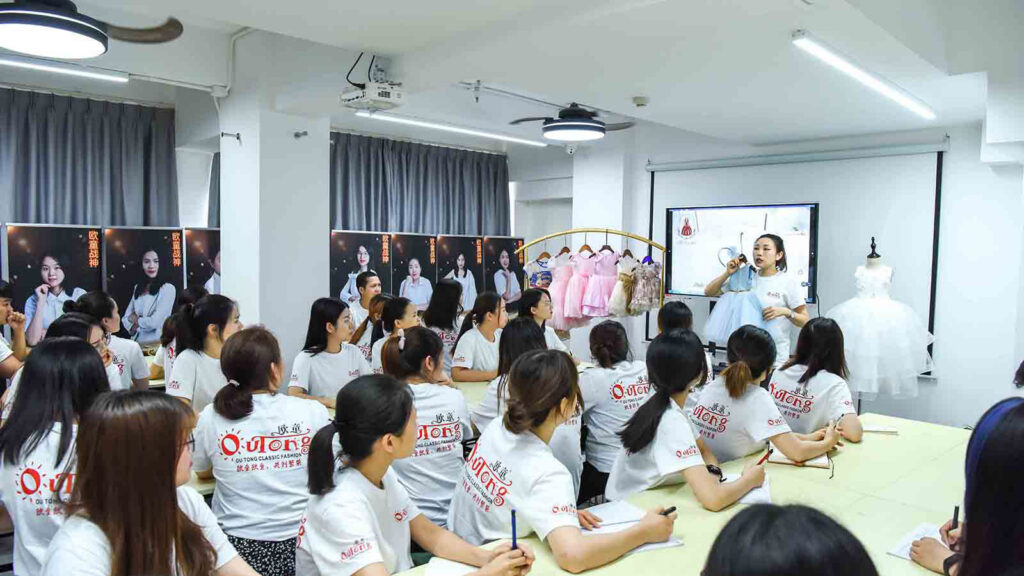
Outong develops flower girl dresses in a wide range of colors, fabrics and silhouettes for wedding boutiques, retailers and children’s clothing brands. We support color customization, sample development and OEM/ODM production for different wedding markets.
Contact us to explore available styles, color options and wholesale solutions.