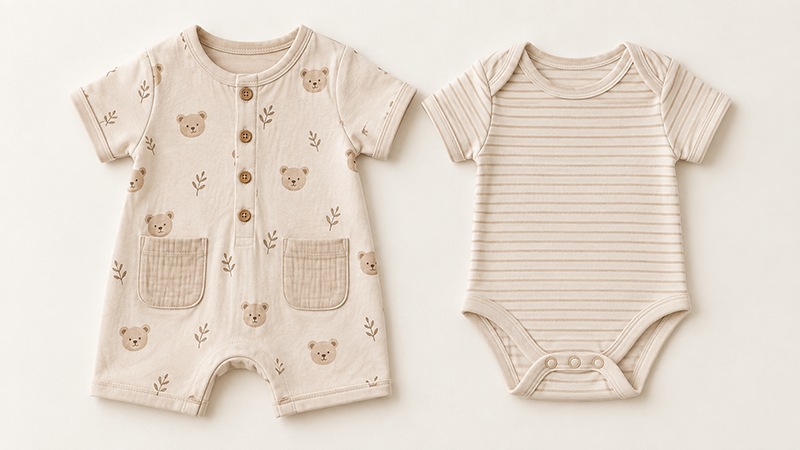
Rompers and onesies are often grouped together in babywear catalogs, but they are not quite the same. The biggest difference is simple: a baby bodysuit usually ends at the crotch, while a romper extends onto the legs and is often worn as a complete outfit.
For retailers, brands, and babywear buyers, knowing the difference makes it easier to organize product categories, communicate with suppliers, and build a more balanced baby clothing collection.
What Is a Onesie?
A onesie generally refers to a close-fitting baby bodysuit that covers the upper body and fastens with snaps at the crotch. Most styles come with short or long sleeves, while the legs are left uncovered.
They are commonly made from soft cotton jersey or stretch fabrics and work well as everyday basics or layering pieces. For wholesale collections, bodysuits are easy to develop in different colors, prints, sleeve lengths, and multipacks, making them a practical core item for year-round babywear ranges.
In wholesale and international sourcing, baby bodysuit is often the clearer generic product name, as Onesies® is a Gerber trademark in the U.S.
What Is a Baby Romper?
A baby romper is also a one-piece garment, but it usually extends over part or all of the legs and is designed to work as a more complete outfit.
The category covers a much wider range of designs. A lightweight cotton short romper works well for summer, while a knitted long-sleeve or long-leg style can be developed for cooler seasons. Collars, buttons, embroidery, smocking, prints, and other details can also turn a basic romper into a more distinctive fashion or gifting item.
Because of this flexibility, rompers can work across everyday, seasonal, gifting, and more premium babywear collections.
Romper vs Onesie: What Is the Main Difference?
The easiest way to understand the difference is to look at coverage and how the garment is worn.
| Feature | Baby Romper | Baby Bodysuit / Onesie |
|---|---|---|
| Garment type | Complete one-piece outfit | Basic one-piece garment |
| Leg coverage | Usually yes | Usually no |
| Fit | Relaxed or fitted | Usually close-fitting |
| Styling | Basic to decorative | Usually simple |
| Common fabrics | Cotton, jersey, knit, muslin, woven fabrics | Mainly cotton and jersey |
| Main use | Complete outfit | Basic layer or everyday essential |
| Seasonal options | Short and long styles | Mainly sleeve variations |
| Wholesale role | Fashion + everyday category | Core basics category |
In simple terms, a bodysuit is usually a base garment, while a romper is more often an outfit on its own.
There can still be some overlap. Suppliers and retailers may use terms such as romper, playsuit, bodysuit romper, or short romper differently, especially across different markets. For wholesale orders, product photos, measurements, fabric, closures, and construction are more reliable than the product name alone.
What About Playsuits?
A playsuit is another term commonly found in baby and children’s clothing. It often describes a lightweight one-piece outfit with short legs, so in practice it can look very similar to a short romper.
Terminology varies between countries and suppliers. When sourcing in bulk, it is better to confirm the actual garment specifications—such as sleeve length, inseam, measurements, fabric composition, and closure type—rather than relying only on whether the supplier calls the product a romper or playsuit.
Common Fabrics for Baby Rompers and Bodysuits
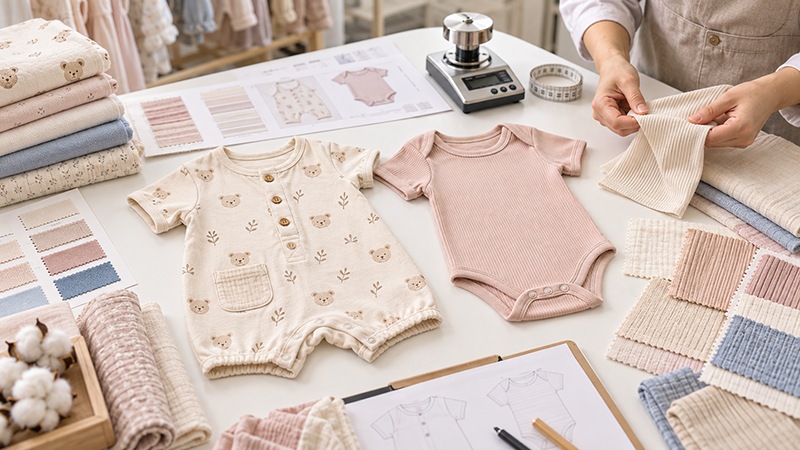
Fabric choice depends on the season, target price, and how the garment will be used. Cotton jersey is one of the most common options for both bodysuits and everyday rompers because it is soft, flexible, and suitable for basic styles. Rib knit offers more texture and stretch and is often used for fitted bodysuits and modern neutral babywear collections.
For rompers, buyers have more room to experiment with fabric. Knitted styles can work well for cooler seasons and gifting collections, while muslin and lightweight woven cotton are useful for relaxed summer designs. Details such as collars, embroidery, buttons, or textured knitting can also help create a more premium look without changing the basic one-piece construction.
For wholesale buyers, fabric should not be selected on appearance alone. Weight, shrinkage, stretch, hand feel, color consistency, and performance after washing should all be checked during sampling before bulk production. Buyers may also request relevant textile certifications, such as OEKO-TEX® STANDARD 100, depending on their market requirements.
Which Is Better for a Baby Clothing Collection?
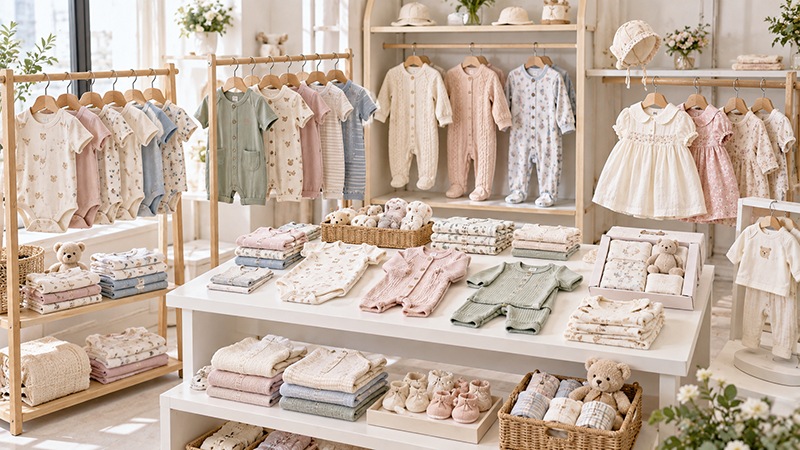
For most retailers, it does not need to be one or the other. Bodysuits and rompers play different roles in a babywear assortment.
Bodysuits are strong core products. The same basic shape can be developed across several colors, prints, sleeve lengths, and pack combinations, which makes them useful for retailers that need repeatable everyday styles.
Rompers provide more room for seasonal and fashion development. Buyers can move from simple cotton basics to knitted, embroidered, printed, or occasion-inspired designs while staying within the same broad product category. They can also sit at different price points depending on fabric and workmanship.
For a 0–24M baby clothing collection, a buyer might combine basic bodysuits with summer rompers, knitted styles, pajamas, baby dresses, cotton sets, and newborn gift sets. This creates a broader assortment without relying too heavily on one type of product.
What Should Wholesale Buyers Check Before Ordering?
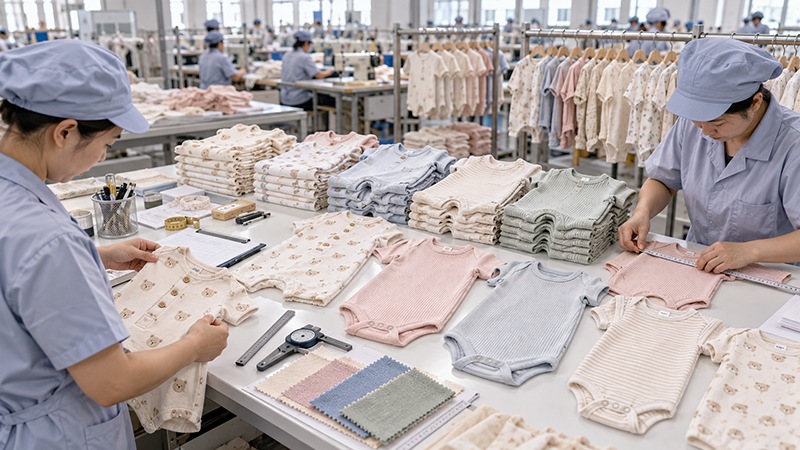
When sourcing baby rompers or bodysuits in bulk, fabric and fit should be checked first. Babywear comes into direct contact with the skin, so buyers should review softness, composition, fabric weight, stretch, shrinkage, and overall hand feel during sampling. Snap placement and strength also matter, particularly around the crotch where frequent opening and closing is expected.
Size grading is another important point. A sample may look correct in one size but become too short, wide, or tight after grading. For 0–24M styles, buyers should check body length, chest width, sleeve length, inseam, and crotch depth across the size range. Seams, trims, labels, embroidery, and other components should also remain consistent during bulk production.
Requirements can vary by product and destination market, so applicable testing and compliance requirements should be confirmed before production begins.
Custom Rompers and Bodysuits for Private Labels
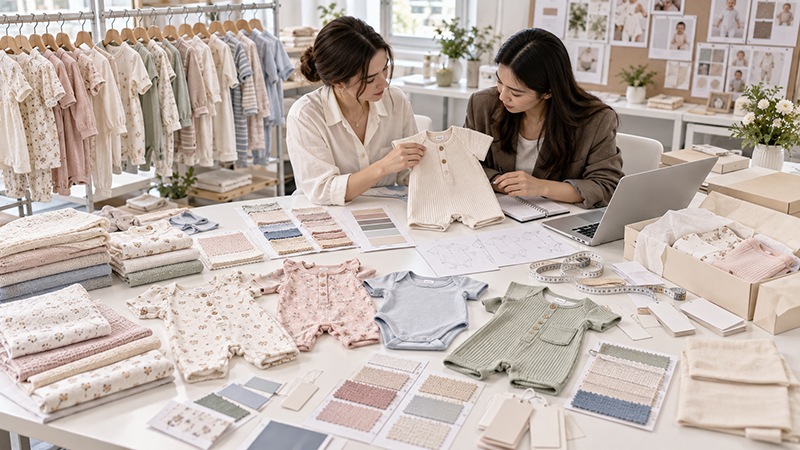
Both rompers and bodysuits work well for OEM, ODM, and private-label babywear collections. Buyers can customize fabrics, colors, prints, embroidery, size specifications, labels, and packaging according to their market.
Existing styles can also provide a faster starting point when a completely new design is not necessary. For custom orders, sampling allows buyers to check the fabric, fit, measurements, closures, and finishing before confirming bulk production.
Outong Fashion develops baby and children’s clothing for wholesalers, brands, retailers, and distributors, including baby rompers, dresses, knitted sets, cotton sets, pajamas, and newborn gift sets. Ready-stock and custom production options are available for different sourcing needs.
FAQ
Is a romper the same as a onesie?
No. A onesie or baby bodysuit usually covers the torso and fastens at the crotch, while a romper normally includes some leg coverage and can be worn as a complete outfit.
What is the difference between a bodysuit and a romper?
The main difference is coverage and styling. Bodysuits are usually fitted basics without leg coverage, while rompers extend onto the legs and offer more options in fabric, silhouette, and design.
Is a playsuit the same as a romper?
They can be very similar. Playsuit often refers to a lightweight one-piece outfit with short legs, but terminology varies between brands, suppliers, and markets.
What fabric is best for baby rompers?
Cotton jersey is a common choice for everyday styles. Rib knit, knitted fabrics, muslin, and lightweight woven cotton are also useful depending on the season and design.
What sizes are common for baby rompers?
Sizing varies between brands and markets, but babywear collections commonly cover newborn through 24 months. For wholesale production, buyers should work from an agreed size chart rather than relying only on age labels.
Can baby rompers and bodysuits be customized for private labels?
Yes. Fabrics, colors, prints, embroidery, sizing, labels, packaging, and other details can be customized for OEM, ODM, and private-label babywear orders.
Romper or Onesie: Which Should You Source?
If you need a simple everyday basic or layering item, a baby bodysuit is usually the more practical category. If you want a one-piece garment that works as a complete outfit, a baby romper offers more flexibility in fabric, season, silhouette, and styling.
For many babywear retailers, the two categories work better together than separately. Bodysuits provide dependable basics, while rompers add seasonal variety and give buyers more room to develop different price points and private-label collections.
Looking for baby rompers or other 0–24M babywear? Contact us for our latest wholesale catalog, ready-stock options, or OEM/ODM sampling.