
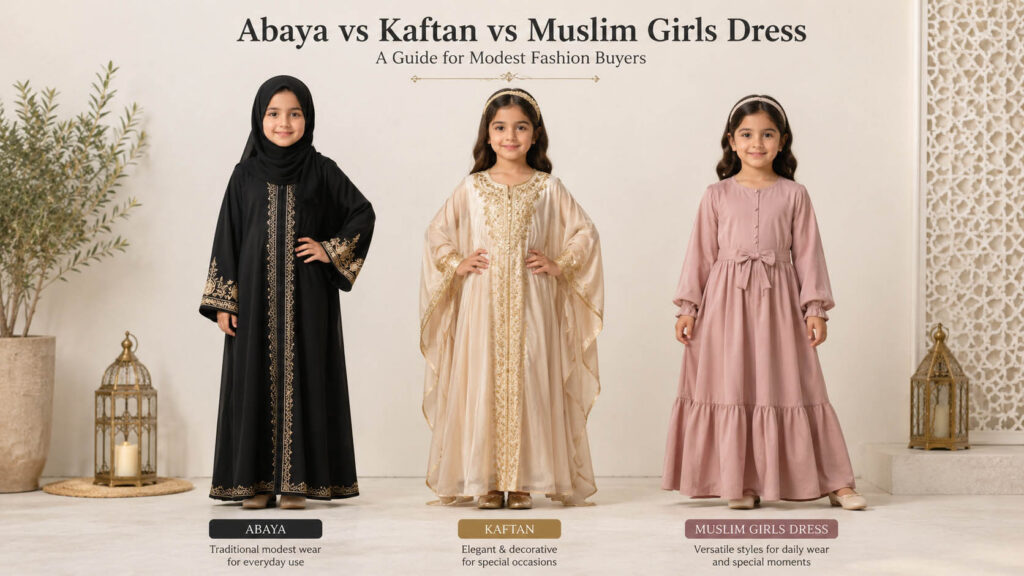
Many buyers new to the modest fashion market use the terms abaya, kaftan, and Muslim girls’ dress interchangeably. While these garments all reflect modest clothing traditions, they serve different purposes, appeal to different customer groups, and perform differently across markets.
Understanding these differences can help wholesalers, retailers, and children’s fashion brands choose the right products and build more successful collections.
What Is an Abaya?
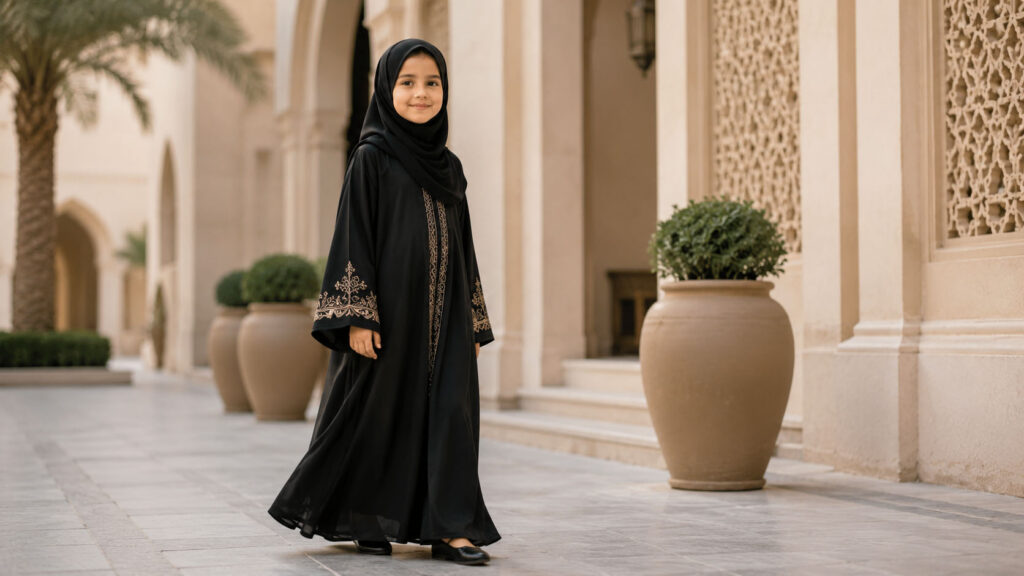
An abaya is a loose-fitting, full-length garment traditionally worn in many Middle Eastern countries. Designed for modest coverage, it is commonly used for daily wear, religious activities, and special occasions. Most girls’ abayas feature long sleeves, lightweight fabrics, and comfortable silhouettes. In our experience, simpler styles are often preferred in Saudi Arabia, while UAE buyers tend to favor embroidery and premium fabrics. For more information about the history of the abaya, readers can refer to Britannica.
What Is a Kaftan?

A kaftan is a flowing, robe-style garment known for its elegant appearance and decorative details. Compared with abayas, kaftans are usually more formal and are often chosen for weddings, Eid celebrations, and other special occasions. Most girls’ kaftans feature flowing silhouettes, embroidery, beadwork, and premium fabrics such as satin or chiffon, creating a more luxurious look. Based on our experience working with Middle Eastern buyers, kaftans are often used as statement pieces in festive collections and typically generate higher demand during the Eid season.
What are Muslim girls’ dresses?

Muslim girls’ dresses refer to a broad category of modest clothing designed for children. Unlike abayas and kaftans, they are available in a wider variety of styles, ranging from everyday casual wear to Eid dresses and special occasion outfits. These dresses typically feature modest necklines, comfortable fabrics, and age-appropriate designs while offering greater flexibility in length, silhouette, and styling. In recent years, we have also seen growing demand for modern Muslim girls’ dresses that combine modest coverage with contemporary fashion details, particularly in markets such as the UAE, Malaysia, and Indonesia.
Explore our girls’ clothing collection to learn more
Abaya vs Kaftan vs Muslim Girls Dresses: Key Differences

| Feature | Abaya | Kaftan | Muslim Girls Dress |
|---|---|---|---|
| Main Purpose | Daily modest wear | Special occasions | Daily & occasional wear |
| Fit | Loose | Flowing | Structured or loose |
| Decoration | Minimal | Heavy embellishment | Varies by style |
| Fabrics | Nida, crepe | Satin, chiffon | Cotton, satin, tulle |
| Occasions | Daily wear, Ramadan | Eid, weddings | Everyday & events |
| Popular Markets | GCC countries | GCC & North Africa | Global Muslim markets |
Which Style Should You Stock?
| Buyer Type | Recommended Product |
|---|---|
| Wholesaler | Muslim Girls Dresses + Basic Abayas |
| Boutique Store | Premium Kaftans + Embroidered Abayas |
| Eid Collection Seller | Kaftans + Occasion Dresses |
| Online Store | Lightweight Muslim Girls Dresses |
| GCC Market Retailer | Abayas + Eid Kaftans |
If you’re entering the modest fashion market for the first time, Muslim girls’ dresses usually offer the widest customer base and the lowest inventory risk.
Which Style Is Most Popular in Different Markets?

Customer preferences for abayas, kaftans, and Muslim girls’ dresses can vary significantly across regions. In Saudi Arabia, traditional abayas remain the dominant choice, particularly in classic colors such as black, navy, and beige. By contrast, buyers in the UAE often prefer more fashion-forward styles featuring embroidery, pearls, and premium fabrics. In Kuwait and Qatar, demand is typically stronger for premium Eid collections and occasion wear, especially during festive seasons.
Meanwhile, markets such as Malaysia and Indonesia tend to favor comfortable Muslim girls’ dresses designed for everyday wear rather than highly decorative styles. In Europe and North America, demand is growing for modern modest dresses that combine traditional values with contemporary fashion elements. Understanding these regional differences can help wholesalers and retailers build collections that better match local customer expectations and purchasing habits.
Our Experience Working With Middle East Buyers

At Outong Fashion, we have worked with buyers from Saudi Arabia, the UAE, Oman, Kuwait, and North Africa for many years. One common mistake we see is assuming that the same product will sell equally well across all Muslim markets.
In reality, customer preferences vary significantly. Saudi buyers often prefer simple, practical abayas, while UAE retailers frequently request more fashionable styles featuring embroidery, pearls, and premium fabrics.
For Eid collections, many successful buyers combine everyday modest dresses with a smaller selection of premium kaftans. This approach helps balance sales volume and profit margins while serving different customer needs.
What We’ve Learned From Manufacturing Muslim Girls’ Clothing
As a children’s clothing manufacturer with more than 24 years of experience, we’ve learned that successful modest fashion collections are not built on trends alone.
The most successful buyers usually focus on three factors:
- Choosing styles that fit local market preferences
- Selecting fabrics suitable for the climate
- Maintaining consistent sizing and quality
For example, buyers serving Gulf countries often prioritize lightweight fabrics such as nida and crepe because of the hot weather. Meanwhile, buyers in Europe and North America frequently focus on versatility and modern styling.
Understanding these differences before sampling can help reduce development costs and improve sell-through rates.
Best Fabrics for Abayas, Kaftans, and Muslim Girls’ Dresses
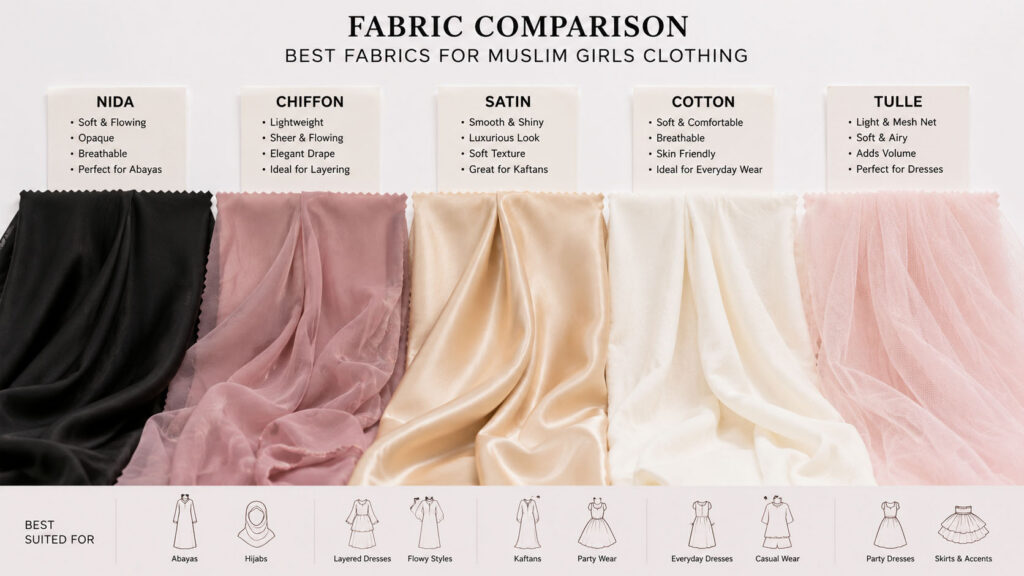
Fabric selection plays an important role in both comfort and appearance. Different modest fashion styles often require different materials depending on their intended use. Nida fabric is widely used for abayas because it is lightweight, breathable, and drapes beautifully while maintaining a modest silhouette. Chiffon is a popular choice for kaftans and Eid dresses thanks to its soft, flowing texture that creates an elegant look for special occasions. For more luxurious collections, many designers choose satin, which offers a smooth finish and a premium appearance that is well-suited to celebrations and formal events.
Related reading:
What Is Tulle Fabric? Why It’s Popular for Girls’ Dresses
Fabric selection plays a critical role in the success of Muslim girls’ clothing collections. Many manufacturers and brands rely on internationally recognized textile safety standards, such as OEKO-TEX® certified textiles, to ensure product safety, fabric quality, and consumer confidence.
Buyers interested in learning more about fabric sourcing, garment manufacturing, and fashion market trends can also refer to professional textile industry resources and market reports for additional guidance when developing abayas, kaftans, and Muslim girls’ dresses.
How to Choose the Right Style for Your Customers
Choosing the right product mix depends largely on your target customers, local market preferences, and sales channels. For wholesalers, a balanced combination of everyday Muslim girls’ dresses and occasion wear usually provides the best sales potential because it serves both regular demand and seasonal events. Retail chains often achieve better results with practical styles that offer comfortable fabrics, reliable sizing, and broad customer appeal. Boutique brands frequently focus on embroidered abayas and premium kaftans, which help create a more distinctive product offering and higher profit margins.
From our experience working with buyers in the Middle East and other international markets, retailers who rely on only one product category often face greater inventory risk. In contrast, buyers who combine everyday modest dresses, premium Eid styles, and fashion-forward abayas tend to achieve more balanced sales throughout the year. For Eid collections in particular, embroidery, premium fabrics, and coordinated family styles continue to be among the strongest-selling features. Understanding customer preferences before placing orders can help retailers improve sell-through rates and reduce excess inventory.
Common Sourcing Mistakes Buyers Make

Based on our experience working with wholesalers and retailers, one of the most common sourcing mistakes is treating abayas, kaftans, and Muslim girls’ dresses as interchangeable products. In reality, each style serves different customer needs and occasions. We also see buyers selecting styles based solely on appearance without considering local market preferences, climate conditions, or fabric comfort. For example, a design that performs well in the UAE may not achieve the same results in Saudi Arabia, while heavy satin fabrics that look luxurious in photos may be less suitable for everyday wear in hot Gulf markets. Before confirming bulk production, we always recommend reviewing fabric swatches, testing samples, and evaluating products based on both appearance and practicality to reduce inventory risk and improve customer satisfaction.
Why Many Buyers Work With Outong Fashion

Outong Fashion specializes in girls’ dresses, Muslim girls’ dresses, flower girl dresses, and occasion wear for wholesalers, retailers, and children’s fashion brands worldwide.
With over 24 years of manufacturing experience, OEM & ODM services, professional sample development, and strict quality control, we help customers develop collections that match the needs of different markets.
Whether you’re sourcing everyday modest dresses, Eid collections, or custom-designed abayas and kaftans, our team can support your product development and bulk production needs.
FAQ
1. Is an abaya the same as a kaftan?
No. An abaya is mainly designed for modest daily wear, while a kaftan is generally more decorative and worn for special occasions.
2. Which style sells best during Eid?
Kaftans and embellished Muslim girls’ dresses usually experience the strongest demand during Eid.
3. What fabrics are commonly used for girls’ abayas?
Nida, crepe, and lightweight cotton blends are among the most popular options.
4. Are Muslim girls’ dresses only for religious occasions?
No. Many modest dresses are designed for everyday wear, school activities, and family events.
5. Can manufacturers customize Muslim girls’ dresses?
Yes. Most OEM and ODM manufacturers can customize fabrics, colors, embroidery, labels, and packaging.
6. How Can Retailers Ensure Muslim Girls’ Dresses Meet Local Cultural Expectations?
Retailers should consider local preferences for garment length, sleeve coverage, colors, and decorative details. Understanding regional differences helps create collections that better match customer expectations.
7. How Does Outong Fashion Help Ensure Children’s Abayas Meet Saudi Market Requirements?
Based on our experience with Middle Eastern buyers, we help adjust fabrics, lengths, coverage, and design details to better align with Saudi market preferences.
Developing the Right Muslim Girls Collection for Your Market
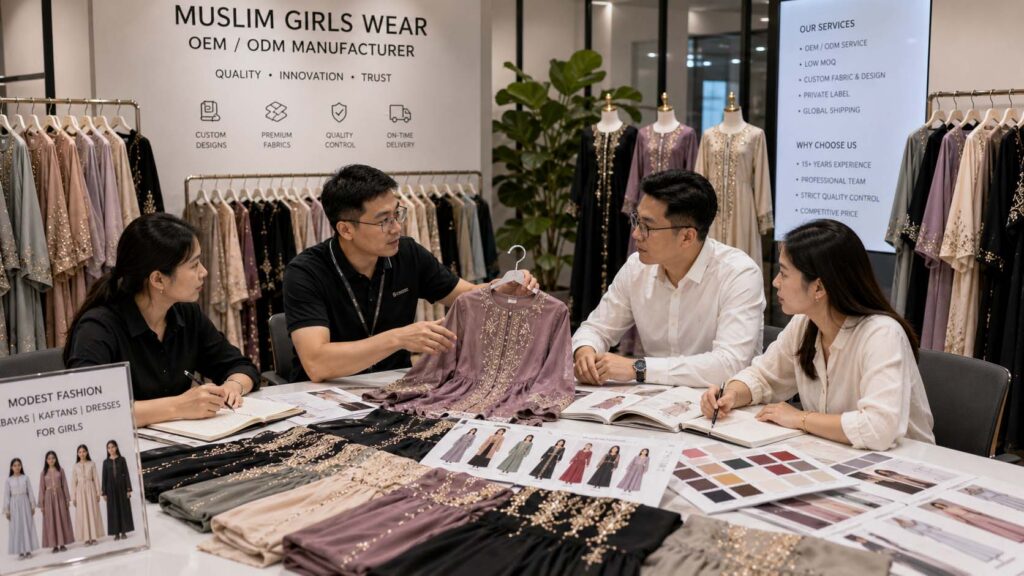
As demand for modest children’s fashion continues to grow, buyers are paying closer attention to product positioning, fabric selection, comfort, and long-term sales potential.
At Outong Fashion, we work with wholesalers, retailers, and children’s fashion brands to develop Muslim girls’ dresses, abayas, kaftans, Eid collections, and other modest wear styles for different markets. From everyday modest dresses to premium occasion wear, we support product development, fabric selection, sampling, and bulk production based on our customers’ market needs.
If you’re planning to expand your modest fashion collection or explore new opportunities in Muslim girls’ clothing, our team is always happy to discuss styles, fabrics, and manufacturing solutions that align with your business goals.
Contact us to design the Muslim Girls Collection.