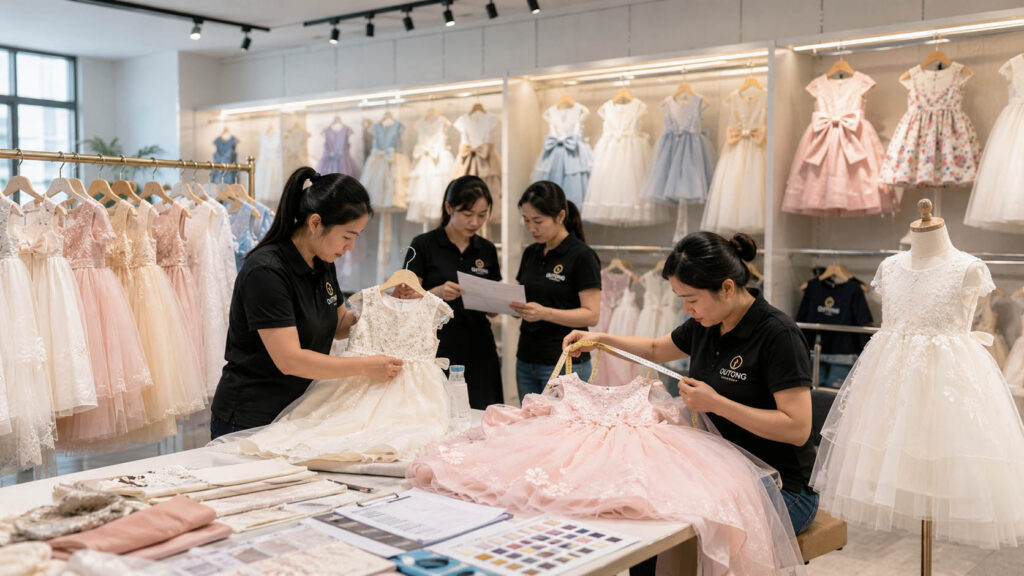
A beautiful sample is only the beginning. The real challenge is making sure every dress in bulk production meets the same standard. We’ve seen orders where the measurements were correct, but small differences in fabric, trims, or finishing still led to customer complaints.
After more than 24 years of manufacturing girls’ dresses, we’ve found that most quality problems can be prevented long before production starts. Based on what we’ve learned from thousands of production orders, here are the quality checkpoints that deserve the closest attention.
Why Quality Problems in Girls’ Dresses Often Begin Before Production
A European retailer once contacted us after receiving a repeat order that didn’t match the previous shipment, even though the approved design and measurements hadn’t changed. After checking our production records, we found that the sewing process had remained consistent. The only difference was that the original soft tulle was no longer available, so a similar fabric from another mill had been used instead. On paper, both fabrics met the same specifications, but under showroom lighting the finished skirts had a noticeably different drape.
This type of issue is more common in girls’ dresses than in everyday children’s clothing because a single style often combines satin, tulle, lace, embroidery, and decorative trim. Even a small change in one material can affect the overall appearance, despite the pattern and measurements remaining the same.
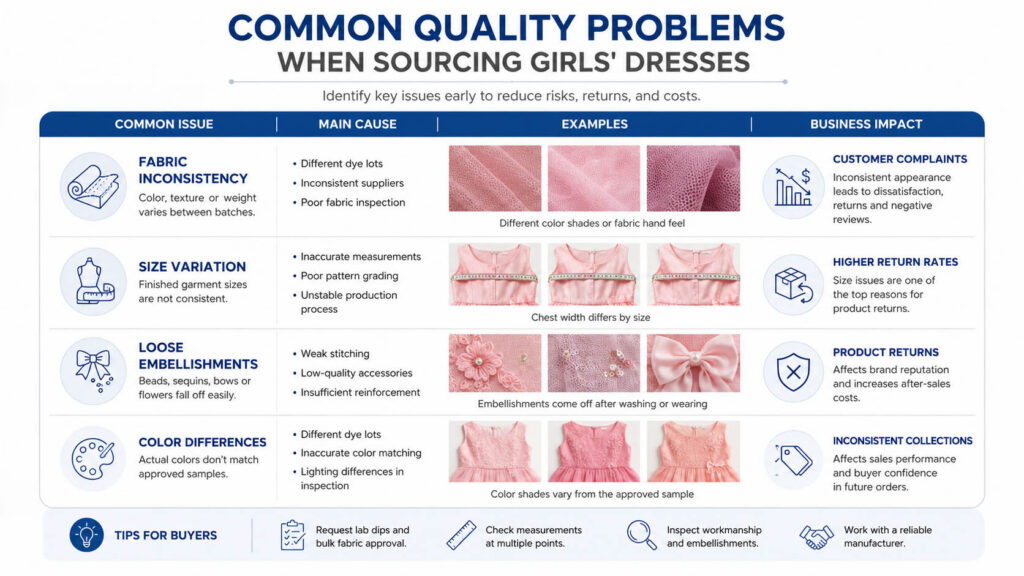
| Common Issue | Main Cause | Business Impact |
|---|---|---|
| Fabric inconsistency | Different fabric batches | Customer complaints |
| Size variation | Unclear tolerances | Higher return rates |
| Loose embellishments | Weak reinforcement | Product returns |
| Color differences | Different dye lots | Inconsistent collections |
Experiences like this are exactly why we encourage buyers to confirm every key material before bulk production begins. Once fabric cutting starts, even a small material change can affect the consistency of an entire order. If you’re developing a private-label collection, our OEM & ODM Children’s Clothing Manufacturing service explains how we manage product development, material approval, and production to help reduce these risks from the very beginning.
How Fabric Choices Affect the Quality of Girls’ Dresses
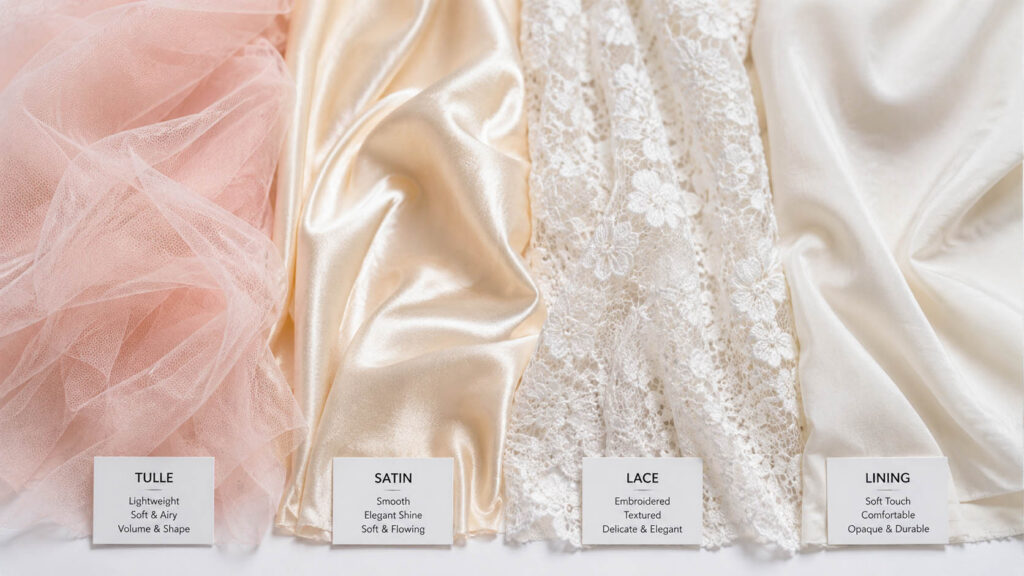
Two fabrics can share the same composition and weight but produce very different results once the dress is finished. Softness, drape, and finishing all influence how customers perceive quality.
We’ve learned this repeatedly with soft tulle. Even when two suppliers offer similar specifications, the skirts may perform differently after sewing. That’s why we usually recommend approving the actual bulk fabric instead of relying only on supplier data sheets. Retailers comparing materials can also explore our Best Fabrics for Girls’ Dresses guide, while OEKO-TEX® Standard 100 offers a useful benchmark when sourcing certified textiles.
Why Pre-Production Samples Matter When Sourcing Girls’ Dresses
Every season, some buyers ask whether they can skip the pre-production sample to save a few days. We rarely recommend it.
One customer made this decision during a busy holiday season. The dresses met every measurement, but the oversized bows sat slightly higher than expected after production. Although the issue was small, part of the order had to be remade. Spending a little more time confirming the pre-production sample is usually much less expensive than correcting finished garments.
Small Construction Details That Affect Girls’ Dress Quality
Beautiful designs may win the first order, but construction quality is what determines whether customers buy again. In our conversations with retailers, complaints are rarely about the overall style of a dress. More often, they’re caused by small details such as a zipper that doesn’t glide smoothly, pearls that loosen after wear, or lace edges that fray sooner than expected.
These issues are easier to prevent than to fix. During sample approval, we recommend checking seam strength, stitch density, lining attachment, and embellishment security separately instead of evaluating only the overall appearance. For premium collections like Girls’ Party Dresses, comfort is equally important. Parents often inspect the inside of a dress before purchasing, so neat finishing around the neckline and armholes can make a noticeable difference.
Build Quality Control Into Every Stage of Girls’ Dress Production
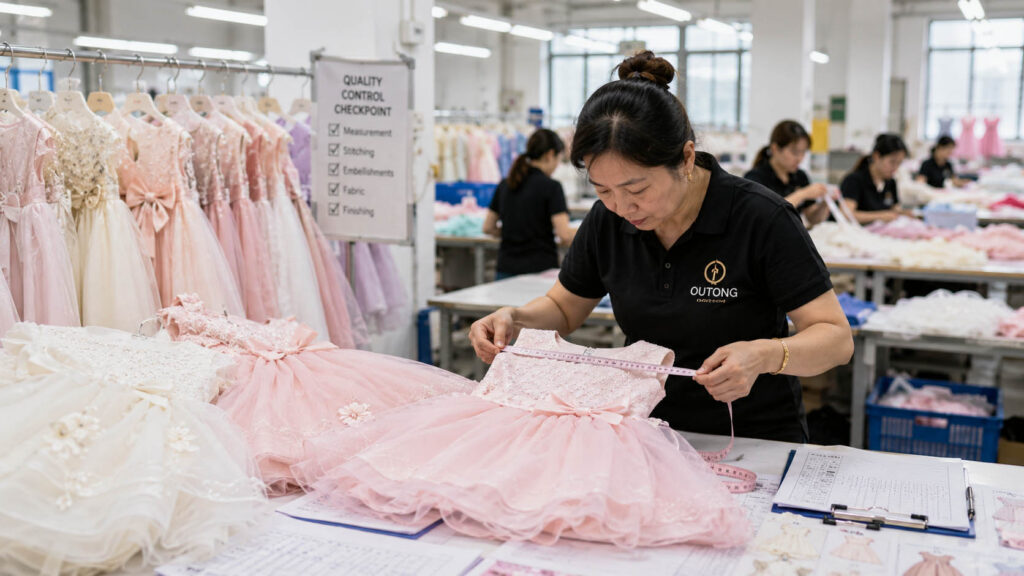
One buyer once asked whether a final inspection was enough to guarantee quality. Our answer was no. A final inspection shows what has already happened, but it can’t stop the same problem from appearing on hundreds of garments if it started earlier in production.
That’s why every production stage should have its own checkpoint.
| Inspection Stage | Key Focus |
|---|---|
| Material inspection | Fabric, trims and color consistency |
| In-line inspection | Sewing quality and measurements |
| Mid-production review | Batch consistency |
| Final inspection | Appearance, labels and packaging |
For buyers supplying the U.S. market, reviewing the guidance published by the U.S. Consumer Product Safety Commission (CPSC) before production is equally important. Many manufacturers also refer to testing methods from ASTM International when evaluating garment durability and workmanship.
If you’d like to see how these inspections fit into a complete production workflow, our Children’s Dress Manufacturing Process and Quality Control Process provide a step-by-step overview.
Why Consistent Sizing Matters for Girls’ Dresses
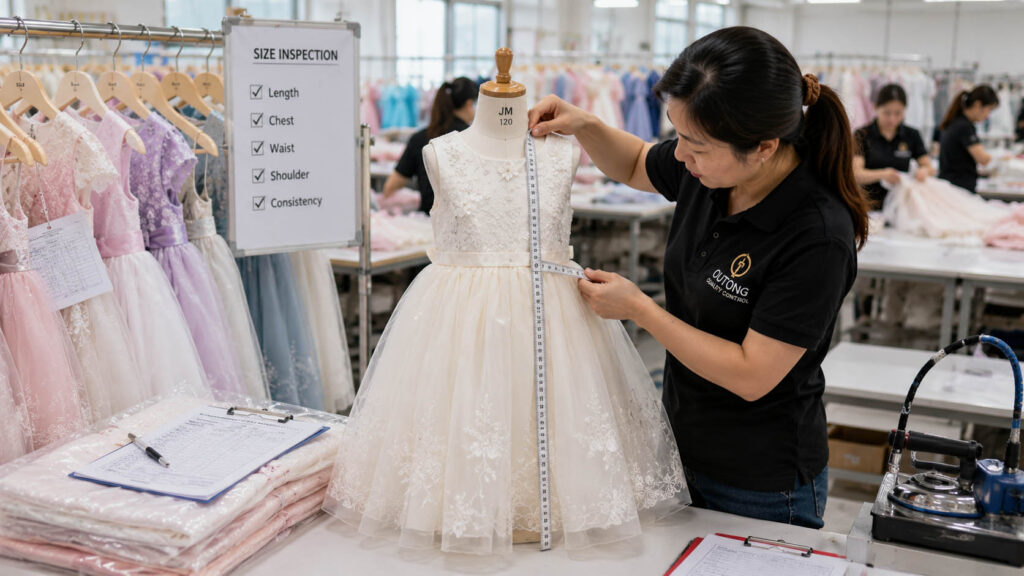
Parents rarely measure a dress before buying it, but they’ll quickly notice if the same size fits differently from a previous purchase. For retailers, that’s one of the most common causes of unnecessary returns.
With multi-layer tulle dresses, the skirt often settles slightly after steaming, which can affect the finished length. That’s why our QC team measures every garment after pressing rather than before packing. This simple step helps keep sizing consistent across different production batches.
If you’re developing your own size standards, our Girls’ Dress Size Guide is a useful reference. For first-time or larger orders, some buyers also choose SGS Consumer Product Services for independent pre-shipment inspections.
Choosing the Right Manufacturing Partner for Girls’ Dresses
It’s natural to compare prices when choosing a supplier, but the lowest quotation doesn’t always deliver the lowest overall cost.
A few years ago, one of our Canadian customers told us the dresses arrived in good condition, but the oversized satin bows had lost their shape after several weeks in transit. The dresses themselves met every quality requirement, yet the presentation wasn’t what the customer expected. Since then, we’ve reinforced the internal structure of larger bows and adjusted our export packing method for similar styles.
That experience reminded us that consistent quality is often decided by small details buyers never see. Reliable fabric suppliers, clear production standards, and stable quality control all contribute to the final result. That’s also why many buyers look beyond price and consider factors such as AMFORI BSCI, or Sedex audits when choosing a manufacturing partner. For buyers following new fabric developments, Fibre2Fashion is another useful industry resource.
FAQ
1. Why can bulk production look different from the approved sample?
The most common reason is a change in fabric batches, trims or finishing processes. Approving the actual bulk fabric and a pre-production sample helps minimise these differences.
2. Is a pre-production sample really necessary?
Yes, especially for new styles or private-label collections. It confirms workmanship, measurements and construction details before bulk production begins.
3. How can I reduce size-related returns?
Use a clear size chart, agree on measurement tolerances with your supplier, and request random measurements during production instead of checking only finished cartons.
4. Should I arrange a third-party inspection?
For first orders or high-value shipments, many buyers choose independent inspections in addition to factory quality checks. This provides extra confidence before shipment.
5. Which certifications should I look for?
Many international buyers prefer suppliers with AMFORI BSCI, or Sedex audits and fabrics certified to OEKO-TEX® Standard 100, depending on their target market.
6. Besides price, what else should I compare when choosing a supplier?
Look at sampling capability, communication, quality control, delivery performance, supply chain stability, and experience with girls’ dresses. These factors usually have a greater impact on long-term sourcing success than unit price alone.
How Outong Maintains Consistent Quality in Every Girls’ Dress Order
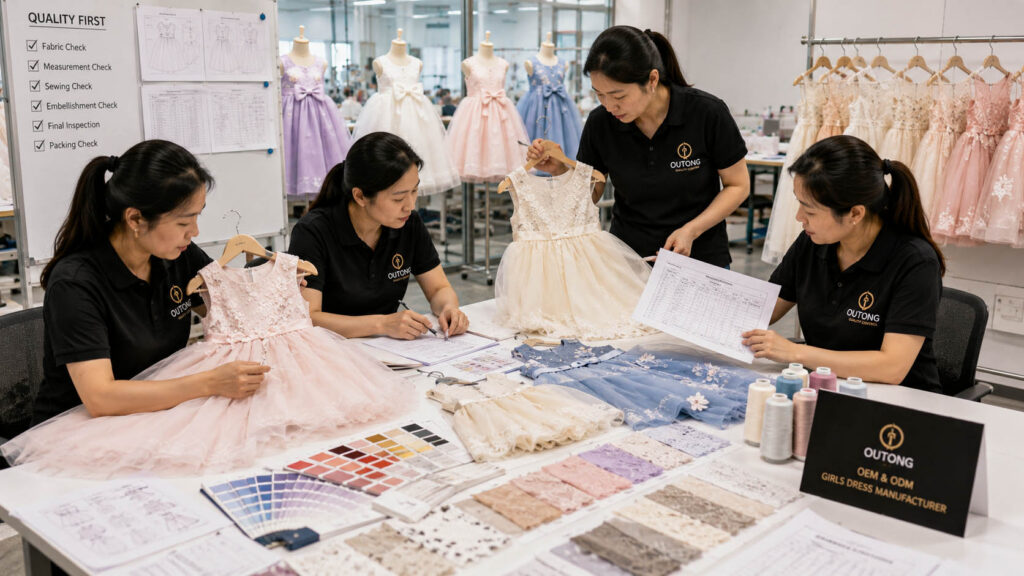
Everything covered in this guide reflects how we manage production at Outong. Before bulk production begins, our production manager, QC supervisor, and sewing team review the approved sample together to confirm fabrics, measurements, construction details, and embellishments. Throughout production, every order passes multiple quality checkpoints, from in-line inspections to final measurement and finishing checks before packing.
With more than 24 years of experience manufacturing girls’ dresses, we’ve learned that consistent quality isn’t achieved through one inspection at the end of production. It’s built into every stage of the process. That’s why every Outong order follows the same quality standards, whether it’s a repeat style or a newly developed collection.
Conclusion
After working on girls’ dress collections for more than 24 years, one thing has become clear to us: the smoothest projects usually aren’t the biggest ones—they’re the ones where buyers and manufacturers stay aligned from the very beginning. When fabrics, construction details, and samples are confirmed early, production becomes much more predictable.
We’ve also found that many quality problems don’t require complicated solutions. A few extra checks before production often prevent far more expensive corrections after shipment. That’s why we always encourage buyers to spend a little more time during development rather than relying only on final inspections.
If you’re planning a new girls’ dress collection, we’d be happy to discuss suitable fabrics and share practical recommendations based on real production experience.
Contact us to request samples or start a conversation with our team.