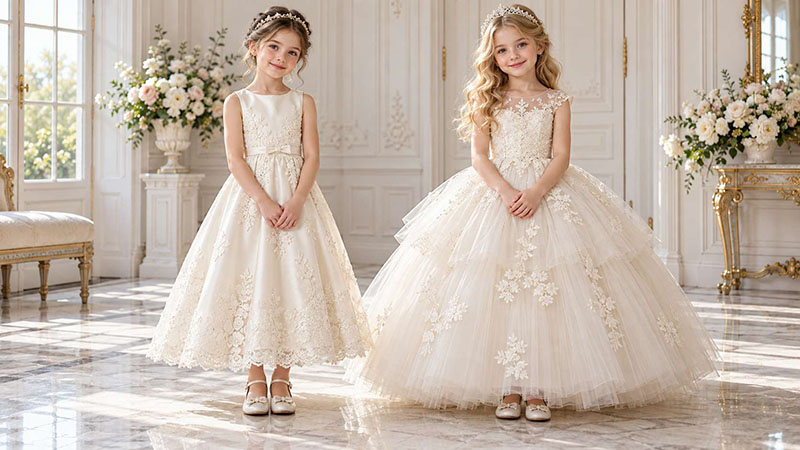
Choosing between an A-line and a ball gown dress for girls often comes down to skirt shape. An A-line dress gradually widens toward the hem, creating a balanced silhouette. A ball gown features a fitted bodice and a fuller skirt, giving it a more dramatic, princess-inspired appearance.
Both styles are popular for flower girls, birthday parties, and formal celebrations. However, their differences go beyond appearance. Fabric, skirt construction, lining, and fit all influence how a dress looks and feels.
This guide compares both silhouettes to help families choose suitable dresses and retailers make more informed sourcing decisions.
1. A-Line vs Ball Gown: Key Differences
The main difference between an A-line dress and a ball gown is skirt volume. A-line dresses create a gradual flare, while ball gowns have a fuller silhouette, often supported by gathered fabric or additional layers.
Neither style is automatically more comfortable or better made. The finished garment depends on its fabric, construction, proportions, and fit.
| Feature | A-Line Dress | Ball Gown Dress |
|---|---|---|
| Silhouette | Gradually widens toward the hem | Fitted bodice with a fuller skirt |
| Skirt volume | Light to moderate fullness | More pronounced volume |
| Construction | Often simpler skirt shaping | May require gathering or layers |
| Common fabrics | Satin, cotton, tulle | Tulle, organza, satin |
| Movement | Depends on fit and length | Depends on weight, fullness, and length |
| Typical occasions | Weddings, birthdays, formal events | Formal weddings, princess parties |
| Production | Often less skirt volume | May involve more fabric or structural details |
Understanding how each silhouette is constructed makes it easier to choose between them.
2. What Is an A-Line Dress?
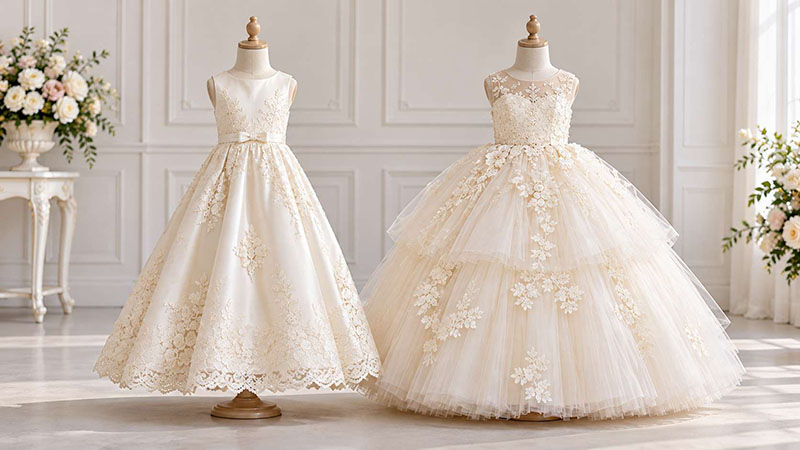
An A-line dress gets its name from its shape. The garment follows the upper body before gradually widening toward the hem, creating an outline similar to the letter A.
Unlike a ball gown, an A-line dress does not rely on a dramatically full skirt to achieve its silhouette.
Key Features of A-Line Dresses
A-line dresses may have a defined waist or a continuous shape from the shoulders. Their appearance depends on the pattern, fabric, and amount of flare.
Soft satin creates a flowing finish, while cotton or structured fabrics can produce a firmer shape. Tulle overlays may add softness without turning the dress into a full ball gown.
This versatility makes A-line designs suitable for different collections, from simple occasionwear to decorative girls’ dresses.
When Are A-Line Dresses Suitable?
A-line dresses work well for flower girls, birthday parties, family celebrations, and formal occasions. Their relatively simple silhouette can be adapted with lace, embroidery, or decorative waist details.
A well-fitted A-line dress can allow comfortable movement, especially when the fabric weight and skirt length suit the child’s activities.
However, the silhouette alone does not guarantee comfort. A stiff lining or restrictive waist can make even a simple dress uncomfortable.
3. What Is a Ball Gown Dress?
A ball gown combines a fitted bodice with a much fuller skirt. The contrast between the upper body and skirt creates the familiar princess-style silhouette.
In children’s occasionwear, designers can achieve this fullness through gathered fabric, layered tulle, organza, or other construction techniques.
Key Features of Ball Gown Dresses
The skirt is the defining feature of a ball gown. It creates a rounded, voluminous appearance that is especially noticeable when the child stands or turns.
Tulle is commonly used because layers of lightweight netting can build volume. Organza provides a crisper structure, while satin can create a smooth outer surface or lining.
The final appearance depends on how these materials are combined. A ball gown does not require a fixed number of layers.
When Are Ball Gowns Suitable?
Ball gowns are often chosen for princess-themed birthdays, formal weddings, and special-event photography.
Their fuller skirts create a distinctive appearance, especially when combined with lace, embroidery, or decorative details.
For younger children, the skirt should remain manageable. Excessive length or weight may make walking, sitting, and playing more difficult.
4. Which Dress Is More Comfortable for Girls?
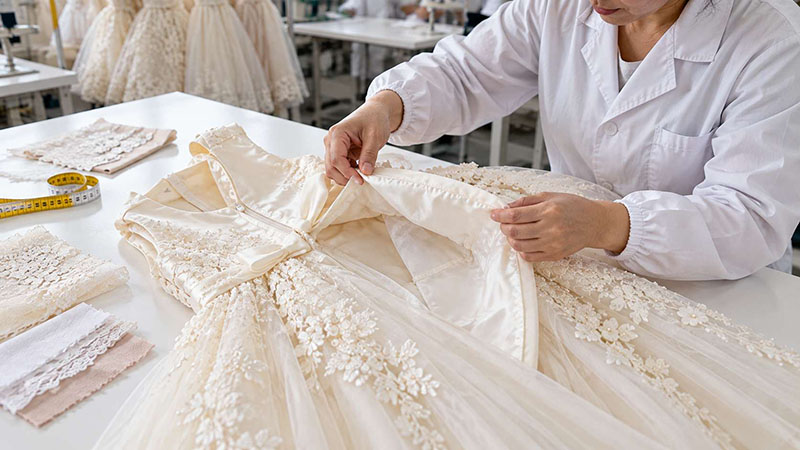
Comfort depends more on garment construction than silhouette alone. Although A-line dresses often have less skirt volume, a properly constructed ball gown can also be comfortable.
Skirt Weight and Movement
A lighter skirt generally places less weight around the waist, but fabric type and dress length also matter.
For example, a knee-length ball gown made with lightweight tulle may be easier to move in than a long A-line dress made from heavy fabric.
Before choosing a dress, consider whether the child will spend most of the event standing, walking, sitting, or playing.
Lining, Waistbands, and Seams
The inside of a dress deserves as much attention as the outside. Rough seams, stiff lining, tight waistbands, and exposed zipper edges may cause discomfort during long events.
At Outong , our garment checks include the lining, neckline, seams, waist area, zippers, and skirt construction. These details matter because an attractive outer design does not always reveal how the garment will feel against the skin.
When evaluating a sample, buyers should examine the inner construction and observe how the dress moves when worn.
For children’s occasionwear, decorative details should also be checked for secure attachment and potential safety concerns. Retailers selling in the U.S. can refer to the U.S. Consumer Product Safety Commission for applicable children’s clothing safety requirements.
For more practical advice, read our guide on choosing a comfortable party dress for girls.
5. How Do Fabrics Affect Each Silhouette?
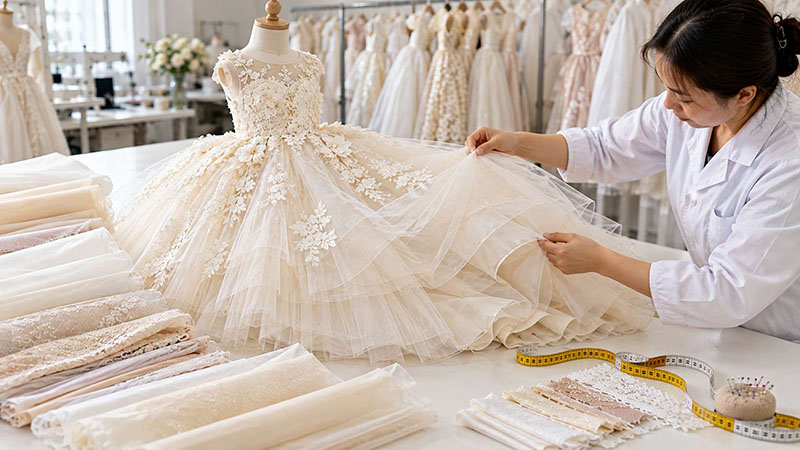
Fabric selection influences the drape, volume, weight, and overall appearance of a dress.
The same silhouette can look different depending on the material used. This is why choosing between A-line and ball gown designs involves more than comparing photographs.
Fabrics for A-Line Dresses
Satin is frequently used for formal A-line dresses because its smooth surface creates an elegant appearance. Depending on its weight and construction, it can produce either a soft drape or a more defined shape.
Cotton and cotton blends work well for less formal styles, while tulle overlays add a delicate finish.
For an A-line dress, the goal is usually to maintain a gradual flare without excessive volume.
Fabrics for Ball Gowns
Ball gowns often use tulle, organza, satin, or combinations of these materials.
Tulle creates volume through layering, while organza offers a crisp, lightweight structure. Satin may be used for the outer skirt, bodice, or lining, depending on the design.
Beyond appearance and texture, fabric safety is another consideration when sourcing children’s dresses. Buyers can look for materials certified to OEKO-TEX STANDARD 100, which involves testing textiles for harmful substances. Certification should be verified for the specific material or product.
If you are comparing fabric options, our articles on Satin vs Tulle Flower Girl Dresses and Tulle vs Organza: Key Differences for Girls’ Dresses explain how different materials influence occasionwear construction.
Adjusting Skirt Fullness
Skirt fullness is not determined by fabric alone. Pattern shape, gathering, layering, and internal construction all influence the finished silhouette.
In our dress development process at Outong Fashion, we adjust skirt fullness according to the individual style. Rather than following one fixed method, we consider fabric selection, layering, and skirt construction together to achieve the intended appearance.
For custom girls’ dresses, buyers should evaluate the complete sample before approving the final skirt shape. Photographs may not fully show how the fabric hangs or moves.
6. Which Style Is Better for Different Occasions?
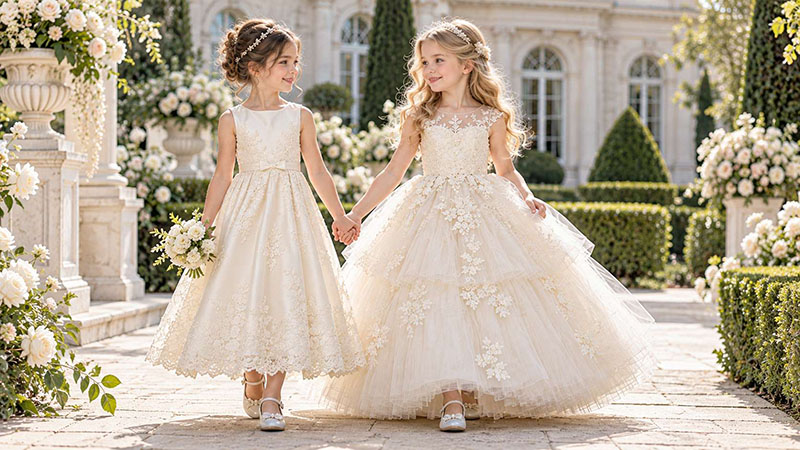
Both silhouettes can work for weddings, birthdays, and formal celebrations. The better choice depends on the event, the child’s age, and how the dress will be worn.
Flower Girl Dresses
A-line dresses are a practical option for outdoor weddings, garden ceremonies, and events where a softer silhouette is preferred.
Ball gowns may suit more formal settings, particularly when the wedding style calls for a fuller princess-inspired dress.
However, skirt length, movement, and comfort are just as important as appearance, especially for younger flower girls.
Birthday Party Dresses
For birthdays involving games and active movement, an A-line dress with a manageable skirt length may be a practical choice.
Ball gowns are particularly appealing for princess-themed celebrations, where a fuller skirt is part of the desired look.
A child can still enjoy a ball gown during an active event, provided the dress fits properly and the skirt does not restrict movement.
First Communion Dresses
First Communion dresses often feature white or ivory fabrics, modest styling, and carefully selected decorative details.
A-line dresses can create a simple, elegant appearance, while fuller skirts may suit families looking for a more traditional formal style.
Dress requirements vary between churches and ceremonies. Buyers should confirm any local guidelines before choosing a silhouette or decorative design.
7. How to Choose the Right Dress for Girls
The best dress is not necessarily the one with the fullest skirt or most elaborate decoration. A suitable choice should balance appearance, fit, comfort, and the requirements of the occasion.
Consider Age, Size, and Fit
Age labels provide a starting point, but children of the same age may have different body measurements.
Check the chest, waist, and dress length against the supplier’s size chart. For fitted bodices, these measurements are particularly important.
A fuller skirt also needs suitable proportions. Too much length or volume can overwhelm a smaller child, even when the bodice fits correctly.
For additional sizing advice, see our flower girl dress size guide.
Consider the Venue and Season
Outdoor summer events may call for lighter fabrics and manageable skirt lengths, while indoor formal celebrations may allow more elaborate designs.
Temperature also matters. Multiple fabric layers can affect how warm a dress feels, particularly during long ceremonies.
For outdoor events, consider the ground surface. A very long or full skirt may be less convenient on grass, steps, or uneven pathways.
Consider Style and Comfort
Some children prefer a simple, flowing dress. Others enjoy the fuller shape of a princess-style ball gown.
Neither preference is wrong. The important question is whether the dress suits the occasion and allows comfortable movement.
When possible, check the dress while the child walks, sits, and turns. These movements can reveal fit issues that are difficult to notice on a hanger.
8. What Should Retailers Consider When Sourcing?
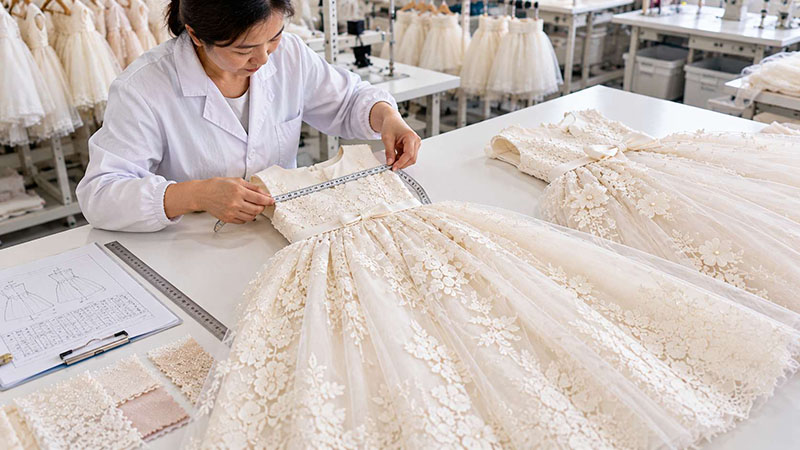
For retailers and clothing brands, choosing between A-line and ball gown dresses involves more than visual appeal.
Fabric consumption, construction details, sizing, and sample approval can all affect the suitability of a style for a particular collection.
Fabric Consumption and Construction
Ball gowns may require more fabric or additional construction to create a fuller skirt. However, this does not mean every ball gown costs more than an A-line dress.
A heavily embroidered A-line dress may require more detailed workmanship than a simple layered ball gown.
Retailers should compare complete specifications, including fabric, lining, decorative details, and finishing, before evaluating production costs.
Size Charts and Sample Approval
Size consistency is especially important when ordering girls’ dresses in multiple sizes.
At Outong Fashion, we have encountered differences between customers’ size charts and standard factory measurements. We have also experienced situations where sample and bulk-production measurements required additional checking.
For this reason, confirming the buyer’s size specifications and approved sample measurements before bulk production is an important part of the development process.
For retailers importing children’s dresses into the U.S., accurate product labeling is another important sourcing consideration. The Federal Trade Commission provides guidance on textile labeling requirements, including fiber content, country of origin, and responsible business identification.
| Sourcing Factor | A-Line Dresses | Ball Gown Dresses |
|---|---|---|
| Skirt construction | Check flare and drape | Check fullness and layering |
| Fabric consumption | Depends on design and length | May increase with volume |
| Comfort inspection | Check lining, waist, and seams | Also check layered skirt construction |
| Size consistency | Confirm bodice and length | Confirm bodice, length, and proportions |
| Decorative details | Check stitching and attachment | Check embellishments and attachment |
| Sample approval | Review fit and shape | Review fit, volume, and shape |
9. Frequently Asked Questions
What Is the Main Difference Between an A-Line and a Ball Gown Dress?
An A-line dress gradually widens toward the hem, creating a balanced silhouette. A ball gown has a fitted bodice and a fuller skirt, producing a more dramatic, princess-inspired appearance.
Is an A-Line Dress More Comfortable Than a Ball Gown?
Not necessarily. A-line dresses often have less skirt volume, but comfort depends on fabric, lining, fit, weight, and construction. A properly fitted ball gown can also be comfortable.
Are Ball Gown Dresses Suitable for Young Girls?
Yes, provided the dress is appropriately sized and constructed. Soft lining, secure decorations, manageable skirt volume, and suitable length are important considerations for younger children.
Which Style Is Better for Flower Girls?
Both styles can work well. A-line dresses often suit understated or outdoor weddings, while ball gowns may complement more formal ceremonies. The final choice should consider comfort, movement, and wedding style.
Are Ball Gown Dresses More Expensive Than A-Line Dresses?
Not always. Ball gowns may use more fabric or additional layers, but production cost also depends on fabric quality, embroidery, embellishments, construction, and order specifications.
Conclusion
The main difference between A-line and ball gown dresses for girls is the shape and fullness of the skirt. A-line dresses create a gradual flare, while ball gowns offer a fuller, more dramatic silhouette.
Both styles can be suitable for flower girls, birthdays, and formal occasions. Rather than choosing by appearance alone, consider the fabric, fit, lining, movement, and overall construction.
For retailers, reviewing these details in actual samples is a practical way to select styles that suit both the intended occasion and customer expectations.
Explore Girls’ Dresses with Outong

Outong is a children’s clothing manufacturer specializing in girls’ party dresses, flower girl dresses, and other occasionwear. We support wholesale orders, OEM/ODM development, and private label production for clothing brands, boutiques, and retailers.
Whether you’re looking for elegant A-line designs or fuller princess-style ball gowns, explore our girls’ clothing collection or contact our team to discuss available styles and custom requirements.