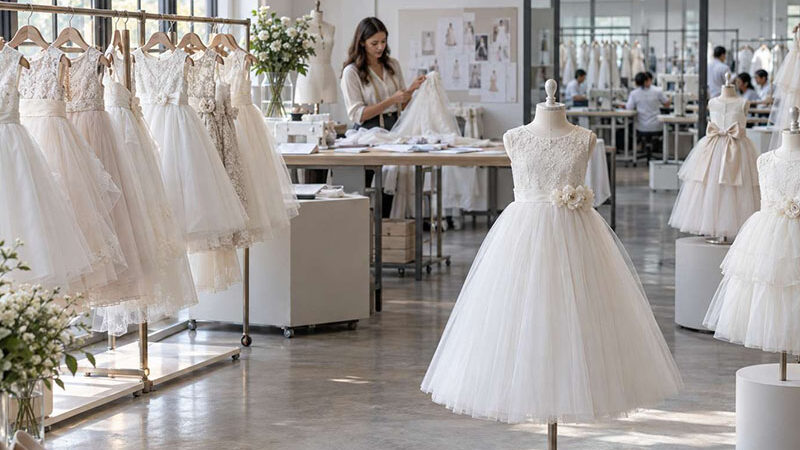
Developing a private label flower girl dress collection involves more than choosing a beautiful design and adding your brand. Fabric, skirt construction, sizing, color, embellishments, and sample approval can all affect how successfully a design moves into bulk production.
For children’s fashion brands, boutiques, wholesalers, and retailers, the challenge is not simply finding a flower girl dress manufacturer. It is finding a supplier that can turn a design concept into a consistent, commercially viable product.
This guide explains what to consider when sourcing private label flower girl dresses, from fabrics and customization to MOQ, sampling, supplier evaluation, and bulk production.
What Are Private Label Flower Girl Dresses?
Private label flower girl dresses are produced by a manufacturer for sale under another company’s brand. Depending on the sourcing model, a buyer may customize an existing style or work with an OEM/ODM manufacturer to develop a more distinctive product.
Customization can extend well beyond adding a logo. Brands may want to change the fabric, color, sizing, silhouette, decorative details, labels, hang tags, or packaging to create a collection that fits their market.
This is one of the main differences between private label sourcing and simply purchasing ready-stock dresses. With private label development, the brand becomes involved in decisions that affect both the product and how it is presented to the final customer.
Why Private Label Works for Flower Girl Dress Collections
Flower girl dresses are highly visual products. Shoppers notice silhouette, skirt volume, lace placement, fabric texture, color, embellishments, and how the dress fits into a particular wedding style.
That gives children’s fashion brands room to differentiate. Two dresses can follow a similar general silhouette while feeling very different because of their materials, construction, color palette, or decorative details.
Private labeling also allows brands to create consistency beyond the garment. A coordinated approach to product design, care labels, hang tags, packaging, and other branding details can make the finished collection feel more intentional.
For businesses planning repeat collections, OEM and ODM development can also make it easier to evolve successful designs rather than starting from zero for every season. Brands developing this category can explore OUTONG’s Wedding & Flower Girl Solutions for related product and sourcing information.
Start With the Product, Not the Logo
One mistake in private label sourcing is to focus too early on branding details while leaving important garment specifications open. A logo and custom package cannot compensate for a dress whose fabric, fit, or silhouette does not meet expectations.
Before discussing bulk production, buyers should define the intended style, target age or size range, preferred materials, color direction, key design features, and any details that must remain consistent across the collection.
Once the garment itself is clearly defined, branding elements can be developed around it. This creates a much stronger foundation for sampling and makes communication with the manufacturer more precise.
What Can Be Customized?
At OUTONG, private label projects can include customization of colors, sizes, fabrics, dress designs, logos, hang tags, care labels, and packaging. OEM and ODM development are also available.
For buyers, however, the important question is not simply whether customization is available. It is how each requested change will affect the sample, production requirements, MOQ, and final appearance.
Common areas to define before sampling include:
- Fabric, color, size range, silhouette, and decorative details
- Logo, hang tags, care labels, and other private label elements
- Packaging and presentation requirements
- OEM/ODM design changes or new product development
A clear specification at the beginning usually makes later sample feedback much more useful.
Fabric Choice Can Change the Entire Dress
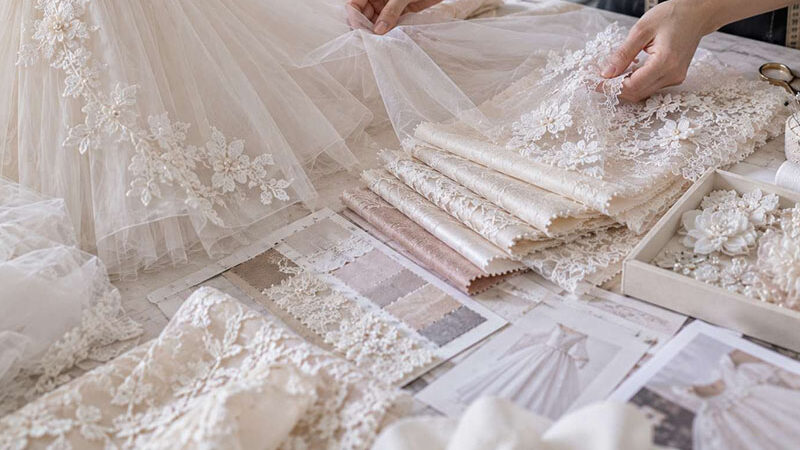
Flower girl dresses may use tulle, lace, satin, organza, cotton, polyester, sequins, or combinations of several materials. They do not behave in the same way.
Tulle can create an airy, layered skirt, while satin provides a smoother and often more structured visual effect. Lace introduces pattern and texture, while organza can provide lightweight volume and a different degree of structure.
The same color can also appear different across these materials. A shade viewed on a computer screen may not look identical when applied to satin, layered tulle, or lace over a lining.
This is why fabric selection should be treated as part of product development rather than simply a purchasing choice.
For children’s fashion brands, fabric selection can also involve requirements beyond appearance and construction. Buyers who consider textile testing or certification as part of their sourcing criteria can review the official OEKO-TEX STANDARD 100 information to understand what the certification covers and determine whether it is relevant to their product and market requirements.
A Lesson From the Sampling Room: A Photo Is Not a Specification
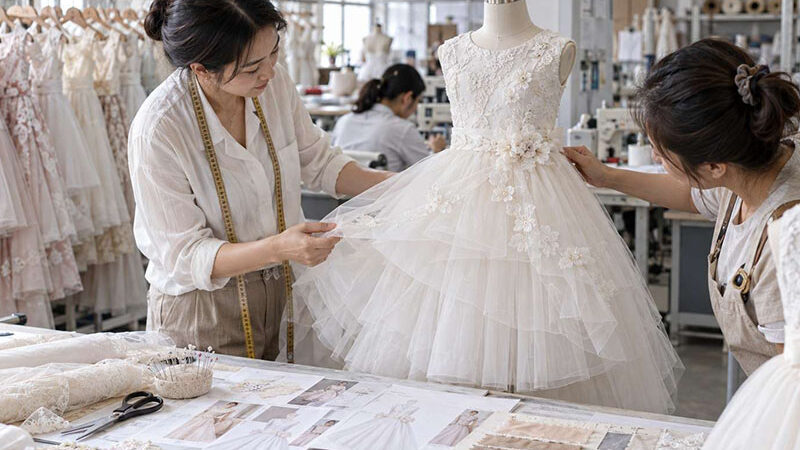
In our experience developing children’s formalwear, one issue appears repeatedly: a customer may have a reference image with exactly the skirt shape they want, but reproducing that appearance requires understanding what creates the silhouette.
With a tulle flower girl dress, for example, the stiffness of the tulle, number of layers, lining construction, and decorative elements can all change how the skirt falls. Simply choosing a material that looks similar in a photograph may not produce the same result.
We therefore pay close attention during sampling to whether the assembled tulle layers, lining, and embellishments create the intended silhouette. Lace placement, sequin details, fabric hand feel, and wearing comfort are also better evaluated on the physical sample.
For brands, the practical lesson is simple: use reference images to communicate direction, but use the actual sample to approve the product. Resolving these details during sampling is much easier than trying to correct them after bulk production has started.
How to Evaluate a Flower Girl Dress Manufacturer
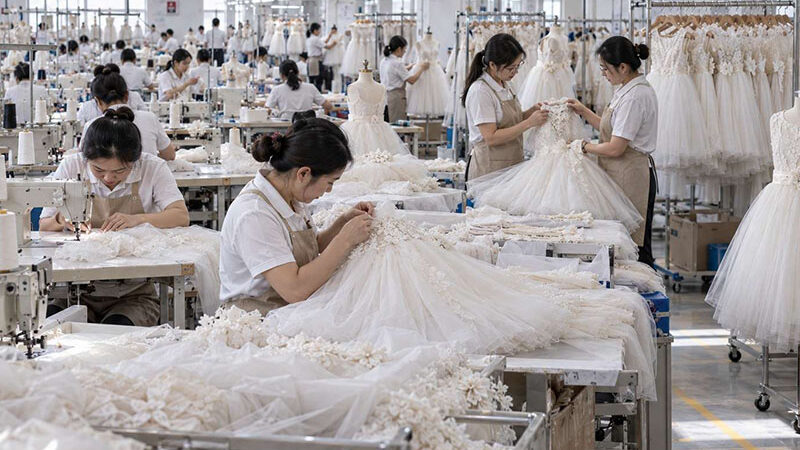
Price matters, but a quotation does not show the complete cost or risk of developing a private label collection.
A manufacturer also needs to interpret design requirements, source appropriate materials, develop samples, manage revisions, reproduce the approved product in bulk, and meet the agreed production schedule.
When comparing flower girl dress suppliers, buyers should therefore consider development resources, sampling capability, OEM/ODM support, MOQ, production capacity, communication, lead times, customization options, and relevant compliance documentation.
A useful question is not only, “Can this factory make this dress?” It is also, “Can this factory reproduce the approved dress consistently when the order moves from one sample to hundreds of pieces?”
Supplier evaluation may also include social compliance requirements, particularly for brands with established responsible-sourcing policies. Buyers who use social compliance as part of their supplier qualification process can review the official amfori BSCI information to better understand the program and decide what documentation they should request when evaluating a manufacturing partner.
Look at Development Capability
Private label relationships often extend beyond one order. A successful style may later need new colors, fabric changes, additional sizes, modified details, or related designs for a new collection.
OUTONG has 50 designers and 20 garment sample workshops, with new designs developed every week. This development structure supports OEM and ODM projects as well as ongoing product development.
For a brand, access to development resources can become particularly valuable when collections evolve and products need to be revised rather than simply reordered without changes.
Understand Production Capacity
Production capacity matters because brands need to know whether a supplier can support both the current order and future growth.
Outong Garment Factory was established in 1999 and operates 10 production lines with more than 200 workers. Production exceeds 200,000 dresses per month.
Capacity alone does not determine whether a supplier is right for a particular project, but it is an important part of evaluating whether production resources align with a buyer’s expected order volume and schedule.
MOQ: Ready Stock and Custom Orders Are Different Decisions
MOQ is especially important for new brands, boutiques, and businesses testing a category for the first time.
At OUTONG, the ready-stock MOQ is 30 pieces, while customized orders have an MOQ of 360 pieces. These options serve different sourcing needs rather than simply representing two quantities for the same type of order.
Ready stock can be useful when a buyer wants to purchase existing products at a lower starting quantity. Custom production is more appropriate when the project requires specific fabrics, colors, designs, private labels, or packaging.
Before choosing between them, brands should consider whether their priority is testing demand with existing styles or creating a differentiated collection with customized specifications.
What to Confirm Before Approving Bulk Production
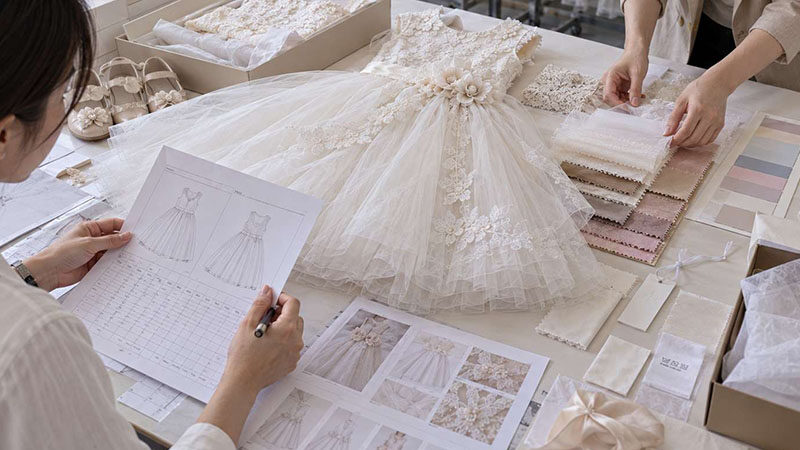
Once a sample looks good, there can be pressure to approve production quickly. This is exactly when a careful final review is valuable.
From our production experience, three details deserve particular attention before bulk manufacturing:
- Size assortment: Confirm garment measurements as well as how many pieces are needed in each size. The right size mix depends on the brand’s target customers and sales experience.
- Fabric and color: Review the actual material combination. Tulle, satin, lace, and organza can display the same color differently, particularly when several materials are used together.
- Private label details: Approve logos, hang tags, care labels, and packaging together with the garment rather than leaving them until production is underway.
These may seem like small decisions when reviewing a single sample. Across a bulk order, however, small unresolved details become repeated details.
That is why we prefer to solve them during sample approval rather than after production has started.
How Long Do Sampling and Production Take?
Lead time should be considered as part of a brand’s launch or purchasing calendar, especially for wedding and special-occasion products where timing may matter to the retailer.
OUTONG’s stated sample lead time is 3 days, and the stated mass-production lead time is 15 days. Buyers should also allow time for reviewing samples, communicating revisions, confirming specifications, and providing final approval.
In other words, production lead time and total project lead time are not necessarily the same thing. A clear and consolidated approval process can help prevent avoidable delays between sampling and bulk production.
For seasonal collections, buyers should discuss their required delivery date early so the production plan can be evaluated against the intended sales schedule. Businesses working across multiple occasions can also review OUTONG’s Christmas & Seasonal Kidswear Solutions when planning seasonal children’s collections.
Don’t Compare Suppliers on Unit Price Alone
A lower unit price can look attractive on a sourcing spreadsheet, but price alone does not show what happens after an order is placed.
For private label flower girl dresses, we recommend comparing at least three things alongside price: whether bulk production can remain consistent with the approved sample, how effectively the supplier can develop and revise products, and whether the production schedule can support the required delivery date.
This is particularly relevant for dresses using multiple fabrics and decorative elements. If skirt volume, lace placement, color, or embellishment changes unexpectedly between sample and production, the commercial impact may be greater than a small difference in unit cost.
For long-term sourcing, the better question is often not “Which supplier quoted the lowest price?” but “Which supplier can help us achieve the product we approved, at the scale and timing our business requires?”
Compliance Information Should Be Verified for Your Project
Children’s clothing buyers may have specific compliance requirements depending on their market, sales channel, product type, or company policy.
This is a useful practice with any supplier. Certification names alone should not replace verification that the relevant documentation applies to the factory, product, material, or sourcing requirement involved.
For brands importing or selling children’s products in the United States, compliance requirements should be reviewed for the specific product rather than assumed from general garment standards. The U.S. Consumer Product Safety Commission’s children’s products guidance provides an official starting point for understanding federal children’s product requirements. Buyers should determine which rules, testing requirements, and documentation apply to the particular garments they intend to sell.
Questions to Ask Before Choosing a Private Label Supplier
Before selecting a manufacturer, a children’s fashion brand should have enough information to understand both the product-development process and the production process.
Useful questions include:
- What are your MOQs for ready stock and customized production?
- Which fabrics, colors, sizes, and design details can be customized?
- How do you develop, review, and revise samples?
- Can you provide OEM, ODM, labels, hang tags, and custom packaging?
- How do you maintain consistency between approved samples and bulk production?
- What are your sample and mass-production lead times?
- What production resources and capacity support my order?
- Which compliance documents can you provide for my sourcing requirements?
The quality of the answers—and how clearly a supplier communicates them—can tell a buyer a great deal before the first bulk order is placed.
Frequently Asked Questions
What is the MOQ for private label flower girl dresses?
At OUTONG, the MOQ for ready-stock products is 30 pieces. Customized orders have an MOQ of 360 pieces. Buyers should choose based on whether they need existing styles or a customized private label project.
What should I check before approving a flower girl dress sample?
Check the silhouette, fabric hand feel, color, sizing, skirt construction, lining, decorative details, and wearing effect. For private label projects, logos, care labels, hang tags, and packaging should also be confirmed before bulk production.
Can I customize the fabric and design?
Yes. OUTONG supports customization of fabrics, colors, sizes, dress designs, logos, hang tags, care labels, and packaging, as well as OEM and ODM development.
Which fabrics are available for flower girl dresses?
Available materials include tulle, lace, satin, organza, cotton, polyester, and sequins. The appropriate material depends on the intended silhouette, appearance, construction, and design requirements.
Is ready stock or private label better for a new children’s brand?
It depends on the business objective. Ready stock can offer a lower starting MOQ for testing products, while private label production provides greater control over design and branding but requires a higher customized-order MOQ.
How quickly can OUTONG develop a sample?
OUTONG’s stated sample lead time is 3 days. The stated mass-production lead time is 15 days. Project timing should also include sample review, revisions, and final approval.
Conclusion
Building a successful private label flower girl dress collection is less about finding the most attractive reference image or the lowest quotation and more about controlling the details between concept and bulk production. Fabric behavior, silhouette, sizing, sample approval, MOQ, branding elements, production capability, and communication all influence the finished collection.
For children’s fashion brands, some of the most valuable sourcing work happens before bulk production begins. A carefully reviewed sample and clearly confirmed specifications create a stronger foundation for consistent production, repeat orders, and future collection development.
Start Your Private Label Flower Girl Dress Project
If you are developing flower girl dresses for a children’s fashion brand, boutique, retailer, wholesaler, importer, or e-commerce business, OUTONG supports ready-stock sourcing and customized OEM/ODM development. You can explore our Wedding & Flower Girl Solutions to learn more about relevant sourcing options.
To discuss a private label project, send OUTONG your reference design or product idea, target quantity, preferred fabrics, and customization requirements. Our team can then discuss suitable product options, sampling, MOQ, private label details, and production requirements with you.