
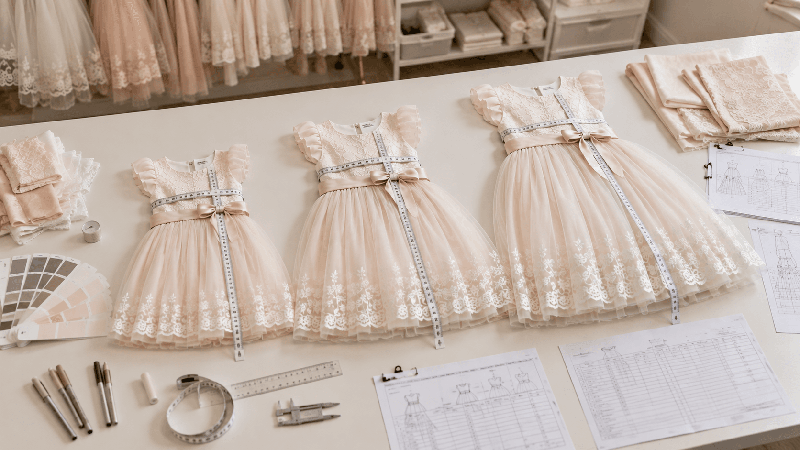
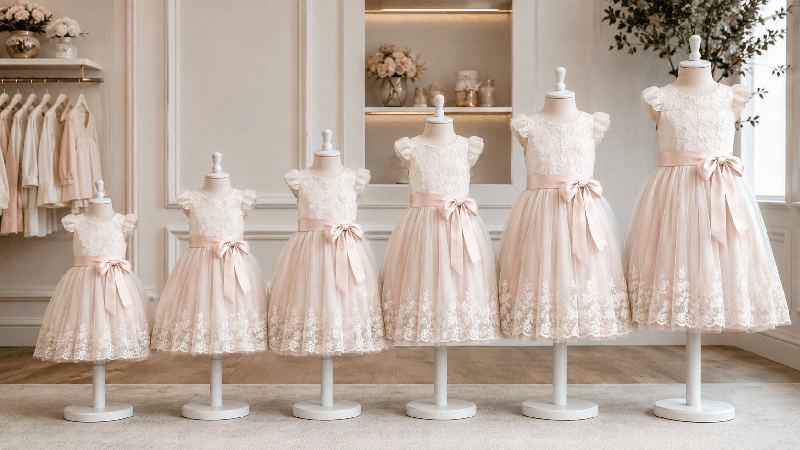
In many kidswear categories, middle sizes—especially those covering roughly ages 4–8—tend to see steadier demand. But there is no universal best-selling size. What sells fastest depends on the product, target age group, market, and customer base.
For buyers, the goal is not to find one “perfect” size. It is to build a size range that matches what their customers are actually buying.
Which Kids’Clothing Sizes Usually Sell Best?
The middle of a children’s size range often sees more consistent demand than the smallest or largest sizes. This is common in dresses, occasionwear, and many everyday kidswear categories.
A general buying pattern may look like this:
| Age Group | Common Size Range | Buying Consideration |
|---|---|---|
| Baby | 0–24 months | Demand varies significantly by product type |
| Toddler | 2–4 years | Important for dresses and occasionwear |
| Kids | 4–8 years | Often a core range across many categories |
| Older Kids | 8–12+ years | Important for brands serving a wider age range |
These ranges are a starting point, not a fixed rule. A store focused on preschool clothing will naturally need a different size assortment from one selling formal dresses for children up to 12 years old.
Best-Selling Sizes Depend on the Product
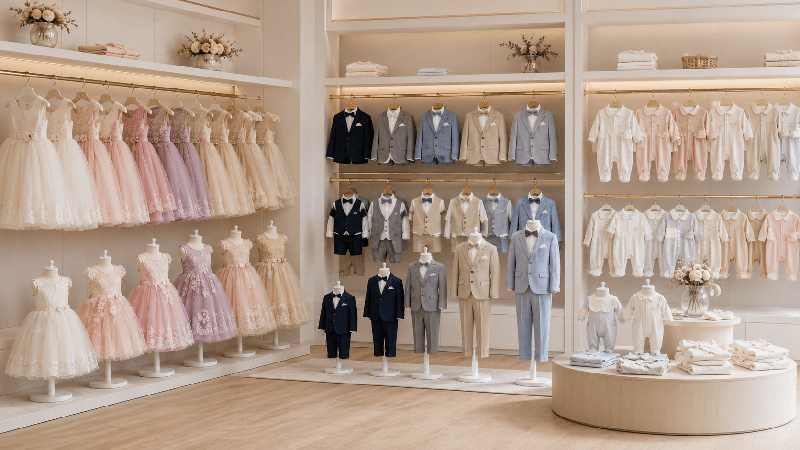
Using the same size mix across every product category rarely works well. Children’s clothing is bought for different ages, occasions, and purposes, so demand can shift noticeably from one category to another.
Girls’Dresses
For girls’ party dresses, flower girl dresses, and other occasionwear, sizes covering roughly ages 4–8 often make up an important part of the collection.
The occasion can change the size mix. A flower girl collection, for example, may need to cover both toddlers and older children because wedding parties often include girls of different ages. Party and formal dress collections may also need larger sizes for school-age girls.
Keeping a complete size run while adding more depth to proven core sizes is usually more practical than concentrating too heavily on only one or two sizes.
Boys’Formalwear
Boys’ suits and formal outfits can follow a different pattern. Weddings, baptisms, First Communion, birthdays, and other events do not always serve the same age group.
A wedding-focused collection may therefore need a broader size range, while a business specializing in toddler formalwear can concentrate more heavily on younger sizes. The size mix should follow the occasions the store actually serves rather than simply copying the ratio used for girls’ clothing.
Babywear
Babywear needs a different approach again. Newborn sizes may seem like the obvious priority, but babies grow quickly, and many customers deliberately choose a larger size so the clothing can be worn for longer.
For newborn gift sets and babywear collections, carrying several age ranges is often more useful than putting most of the stock into the smallest size.
How Should Buyers Plan a Size Mix?
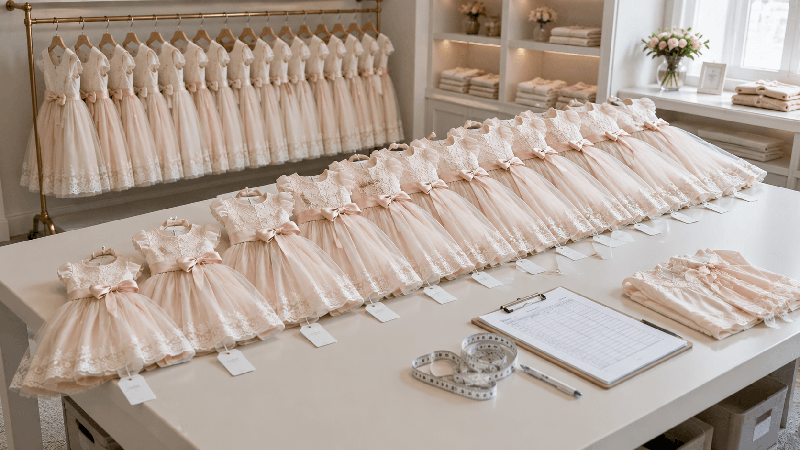
Ordering exactly the same quantity in every size is simple, but it is not always the most practical way to build a first wholesale order.
A better starting point is to keep a complete size range while placing more depth in the sizes expected to sell most often.
| Size Group | First-Order Approach |
|---|---|
| Smallest sizes | Start with a smaller test quantity |
| Core sizes | Keep more stock for regular demand |
| Larger core sizes | Increase quantities where customer demand supports them |
| Largest sizes | Keep enough to maintain a complete size range |
There is no fixed kidswear size ratio that works for every collection. The right mix depends on the product, target age group, and market.
Without previous sales data, a relatively balanced first order is a sensible place to start. After the first selling cycle, buyers can adjust future orders around the sizes that actually moved faster. This creates a more reliable children’s clothing size assortment than simply copying the same ratio from another product or market.
Why Size Demand Changes by Market
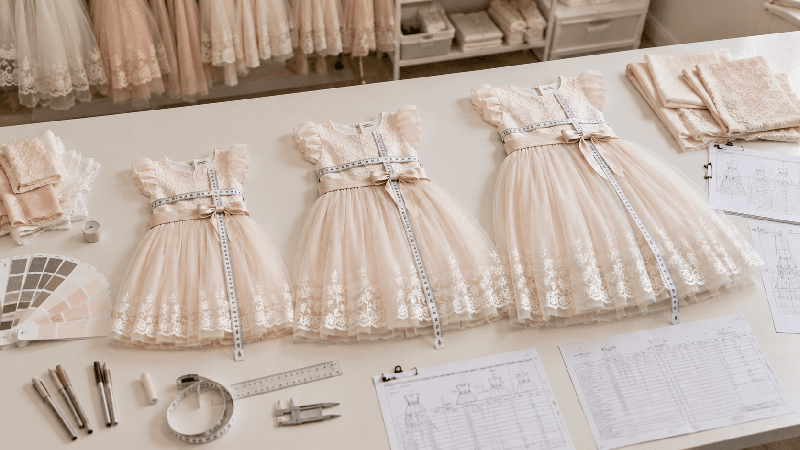
Children of the same age do not always wear the same clothing size. Sizing standards, body measurements, preferred fit, and buying habits can vary between markets. International references such as ISO clothing sizing standards also use body measurements as an important basis for size designation.
Climate and occasion also influence demand. A store selling lightweight party dresses in a warm market may have a different customer profile from one focused on Communion and wedding seasons in Europe.
Age labels alone are therefore not enough when sourcing internationally. Actual garment measurements and the supplier’s size chart should also be checked before an order is placed.
Buyers selling into the U.S. should also check applicable children’s product requirements alongside sizing and fit.
Common Size Planning Mistakes
Buying too heavily into one size.
A strong-selling size may justify extra stock, but relying too heavily on it can leave the rest of the range incomplete.
Using one size ratio for every product.
A baby gift set, flower girl dress, and boys’ suit are unlikely to follow exactly the same sales pattern.
Ignoring the smallest and largest sizes.
These sizes may move more slowly, but removing them entirely can mean losing customers who fall outside the core range.
The aim is to balance sales speed with enough size coverage to serve the target customer.
Use Sales Data to Improve Your Next Order
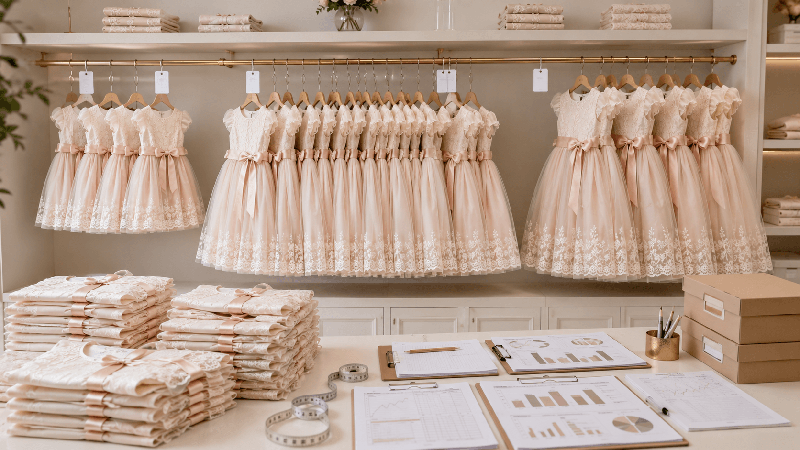
The first order does not need to predict demand perfectly. Its real value is showing which sizes customers actually choose.
Track which sizes sell first, which ones receive repeat requests, and which remain in stock. The next order can then be adjusted style by style instead of applying one standard ratio across the whole collection.
This is especially useful when testing new products. Two dresses aimed at the same age group can still produce different size patterns, so actual sales are usually a better guide than assumptions.
FAQ
What is the most popular size in children’s clothing?
There is no universal best-selling size, although middle sizes often see steady demand. The strongest sizes depend on the product category, target age group, and market.
What sizes should a children’s clothing store stock?
A store should carry a size range that reflects its main customer age group. Core sizes can be stocked in greater depth, while smaller quantities can be used at the two ends of the range.
How many pieces of each size should I order?
If you do not have previous sales data, start with a relatively balanced size mix rather than concentrating most of the order in one or two sizes. Adjust later orders according to actual sales.
Do children’s clothing sizes vary between countries?
Yes. Age labels, garment measurements, and sizing standards can vary between markets and suppliers. Always check the size chart and actual measurements before ordering.
Build a Size Mix That Fits Your Market
A strong size assortment is less about finding one “best” size and more about stocking the right depth across the sizes your customers actually buy. Start with a sensible range, track sales, and adjust future orders accordingly.
Outong supplies girls’ dresses, boys’ clothing, babywear, and occasionwear for wholesale buyers. We support both ready-stock and custom orders with multiple size options for different markets.
Looking for children’s clothing for your next collection? Contact us for our latest catalog, available size ranges, and wholesale options.