
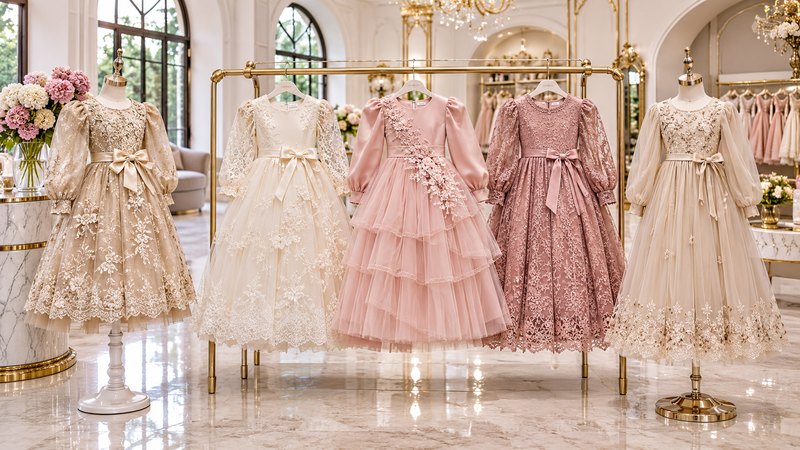
Wholesale girls’ Eid dresses organized for retail inventory preparation and delivery
For children’s clothing retailers, Eid is an important occasion to introduce new dresses, refresh seasonal collections, and attract customers looking for something special. But a successful collection depends on more than attractive designs. The dresses must also arrive in time for customers to buy them.
Eid al-Fitr 2027 is expected around March 9–10, subject to local moon sightings. With Chinese New Year falling on February 6, retailers sourcing from China need to pay particular attention to factory schedules and shipping arrangements.
This 2027 Eid dresses wholesale buying guide explains when to start sourcing, how to select suitable styles, and what to check before placing bulk orders. It is designed for children’s boutiques, importers, brand owners, and online retailers preparing their spring collections.
1. Why Early Planning Matters for Eid Dresses Wholesale
Eid 2027 Retail Demand
Eid shopping often includes new outfits for family visits, gatherings, and celebrations. For girls, this can mean anything from comfortable embroidered dresses to more elaborate occasion gowns.
Retailers serving Middle Eastern markets often look for modest silhouettes, refined details, and colors suitable for festive occasions. However, preferences vary between countries, age groups, and price segments. A boutique selling premium occasionwear may need a different assortment from a retailer focused on practical family clothing.
The challenge is timing. Unlike everyday clothing, Eid collections have a relatively short selling window. If stock arrives too late, retailers may have limited opportunities to sell it at the intended price.
Avoid Last-Minute Production Delays
Late sample approvals, fabric changes, and limited factory capacity can disrupt seasonal orders.
During the 2025 peak season, Outong Fashion experienced scheduling pressure when workforce losses and overlapping orders reduced available capacity at a cooperating factory. Some delivery arrangements were affected, requiring discussions with customers about compensation, revised options, or refunds.
That experience reinforced the importance of confirming production capacity before accepting time-sensitive orders. We now encourage buyers to review new collections earlier, finalize samples promptly, and avoid leaving major design decisions until production is about to begin.
For retailers, the practical lesson is simple: a quoted production lead time is not the same as a confirmed delivery schedule.
2. Your 2027 Eid Dress Buying Calendar
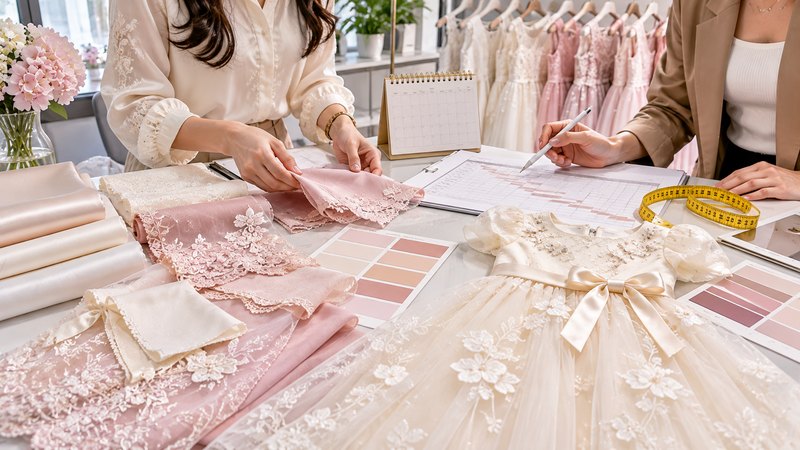
2027 Eid Buying Timeline
For custom wholesale Eid dresses, supplier research should ideally begin in late summer or early autumn 2026. This allows time for design development, sample revisions, fabric confirmation, and production planning.
The following calendar provides a practical framework for retailers preparing for Eid al-Fitr 2027.
| Planning period | Recommended action | What to confirm |
|---|---|---|
| Aug–Sep 2026 | Research suppliers and select styles | MOQ, customization, sample requirements |
| Oct–Nov 2026 | Develop and review samples | Fit, fabrics, colors, decorations |
| Late Nov–Early Dec 2026 | Finalize custom orders | Approved samples, quantities, production slots |
| Dec 2026–Jan 2027 | Production and quality inspections | Progress, specifications, dispatch dates |
| Jan–Feb 2027 | Shipping and inventory preparation | Customs, receiving, photography, listings |
| Before Mar 2027 | Launch Eid collections | Stock availability and merchandising |
These are recommended planning periods, not guaranteed deadlines. Buyers using ocean freight, complex embroidery, or multiple customized styles may need to confirm orders earlier.
The early February 2027 Chinese New Year holiday is another important consideration. Factory closures, workforce availability, and logistics schedules can affect production and dispatch. Retailers should confirm their supplier’s actual holiday arrangements before finalizing delivery expectations.
Work Backward from Your Launch Date
Instead of starting with the holiday date, begin with the day your collection needs to be available for sale.
For example, a retailer planning a February launch should first establish the required warehouse arrival date. From there, allow time for customs clearance, international shipping, final inspection, production, and sample approval.
A practical sequence is:
- Set your store launch date. Allow time for product photography, listings, and merchandising before customers begin shopping.
- Confirm shipping and customs requirements. Ask your freight forwarder for a realistic transit estimate, including possible delays.
- Reserve production and sampling time. Confirm the factory’s available capacity, approved specifications, and expected dispatch date.
This backward-planning method is particularly useful for customized Eid collections, where a delayed sample decision can affect every later stage.
Custom Orders vs. Ready-Stock Dresses
Custom production offers greater control over fabrics, colors, sizing, labels, and decorative details. However, it requires more planning than purchasing available inventory.
At Outong Fashion, customized orders generally start from 240 pieces per color per style. Standard sample development takes approximately 10 working days, while bulk production typically takes around 45 days after the deposit is received.
For 2027 Eid collections, we recommend completing custom sample approval by early December 2026 and, where possible, confirming bulk orders by late November or early December. Orders placed later require individual production and shipping assessments.
Ready-stock orders start from 30 pieces per style, subject to availability. They follow a shorter process of stock confirmation, quality checking, packing, and dispatch. A 3–4 week purchasing window may be possible for some destinations and shipping methods, but it should not be treated as a universal guarantee.
Retailers comparing these options should consider design flexibility, minimum order quantities, and delivery risks. Our guide to Ready Stock vs. Custom Kidswear explains the key differences and helps buyers choose a suitable sourcing approach.
3. Choose the Right Wholesale Eid Dresses for Girls
Select Dress Lengths by Age
Dress length is one of the first details retailers should consider when planning an Eid collection.
From our experience working with Middle Eastern buyers, below-knee and mid-calf dresses are commonly requested for girls’ occasionwear. These lengths provide a modest appearance while remaining practical for many daytime celebrations.
Ankle-length dresses are another option for formal gatherings, weddings, and evening occasions. For younger children, garment weight, ease of movement, and comfortable openings deserve particular attention.
Retailers should check actual garment measurements rather than relying only on age labels. Our Flower Girl Dress Size Guide explains additional considerations when selecting dress sizes.
Fabrics, Colors, and Details
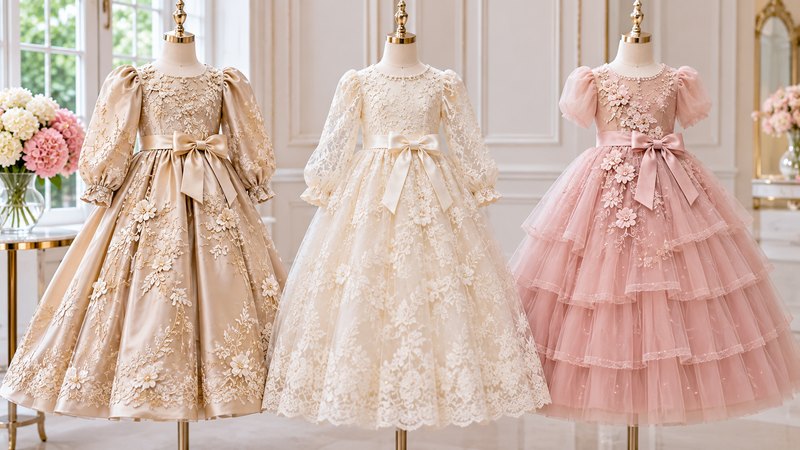
Champagne, ivory, blush pink, and dusty pink are among the colors frequently requested by Outong Fashion’s Middle Eastern customers.
For decoration, buyers often choose embroidery, lace, bows, waist ties, and carefully placed sequins. The preferred appearance is generally refined rather than excessively embellished, although individual markets and customers may differ.
Fabric selection should support both the design and the child’s comfort. Satin can create a more structured appearance, while tulle adds skirt volume. Lace and embroidery provide decorative interest, but the lining, seams, and garment weight still need careful evaluation.
Retailers ordering light-colored dresses should also examine physical samples under suitable lighting. Ivory and champagne fabrics can appear different depending on the material, lining, and lighting conditions.
When evaluating fabric quality, retailers can refer to OEKO-TEX for information about textile testing and certification, particularly when sourcing children’s clothing for markets with specific material requirements.
Balance Everyday and Formal Dresses
A well-planned Eid collection does not need to consist entirely of elaborate gowns.
Some customers prefer dresses that can be worn again for birthdays, weddings, or family gatherings. Others may look for statement pieces with fuller skirts, embroidery, and decorative details.
Retailers can organize their assortment around these different needs, using previous sales records to determine which sizes, colors, and styles deserve larger quantities.
Our Girls’ Clothing Collection provides examples of different dress silhouettes and occasionwear styles.
4. How to Choose a Reliable Eid Dress Supplier
Compare MOQ and Customization Options
When evaluating an Eid dress supplier, price is only one part of the decision.
Retailers should confirm minimum order quantities, sampling procedures, available fabrics, labeling options, and production schedules. It is also important to understand whether the supplier offers ready-stock wholesale, OEM development, or ODM design support.
For brands developing their own collections, private labeling may be especially relevant. Buyers should clarify which design elements can be customized and whether changes affect MOQ, sampling costs, or lead times. Our guide to Private Label vs. White Label Kidswear explains the differences and helps retailers choose the right branding approach.
A supplier’s experience with children’s occasionwear is also worth reviewing. You can learn more about Outong Fashion’s manufacturing background and our approach to children’s clothing production.
Approve Final Dress Details
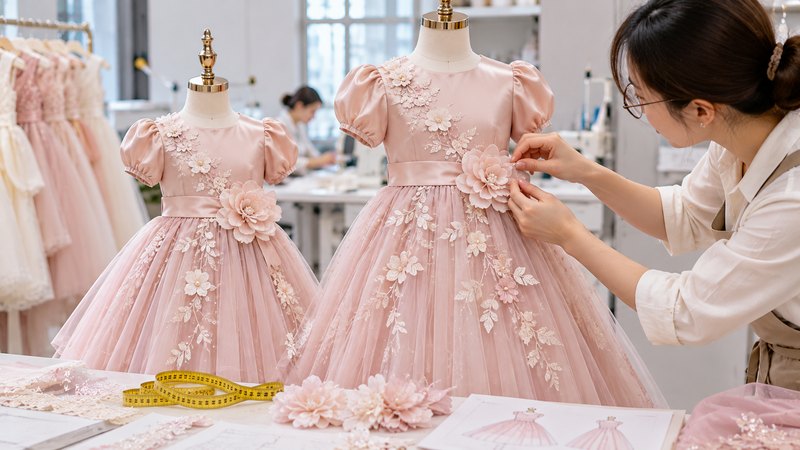
Even small design details can look different across a full size range.
In one Outong Fashion order, a customer noticed before bulk production that a waist flower appeared too large on a smaller dress size. The original decoration had been applied without sufficient adjustment for the smaller garment proportions.
After reviewing the issue, our team adjusted the flower size and recorded the revised requirement for production.
This experience highlights a detail that buyers sometimes overlook: decorative components should be evaluated in relation to garment size, not only on the main sample.
Before bulk production, retailers should approve the final sample, measurement chart, fabric, and color references. Any changes to flowers, bows, embroidery, or skirt volume should be documented clearly.
5. Check Wholesale Eid Dress Quality
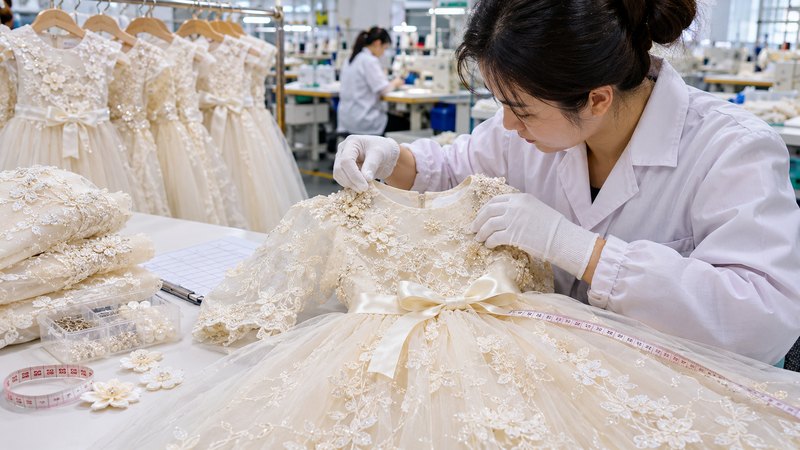
Inspect Comfort, Fit, and Construction
A dress that looks attractive in a catalog may still require adjustments before bulk production.
For girls’ occasionwear, important checks include lining softness, neckline comfort, sleeve openings, skirt weight, and decorative attachment strength. These details affect how the garment feels and performs during wear.
At Outong Fashion, color differences, measurement deviations, and inconsistent skirt fullness are among the issues we pay particular attention to during production checks.
Retailers should also confirm applicable product safety requirements in their destination markets. For buyers sourcing children’s clothing for the United States, the U.S. Consumer Product Safety Commission provides guidance on relevant safety regulations and compliance requirements.
Pre-Production Quality Checklist
Before approving bulk production, buyers should make sure the following details match the agreed specifications.
| Quality checkpoint | What to verify |
|---|---|
| Fabric and color | Approved fabric, shade, and material consistency |
| Measurements | Dress length, waist size, and size grading |
| Comfort | Lining softness, seam finishing, neckline fit |
| Decorations | Placement, proportions, and attachment strength |
| Construction | Skirt fullness, stitching, and garment weight |
| Labels and packaging | Required information and agreed presentation |
A clear production specification sheet helps both buyers and manufacturers identify differences before they become larger problems.
For children’s clothing, applicable labeling, chemical, and small-component requirements should be checked according to the destination market and product category.
6. Plan Pricing, Inventory, and Delivery
Calculate Your Total Landed Cost
Wholesale price alone does not determine whether an Eid dress will be profitable.
Retailers should calculate the full landed cost, including garment price, packaging, freight, applicable duties, taxes, and local handling charges.
Custom embroidery, additional fabric layers, and decorative accessories can also affect manufacturing costs. Comparing these expenses against the expected retail price helps buyers choose designs that fit their target market.
Manage Seasonal Inventory
Because Eid collections have a limited selling period, retailers should be careful about overordering styles that may be difficult to sell afterward.
Previous sales data can help determine suitable size ranges, color quantities, and the balance between everyday dresses and formal gowns.
Ready-stock purchasing may offer more flexibility for smaller boutiques, while custom manufacturing provides greater control over branding and collection design.
However, retailers should not assume that popular styles can always be replenished before Eid. Availability, production capacity, and transportation time may limit last-minute options.
Prepare for Delivery and Launch
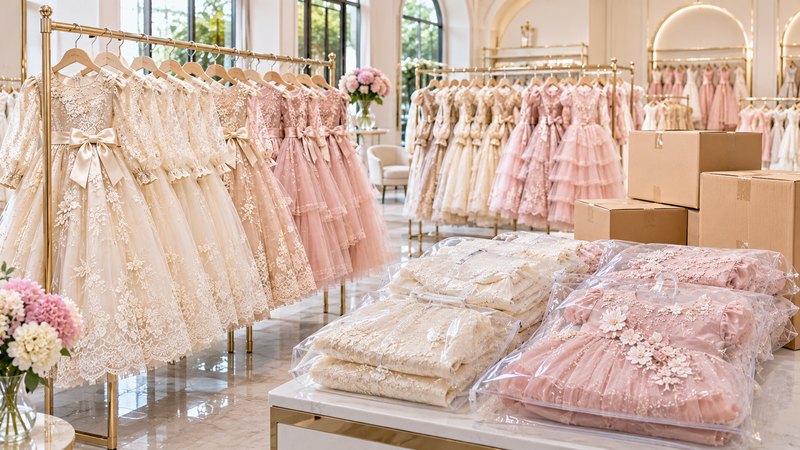
Before shipment, confirm the final inspection arrangements, packing requirements, shipping documents, and estimated arrival date.
Retailers should also prepare product photography, online listings, and store displays while orders are being completed.
This allows the collection to reach customers soon after inventory arrives rather than losing valuable selling time to unfinished marketing materials.
7. Frequently Asked Questions
When Should Retailers Order Eid Dresses for 2027?
For custom collections, sourcing should ideally begin in late summer or autumn 2026, with sample approval and order confirmation targeted for late November or early December. Buyers should confirm shipping and factory schedules individually, especially when using ocean freight.
What Is the MOQ for Wholesale Eid Dresses?
MOQ varies by supplier and order type. At Outong Fashion, ready-stock orders start from 30 pieces per style, while custom production starts from 240 pieces per color per style.
Which Dress Styles Work Best for Eid?
Below-knee, mid-calf, and ankle-length dresses are common options for modest occasionwear. Soft colors, embroidery, lace, and comfortable lining may also appeal to many buyers, depending on their market.
Can Retailers Customize Eid Dresses with Their Own Labels?
Yes. Manufacturers offering OEM/ODM and private-label services may support custom labels, fabrics, colors, and design details. Retailers should confirm available options and minimum quantities before sampling.
How Can Buyers Avoid Late Deliveries?
Approve samples early, confirm factory capacity, document all design changes, and allow sufficient time for production, shipping, and customs clearance. Seasonal orders should also account for factory holidays and possible logistics disruptions.
Conclusion
Preparing a successful Eid dress collection requires more than selecting attractive styles. Retailers need a realistic buying calendar, carefully approved samples, suitable product assortments, and clear communication with manufacturers.
For Eid 2027, early March celebrations and February factory holidays make advance planning particularly important. Buyers who confirm their requirements early and monitor production milestones can reduce avoidable sourcing risks and prepare their collections with greater confidence.
Source Wholesale Eid Dresses with Outong
Since 1999, Outong Fashion has specialized in children’s clothing manufacturing, offering OEM/ODM, private-label production, and ready-stock wholesale. Our collections include girls’ Eid dresses, embroidered party dresses, and customizable occasionwear.
Planning your 2027 Eid collection? Share your preferred styles, quantities, and delivery destination with our team to explore suitable designs, MOQ options, and realistic production timelines.
Contact Outong to request our latest dress catalog and discuss your sourcing needs.