
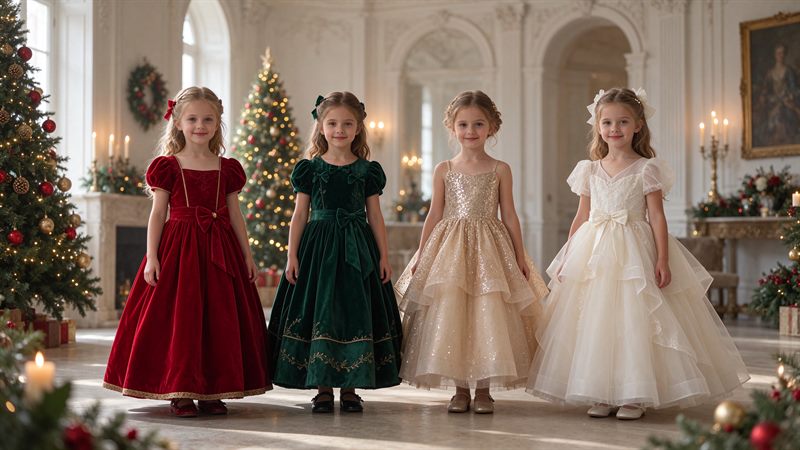
Christmas is a key seasonal selling opportunity for children’s clothing retailers. But which Christmas dresses for girls should you include in your collection? From classic velvet styles to sparkling sequin dresses and layered tulle gowns, each design offers different opportunities for your target market. Drawing on our experience manufacturing children’s clothing since 1999, we’ll explore 10 styles worth considering, compare fabric options, and share practical quality checks to help retailers plan their holiday collections.
1. What Makes a Christmas Dress Popular?
A successful Christmas dress combines festive appeal, comfortable construction, and practical design. Retailers should consider what their customers want for family gatherings, school celebrations, Christmas parties, and other winter occasions.
Red, emerald green, burgundy, gold, and ivory are useful colors for holiday collections. Velvet creates a rich winter look, tulle adds volume, and satin provides an elegant finish.
A balanced collection should include statement dresses alongside versatile designs that customers can wear for birthdays and other winter celebrations. Retailers planning their next seasonal collections can also explore our guide to 2027 Kids’ Dress Trends for more ideas on colors, silhouettes, and decorative details.
2. 10 Christmas Dress Styles
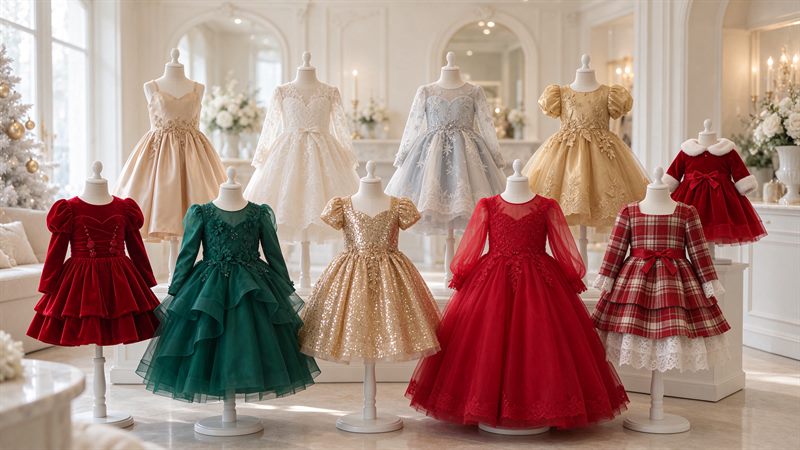
Red Velvet Christmas Dresses
Red velvet dresses are classic choices for Christmas collections. Their rich texture and traditional color make them suitable for family photographs, holiday dinners, and formal celebrations.
Retailers can consider long-sleeve designs, embroidered bodices, and A-line silhouettes. Pay attention to fabric softness, thickness, and color consistency when selecting velvet styles.
Retailer Tip: Choose classic silhouettes that customers can also wear for other winter occasions.
Green Velvet Party Dresses
Emerald, forest green, and dark green offer elegant alternatives to traditional Christmas red. These shades work well with gold embroidery, decorative buttons, and subtle bows.
Green velvet can complement a red-focused collection and provide customers with more color choices. Different silhouettes can also help retailers create a more varied product range.
Retailer Tip: Consider offering complementary designs rather than stocking too many similar styles.
Sequin Christmas Dresses
Sequin dresses add sparkle to Christmas parties and evening celebrations. Gold, silver, champagne, and red are useful choices for festive occasionwear.
Buyers should inspect how sequins are attached and check the inner finishing for uncomfortable areas. From our production experience, sequin shedding can be difficult to eliminate completely because it depends partly on fabric construction and attachment methods. Physical sample inspection is important before approving bulk production.
Retailer Tip: Check decoration attachment and inner comfort before confirming a large order.
Tulle Princess Dresses
Layered tulle dresses create the full princess silhouette popular in girls’ partywear. They can feature traditional Christmas colors, neutral shades, embroidered bodices, and decorative waist details.
Retailers should evaluate skirt fullness, layer distribution, lining, and fabric weight. Adding more layers does not automatically create a better silhouette because the overall construction needs to remain balanced.
For more information about skirt shapes, explore our guide to A-Line vs. Ball Gown Dresses for Girls.
Retailer Tip: Compare complete physical samples rather than judging skirt fullness from photographs alone.
Plaid Christmas Dresses
Red and green plaid dresses create a traditional holiday appearance. They are suitable for school celebrations, family gatherings, and seasonal photographs.
Consider Peter Pan collars, gathered skirts, and simple decorative bows. Classic plaid patterns may also remain wearable during the wider winter season, giving retailers more opportunities to sell these designs after Christmas.
Retailer Tip: Choose versatile patterns rather than designs with overly specific Christmas graphics.
Satin Christmas Party Dresses
Satin dresses offer a smooth surface and elegant appearance. Burgundy, champagne, ivory, and deep red are suitable choices for formal Christmas collections.
Check the fabric’s appearance under different lighting conditions. The lining should feel comfortable, and seams should be neatly finished to maintain the overall appearance.
Retailers can also explore our guide to Satin vs. Tulle when comparing occasionwear fabrics.
Retailer Tip: Confirm physical color swatches before bulk production, especially for champagne and ivory shades.
Lace Christmas Dresses
Lace dresses combine delicate textures with a formal appearance. Lace overlays, embroidered bodices, and decorative sleeves work well for Christmas dinners and special family occasions.
The inner construction is important because lace may feel uncomfortable against children’s skin without suitable lining. Buyers should check pattern consistency and ensure that decorative edges are neatly finished.
Retailer Tip: Check lining coverage and lace finishing before approving the sample.
Long-Sleeve Christmas Dresses
Long-sleeve dresses are practical options for winter celebrations, particularly in colder markets. They can combine velvet, satin, lace, or tulle with different bodice and skirt designs.
Retailers should check sleeve openings, armhole construction, and neckline comfort. A well-designed dress should allow children to sit, move, and play without unnecessary restrictions.
Retailer Tip: Check sleeve width and armhole proportions on the physical sample.
Gold and Champagne Holiday Dresses
Gold and champagne dresses provide alternatives to traditional Christmas red and green. They create an elegant appearance for holiday dinners, winter parties, and other formal occasions.
Subtle metallic finishes, embroidery, and layered skirts can add visual interest without relying on heavy Christmas decorations. These designs may also suit New Year celebrations and other winter events.
Retailer Tip: Consider these colors when developing collections intended to sell beyond Christmas.
Baby Christmas Dresses
Baby Christmas dresses are another category retailers can include in seasonal collections. Soft fabrics, gentle linings, and simple decorative details are particularly important for infants and toddlers.
Check neckline construction, fastening methods, and the security of bows or other decorations. Practical designs should make dressing easier while keeping unnecessary details away from sensitive areas.
Retailer Tip: Prioritize comfortable inner layers, easy dressing features, and securely attached decorations.
3. Best Fabrics for Christmas Dresses
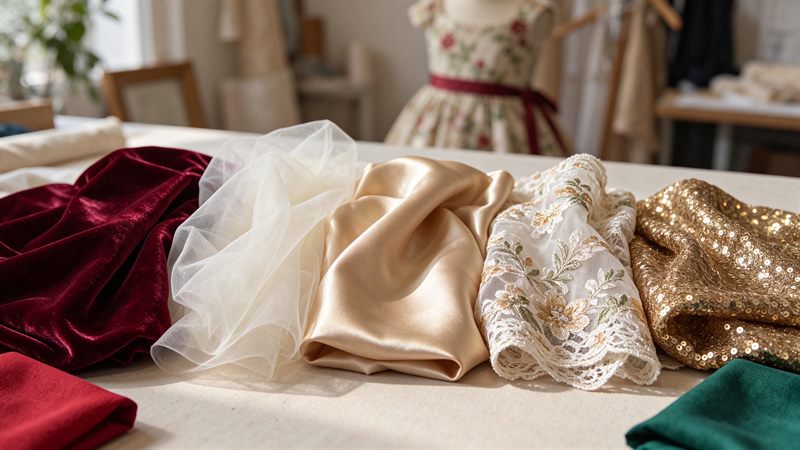
Different fabrics create different visual effects and construction requirements. Retailers should match fabric choices to the intended design, target customers, and finished garment quality.
Velvet works well for classic winter styles because of its rich texture. Buyers should check softness, thickness, and color consistency before confirming the material.
Tulle is ideal for princess dresses and layered skirts. The number of layers, lining, and fabric weight all influence the finished skirt shape.
Sequins add shine to party dresses, while satin creates a smooth and elegant finish. Lace is suitable for delicate designs, but its pattern, lining coverage, and edge finishing require careful attention.
In our production process, we pay special attention to layered tulle skirts after steaming. Multiple layers can settle during finishing, affecting the overall length and silhouette. For this reason, the finished garment should be measured again after steaming rather than relying only on measurements taken before pressing.
Retailers comparing decorative fabrics can also read our guide to Tulle vs. Organza.
4. Christmas Dress Quality Checks
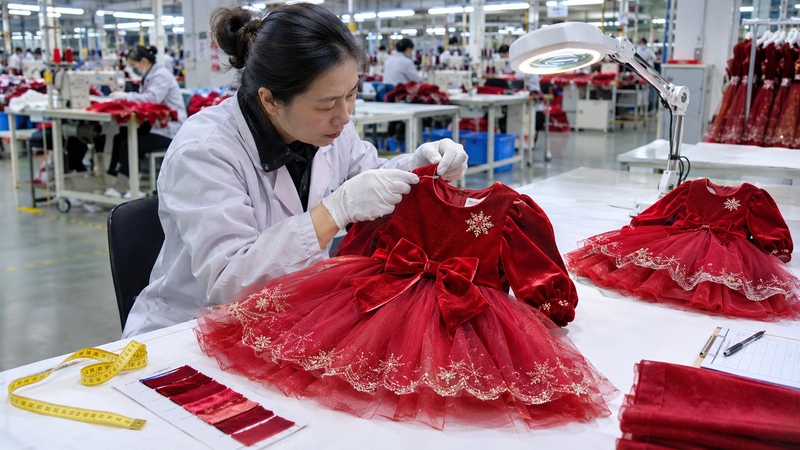
A dress may look attractive in photographs but still have problems that become noticeable during bulk production. Buyers should review fabric consistency, inner construction, finished measurements, and decorative details before approving an order.
Fabric Color and Batch Consistency
Different fabric batches may show slight color variations, even when suppliers use the same color reference. This is particularly important for Christmas red, burgundy, and emerald green, where visible differences can affect the appearance of an entire collection.
We recommend confirming physical fabric swatches and, whenever possible, using material from the same batch for bulk production. This helps maintain more consistent colors across different garments.
Lining and Seam Comfort
Check the inner lining, neckline, armholes, and waist seams. Smooth inner construction and properly finished seams are particularly important for younger children.
Buyers should also inspect whether decorative materials or stitching create rough areas inside the garment. For applicable U.S. clothing requirements, refer to the CPSC’s Clothing Business Guidance. Comfort is equally important when selecting occasionwear for younger children. Retailers can learn more about fabric choices, garment construction, and comfortable designs in our guide to Comfortable Party Dresses for Girls.
Skirt Fullness and Finished Length
Inspect skirt symmetry, layer distribution, and overall fullness. For layered tulle dresses, the finished silhouette should match the approved sample.
As mentioned earlier, steaming can affect how tulle layers settle. The finished garment should be measured again after pressing to maintain consistency with the approved measurements.
Embellishment and Workmanship
Inspect sequins, flowers, bows, and decorative trims for secure attachment. Check stitching consistency, loose threads, and uneven decoration placement.
The approved sample should serve as the reference when comparing bulk production. Buyers should pay attention to both the appearance and construction of the finished garments.
5. Girls’ Christmas Dress Size Guide
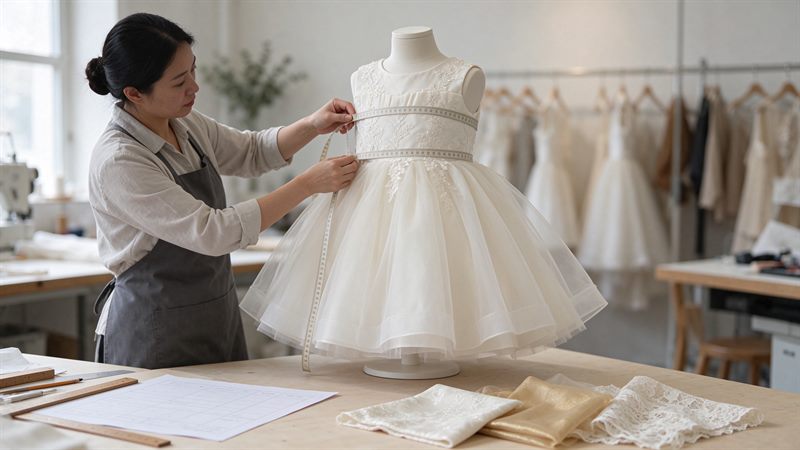
Age alone cannot determine the correct dress size. Children of the same age may have different body measurements, so retailers should not rely only on age labels when planning their size ranges.
Before placing an order, retailers should confirm four important measurements:
- Chest circumference for bodice fit.
- Waist circumference for fitted designs.
- Shoulder-to-waist measurement for bodice proportions.
- Finished dress length for the intended silhouette.
For full-skirt dresses, the bodice fit and skirt length should be evaluated separately. If you are developing a private-label collection, provide your manufacturer with an approved size chart before sampling. When sourcing fabrics for children’s clothing, buyers can also review OEKO-TEX STANDARD 100 to learn more about textile testing for harmful substances.
6. Christmas Dress Buying Guide
Choose a Balanced Product Range
A Christmas collection does not need to contain only red and green dresses. Combine traditional festive styles with burgundy, champagne, ivory, and versatile winter colors.
Balance statement dresses with simpler party styles that customers may wear for birthdays and family celebrations. This approach can help retailers serve different customer preferences without making the collection unnecessarily complicated.
Plan Seasonal Orders Early
Christmas sourcing involves several stages, including design confirmation, sample approval, fabric selection, material purchasing, and bulk production. Leaving these decisions until the last minute can create pressure on production schedules and material availability.
A practical purchasing schedule should include:
- Design selection: Confirm styles, colors, and target age groups.
- Sample approval: Check fabric, measurements, and workmanship.
- Material confirmation: Confirm colors, fabric batches, and trims.
- Bulk production: Confirm MOQ, quantities, and production schedules.
- Final inspection: Check measurements, stitching, and decorations.
Planning these steps early gives buyers more time to review samples and resolve issues before bulk production begins.
Understand Wholesale MOQ and Lead Time
Before choosing a manufacturer, confirm the minimum order quantity, sampling arrangements, and production schedule. These details help retailers decide whether ready-stock products or custom designs better match their business needs.
At Outong Fashion, our current ordering options include:
- Ready-stock styles: Starting from 30 pieces per style.
- Custom production: Starting from 240 pieces per color and style.
- Sample development: Approximately 10 working days.
- Bulk production: Approximately 45 days after deposit confirmation, subject to order details and production scheduling.
7. Choosing a Christmas Dress Manufacturer
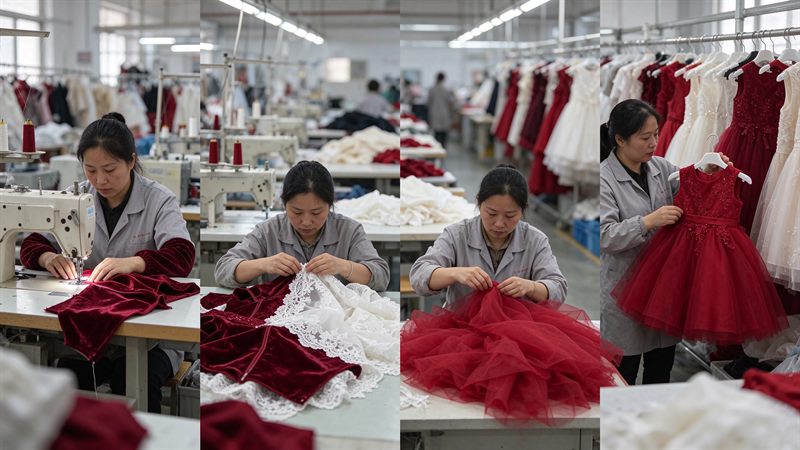
Choosing a manufacturer involves more than comparing unit prices. Buyers should evaluate sampling procedures, production experience, quality control, and the ability to follow specific design requirements.
Before confirming an order, consider asking whether the manufacturer can provide physical samples, follow your size chart, manage fabric color consistency, handle layered skirts and decorative details, and provide custom labels and packaging.
For retailers selling in the U.S. market, understanding applicable clothing labeling requirements is also important. The FTC provides detailed guidance on Clothing, Textiles, and Wool Products, including relevant labeling requirements
At Outong Fashion, we have manufactured children’s clothing since 1999, with experience in girls’ occasionwear, baby clothing, and other children’s apparel categories. Our Guangzhou showroom allows buyers to examine physical samples, fabric textures, lining, skirt fullness, and construction details before making purchasing decisions.
We also support OEM, ODM, and private-label projects. Retailers developing their own Christmas collections can discuss designs, materials, branding, and size specifications with our team. For more information, read our guide to Private Label vs. White Label Kidswear.
8. Frequently Asked Questions
Q1. What Are the Most Popular Christmas Dress Colors for Girls?
Red and green remain classic festive choices. Burgundy, gold, champagne, and ivory offer additional options for retailers developing versatile winter collections.
Q2. What Fabrics Are Best for Girls’ Christmas Dresses?
Velvet works well for winter styles, while tulle creates fuller princess silhouettes. Satin and lace suit elegant occasionwear, and sequins add decorative shine. The best choice depends on the design, comfort requirements, and construction.
Q3. When Should Retailers Order Christmas Dresses?
Retailers should begin seasonal sourcing several months before Christmas. This allows sufficient time for design confirmation, sampling, fabric selection, bulk production, and shipping.
Q4. How Can Retailers Check the Quality of Christmas Dresses?
Inspect fabric consistency, lining, stitching, skirt construction, and decorative attachments. Compare bulk garments with approved samples and confirm measurements after final pressing.
Q5. Can Christmas Dresses Be Worn After the Holiday Season?
Yes. Burgundy, emerald, champagne, and ivory dresses with classic silhouettes can also suit winter birthdays, family gatherings, and other special occasions.
Conclusion
A successful Christmas dress collection should balance festive appeal with comfort, quality, and practical retail value. From velvet and sequins to layered tulle and lace, each style offers different opportunities for children’s clothing retailers.
Before placing bulk orders, review complete samples and confirm fabric, measurements, and construction details. A carefully planned collection can help retailers prepare for seasonal demand while reducing avoidable sourcing risks.
Work with Outong
Outong has been manufacturing children’s clothing since 1999, providing wholesale, OEM, ODM, and private-label solutions for international retailers, brands, and distributors.
Whether you are developing a new Christmas dress collection or sourcing ready-stock girls’ party dresses, our team can help you find suitable styles and discuss your production requirements.
Looking for a reliable children’s clothing manufacturer? Contact Outong today to request our latest catalog and discuss your next collection with our team.