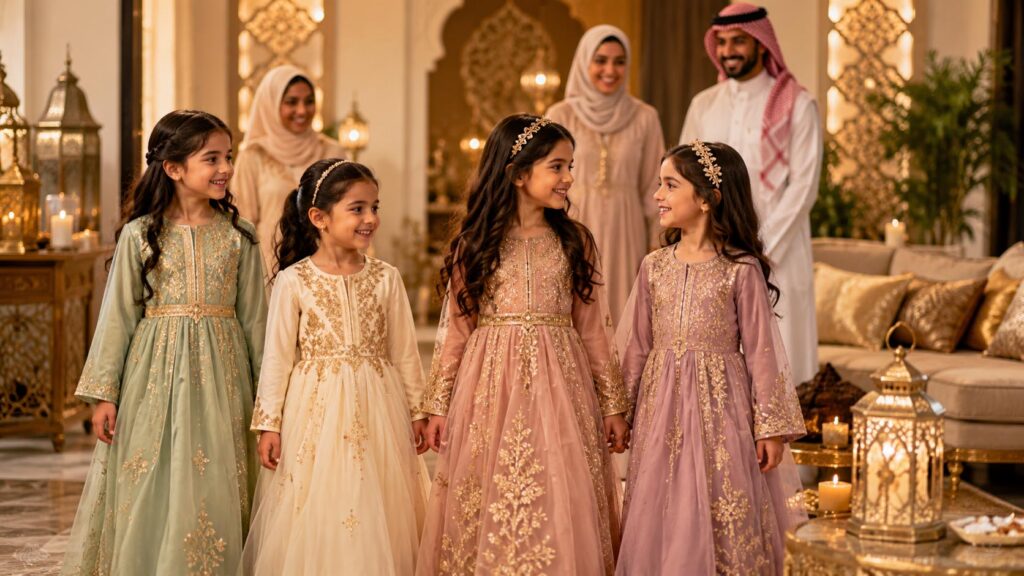
The Middle East has become an important market for Muslim children’s clothing, especially Muslim girls’ dresses, Eid outfits, and modest occasion wear. Across countries such as Saudi Arabia and the UAE, growing demand for premium modest fashion is creating new opportunities for wholesalers, retailers, and children’s brands.
Understanding local preferences, seasonal demand, and product requirements is becoming increasingly important for buyers entering this market.
Understanding the Growing Muslim Kidswear Market in the Middle East
The global modest fashion industry has expanded rapidly over the last few years, and children’s apparel is becoming an increasingly important part of this market.
Middle East countries combine strong family consumption, festival-driven purchasing behavior, and growing demand for premium children’s fashion, creating good opportunities for wholesalers and importers.
The major markets include:
- Saudi Arabia
- UAE
- Qatar
- Kuwait
- Oman
Many retailers and distributors are expanding their collections to include Muslim girls’ dresses, Eid outfits, modest occasion dresses, and luxury children’s wear.
The market is also supported by a relatively young population and frequent family-oriented celebrations, which increase demand for children’s clothing throughout the year.
External Reference: State of the Global Islamic Economy Report
What Makes Muslim Girls’ Dresses Different?
Muslim girls’ dresses are designed to combine modesty, comfort, and elegance.
Compared with standard party dresses, these garments often follow modest fashion principles while maintaining a premium appearance.
Common design features include:
- Longer sleeves for better coverage
- Full-length or longer silhouettes
- Layered skirts and flowing shapes
- Comfortable lining
- Softer construction suitable for children
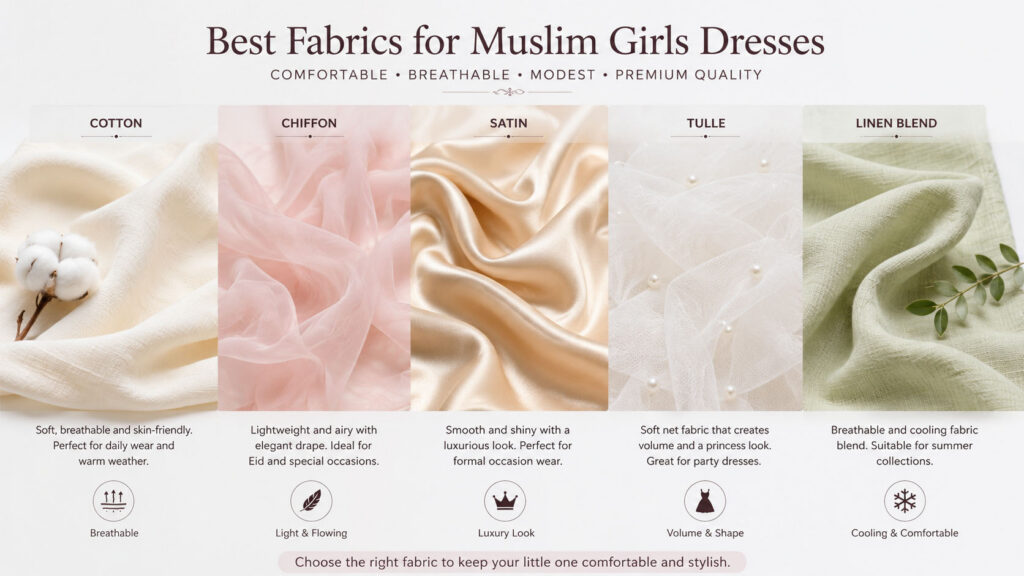
Fabric selection is also important because many Middle East countries have warm climates.
| Fabric | Features | Suitable Products |
|---|---|---|
| Cotton | Breathable and soft | Daily dresses |
| Chiffon | Lightweight | Eid dresses |
| Satin | Elegant appearance | Occasion wear |
| Tulle | Creates volume | Princess dresses |
| Linen blend | Cooling effect | Summer collections |
Decorative elements often include embroidery, pearls, lace trims, sequins, and gold details.
For buyers sourcing occasion dresses, fabric selection directly influences comfort, appearance, and product value.
Related Reading: What Is Tulle Fabric? Why It’s Popular for Girls’ Dresses
Why are Muslim girls’ dresses so popular in the Middle East?
Cultural and Religious Influence
One of the biggest reasons behind the popularity of Muslim girls’ dresses is the cultural preference for modest clothing.
Families often look for outfits that combine: Coverage + Comfort + Elegance
As a result, Muslim girls’ dresses are not limited to religious occasions. They are also widely used for daily wear, celebrations, school activities, and family gatherings.
Festival Demand Creates Strong Seasonal Sales
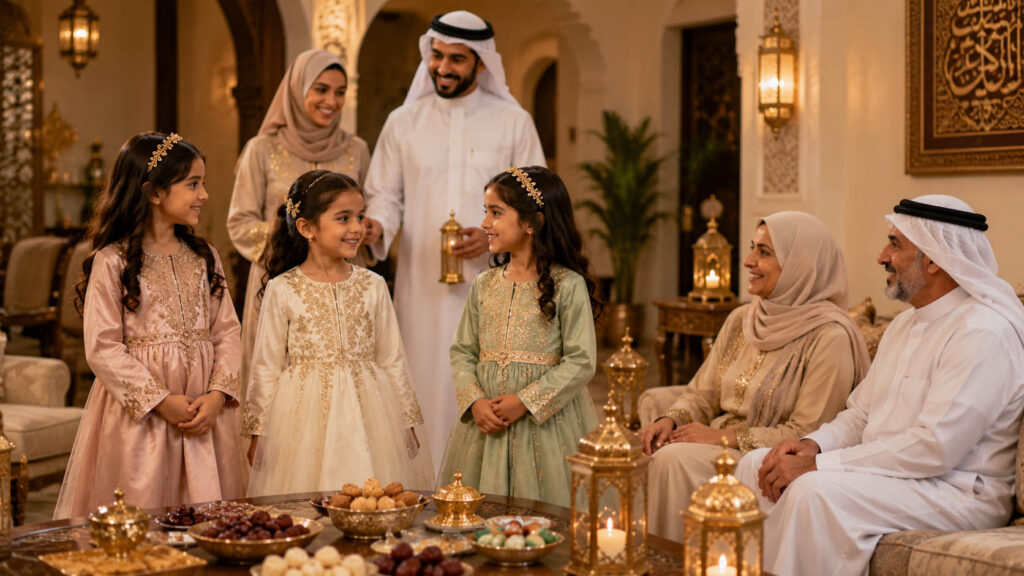
Religious festivals remain one of the biggest sales drivers in the market.
Key seasons include:
- Eid al-Fitr
- Eid al-Adha
- Ramadan gatherings
During these periods, families often purchase new outfits for children, especially premium dresses for celebrations.
Popular products include:
- Eid dresses for girls
- Embroidered occasion dresses
- Luxury modest wear
- Family celebration outfits
According to UNICEF demographic data, the Middle East has a large youth population, supporting long-term growth in children’s products.
External Reference: UNICEF
Rising Demand for Premium Occasion Wear
Muslim girls’ dresses are increasingly used for:
- Weddings
- Family celebrations
- Religious events
- School performances
This trend has created demand for:
Luxury embroidery, layered tulle skirts, pearls, and premium finishing details.
For wholesalers, premium occasion collections usually create higher product value compared with basic daily styles.
Related Reading: Best Fabrics for Flower Girl Dresses
Popular Muslim Girls’ Dress Styles in Middle East Markets
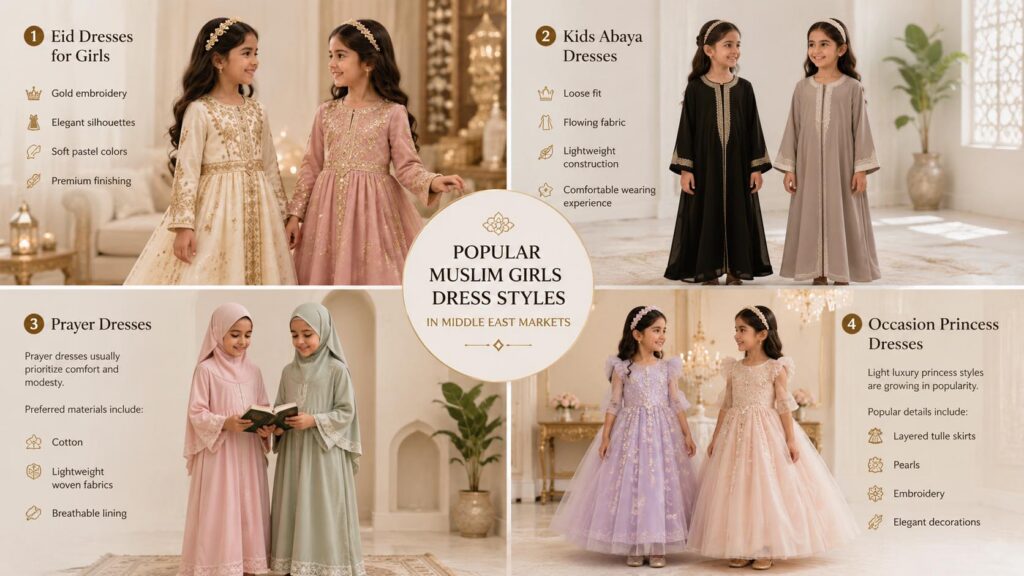
Eid Dresses for Girls
Eid dresses are among the most popular categories.
These collections often feature:
- Gold embroidery
- Elegant silhouettes
- Soft pastel colors
- Premium finishing
Retailers usually prepare Eid collections several months before the season.
Kids Abaya Dresses
Kids’ abayas remain popular in many GCC markets.
Common features include:
- Loose fit
- Flowing fabric
- Lightweight construction
- Comfortable wearing experience
Prayer Dresses
Prayer dresses usually prioritize comfort and modesty.
Preferred materials include:
- Cotton
- Lightweight woven fabrics
- Breathable lining
Occasion Princess Dresses
Modern Middle East markets are also seeing growth in light luxury princess styles.
Popular details include:
- Layered tulle skirts
- Pearls
- Embroidery
- Elegant decorations
Color Trends and Design Preferences in Middle East Markets
Popular colors often include:
- White
- Beige
- Emerald green
- Gold
- Dusty pink
- Navy
Seasonal collections usually move from:
Ramadan → Eid → Winter Luxury Collections → Summer Lightweight Collections
Premium details frequently include hand embroidery, pearls, sequins, and luxury trims.
Our Factory Experience: Different Markets Prefer Different Styles
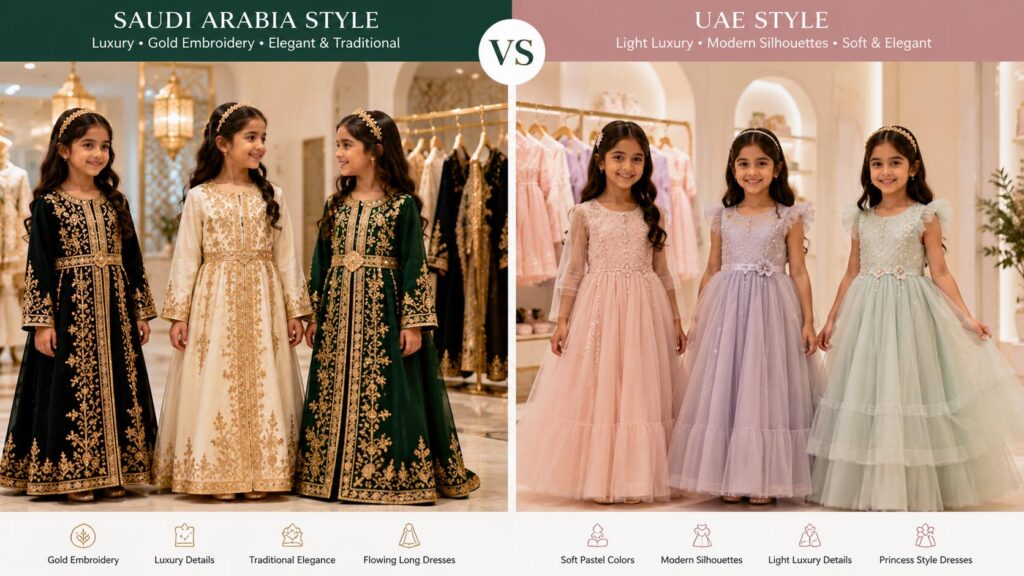
Based on our experience working with Middle East buyers, design preferences often vary between countries.
Saudi Arabia
Saudi buyers frequently prefer:
Gold embroidery long dresses
Popular details include:
- Gold decorations
- Layered skirts
- Elegant silhouettes
- Premium embellishments
These styles are especially common for Eid collections and family celebrations.
UAE
Many UAE buyers prefer:
Light luxury princess styles
Typical characteristics include:
- Softer colors
- Modern silhouettes
- Lightweight fabrics
- Cleaner decoration details
Understanding these differences helps wholesalers create more targeted collections instead of using the same products across all markets.
Factory Observation: Early Eid Planning Helps Avoid Delays
Another pattern we frequently notice is purchasing timing.
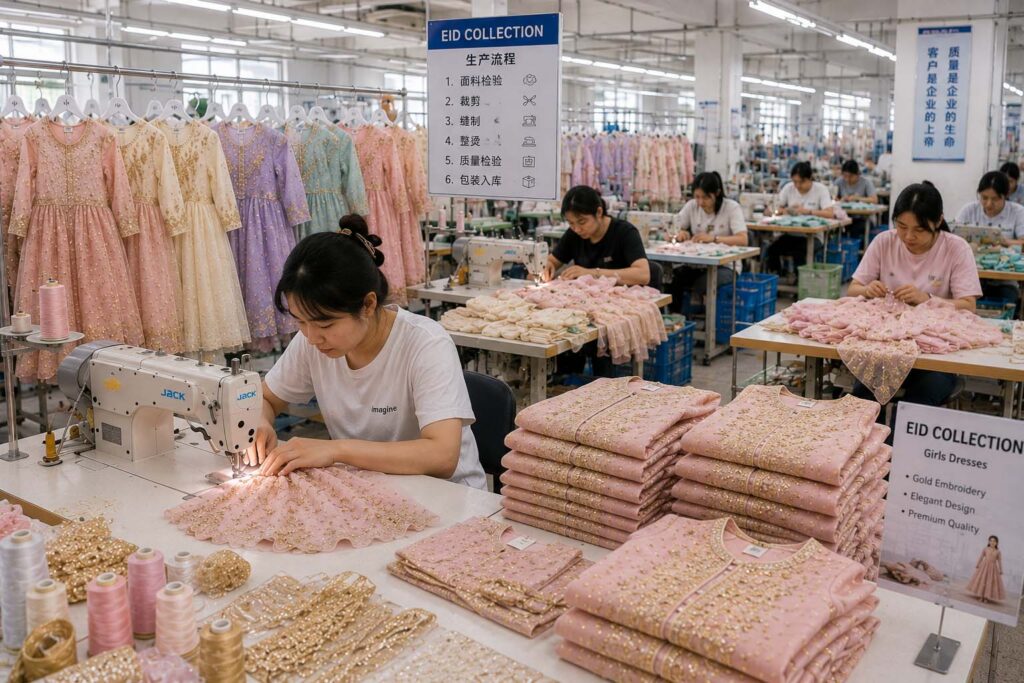
Many Middle East buyers start preparing Eid collections around three months before the season.
Early planning allows more time for:
- Sample development
- Fabric sourcing
- Production scheduling
- Shipping preparation
This is especially important for styles with embroidery and luxury decorations because they often require longer production periods.
Related Reading: How Long Does It Take to Produce Kids’ Clothing in Bulk?
What Wholesale Buyers Should Consider When Sourcing Muslim Girls’ Dresses
Fabric Breathability Matters
Warm climates make comfort an important factor.
Recommended considerations include:
- Lightweight fabrics
- Soft lining
- Breathable construction
- Comfortable fit
According to OEKO-TEX®, textile safety and comfort are becoming increasingly important in apparel sourcing.
External Reference: OEKO-TEX® Standard
Factory Experience: One Change Buyers Often Request During Sampling
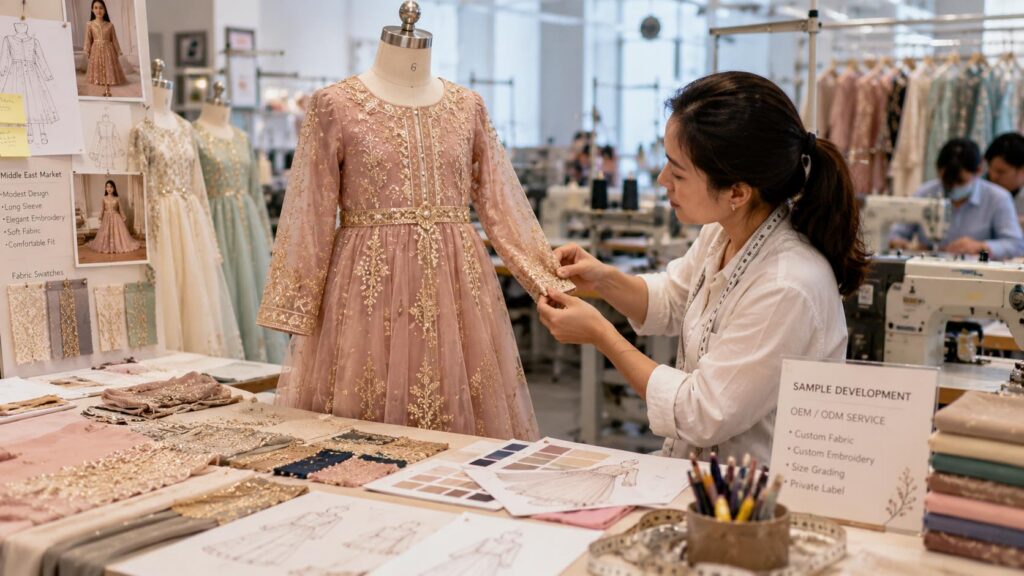
During Muslim girls’ dress development, one modification we often receive from Middle East buyers is:
Extending sleeve length
Many initial samples follow standard occasion dress designs.
However, buyers frequently request:
- Longer sleeves
- Better coverage
- More modest silhouettes
This adjustment is particularly common for:
- Eid collections
- Religious gatherings
- Family celebrations
Confirming sleeve details early usually reduces sample revisions and improves development efficiency.
Related Reading: How to Control Quality When Sourcing Kids’ Clothing
Size Planning and Production Strategy
Recommended size planning: 2–3Y,4–5Y,6–7Y,8–10Y,11–12Y
Wholesale buyers should also consider:
- Stock programs
- OEM development
- ODM collections
- Private labels
- Packaging customization
Early planning usually improves delivery stability for seasonal collections.
Related Reading: Kids Clothing Production Timeline: Bulk Order Lead Time Guide
Related Reading: Why Kids’ Clothing Prices Vary So Much
Future Trends of Muslim Girls’ Fashion
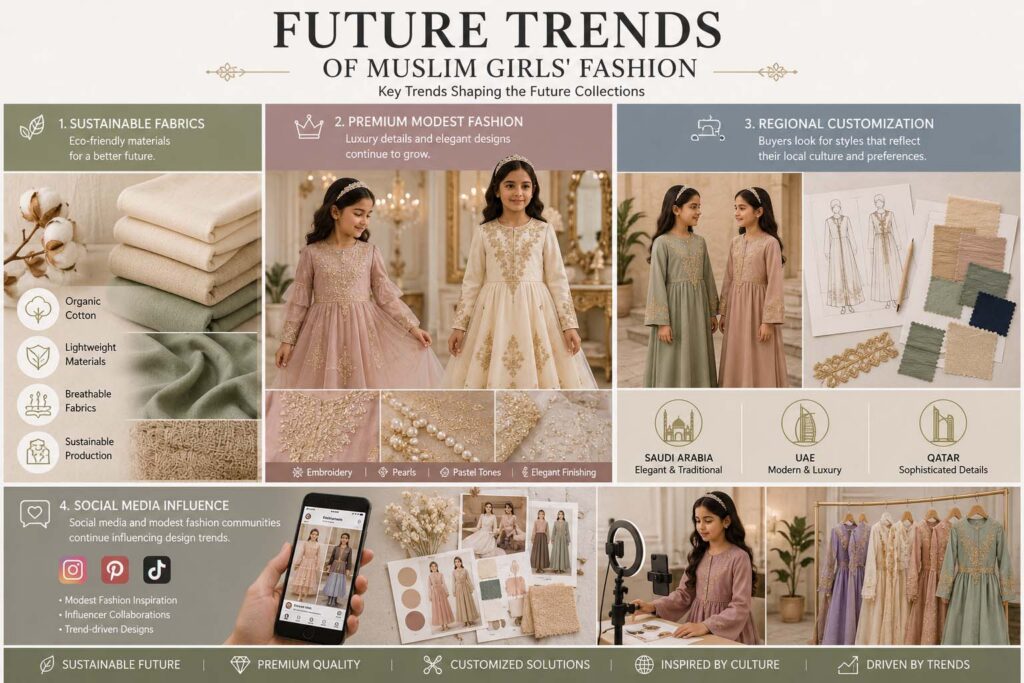
Several trends are shaping future collections.
Sustainable Fabrics
Cotton and lightweight materials continue gaining attention.
Premium Modest Fashion
Luxury children’s occasion wear continues to grow.
Regional Customization
More buyers now request:
- Country-specific styles
- Exclusive embroidery
- Brand customization
Social Media Influence
Social media and modest fashion communities continue influencing design trends.
External References: Salaam Gateway, World Bank Middle East Data, Britannica – Clothing Industry
FAQ
1. What are Muslim girls’ dresses called?
Common products include Eid dresses, kids’ abayas, prayer dresses, modest dresses, and occasion wear.
2. Which Middle East countries buy Muslim kids’ clothing the most?
Saudi Arabia, UAE, Qatar, Kuwait, and Oman.
3. What fabrics are best for Muslim girls’ dresses?
Cotton, chiffon, satin, tulle, and lightweight blends.
4. What changes do Middle East buyers often request?
Longer sleeves and more modest silhouettes are common requests.
5. When should retailers prepare Eid collections?
Many buyers begin planning around three months before Eid.
6. Do Saudi Arabia and UAE buyers prefer different styles?
Yes. Saudi buyers often prefer gold embroidery long dresses, while UAE buyers frequently choose light luxury princess styles.
Looking for Muslim Girls’ Dress Wholesale or OEM Development?
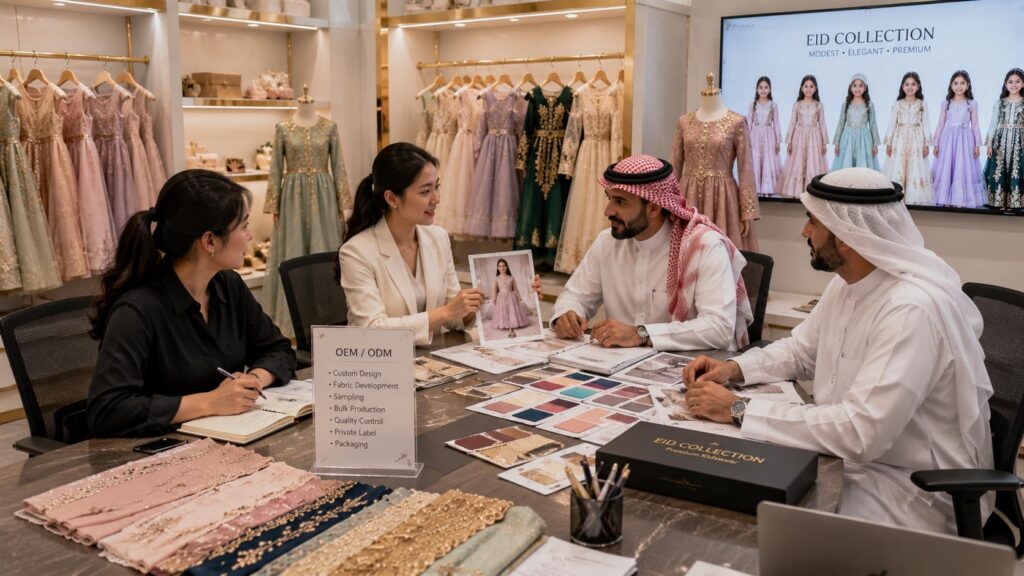
Outong Fashion is a children’s apparel manufacturer with more than 24 years of experience, specializing in:
- Muslim girls dresses
- Eid collections
- Girls occasion wear
- Princess dresses
- OEM & ODM development
We support wholesalers, brands, importers, and retail chains with sample development, customization, and bulk production solutions.
Contact me now to start your new Muslim dress collection!